
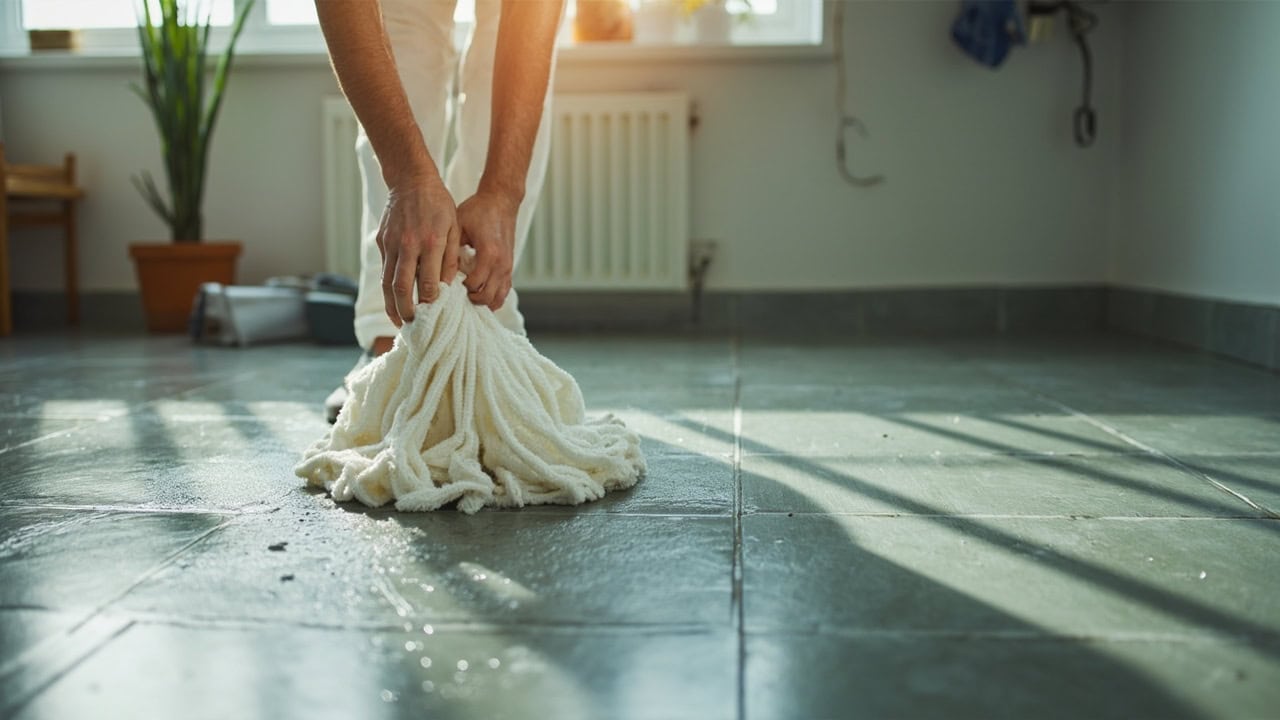
How to Clean Slate Floors: Natural Stone Care

Slate floors must be cleaned with a pH-neutral cleaner at a dilution ratio of 1:10 and a soft-bristle brush to prevent scratching the cleft texture — acid-based cleaners with pH below 5 cause irreversible etching on calcium-bearing slate surfaces. Rinse thoroughly with clean water to prevent residue buildup, and dry immediately with a microfiber mop to avoid water penetration into the stone’s natural fissures. Sealing slate floors every 1–2 years maintains the stone’s porosity resistance and prevents staining from oil-based spills.
Slate is a fine-grained metamorphic rock composed primarily of quartz (40–60%), illite and chlorite clay minerals (30–40%), with accessory carbonate minerals, iron oxides, and feldspar that give individual slate varieties their distinctive colors. Its very low porosity of less than 0.4% water absorption makes it highly resistant to frost damage, yet the calcium-bearing mineral content makes it vulnerable to acid attack. With proper care — pH-neutral cleaning, regular sealing, and immediate drying — slate floors can maintain their natural beauty for several hundred years.
What You Need Before You Start
Gather these supplies before cleaning slate floors to ensure the process is efficient and effective. Using incorrect products can cause permanent damage that cannot be polished out.
- pH-neutral stone cleaner (dilution ratio 1:10 with distilled water) — formulated specifically for natural stone with a pH of 7.0
- Soft-bristle scrub brush or push broom with soft bristles — prevents scratching the cleft texture that collects dirt
- Microfiber mop for drying and final buff — microfiber traps dust and absorbs moisture without scratching
- Spray bottle for applying cleaner to grout lines — allows targeted application without overwetting the slate
- Bucket for clean rinse water — a second bucket prevents contaminated rinse water from redepositing dirt
- Dry microfiber cloths for spot drying — essential for removing pooled water before it penetrates fissures
- Slate sealer (penetrating impregnator type) — penetrates the stone’s pore structure to provide stain resistance without altering the natural appearance
Why pH-neutral matters: Slate is a calcium-bearing metamorphic stone with accessory carbonate minerals that act as a natural binder. Acidic cleaners (vinegar, lemon juice, most bathroom cleaners) with pH below 5.5 dissolve this calcium binder through a chemical reaction called etching, creating etch marks and a chalky dull appearance that cannot be polished back to the original finish without professional restoration.
Step-by-Step: How to Clean Slate Floors
Follow this sequence precisely for optimal slate floor care. Each step builds on the previous one — skipping steps or using incorrect technique can lead to scratching, residue buildup, or efflorescence.
- Dry sweep or vacuum the entire slate floor surface to remove loose debris, dust, and pet hair. Never skip this step — loose particles act as abrasives when wet, scratching the slate’s natural cleft texture and creating collection points for future dirt buildup. Use a vacuum with a hard floor attachment to avoid scuffing.
- Pre-treat grout lines and stubborn spots by spraying pH-neutral cleaner directly on stains and allowing 2–3 minutes of dwell time without letting it dry completely. For oil-based stains, a small amount of 专门的去油剂 may be needed — always test on an inconspicuous area first. Never let cleaner dwell for more than 5 minutes as it can dry and leave residue.
- Mix cleaning solution at 1:10 dilution (1 part pH-neutral stone cleaner to 10 parts distilled water) in a bucket. Using distilled water prevents mineral deposits from tap water — calcium and magnesium in hard water can leave white spots as the water evaporates. Cold or room temperature water prevents thermal shock to the stone.
- Scrub the slate surface using a soft-bristle brush in circular motions, working in 3×3 foot sections to ensure even coverage and prevent cleaner from drying on the stone. Apply light to moderate pressure — slate’s cleft texture has natural valleys where dirt accumulates, and the brush bristles need to reach these low points without catching on the peaks.
- Rinse thoroughly with clean distilled water from a second bucket or a clean mop wrung out in plain water. Mineral-free rinsing prevents water spot residue on the stone. Change rinse water frequently — if the water becomes cloudy, dirt is being redistributed rather than removed.
- Dry immediately using a clean microfiber mop or towels, working in the direction of the slate’s natural grain pattern to prevent streaking and water penetration into fissures. Microfiber’s fine strands (measuring 1–3 denier) trap particles too small to see, lifting them away from the stone rather than pushing them into crevices.
- Allow to air dry completely (minimum 30–60 minutes) before applying any sealer or placing furniture back on the surface. Placing furniture on a damp slate floor can cause permanent finish marks from the finish coat being compressed against the wood. For sealer application, the floor must be completely dry for 24+ hours to ensure proper sealer penetration.
Slate Floor-Specific Considerations
Slate is unique among natural stones because of its natural cleft texture, low porosity, and mineral composition. Understanding these characteristics helps you avoid common mistakes that lead to permanent damage.
What to Avoid
- Acidic cleaners — vinegar (pH 2.5–3.0), lemon juice, bathroom tile cleaners, bleach-based products. These etch slate’s calcium matrix through acid-base reactions, causing permanent dulling, chalky white spots, and surface degradation that cannot be reversed by polishing. Even “natural” or “green” cleaners containing citrus or vinegar must be avoided.
- Abrasive scrubbers — steel wool, stiff nylon brushes, abrasive pads (scouring pads). These scratch the cleft texture and create microscopic collection points for dirt, making floors appear duller after each cleaning. Once the natural texture is abraded, the slate loses its characteristic depth and shimmer.
- Steam mops — excessive heat (typically 200–300°F) and moisture can penetrate natural fissures in unsealed slate and cause efflorescence — white mineral salt deposits rising to the surface as water evaporates and pulls dissolved minerals upward through the stone’s capillary structure.
- Oil-based cleaners — these can penetrate unsealed slate and create dark staining that is difficult to remove. Oil molecules are small enough to pass through the stone’s pore structure (with porosity below 0.4% but still permeable to oils) and coat individual mineral particles from within.
Slate Varieties and Their Care
| Slate Type | Characteristics | Special Care Notes |
|---|---|---|
| Grey/Green Slate | Lower porosity (0.1–0.3%), more resistant to staining | Standard pH-neutral cleaning at 1:10 dilution is sufficient for regular maintenance. Annual sealing adequate for most installations. |
| Black Slate | Higher porosity (0.3–0.6%), absorbs more moisture and oils | More frequent sealing recommended — annual application of penetrating sealer. Perform monthly water droplet test: if water absorbs within 10 seconds, reseal immediately. |
| Multicolor/Rustic Slate | Natural cleft texture with pronounced peaks and valleys, uneven surface | Requires softer bristle brush to avoid catching on edges. Allow extra dwell time (3–5 minutes) for cleaner to reach debris in deep clefts. More prone to efflorescence — ensure thorough drying. |
| Honed Slate | Machine-smoothed finish, less textured surface | Can use softer microfiber mop for daily maintenance. Avoid abrasive contact entirely — honed finish shows scratches more readily than cleft texture. May require more frequent resealing due to smoother surface. |
Drying and Finishing Slate Floors
Drying is as critical as cleaning for slate floor maintenance. Improper drying leads to water spots, efflorescence, and long-term mineral damage that compromises the stone’s appearance and structural integrity.
- Immediate drying prevents water spots — use a clean microfiber mop in a figure-8 pattern, changing mop heads if they become saturated. Standing water on slate allows minerals from evaporation to deposit on the surface as white spots. A single microfiber mop head absorbs up to 8 times its weight in water.
- Buff for enhanced sheen — once surface moisture is removed, buff the dry slate with a clean, dry microfiber cloth to bring out the stone’s natural luster. This creates specular reflection from the stone’s quartz and mica content, enhancing the characteristic shimmer of quality slate.
- Check for residual residue — hold a flashlight at a low angle (within 6 inches of the floor) to detect any cleaner film or streaking that requires additional buffing. Light at an oblique angle reveals film invisible under overhead lighting. Cleaner residue acts as a sticky surface that attracts and traps dust, making floors appear dirty faster after each cleaning.
- Sealing timing — apply penetrating stone sealer only after floor has been completely dry for 24+ hours. This ensures proper sealer penetration into the stone’s capillary pore structure rather than sitting on a moisture barrier. In humid climates, extend drying to 48 hours before sealing. Sealers work through chemical bonding with the stone’s mineral surface — moisture between the sealer and stone prevents this bond.
Common Mistakes When Cleaning Slate Floors
| Mistake | Why It Causes Damage | Correct Approach |
|---|---|---|
| Using vinegar solution | Acidic pH (2.5–3.0) etches calcium binder in slate through acid-base reaction, dissolving the mineral structure that holds the stone together at a microscopic level. Damage is cumulative and irreversible. | Use pH-neutral stone cleaner only (pH 7.0). For all-purpose cleaning, mix at 1:10 dilution with distilled water. |
| Leaving pooled water | Water penetrates natural fissures and dissolves mineral compounds (calcite, dolomite) within the stone. As water evaporates, dissolved minerals crystallize on the surface as efflorescence — white powdery deposits that obscure the natural color. | Dry immediately with microfiber mop. Use minimal water during cleaning. Always dry in direction of natural grain pattern. |
| Skipping sealer application | Unsealed slate absorbs stains from oil, wine, grease, and organic matter. Once absorbed into the stone’s pore structure, these stains cannot be removed without professional stone restoration. Porosity below 0.4% still allows liquid penetration over time. | Seal every 1–2 years with penetrating stone sealer. High-traffic areas or black slate may need annual sealing. Test with water droplet test monthly. |
| Using too much cleaner | Concentrated cleaner creates sticky residue that traps dirt particles, causing floors to appear dirty faster after cleaning. Residual surfactant compounds attract and hold particulate matter from the air. | Follow 1:10 dilution ratio precisely. One part cleaner to ten parts distilled water is the standard maintenance dilution for pH-neutral stone cleaners. |
| Ignoring grout lines | Porous grout (cementitious grout has porosity of 5–15%) holds dirt, mildew spores, and organic matter. Contaminated grout transfers stains to adjacent slate edges during cleaning and creates health concerns in damp environments. | Spray cleaner directly on grout lines using spray bottle. Scrub with soft brush (not hard brush). Rinse grout thoroughly — contaminated rinse water is a primary cause of slate staining at edges. |
Frequently Asked Questions
Q: Can I use vinegar to clean slate floors?
A: No — vinegar has a pH of 2.5–3.0 and is too acidic for slate floors. The acetic acid etches the calcium binder in slate, causing permanent dulling, chalky white spots, and surface degradation that cannot be reversed by polishing. Always use a pH-neutral stone cleaner with a dilution ratio of 1:10.
Q: How often should I seal my slate floors?
A: Slate floors should be sealed every 1–2 years with a penetrating stone sealer. High-traffic areas or black slate varieties may require annual sealing. Perform a water droplet test monthly: if water absorbs into the stone within 10 seconds rather than beading, the sealer has degraded and reapplication is needed.
Q: What is the best cleaner for slate tile floors?
A: A pH-neutral stone cleaner specifically formulated for natural stone (pH 7.0) is the best cleaner for slate tile floors. These cleaners are designed to clean without degrading the stone’s calcium-based binder or leaving residue that attracts dirt. Dilute at 1:10 with distilled water for regular maintenance cleaning.
Q: Why is my slate floor turning white in spots?
A: White spots on slate floors are typically efflorescence — mineral salts rising to the surface from water penetration into the stone’s natural fissures. This occurs when excessive moisture (from cleaning, spills, or humidity) penetrates the slate and evaporates, leaving crystalline mineral deposits. Prevent efflorescence by always drying slate thoroughly and maintaining proper sealer coverage.
References
- Wikipedia. (2025). Slate — Composition, Properties, and Formation. Wikimedia Foundation.
- Natural Stone Institute. (2025). Use Natural Stone — Care and Maintenance Resources. Natural Stone Institute.
- Bob Vila. (2025). Slate Flooring Care Guide. Bob Vila.


