
How to Wash Silk at Home Without Damage

Silk must be hand washed in cold water (below 86°F/30°C) using a pH-neutral detergent specifically formulated for delicates — the fabric’s triangular protein structure makes it vulnerable to alkaline damage that causes fiber dissolution and permanent dulling. Agitation should be minimized to prevent felting, and silk should never be wrung or twisted — instead, press water out gently and lay flat to dry away from direct sunlight. With proper technique, hand washing extends silk garment lifespan to 10–15 years versus 2–3 years for dry-clean-only handling.
What You Need Before Washing Silk
Silk is a natural protein fiber produced by Bombyx mori silkworms, composed of two primary proteins: fibroin (75–80%), which forms the structural filament, and sericin (20–25%), a gummy binder that holds the cocoon together. The individual silk fibers have a triangular cross-section measuring 5–10 μm in diameter, which refracts light to produce silk’s characteristic luster. Because silk fibroin has a tensile strength of 500–740 MPa when dry but loses roughly 20% of that strength when wet, every aspect of the washing process — from water temperature to detergent chemistry — must be controlled precisely.
Gather these supplies before you begin:
- Water temperature: Cold water below 86°F (30°C) — hot water dissolves the sericin binder and weakens fibroin filaments progressively as temperature increases above 95°F (35°C).
- Detergent: A pH-neutral liquid detergent (pH 6.5–7.5) specifically labeled for silk or delicates. Standard laundry detergents contain enzymes and alkaline builders that degrade silk proteins at the molecular level.
- Basin: A clean plastic or glass container — metal basins cause oxidation stains on damp silk fibers.
- Absorbent towels: Clean white microfiber towels for rolling and pressing out water without transferring dyes or lint.
- Drying surface: A padded drying rack or flat surface lined with a clean white towel for air drying.
Step-by-Step: How to Wash Silk by Hand
Hand washing is the gold standard for silk care. When performed correctly, it removes soils and body oils while preserving the fiber’s natural luster and structural integrity — and it extends garment life significantly beyond what dry cleaning alone can achieve. For comprehensive guidance on washing all types of delicate fabrics, see our Laundry & Fabric Care Guide.
- Fill the basin with cold water below 86°F (30°C). If your tap runs warmer, add a few ice cubes and verify with a thermometer. Add 1 teaspoon of pH-neutral silk detergent and swirl gently to distribute — avoid creating suds, which indicate excess detergent.
- Submerge the garment fully and let it soak for 3–5 minutes. Do not agitate vigorously. Silk fibers are weakest when saturated, and prolonged soaking beyond 5 minutes causes dye bleeding and progressive fiber weakening.
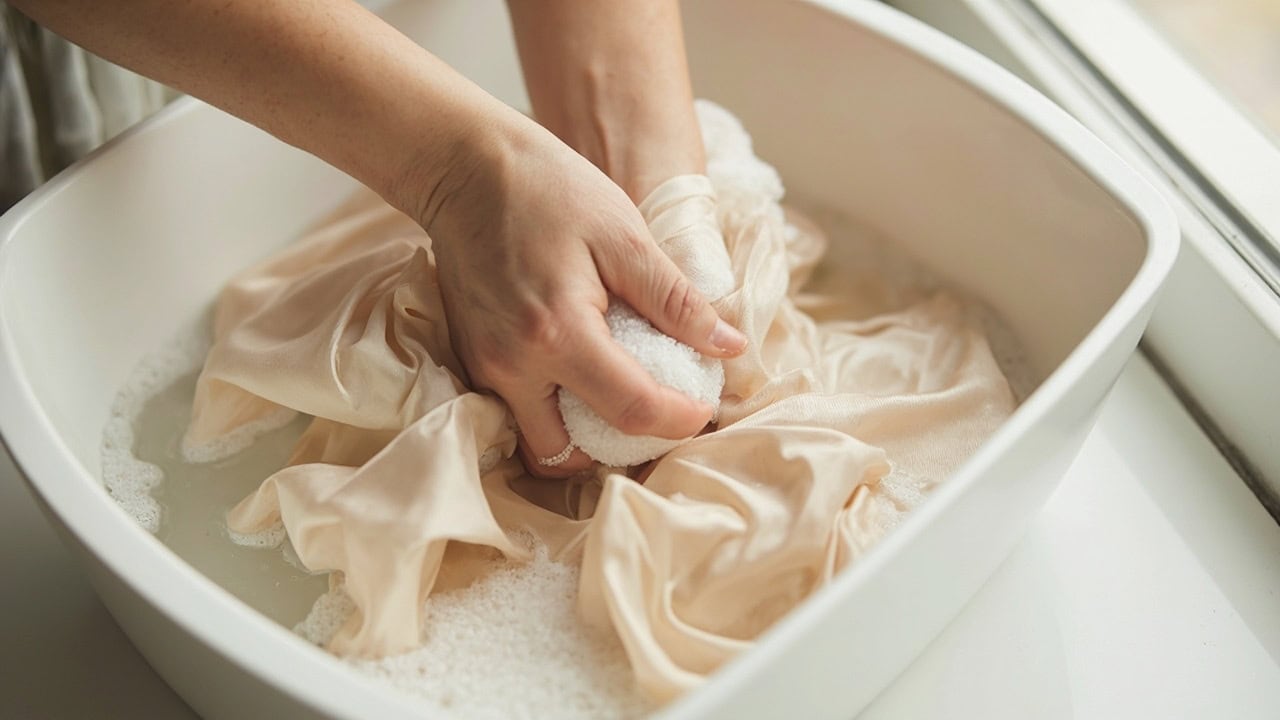
- Gently press the fabric with your palms in a slow, rhythmic motion to work detergent through the fibers. Use a gliding motion — think of pressing water through a sponge rather than scrubbing a surface.
- Focus on stained areas by applying a small drop of undiluted detergent directly onto the spot and dabbing gently with your fingertips. For stubborn stains that resist this approach, refer to our Stain Removal Guide for silk-specific stain treatment protocols.
- Rinse thoroughly with cold water, changing the water 2–3 times until no detergent residue remains. Residual surfactants attract dirt and cause yellowing of the protein fibers over time.
- Remove excess water by laying the garment flat on a clean white absorbent towel, rolling it up like a sleeping bag, and pressing gently with your palms. Never wring or twist silk — the triangular fiber cross-section deforms permanently under torsional stress.
- Lay flat to dry on a padded drying rack, reshaping the garment gently while still damp. Position the rack in a shaded, well-ventilated area — not near a heat source or in direct sunlight.
- Store properly once completely dry. Hang on a padded hanger or fold with acid-free tissue paper between layers to prevent creasing and acid transfer from wood or cardboard storage materials.
Silk-Specific Considerations: What Damages Silk
Understanding how silk degrades helps you avoid the most common — and often irreversible — forms of damage. Silk fibroin is sensitive to pH, temperature, UV radiation, and mechanical stress. The following table summarizes the primary damage mechanisms and their prevention.
| Damage Type | Cause | Prevention |
|---|---|---|
| Fiber breakage | Alkaline detergents (pH > 8), hot water | Use only pH-neutral silk detergents (pH 6.5–7.5) |
| Color bleeding | Prolonged soaking, dye instability | Limit soak time to 5 minutes maximum |
| Felting/pilling | Agitation, friction, heat | Minimize rubbing; use a gentle glide motion |
| Water spots | Inconsistent drying, tap water minerals | Use filtered water if in a hard-water area; dry evenly |
| Wrinkling | Improper drying position | Reshape while damp; always dry flat |
Silk’s vulnerability to alkaline conditions is rooted in its protein chemistry. During commercial silk processing, raw silk is degummed by boiling in a mild alkaline solution (often sodium carbonate) to dissolve the sericin coating — which demonstrates how readily alkali attacks silk proteins. Using an alkaline detergent on a finished garment replicates this degumming process on a smaller scale, gradually stripping the fibroin filaments and causing irreversible dulling and structural weakening.
Can You Machine Wash Silk?
Conditional yes — only if the garment’s care label explicitly permits machine washing and the following conditions are met:
- Place the garment inside a delicates mesh laundry bag to reduce mechanical agitation against the drum.
- Select cold water (below 86°F/30°C) on the shortest gentle or hand-wash cycle available.
- Use silk-specific or high-efficiency detergent only — 2 teaspoons maximum to avoid residue buildup.
- Remove the garment immediately after the cycle ends. Standing water in the drum causes dye transfer between items.
- Never tumble dry — even on the lowest heat setting, dryer temperatures exceed silk’s safe threshold and cause shrinkage of up to 8%.
Machine washing increases fiber stress by 40–60% compared to hand washing due to the repeated mechanical action of the drum and water jets. For valuable garments, heirloom pieces, or items with beaded embellishments and bonded linings, professional dry cleaning or hand washing is strongly preferred. If you’re exploring alternative care methods for delicate items, see our guide on washing sheer and delicate fabrics for additional techniques.
How to Dry Silk Properly
Drying is where most silk damage occurs — not during the wash itself. Silk fibers shrink when exposed to heat and lose luster under ultraviolet radiation. Follow these rules strictly:
- Never wring or twist silk — torsional force permanently deforms the triangular fiber cross-section that produces silk’s signature sheen.
- Never tumble dry — even “air fluff” cycles generate enough friction and residual heat to cause shrinkage and surface dulling.
- Never dry in direct sunlight — UV radiation degrades silk fibroin proteins and fades dyes. Prolonged sun exposure causes photobleaching and embrittlement of the fibers.
- Air dry flat on a clean padded surface, or hang on a padded hanger in a well-ventilated, shaded area. The garment should hold its shape naturally without stretching.
- Iron on low heat if needed — use the silk setting (230–250°F / 110–120°C) with a pressing cloth between the iron and fabric to prevent direct heat contact and shine marks. A handheld steamer held 1–2 inches from the surface is a safer alternative.
Common Mistakes When Washing Silk
Even experienced caregivers make errors with silk because the fabric’s vulnerability is counterintuitive — the same protein structure that gives silk its strength when dry makes it fragile when wet. These are the six most frequent mistakes and why they matter:
- Using regular laundry detergent. Standard detergents contain protease enzymes and alkaline builders (sodium carbonate, zeolites) that chemically digest the same protein bonds they’re designed to remove from other fabrics. On silk, they break down fibroin directly.
- Soaking for extended periods. Beyond 10 minutes, water penetrates the fibroin matrix deeply enough to destabilize dye bonds and weaken inter-fiber hydrogen bonding. This causes both color bleeding and progressive loss of fabric integrity.
- Rubbing stained areas aggressively. Wet silk is approximately 20% weaker than dry silk. Rubbing creates localized stress concentrations that develop into permanent holes — the damage is irreversible once the fiber filaments fracture.
- Using fabric softener. Silicone-based softeners coat silk fibers with a hydrophobic film that attracts dirt, causes streaking, and prevents the fabric from breathing naturally. Silk’s natural hand feel should be preserved through proper detergent selection, not chemical softening.
- Storing silk while damp. Residual moisture promotes mold growth on the protein fibers and causes yellowing as amino acids oxidize in the presence of water and air. Always confirm the garment is completely dry before storing.
- Skipping the colorfastness test. Always test an inconspicuous seam by dabbing it with cold water and detergent before committing to a full wash. Some silk dyes are unstable even in cold water, and early detection prevents ruining the entire garment.
How to Remove Common Stains from Silk
Stain removal on silk requires a fundamentally different approach than on cotton or synthetic fabrics. Harsh chemical spot removers, enzyme-based pre-treaters, and alkaline solutions all damage silk fibroin. The table below provides safe, silk-specific treatment methods for the most common stains.
| Stain Type | Treatment Method |
|---|---|
| Sweat / deodorant | Dab with cold water and a tiny drop of pH-neutral detergent. Never use commercial stain removers — their solvents dissolve silk proteins. |
| Oil / grease | Sprinkle cornstarch generously over the stain immediately and let it absorb for 15 minutes. Brush off gently with a soft, dry cloth. Repeat if necessary. |
| Wine / red beverage | Blot immediately with cold water — do not rub, which pushes the pigment deeper into the fiber matrix. For set-in wine stains, seek professional treatment. |
| Makeup | Dab gently with cold water on a soft, lint-free cloth. Avoid makeup remover solvents entirely — the acetone and alcohol in most removers cause immediate silk damage. |
| Blood | Rinse immediately with cold saline solution (1/2 teaspoon salt per cup of cold water). Cold water only — hot water coagulates blood proteins into the silk fibers, making the stain permanent. |
For stains that resist these home treatments, professional dry cleaning is the safest option. The sooner you address a stain, the higher the success rate — silk’s porous fiber structure absorbs liquids rapidly, so dwell time directly affects outcomes. For a deeper dive into treating stubborn silk stains, see our dedicated guide on washing delicate natural fibers.
Frequently Asked Questions
Q: Can you wash silk that’s labeled dry clean only?
A: Yes, most silk garments can be safely hand washed even if labeled dry clean only — the dry clean label is a manufacturer’s recommendation, not a legal requirement. However, heavily structured items with interfacing, beaded embellishments, or bonded linings should be professionally dry cleaned to prevent damage to adhesives and decorative elements.
Q: What temperature of water is safe for washing silk?
A: Water must be below 86°F (30°C) — ideally 65–75°F (18–24°C). Silk’s sericin protein binder begins to dissolve above 95°F (35°C), and the fiber structure weakens progressively as temperature increases. If your tap water runs warmer than this, use ice cubes or refrigerator-cold water to achieve the correct temperature.
Q: How often should you wash silk garments?
A: Silk blouses and shirts should be washed after 3–5 wears if not visibly soiled, as frequent washing accelerates wear. Silk bedding should be washed weekly. Because silk is naturally antimicrobial and odor-resistant due to its protein structure, it requires less frequent washing than cotton or synthetic fabrics.
Q: Can you use white vinegar when washing silk?
A: A small amount (1 tablespoon per gallon of water) of white distilled vinegar can be used as a final rinse to remove detergent residue and restore silk luster — but only if the vinegar is diluted heavily. Direct application of vinegar causes localized acid damage that creates permanent cloudy spots on the fabric surface.
References
- Vepari, C. & Kaplan, D.L. (2007). Silk as a Biomaterial. Progress in Polymer Science, 32(8-9), 991–1007.
- Altman, G.H., Diaz, F., Jakuba, C., et al. (2003). Silk-based biomaterials. Biomaterials, 24(3), 401–416.
- Kundu, B., Rajkhowa, R., Kundu, S.C., & Wang, X. (2013). Silk fibroin biomaterials for biomedical applications. Journal of Materials Chemistry B, 1, 2630–2642.
- National Center for Biotechnology Information. Biotechnology of Silk. In: Xiang, Z.H. (Ed.), Biotechnology of Silk. Springer.


