

Can You Use a Shop Vac Without a Filter?

A Shop-Vac (wet-dry vacuum) operates without a filter for dry debris only—the filter traps particles as small as 0.3 microns, and operating without one allows fine dust to recirculate into the air. For wet cleanup, the foam sleeve filter is mandatory to protect the motor from moisture damage. Running a Shop-Vac without any filtration for liquid tasks causes motor failure within seconds.
How Does a Shop-Vac Work?
Unlike standard household vacuums, a Shop-Vac features a dual-tank system that handles both dry debris and liquids in a single unit. Most residential models range from 5 gallons (19 liters) to 16 gallons (61 liters), while commercial units reach 20+ gallons. The vacuum draws air through the inlet port, passing it through the filtration system before exhausting clean air.
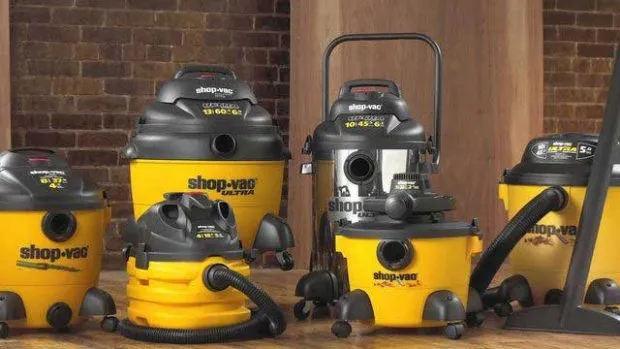
All Shop-Vacs include a filtration system that prevents debris from entering the motor housing. Standard models use a pleated cartridge filter rated to capture particles down to 0.3 microns—the same standard as HEPA filtration. For wet applications, a foam sleeve filter wraps around the motor housing to block moisture and particulates before they reach internal components.
Dry Cleaning with a Shop-Vac
Dry cleaning mode uses layered filtration to separate debris by particle size. The primary filter captures large debris—wood chips, stone fragments, and similar materials measuring 500+ microns. A secondary fine-particle filter handles materials in the 10–500 micron range, including sawdust, gravel, and coarse sand.
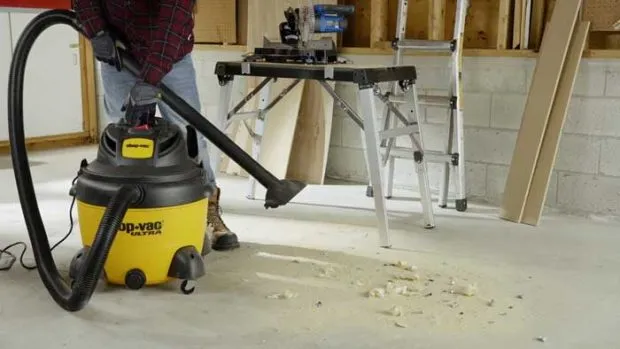
The final filtration stage uses a HEPA-grade element that traps particles smaller than 10 microns—including fine dust, ash, and powdered materials. This multi-stage system ensures that particles exceeding 0.3 microns do not recirculate into the workspace air.
Wet Cleaning with a Shop-Vac
Wet cleaning mode relies on a foam sleeve filter that encases the motor chamber. This open-cell polyurethane foam with 30–50 pores per inch (PPI) allows air passage while capturing debris and blocking liquid. Without this foam sleeve installed, moisture directly contacts the motor windings, causing immediate short-circuit failure.
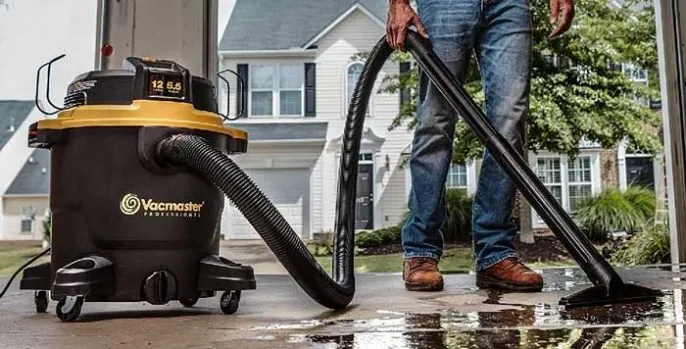
Many Shop-Vac models include a tear-resistant collection bag for wet pickup. These bags feature a built-in drain port that allows collected liquid to empty through a hose attachment, eliminating the need to tilt heavy tanks to dispose of liquid waste.
Shop-Vac Filter and Bag Requirements
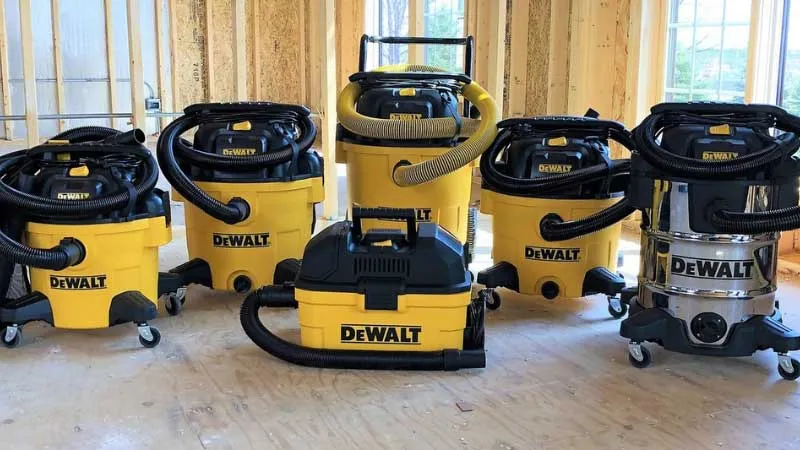
Dry debris pickup requires the pleated cartridge filter installed. Without it, particles below 500 microns pass through the motor and exhaust into ambient air—creating a health hazard and reducing suction performance by up to 40%. The filter also protects the blower fan from abrasive damage that shortens unit lifespan.
Wet pickup requires the foam sleeve filter and a collection bag. The bag contains liquids and prevents gravel, stones, and debris from puncturing the tank. Without the bag, collected water exits through the exhaust port, negating the cleaning effort and potentially damaging nearby surfaces.
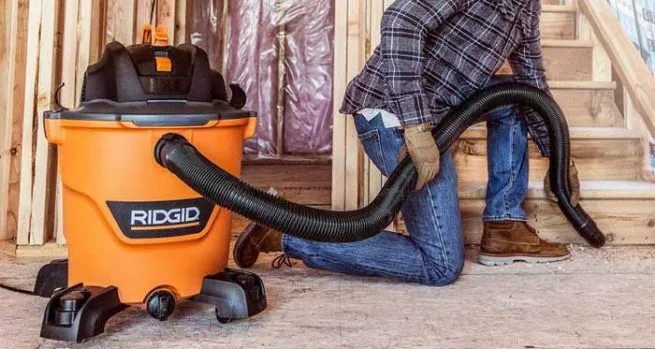
For dry-only pickup, operating without the bag is acceptable—the bag serves primarily as a debris container, not a filter. However, the pleated cartridge filter remains mandatory for all dry-use applications.
Shop-Vac Pool Cleaning Capabilities
Shop-Vacs are not designed as pool pumps and cannot replace dedicated pool cleaning equipment. Standard residential models (5–16 gallons) lack the capacity to handle pool volumes exceeding 10,000 gallons. Attempting large-scale pool cleanup with a Shop-Vac risks:
- Motor overheating from continuous wet operation
- Filter clogging from leaves, algae, and calcium deposits
- Tank rupture if liquid freezes in cold conditions
For small above-ground pool or spa spot cleaning, attach a discharge hose to the exhaust port to route collected water away from the unit. Use a 1.5-inch (38mm) diameter hose minimum to prevent clogging from debris-laden water.
Shop-Vac Filter Performance Upgrades
Stock filters on entry-level Shop-Vacs capture approximately 85–90% of particles at 2 microns. Upgrading components significantly improves filtration efficiency:
Foam Sleeve Filter for Wet Pickup
The standard foam sleeve filter contains open-cell polyurethane foam rated at 30–50 PPI. Higher-density foam (60+ PPI) provides finer filtration but reduces airflow by 15–20%. Replace foam filters every 3–6 months under regular use, or immediately if the foam appears compressed, torn, or discolored.
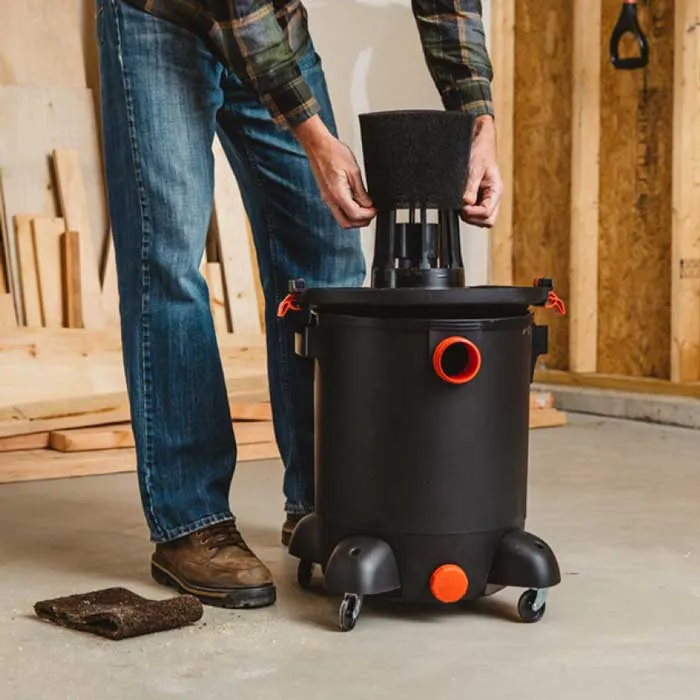
A quality foam sleeve filter extends motor life by preventing moisture and particulate intrusion into the bearing housings and armature windings. This prevents corrosion that causes the motor to draw excess current, potentially trip thermal overload protection, or fail entirely.
HEPA-Grade Cartridge Upgrade
Upgrading from a standard pleated filter to a true HEPA filter increases efficiency from approximately 90% to 99.97% at 0.3 microns. This upgrade is essential when using the Shop-Vac for:
- Lead dust remediation (requires 99.97% at 0.3 microns per EPA RRP standards)
- Asbestos abatement work (requires HEPA filtration per OSHA 1926.1101)
- Fine powder capture ( drywall dust, sawdust, concrete dust)
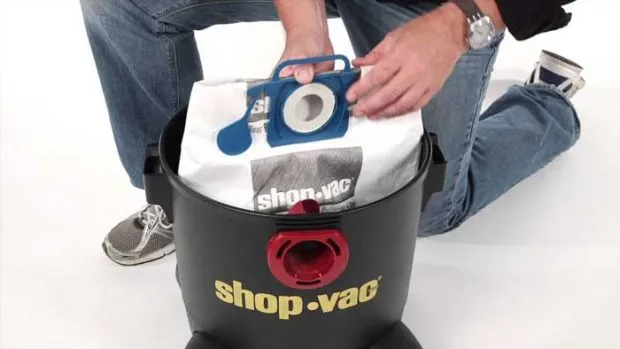
Tear-Resistant Collection Bags
Tear-resistant bags use 4–6 mil polyethylene construction to resist punctures from sharp debris such as:
- Broken glass (can slice standard polyethylene at 2–3 mil thickness)
- Metal shavings and screws
- Gravel and river stones
These bags include a 0.75-inch (19mm) drain fitting compatible with standard garden hose threads for controlled liquid discharge.
Shop-Vac Maintenance Schedule
Regular maintenance ensures consistent suction performance and extends unit lifespan. Follow this maintenance schedule based on usage frequency:
| Usage Level | Filter Cleaning | Filter Replacement | Tank Inspection |
|---|---|---|---|
| Daily / Heavy Commercial | After each use | Every 1–2 months | Monthly |
| Weekly / Regular Home | Every 1–2 weeks | Every 3–6 months | Every 6 months |
| Occasional / Seasonal | Before/after each use | Every 6–12 months | Annually |
Clean pleated cartridge filters by tapping loose debris into a trash bag—do not use water unless the filter is labeled as washable. Washable foam sleeves should be rinsed in warm water (maximum 120°F / 49°C) and air-dried completely before reinstalling. Installing a damp foam filter causes immediate motor damage.
Basement and Workshop Cleaning with a Shop-Vac
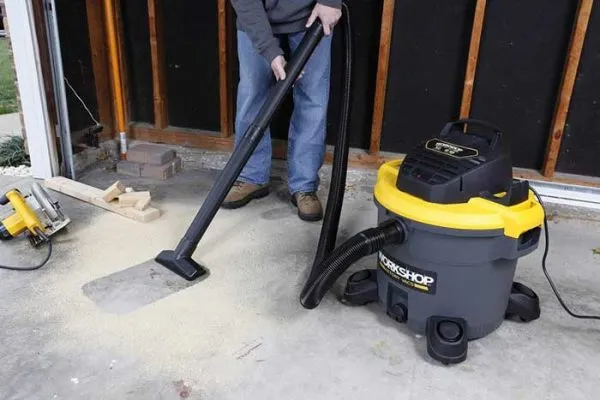
Dedicated basement Shop-Vac models feature 6–16 gallon capacity and include features optimized for damp, dusty environments: corrosion-resistant polymer tanks, sealed motor housings rated for IPX4 splash resistance, and extended-reach hose kits reaching 20+ feet.
For woodworking shops, pair the Shop-Vac with a dust collection system to capture sawdust at the source before it disperses. Connect the Shop-Vac to tools with 2.25-inch (57mm) external diameter dust ports using the included adapter kit.
References
- U.S. Department of Energy. (2024). What is a HEPA Filter?. Environmental Protection Agency.


