

How to Clean a Leather Jacket: The Cost and Details

Professional leather jacket cleaning costs between $38 and $100 at dry cleaners, depending on jacket size, leather type, and condition. Leather is a porous, pH-sensitive material that requires specialized care — wet cleaning uses a mild detergent solution (pH 7.0–8.5) applied with a damp cloth, while dry cleaning employs hydrocarbon solvents to lift body oils without water exposure. Clean and condition your leather jacket once annually to prevent pore clogging and leather fiber degradation.
How Often Should You Clean Your Leather Jacket?
Leather is a natural material with pores that absorb dirt, body oils, and sweat during wear. Over time, these substances break down leather fibers, causing the surface to crack, dull, or develop an odor. Industry guidance recommends cleaning leather jackets once or twice per year — once for fashion leather worn indoors, twice for active-use leather exposed to sweat or environmental contaminants. More frequent cleaning risks removing natural oils; less frequent cleaning allows buildup that degrades the leather.
Dry Cleaning vs. Wet Cleaning: What Professionals Use
Professional leather cleaners use two primary methods depending on leather type and soil level.
Wet Cleaning

Wet cleaning uses water and a mild detergent solution (pH 7.0–8.5) to suspend and lift water-soluble soils from leather fibers. A technician applies the solution with a damp — not wet — soft cloth using long, smooth strokes. This method effectively removes perspiration salts, water-based stains, and surface dirt without saturating the leather.
Steps of Professional Wet Cleaning
- Pre-inspection identifies soil load and tests a hidden area for colorfastness.
- Technician mixes a mild detergent (2–3 teaspoons per 8–10 ounces of warm water) into a soapy solution.
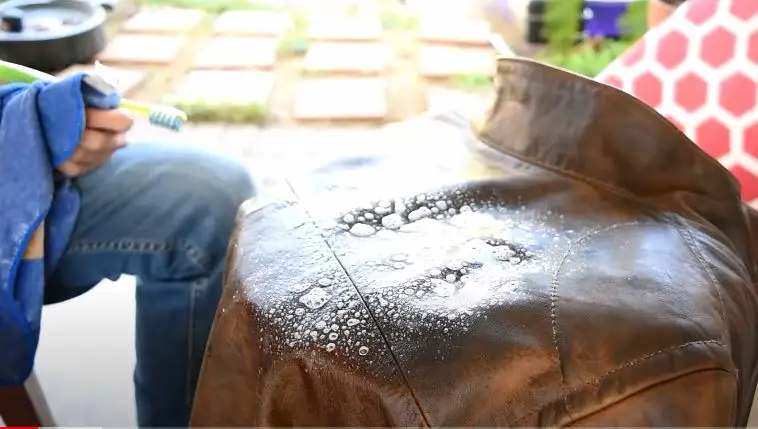
- A soft cloth or brush applies the solution to the leather surface with gentle circular motions.
- The jacket is rinsed with a clean, damp cloth to remove all soap residue.
- The jacket is pat-dried with a clean towel and hung to air dry at room temperature, away from direct heat.
Dry Cleaning
Dry cleaning employs hydrocarbon or petroleum-based solvents (such as perchloroethylene alternatives) to dissolve body oils, grease, and oil-based soils without introducing water. This method is preferred for structured leathers and items with suede or nubuck finishes. Solvent cleaning also helps restore leather color and texture.
Steps of Professional Dry Cleaning
- Surface dirt is brushed off with a soft-bristle brush.
- A clean cloth dampened with dry cleaning solvent is applied to the leather surface.
- The technician works in sections, re-foldng the cloth to avoid redistributing soil.
- The jacket is air-dried at room temperature, then a leather conditioner is applied if the leather feels dry.
Professional Leather Jacket Cleaning Costs
According to New York-area dry cleaners, professional leather jacket cleaning costs $38 to $100 in 2022 pricing. The final price depends on three factors:
| Factor | Impact on Cost |
|---|---|
| Jacket size | Larger jackets (longline, oversized) require more solvent or solution and more conditioning product. |
| Leather type | Suede and nubuck jackets cost $20–$40 more than smooth finished leather due to specialized processing. |
| Condition | Heavily soiled jackets or those with odor issues require pre-treatment, adding $10–$25 to the base price. |
Can You Clean a Leather Jacket at Home?
You can perform limited home cleaning on smooth-finished leather jackets, but incorrect techniques cause irreversible damage. Vinegar-based solutions are not recommended — vinegar’s acetic acid (pH 2.5–3.5) can cause etching, staining, or discoloration on leather surfaces. Instead, use a mild soap-and-water solution.
Safe At-Home Leather Cleaning Steps
- Wipe the jacket surface with a dry soft cloth to remove loose dust and debris.
- Mix 2 teaspoons of mild liquid dish detergent with 8–10 ounces of warm water (approximately 100°F / 38°C).
- Dampen — do not saturate — a soft microfiber cloth with the solution and wipe the leather in long, smooth strokes.
- Rinse a second cloth with clean water and wipe the surface to remove soap residue.
- Pat the jacket dry with a clean towel and allow it to air dry completely at room temperature.
- Apply a leather conditioner (dime-sized amount, rubbed in circular motions) once the jacket is fully dry.
Avoid machine washing leather jackets — the agitation and heat cause shrinkage, fiber distortion, and permanent cracking of the leather surface. Do not use a tumble dryer, hair dryer, or radiator to speed drying.
Leather Jacket Care: Best Practices
- Store your leather jacket in a cool (50–70°F / 10–21°C), dry place with low humidity (30–40% RH) on a padded hanger.
- Wipe up liquid spills immediately with a dry cloth — do not rub, which pushes liquid deeper into the pores.
- Brush off dried dirt with a soft-bristle suede brush after each wear.
- Apply leather conditioner every 6–12 months using a pH-balanced product (pH 4.5–5.5) to restore moisture to the leather fibers.
- Keep leather away from prolonged direct sunlight (UV breaks down collagen fibers) and heat sources.
- Do not machine wash, tumble dry, or dry clean with perchloroethylene on delicate leathers like lamb or suede.
- Take lambskin, suede, and nubuck jackets to a professional cleaner for any significant cleaning.
Quick-Reference: Leather Jacket Care Specs
At a Glance
- Professional cleaning cost: $38–$100
- Cleaning frequency: 1–2 times per year
- Home soap solution: 2 tsp mild detergent + 8–10 oz warm water (~100°F / 38°C)
- Conditioner pH: 4.5–5.5 (slightly acidic to match leather’s natural pH)
- Air dry temperature: Room temperature (68–72°F / 20–22°C)
- Storage humidity: 30–40% RH
- Conditioning frequency: Every 6–12 months
- Vinegar: NOT recommended — causes etching and discoloration
Frequently Asked Questions
How do you clean a smelly leather jacket?
Mix 2 teaspoons of mild liquid dish detergent with 8–10 ounces of warm water. Dampen a soft cloth and wipe the jacket surface in long, smooth strokes. For odor, a dedicated leather deodorizer spray is safer than vinegar, which can discolor the leather. Allow the jacket to air dry completely at room temperature before wearing or storing.
Why does leather smell?
Leather develops odor from body oils, sweat, and environmental contaminants absorbed into the pores during wear. Leather also retains compounds from the tanning process, including chromium salts in chrome-tanned leather, which can produce a characteristic smell that diminishes with use and airing.
Can leather jackets be washed?
Smooth-finished leather jackets can be surface-cleaned at home using a mild soap solution, but machine washing causes irreversible damage including shrinkage, fiber distortion, and cracking. Lambskin, suede, and nubuck jackets require professional cleaning only.
Can you dry leather jackets in the dryer?
No — tumble drying causes leather to shrink, become misshapen, and crack as the heat removes natural oils from the fibers. Always air dry leather jackets at room temperature on a padded hanger, which takes 4–8 hours depending on humidity.
Is olive oil good for leather?
Olive oil can temporarily soften leather, but it oxidizes and goes rancid over time, leaving an unpleasant odor and sticky residue that attracts dust and dirt. Use a pH-balanced commercial leather conditioner instead — products containing neatsfoot oil, mink oil, or beeswax provide superior, long-lasting conditioning without the drawbacks of food-grade oils.
What oils are safe for leather conditioning?
pH-balanced leather conditioners are formulated with neatsfoot oil, mink oil, lanolin, or beeswax — these penetrate leather fibers without oxidizing or going rancid. Jojoba oil (technically a liquid wax, pH ~5.0) is also compatible with leather. Apply a dime-sized amount to a soft cloth and rub into the leather in circular motions; allow 30–45 minutes for absorption before wiping off any excess.
References
- wikiHow contributors. (2024). How to Clean a Leather Jacket. https://www.wikihow.com/Clean-a-Leather-Jacket


