
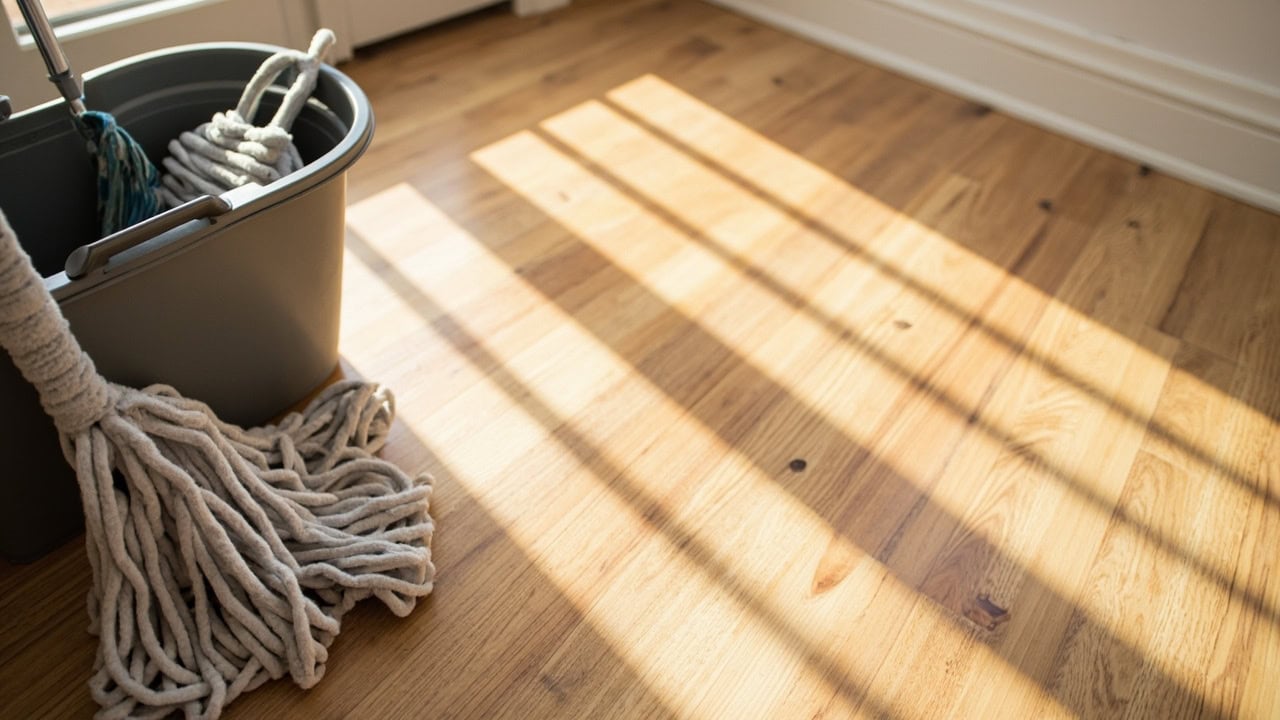
How Often to Mop Hardwood Floors: Maintenance Schedule

Hardwood floors should be mopped every 7–14 days with a barely-damp microfiber mop and pH-neutral cleaner at a 1:20 dilution ratio — frequency depends on household traffic levels and whether pets or children are present. Daily dust mopping with a microfiber sweep pad removes surface debris before it scratches the finish, while weekly wet mopping handles embedded dirt that dry sweeping misses. High-traffic households with pets or children may require mopping every 5–7 days, while low-traffic adult-only homes can extend the interval to every 2–3 weeks without risk.
What This Schedule Means for Your Hardwood
Regular mopping every 7–14 days preserves the floor finish by removing abrasive dirt particles before they cause micro-scratches that dull the surface over time. Each footstep on a dirty hardwood floor can grind silica sand and grit into the finish — particles invisible to the eye but capable of scoring the protective coating with every pass. The National Wood Flooring Association (NWFA) notes that the primary cause of premature hardwood wear is surface contamination rather than foot traffic itself.
Moisture from wet mopping is the primary risk in hardwood floor care. Excessive water causes wood fibers to expand, leading to cupping (edges of boards rise above the center), crowning (center of boards rises above edges), and boards to separate at seams. Solid hardwood is particularly susceptible — engineered wood’s layered construction provides greater dimensional stability, but both floor types require the same moisture discipline. The DIY Floor Store maintenance guide establishes that indoor relative humidity should remain between 30–60% to prevent both cupping and crowning, with seasonal adjustments needed as humidity fluctuates.
The goal of every wet mopping session is dissolved dirt removal with minimal moisture contact time on the wood surface. A properly damp microfiber mop should leave no puddles — only a thin film that evaporates within 30–60 seconds. Any standing water that persists beyond two minutes has already begun penetrating seam gaps and initiating the swelling process that leads to finish delamination and board separation.
Daily and Weekly Maintenance Schedule
Daily Dust Mopping (Every Day)
Use a dry or slightly damp microfiber sweep pad to capture dust, pet hair, and surface debris before it accumulates and becomes abrasive. Work in the direction of the wood grain to prevent pushing particles across the surface — against-grain movement can drive small grit into the micro-scratches left by previous passes. A 60-second sweep of main traffic areas is sufficient for daily maintenance in most households; kitchens and entryways may require two passes.
Studies on indoor air quality from the Occupational Safety and Health Administration (OSHA) link poor IAQ to headaches, fatigue, and respiratory irritation — dust and cleaning byproducts are primary contributors. Daily dust mopping reduces airborne particulate load while protecting the floor finish simultaneously. The Centers for Disease Control and Prevention (CDC) through NIOSH developed the Dampness and Mold Assessment Tool (DMAT) specifically because dampness and mold are associated with respiratory health problems, reinforcing that controlling moisture and keeping floors dry is both a floor care and health priority.
Weekly Damp Mopping (Every 7–14 Days)
Prepare a solution of pH-neutral hardwood floor cleaner at 1:20 dilution with warm water (approximately 75–80°F / 24–27°C). The 1:20 ratio means 1 part cleaner to 20 parts water — roughly 2–3 ounces of concentrate per gallon of warm water. This dilution provides sufficient cleaning strength to dissolve oils and grime while remaining gentle enough to avoid stripping the floor’s protective finish. pH-neutral cleaners operate in the 6.5–7.5 range, which is safe for all hardwood floor finishes including polyurethane, penetrating oil, and wax.
Dip a barely-damp microfiber mop — it should feel barely moist to the touch, not wet. The industry-standard test: squeeze the mop head firmly. If more than 2–3 drops of water escape, it is too wet. Mop using a figure-eight pattern, which allows overlapping coverage without leaving streaks or missed strips. Rinse the mop head when it appears soiled — a dirty mop head redistributes grime rather than removing it. Change the cleaning solution when it turns murky to prevent redistributing dirt onto the floor surface.
After mopping, allow the floor to air-dry completely (typically 15–30 minutes depending on humidity). Do not walk on the floor until the moisture film has evaporated. Walking on a damp hardwood floor with socks or soft-soled shoes can create water marks that require additional cleaning to remove.
Monthly Deep Clean (Every 30 Days)
Perform a more thorough damp mopping session using a well-wrung microfiber mop, paying extra attention to corners, baseboards, and high-traffic lane areas where dirt accumulation is heaviest. High-traffic lanes — the paths between rooms and in front of furniture — experience up to 10 times the wear of other floor areas, according to wood flooring industry data.
During the monthly session, inspect for any scratches, finish wear spots, or gaps between boards. Gaps exceeding 1/16 inch in width may indicate excessive dryness (humidity below 30% RH) and should be addressed by adjusting indoor humidity levels. Finish wear spots in high-traffic areas may require spot treatment or a full-floor recoat. The NWFA states that factory-finished floors typically only require 1/32-inch of wood removal when refinishing, meaning the finish layer is thinner than many homeowners realize and requires consistent care to preserve.
Monthly inspection also provides an opportunity to check for pet urine odors that may have been absorbed into the wood grain. Pet urine contains uric acid crystals that can penetrate deeply into hardwood and cause persistent odors if not promptly cleaned. If odor is detected, a specialized enzymatic hardwood cleaner should be used rather than additional water, which would drive the odor deeper into the wood.
Factors That Change Your Mopping Frequency
High Traffic (+2–3 Mopping Sessions per Month)
Homes with children, pets, or frequent entertaining accumulate dirt faster and require 2–3 additional mopping sessions per month — bringing the total to 3–4 sessions monthly, or roughly weekly wet mopping. Entryways and hallways show wear first because they receive the highest concentration of foot traffic and are primary deposition points for sand, salt, and outdoor debris. The grit carried in from outdoor footwear is the single largest contributor to hardwood floor micro-scratching.
Consider placing area rugs in high-traffic zones to reduce wear patterns and extend the time between wet mopping sessions. Rugs should be backed with a non-slip pad designed for hardwood floors to prevent the rug itself from scratching the finish. Vacuum under rugs weekly to prevent debris accumulation beneath them, which can create localized wear patterns.
Low Traffic (Standard Schedule or −1 Session per Month)
Adult-only homes with minimal pet presence can extend wet mopping intervals to 14–21 days without risk of damage. Rooms with furniture and limited foot traffic — guest bedrooms, formal living rooms used only for special occasions — rarely need wet mopping more than once per month. Dust mopping should still occur in these spaces, but the mechanical contamination load is far lower than in primary living areas.
The principle of mopping frequency adjustment is simple: mop when the floor looks dirty, not on a rigid calendar schedule. In low-traffic environments, a visual inspection every 2–3 weeks will indicate whether wet mopping is warranted. If the floor appears dull only after dust mopping, it is time for wet mopping.
Climate and Seasonal Adjustments
Humid climates (above 60% RH): Reduce water exposure during high-humidity months by using a dry mop more often and skipping wet mopping entirely during periods of sustained high humidity. When humidity exceeds 60%, wood is already absorbing moisture from the air — additional water from mopping compounds the stress on seams and joints. Use the dry microfiber pad for daily maintenance and reserve damp mopping for when indoor humidity is in the 30–50% range.
Dry climates (below 30% RH): Wood contracts and gaps may appear between boards during dry winter months or in arid climates. Avoid excessive moisture during these periods — the 30–60% RH target range is critical, and mopping with too much water when humidity is already low can cause the wood to swell unevenly when humidity eventually rises. Monitor with a hygrometer and use a humidifier if levels drop below 30%.
Summer months: Increased dust and pollen from open windows and higher outdoor activity requires additional dust mopping sessions — potentially daily in pollen-heavy regions. Pollen itself is mildly abrasive and, when combined with morning dew tracked indoors or condensation, can create a grime layer that accelerates finish wear.
Winter months: Salt, sand, and grit from winter boots accumulates near entryways and requires more frequent damp mopping near doors. Place durable boot trays and doormats at all entrances to capture the majority of winter debris before it reaches the hardwood. Increase damp mopping frequency in entryways to twice weekly during winter months in climates with significant snow and ice.
The Right Tools and Products for Hardwood Mopping
| Tool/Product | Purpose | What to Avoid |
|---|---|---|
| Microfiber mop (barely-damp) | Traps dirt mechanically, minimal moisture delivery | String mops, sponge mops — deliver 10–20x more water |
| pH-neutral hardwood cleaner | Dissolves oils and grime safely for all finishes | Vinegar (pH 2.5), ammonia, bleach — etch and cloud finishes |
| Soft-bristle dust broom | Daily debris removal along edges and corners | Stiff brushes, scrub brushes — create micro-scratches |
| Terry cloth mop head | Gentle agitation for stubborn spots | Synthetic scrubbers, abrasive pads |
Microfiber works through electrostatic attraction — the split microfibers create a positive charge that attracts dust particles and holds them within the pad rather than redistributing them. A quality microfiber mop pad contains 200,000–400,000 fibers per square inch, providing enormous surface area for dirt trapping. Wash microfiber pads separately from other laundry and avoid fabric softener, which coats the fibers and eliminates their electrostatic properties.
For non-greasy spills, dish detergent diluted in warm water is an effective pre-treatment before damp mopping. For greasy spills, a cloth dampened with hydrogen peroxide applied for 5–10 minutes breaks down organic matter without the harsh effects of bleach. Water marks on waxed floors can be treated with #000 steel wool after allowing the area to dry for 48 hours — the fine steel wool gently abrades the wax layer without damaging the wood beneath.
Common Mistakes That Damage Hardwood Floors
Using too much water — Standing water penetrates seams and causes swelling, cupping, and finish delamination within 24–48 hours of exposure. The affected boards may not return to their original shape even after drying. Cupped boards (edges higher than center) indicate sustained moisture exposure; the fix requires removing the moisture source and allowing the floor to acclimate for weeks or months. In severe cases, floor replacement is the only solution.
Steam mops — Direct steam heat opens wood pores and forces moisture into joints through pressure. Manufacturers void warranties when steam is used on hardwood floors. The Journal of Wood Science documents finish delamination occurring within 15 minutes of steam exposure on unsealed joints, and even sealed joints can be compromised when the heat cycle causes differential expansion between the wood surface and the adhesive layer beneath.
Vinegar or ammonia-based cleaners — Vinegar’s 5% acetic acid concentration etches the floor finish over time, causing clouding, streaking, and premature wear. Ammonia-based products are particularly aggressive on water-based polyurethane finishes. Neither should be used on hardwood floors regardless of dilution ratio. The acidity of vinegar (pH 2.5) is fundamentally incompatible with maintaining a clear, intact floor finish over time.
Skipping the dust mop — Rubbing dry dirt with a wet mop creates a muddy slurry that grinds abrasive particles into the finish. This is one of the most common and most damaging errors: wet mopping a contaminated floor forces sand and grit into direct contact with the finish under hydraulic pressure, turning each footprint into a micro-scratching event. Always sweep or dust mop thoroughly before wet mopping.
Not wringing out the mop — A mop that leaves puddles rather than a barely-damp film delivers 10–20 times more water to the wood surface. A properly wrung microfiber mop contains approximately 8–10 times its weight in water when saturated, but the goal is saturation below 2% of the mop head’s capacity. The squeeze-test: if more than 2–3 drops escape when wringing, the mop is too wet.
How to Tell When Your Floor Needs Mopping
Surface looks dull even after dust mopping — A buildup of oils and grime that dry sweeping cannot dissolve has accumulated on the floor. This is a dulling film rather than surface contamination; the dust mop physically removes particles but cannot break down the oily residue from cooking fumes, body oils from bare feet, or pet dander that settles on floors. Wet mopping with a pH-neutral cleaner at the proper dilution is required to dissolve this layer.
Footprints remain visible after sweeping — The contamination layer is too heavy for dry mechanical removal. Footprints leave behind a residue composed of skin cells, body oils, and whatever particles have adhered to the bottom of feet. This is a clear signal that wet mopping is overdue and should be scheduled within 24–48 hours.
Pet paw prints appear — Pet urine, mud, and body oils require prompt damp mopping to prevent odor absorption into the wood grain. Pet urine contains uric acid crystals that bond with wood fibers and can produce lasting odor if not treated with an enzymatic cleaner specifically designed for hardwood. Mud from pet paws should be spot-cleaned immediately — allowing mud to dry makes removal more difficult and increases the chance of grit scratching the finish.
Gritty or sandy texture underfoot — Sand and fine grit act as sandpaper on hardwood finish. Walking barefoot on a gritty hardwood floor means fine silica particles are being pressed into the finish with each step. If your feet are picking up grit from the floor, the floor is picking up grit from your feet — a cycle of micro-abrasion that will progressively matte down the finish. This requires immediate dust mopping followed by wet mopping within 1–2 days.
Frequently Asked Questions
Q: Can I mop hardwood floors more often than every 7 days?
A: Yes — if your household generates high traffic, pets, or visible dirt accumulation, mopping every 5–7 days is safe when using a barely-damp microfiber mop and pH-neutral cleaner. Excessive frequency without soil buildup is unnecessary and increases moisture exposure risk. The critical variable is the dampness level of the mop, not the calendar.
Q: What happens if I don’t mop my hardwood floors for a month?
A: One month without mopping rarely causes permanent damage in low-traffic homes, but visible dullness, embedded grit scratches, and pet odor absorption may occur. In high-traffic households, finish wear accelerates significantly after 3–4 weeks without proper cleaning. The risk compounds when pets are present — pet dander and urine odors become more deeply embedded the longer they sit on the wood surface.
Q: Is it better to steam clean hardwood floors?
A: No — steam cleaning is not recommended for hardwood floors. Heat and forced moisture open wood pores, force water between boards, and void most manufacturer warranties. The Journal of Wood Science documents finish delamination occurring within 15 minutes of steam exposure on unsealed joints, and even sealed engineered wood can suffer adhesive bond failure at the seam between layers. Dry or barely-damp microfiber mopping is the only moisture-based cleaning method approved by hardwood floor manufacturers.
Q: What’s the difference between dust mopping and wet mopping hardwood?
A: Dust mopping uses a dry or slightly damp microfiber pad to mechanically capture surface debris without adding moisture. Wet mopping uses a pH-neutral cleaning solution to dissolve oils, grime, and embedded dirt. Dust mopping is safe for daily use and causes zero moisture stress to the wood. Wet mopping should be limited to every 7–14 days to minimize water exposure, and the mop must be barely-damp — not wet — to avoid the moisture damage that leads to cupping, swelling, and seam separation.
References
- YourBestDigs.com. (n.d.). How to Clean Hardwood Floors: The Complete Guide. https://www.yourbestdigs.com/how-to-clean-hardwood-floors/
- DIY Floor Store. (n.d.). Hardwood Floor Care and Maintenance Guide. https://www.diyfloorstore.com/hardwood-floor-care-maintenance-guide/
- Hunker. (n.d.). How Often to Mop Hardwood Floors. https://www.hunker.com/2109499/how-often-mop-hardwood-floors/
- Occupational Safety and Health Administration (OSHA). (n.d.). Indoor Air Quality. U.S. Department of Labor. https://www.osha.gov/indoor-air-quality
- National Institute for Occupational Safety and Health (NIOSH). (n.d.). Dampness and Mold Assessment Tool (DMAT). Centers for Disease Control and Prevention. https://www.cdc.gov/niosh/topics/indoorenv/
- National Wood Flooring Association (NWFA). (n.d.). Hardwood Floor Maintenance Guidelines. https://www.nwfa.org/


