
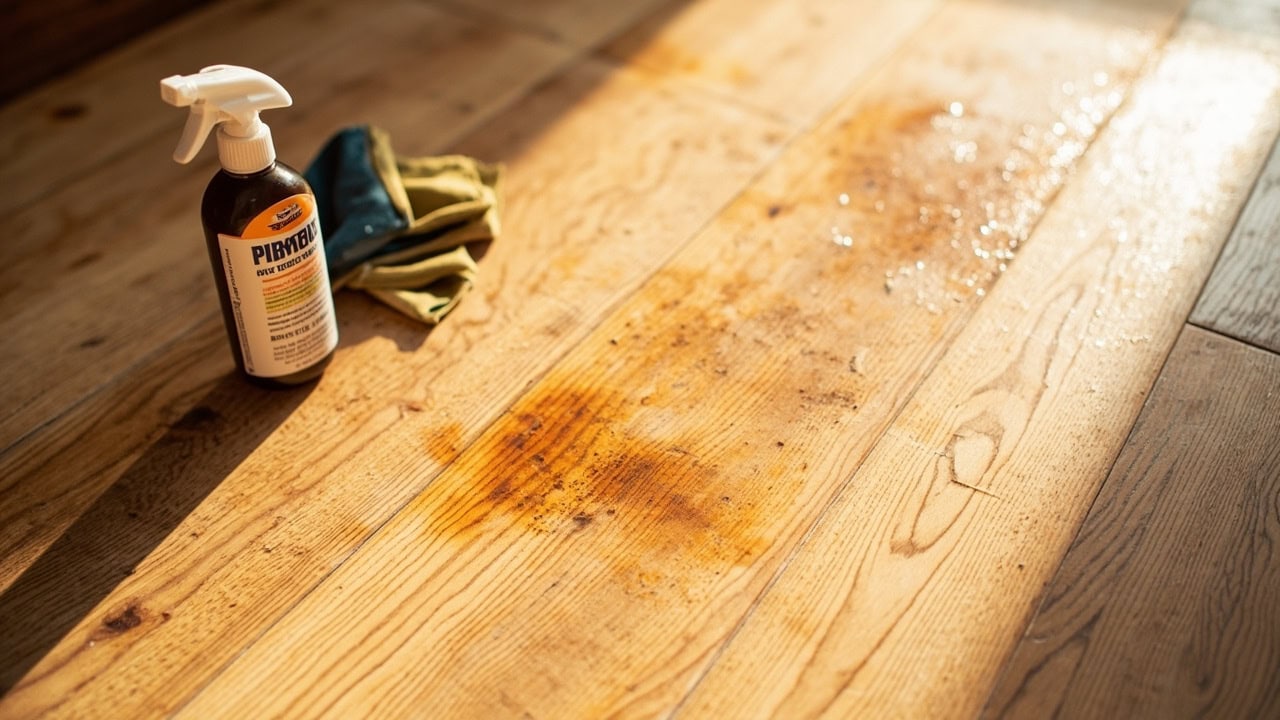
How to Remove Pet Urine Stains from Hardwood

Pet urine stains on hardwood floors require immediate action using enzymatic cleaners to break down uric acid crystals before they penetrate the wood grain and cause permanent discoloration. For fresh stains (under 24 hours), apply a commercial enzymatic cleaner directly to the stain, let it dwell for 10–15 minutes, then blot with a clean microfiber cloth. For set-in stains, use a 3% hydrogen peroxide solution applied carefully to the stain area only — never saturate the floor — followed by gentle scrubbing with a soft-bristled brush and immediate drying.
Understanding Why Pet Urine Damages Hardwood
Pet urine is a chemically complex substance composed of three primary compounds: uric acid, urea, and creatinine. Uric acid is the most damaging component, present in concentrations ranging from 0.5 to 2.0 grams per liter depending on the animal’s diet and hydration levels. Human urine typically has a pH range of 6.0–8.0, while dog and cat urine runs slightly more acidic, between pH 5.5–7.5, with cat urine often trending toward the lower end due to the species’ evolved water conservation mechanisms.
When urine contacts hardwood, the uric acid molecules bond chemically to cellulose fibers in the wood through a process called adsorption. This bond is remarkably strong and cannot be broken by water alone — which is why simply wiping a stain with a damp cloth does nothing to remove it. Fresh urine is water-soluble and can be extracted before the compounds oxidize. However, once urine dries (typically after 24–48 hours), the urea converts to ammonia and alkaline compounds through bacterial decomposition, which then oxidize and darken the wood finish. At this point, the stain has transitioned from a surface issue to a deep-penetration problem requiring bleaching or refinishing.
Repeated accidents in the same location cause cumulative damage. Each incident deposits additional nitrogen compounds that break down the wood’s cellular structure and can reach the subfloor through gaps between floorboards. Subfloor contamination is particularly problematic because it creates persistent odor that surface cleaning cannot reach, and in severe cases requires professional demolition and replacement of affected subfloor materials.
What NOT to Use on Hardwood
Hardwood floors are vulnerable to both chemical and mechanical damage from inappropriate cleaning methods. Understanding what to avoid is equally important as knowing the correct approach.
- Steam cleaners — The heat from steam (typically 200–300°F) denatures urine proteins and permanently bonds them to wood fibers. It also introduces excessive moisture into floorboard seams, risking subfloor damage and wood cupping.
- Ammonia-based cleaners — Ammonia reacts with uric acid to form ammonium urate compounds, which actually intensifies both the stain and the odor. The strong ammonia odor also mimics the chemical signature of urine to animals, potentially attracting repeat accidents to the same spot.
- White vinegar — While vinegar (5% acetic acid, pH ~2.5) is an effective cleaner for many surfaces, its acidity can degrade some hardwood floor finishes, particularly oil-based finishes and older wax coatings. On sealed floors with resilient finishes, diluted vinegar may be acceptable, but it is not recommended as a first-line pet stain treatment.
- Excessive liquid saturation — Hardwood is hygroscopic, meaning it absorbs moisture and swells. Saturating a hardwood floor with any cleaning solution causes cupping (edges raised), crowning (center raised), and potential warping. All liquid applications must be minimal and followed by immediate drying.
- Abrasive scrub brushes — Steel wool, stiff nylon brushes, and rough scouring pads scratch the floor finish, creating microscopic channels that allow stains to penetrate deeper. Always use soft-bristled brushes (nylon, 0000-grade steel wool as a last resort on bare wood only).
Step-by-Step: Removing Fresh Pet Urine Stains (Under 24 Hours)
Fresh stains are water-soluble and respond well to enzymatic treatment. Speed is critical — the sooner you act, the higher your success rate. The following protocol leverages the natural timeline of urine oxidation to maximize stain removal before chemical bonding becomes permanent.
- Blot immediately — Press a clean microfiber cloth firmly onto the stain. Do not scrub. Blotting applies downward pressure that pulls liquid upward into the cloth through capillary action. Work from the outside edge of the stain toward the center to prevent spreading. Use a fresh cloth section for each pass; as the cloth becomes saturated, fold to a fresh section. Continue until minimal color transfers to the cloth.
- Apply enzymatic cleaner — Select an enzymatic cleaner specifically formulated for pet urine, such as those containing subtilisin or protease enzymes, which break down the protein chain in uric acid. Spray the product directly onto the stain and extend 2 inches beyond the stain border to treat the penetration zone. Allow a dwell time of 10–15 minutes. During this period, the enzymes hydrolyze the uric acid molecules into smaller, water-soluble compounds that can be extracted.
- Blot again — Using a fresh section of microfiber cloth, blot the dissolved stain upward with firm, controlled pressure. The dissolved compounds will be watery and may spread if you scrub. Repeat with clean cloth sections until no color transfers. For light stains, 2–3 passes is typically sufficient; heavier stains may require 5–7 passes.
- Rinse with damp cloth — Lightly dampen a microfiber cloth with plain water (room temperature, pH ~7.0) and blot the area to remove any remaining enzymatic residue. Residual enzyme left on the floor can continue reacting with unintended substrates, potentially affecting the floor finish over time.
- Dry immediately — Place a dry microfiber cloth or layered paper towels over the treated area and apply gentle, firm pressure for 2–5 minutes. For thorough drying, you may place a clean, weighted object (such as a flat book) over the cloth. Complete dryness within 5 minutes prevents moisture penetration into the wood grain and prevents any remaining uric acid compounds from re-bonding.
Step-by-Step: Removing Set-In Pet Urine Stains (Over 24 Hours)
Stains older than 24 hours have undergone oxidation and chemical bonding to the wood fibers. Water-based extraction is no longer effective at this stage. The primary intervention for set-in stains on sealed hardwood is targeted hydrogen peroxide bleaching, which breaks the double bonds in the oxidized urine compounds through an oxidation-reduction reaction, effectively decolorizing the stain without damaging the wood substrate itself.
- Assess stain depth — Examine the stain under good lighting (natural daylight is ideal). Light discoloration affecting only the surface finish (the top 0.001–0.005 inches) may respond to bleaching. Dark discoloration that appears to extend into the wood grain itself — visible as color change between boards — indicates deep penetration requiring sanding and refinishing. If the finish appears raised, blistered, or physically disrupted, the subfloor may also be compromised.
- Apply 3% hydrogen peroxide — Using a cotton swab, soft white cloth, or applicator bottle with a narrow tip, apply 3% hydrogen peroxide (standard pharmacy strength) only to the stained area. Do not overspray — keep the application contained to the stain plus a 1/4-inch border. Never saturate the area; apply enough to visibly moisten the stain. 3% hydrogen peroxide is the maximum safe concentration for use on sealed hardwood without risking uneven lightening of the floor finish.
- Cover with plastic wrap — Loosely tent a piece of plastic wrap over the treated spot to create a barrier that slows evaporation. This concentration of the bleaching agent allows the hydrogen peroxide to work more deeply into the oxidized compounds. For light surface stains, 30 minutes is sufficient. For moderate discoloration, wait 45–60 minutes. Do not exceed 60 minutes on sealed hardwood — extended exposure to hydrogen peroxide can begin to degrade some urethane finishes.
- Check progress — Remove the plastic wrap and blot the area with a damp cloth to halt the bleaching reaction. Compare the treated area to the surrounding floor. If the stain has lightened by at least 50%, proceed to the cleaning step. If minimal improvement is visible after one treatment, you may repeat the process up to three times total, allowing 24 hours between treatments to assess whether the stain continues to fade. Stains with zero improvement after two sessions typically require refinishing rather than bleaching.
- Clean and protect — Wipe the treated area with a slightly damp cloth to remove any bleaching residue. Once fully dry (within 10 minutes), apply a pH-neutral hardwood floor cleaner formulated for urethane-finished floors. If the finish appears dulled or compromised in the treated area, apply a fresh coat of hardwood floor polish or compatible finish to restore the protective barrier and uniform sheen.
How to Prevent Future Pet Accidents on Hardwood
Prevention is substantially more effective than treatment, both for maintaining floor integrity and for managing pet behavior. The following measures reduce the frequency and severity of hardwood exposure to pet urine.
- Establish a consistent bathroom schedule — Most pets respond well to structured elimination routines. Taking dogs outside first thing in the morning, after meals, and before bedtime reduces indoor accidents. For cats, ensure the litter box is cleaned daily and located in a low-traffic area away from the hardwood floor zones.
- Place washable rugs in high-accident zones — Entryways, areas near pet beds, and spaces beneath water bowls are common accident locations. Use washable rugs with non-slip backing and clean them weekly in a washing machine on the sanitize cycle (minimum 140°F) to fully break down uric acid compounds.
- Use pet urine attractant sprays in appropriate areas — During training or for pets transitioning to a new environment, enzymatic attractant sprays can direct pets to appropriate elimination areas. These sprays use synthetic analogs of elimination scents to guide behavior without requiring the pet to “mark” the hardwood itself.
- Conduct daily inspections — Morning and evening floor checks catch accidents within the critical 24-hour window when enzymatic treatment is fully effective. Carry a small flashlight to detect stains under furniture and in low-light areas. Catching stains early also prevents the ammonia odor from building up, which can permanently attract pets back to the same spot.
- Apply an additional coat of hardwood floor finish — In homes with multiple pets or young animals in training, applying one to two extra coats of a compatible urethane finish in high-traffic pet zones creates an additional barrier between the wood and any future accidents. This is a low-cost preventive measure relative to the cost of refinishing.
Common Mistakes That Make Pet Urine Stains Worse
Even well-intentioned cleaning efforts can worsen pet urine stains if the underlying chemistry is misunderstood. These are the most frequently observed errors in hardwood pet stain treatment.
- Waiting more than 24 hours — The window for effective water-based extraction closes as urine oxidizes and the uric acid crystallizes. After 48–72 hours, the stain transitions from a surface issue to a structural one requiring bleaching or refinishing. Immediate action is the single most important factor in stain removal success.
- Using conventional household cleaners — All-purpose cleaners, glass cleaners, and surface disinfectants are not formulated to break down uric acid. These products may remove surface residue but leave the nitrogen compounds that constitute the actual stain. Worse, residual cleaning chemicals can react with the urine compounds or attract repeat accidents. Enzymatic cleaners are the only household cleaning agents specifically designed to chemically degrade uric acid.
- Scrubbing in circular motions — Circular scrubbing mechanically pushes liquid and dissolved urine compounds laterally into wood grain and into the seams between floorboards. Always blot or wipe in a straight-line motion toward you, or work from the outside edge toward the center, to direct contamination away from unaffected areas.
- Allowing pets back before cleaning is complete — Pets rely heavily on scent marking. If any trace of the original accident remains — even below the threshold of human smell — the pet will return to the same spot. Complete cleaning (not just surface stain removal) and subfloor treatment when necessary are essential before allowing pet access to the area.
- Ignoring subfloor contamination — When urine penetrates floorboard seams, it reaches the subfloor (typically plywood or OSB), which is more porous than hardwood and absorbs more liquid. Subfloor contamination is the primary cause of persistent pet odor in homes, even after rigorous surface cleaning. In severe cases, affected subfloor sections must be removed and replaced by a professional.
Frequently Asked Questions
Q: Can pet urine stains be removed from hardwood without sanding?
A: Yes, surface-level urine stains on sealed hardwood can often be removed using enzymatic cleaners or targeted hydrogen peroxide bleaching without sanding. However, stains that have penetrated through the finish into bare wood or have been left untreated for weeks require sanding and refinishing for complete removal.
Q: Does hydrogen peroxide damage hardwood floors?
A: 3% hydrogen peroxide is safe for occasional use on sealed hardwood when applied sparingly to the stained area only. Higher concentrations or full-floor application can lighten the floor finish unevenly. Always test on an inconspicuous area first and never leave hydrogen peroxide on hardwood for more than 60 minutes.
Q: How do I remove the smell of old pet urine from hardwood?
A: Old urine odor indicates uric acid crystals have penetrated the wood. Use an enzymatic cleaner designed for deep penetration, apply generously, and allow extended dwell time (30 minutes to 2 hours). For severe cases, consult a professional restoration service that can treat the subfloor if necessary.
Q: Will steam cleaning remove pet stains from hardwood?
A: No, steam cleaning is not recommended for pet stains on hardwood. The heat from steam actually sets urine stains permanently by denaturing the proteins and bonding them to wood fibers. Steam can also penetrate floorboard seams and damage the subfloor through moisture exposure.
References
- American Society of Home Inspectors. (n.d.). Hardwood Floor Damage from Moisture and Pet Waste. ASHI Technical Library. Retrieved from https://www.homeinspector.org
- Centers for Disease Control and Prevention. (2022). Healthy Pets and Healthy People: Pet Safety Tips. U.S. Department of Health and Human Services. Retrieved from https://www.cdc.gov/healthypets
- Environmental Protection Agency. (2023). Pet Waste Management. U.S. Environmental Protection Agency. Retrieved from https://www.epa.gov/animal-waste
- Mayo Clinic. (2023). Pet Allergy: Symptoms and Causes. Retrieved from https://www.mayoclinic.org/diseases-conditions/pet-allergy
- National Wood Flooring Association. (2021). NWFA Installation Guidelines: Hardwood Floor Maintenance. NWFA Technical Guidelines. Retrieved from https://www.nwfa.org


