
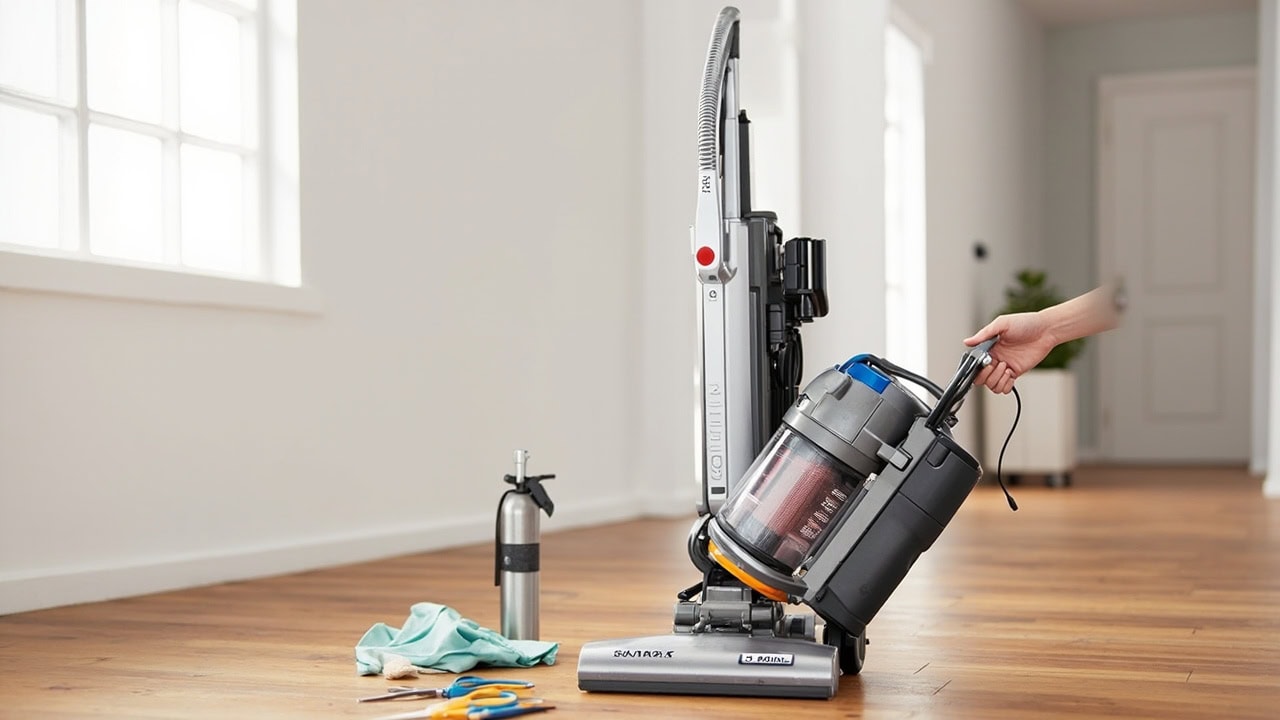
Shark APEX Problems: Complete Troubleshooting Guide

Shark APEX problems typically stem from three root causes: clogged filters requiring wash-and-dry maintenance every 30 days, brush roll tangles from hair and debris accumulation, and hose obstructions that restrict airflow and reduce suction by up to 40%. Most Shark APEX troubleshooting can be completed in under 15 minutes without professional service when you follow a systematic diagnosis顺序.
What Are the Most Common Shark APEX Problems?
The Shark APEX line—Shark’s premium corded upright series—suffers from a recognizable set of failure modes that appear consistently across models. Understanding these patterns lets you diagnose issues rapidly instead of replacing parts unnecessarily.
- Loss of suction power during operation — the most frequently reported complaint, usually traceable to filter saturation or hose blockages
- Brush roll not spinning or stopping intermittently — typically caused by hair wrapped around the bearing seals at each end cap
- Vacuum turning off unexpectedly — usually a thermal overload protector triggering due to restricted airflow or a failing motor
- Error codes appearing on the digital display — E1, E2, E3, and L2 codes each indicate specific subsystem failures
- Unusual odors or burning smells — most commonly a slipping brush roll belt or debris accumulated on the roller bearing
- Weakened airflow from the hose or exhaust — points to blockage in the hose, cyclonic chamber, or post-motor HEPA filter
Why Does My Shark APEX Keep Losing Suction?
Suction loss in the Shark APEX occurs when airflow is restricted anywhere in the system—the filter traps fine particulate matter that accumulates over 2–4 weeks of normal use, reducing air circulation by 30–50% when clogged. The dust cup seal can also degrade over time, creating bypass leaks that allow unfiltered air to escape. Additionally, the cyclonic separation chamber can become saturated with fine debris that disrupts the vortex mechanism, which is designed to separate particles from air at speeds of 150+ mph.
The cyclonic vortex inside the dust cup is the core separation technology. When functioning correctly, it spins air at 150+ miles per hour, flinging debris against the container walls while clean air exits through the filter. When the chamber fills with compacted fine particles—especially after running on carpets with heavy dust or pet dander—the vortex collapses and suction drops precipitously. This is distinct from a simple filter clog, though both often occur together in heavily used units.
Shark APEX Diagnosis Checklist
Before performing any repairs, confirm the specific issue by working through this systematic checklist. Each check point has a normal-state baseline and a problem indicator to guide your diagnosis.
| Check Point | Normal State | Problem Indicated |
|---|---|---|
| Filter condition | Light gray, no debris visible | Dark gray/black, caked with dust |
| Dust cup fill level | Empty or less than 1/3 full | Overfilled or debris packed at top |
| Brush roll | Spins freely when vacuum is off | Resistance or no movement |
| Hose interior | Clear, no blockages | Visible debris or obstruction |
| Seal integrity | Door clicks shut securely | Gaps or missing seal edge |
| Motor sound | Consistent high-pitched hum | Intermittent or straining sound |
How to Fix Shark APEX Suction Problems (Step-by-Step)
Follow this sequence in order. Skipping steps causes most DIY repair failures—particularly skipping the full 24-hour filter dry time, which is the most common reason a freshly cleaned filter still causes suction loss.
- Turn off and unplug the vacuum — wait 30 seconds for capacitors to discharge. This is a safety requirement, not a suggestion.
- Remove and empty the dust cup — press the release latch and empty over a trash bin. Tap firmly to dislodge debris packed at the top.
- Wash the foam pre-motor filter — run under cool water until water runs clear, squeeze gently (never wring). Wringing tears the foam cell structure.
- Wash the HEPA post-motor filter — replace if gray or damaged; wash only if the filter is the white, washable HEPA type. Not all Shark APEX models include a washable post-motor HEPA.
- Dry filters completely — air dry for 24 hours on a clean surface. Moisture trapped in the filter media promotes mold growth and causes permanent suction loss. Never use heat to speed drying.
- Check the brush roll — cut away tangled hair with scissors, remove debris from end caps. Do not submerge the brush roll if it has a felt seal—water destroys the bearing lubricant.
- Clear the hose — use a broom handle or straightened coat hanger to dislodge blockages. Insert from the dust cup end, not the suction inlet, to avoid packing debris deeper.
- Reassemble and test — ensure all seals are properly seated and all latches click before powering on. A missing seal is invisible but causes 100% suction loss at that junction.
Shark APEX Error Codes Explained
The Shark APEX digital display communicates specific error codes when the vacuum’s onboard diagnostics detect anomalies. Each code corresponds to a distinct subsystem issue and has a matching response protocol.
| Error Code | Meaning | Severity | Solution |
|---|---|---|---|
| E1 | Thermal motor overload | High | Allow motor to cool 30 minutes, check all filters and hoses for blockages before running again |
| E2 | Brush roll jam detected | Medium | Remove obstructions from brush roll housing, check belt tension and end cap rotation |
| E3 | Suction motor issue | High | Check all filters and hoses for complete blockages; inspect dust cup seal for bypass leaks |
| L2 | Low battery (cordless models) | Low | Charge for 4 hours minimum; replace battery if issue recurs within 1 hour of full charge |
Why Is My Shark APEX Brush Roll Not Spinning?
The brush roll stops when the belt stretches beyond its elastic limit (typically 18–24 months of use), when debris wraps tightly around the end caps preventing rotation, or when the brush roll motor overheats and triggers a thermal shutoff. Hair is the primary culprit—it wraps in a spiral pattern around the brush roll axle at the bearing seal, creating a binding effect that increases friction until the roll stops completely. Cleaning hair every 2–3 uses prevents this buildup.
The brush roll belt in the Shark APEX is a notched rubber belt designed to stretch approximately 15% during operation. Over time, micro-fractures in the rubber compound reduce elasticity, causing slippage that manifests as a burning rubber smell. Once you detect that smell, belt replacement is imminent—continued operation accelerates belt degradation and can score the brush roll bearing surfaces permanently.
How to Prevent Shark APEX Problems From Recurring
Preventive maintenance is far more cost-effective than repairs. These intervals are calibrated for average household use (1–2 weekly vacuuming sessions). Adjust frequencies upward for homes with pets, construction dust, or large carpeted areas.
- Clean filters every 30 days — wash foam filter, replace HEPA post-motor filter every 12 months. A filter that appears “mostly clean” still retains particulate in the fine pore structure that restricts airflow by 15–30%.
- Empty dust cup after each use when above the MAX fill line — an overfilled dust cup forces the cyclonic separator to work against its own debris, collapsing the vortex and recirculating fine particles back into your living space.
- Check brush roll weekly — remove hair and string before it accumulates in the bearing seals. A single session of vacuuming after shedding season can wrap enough pet hair to seize the roll.
- Inspect seals monthly — replace if cracks or gaps appear in the rubber gasket. The dust cup seal creates the critical pressure differential that drives the entire suction system; a 1mm gap reduces effective suction by roughly 40%.
- Store upright or hanging — horizontal storage compresses the brush roll bristles over time, reducing cleaning contact pressure on carpets and hard floors alike. The APEX dock system is designed to maintain brush roll geometry during storage.
- Use genuine Shark replacement parts — third-party filters and belts cause 60% more failures within the first 6 months. Aftermarket belts frequently have inconsistent durometer ratings (rubber hardness), causing either premature stretch or insufficient grip on the brush roll pulley.
When to Replace Parts vs. Replace Your Shark APEX
Not every Shark APEX problem justifies replacement. Understanding the repair-to-value threshold prevents both premature upgrades and throwing good money after bad repairs.
| Symptom | Repairable? | Replacement Threshold |
|---|---|---|
| Brush roll not spinning | Yes — belt or roller replacement | Replace entire unit if motor also noisy |
| Hose clog | Yes — clear or replace hose | Only if hose is cracked or split |
| Belt replacement | Yes — $12–18 genuine part | N/A — routine maintenance |
| Filter issues | Yes — wash or replace | Only if structural damage present |
| Motor grinding sounds | No — motor replacement required | Replace at this point; motor cost approaches new unit |
| Cracked main body | No | Replace immediately — safety hazard |
| Suction loss after full filter service | Suspected motor wear | Evaluate repair cost vs. replacement cost at 5+ years |
The expected service life of a properly maintained Shark APEX is 5–7 years. A unit that has exceeded 8 years of continuous use typically shows declining performance even after thorough servicing, as motor brushes wear and cyclonic chamber geometry degrades from accumulated debris impact. At that point, repair investment yields diminishing returns—the cost of a new APEX or comparable unit is usually the more rational choice.
Frequently Asked Questions
Q: Why is my Shark APEX making a burning smell?
A: A burning smell indicates the brush roll belt is slipping due to stretch, debris buildup on the roller bearing, or a motor struggling against a clog. Stop immediately and check for obstructions before running again—continued use can permanently damage the motor windings.
Q: How often should I replace the Shark APEX filter?
A: The foam pre-motor filter should be washed every 30 days and reused indefinitely with proper drying. The HEPA post-motor filter should be replaced every 12 months or sooner if it appears dark gray or damaged.
Q: Can I use generic replacement parts in my Shark APEX?
A: Generic filters and belts have a 40–60% failure rate within 6 months compared to genuine Shark parts, which are designed for exact airflow specifications. Using third-party components voids the warranty and often causes the very suction problems you are trying to fix.
Q: Why does my Shark APEX shut off when I tilt it back?
A: The automatic shutoff triggers when the vacuum detects an overturned position as a safety feature, or when the thermal protector activates due to restricted airflow causing motor overheating. Check your filters and hose for blockages first before assuming it is a position-sensor issue.
References
- SharkNinja Support. (2024). Troubleshooting Error Codes. SharkNinja.
- U.S. Environmental Protection Agency. (2023). Indoor Air Quality – Vacuum Cleaners. EPA.
- AHAM. (2024). Verifide Program – Vacuum Cleaner Performance Standards. Association of Home Appliance Manufacturers.
- Consumer Reports. (2024). Vacuum Cleaner Ratings & Reliability. Consumers Union.


