
Why Do Clothes Smell After Washing? Complete Diagnosis

Clothes smell after washing because bacteria break down sweat and body oils into volatile organic compounds — a process accelerated by trapped moisture and detergent residue inside the drum and fabric fibers. The most common culprit is biofilm buildup inside the washing machine drum, which shelters odor-producing microorganisms that transfer to clothes during every wash cycle. Hard water minerals combine with leftover surfactant to form soap scum that traps bacteria against fabric, while damp, poorly ventilated laundry areas create the warm, humid conditions these microbes need to thrive.
What Causes Clothes to Smell After Washing?
Post-wash odor traces back to a handful of interacting factors, and addressing the root cause — not just masking the smell — is the only reliable fix. Research published in Microorganisms found that household washing machines harbor diverse microbial communities, including Pseudomonas, Staphylococcus, and Bacillus species, which survive standard cold-water cycles and colonize fabrics during the wash. These bacteria feed on skin cells, sebum, and residual body oils trapped in fabric fibers, producing the sour, musty, or damp smells that persist even after detergent has been used.
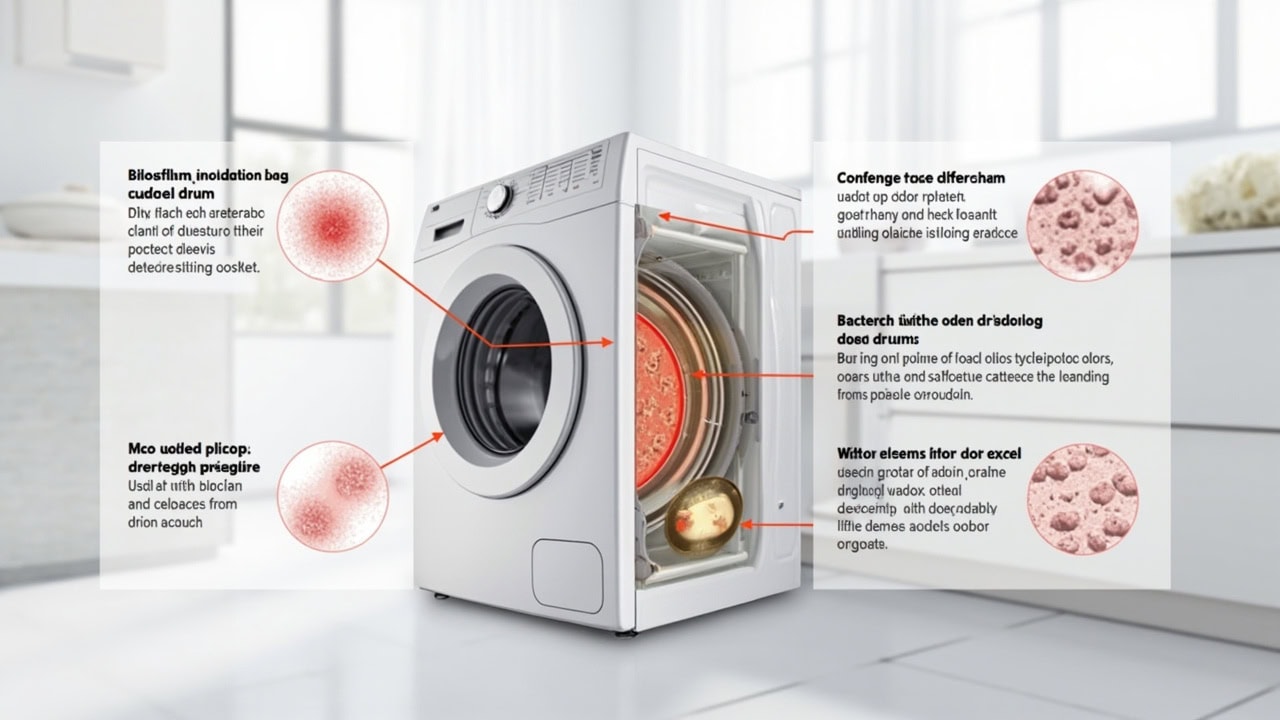
Biofilm accumulation inside the drum and along the rubber door gasket is the single largest contributor. Biofilm is a slimy, structured layer of bacteria encased in a protective extracellular matrix that adheres to the stainless-steel drum surface, the rubber seal, and the inside of detergent dispensers. Once established, this colony continuously sheds bacteria into the wash water, recontaminating every load. A 2024 metabarcoding study of household washing machines in Shanghai identified over 300 operational taxonomic units in drum biofilm samples, confirming that the machine itself functions as a reservoir for odor-producing microbes.
Detergent overdose worsens the problem. When more detergent is added than the wash cycle can fully dissolve and rinse away, the excess combines with minerals in hard water — primarily calcium and magnesium ions — to form soap scum. This scum clings to both the drum and fabric fibers, creating a sticky film that traps bacteria and prevents thorough rinsing. In homes with hard water (above 7 grains per gallon), this interaction accelerates significantly. The result is a musty, sour odor that builds up over successive washes.
Incomplete drying is the third major cause. Clothes left damp for even a few hours after the wash cycle ends provide the moisture bacteria need to continue metabolizing residue on the fabric. Studies show that bacteria multiply fastest between 77°F and 113°F (25°C–45°C) — precisely the temperature range of a warm laundry pile sitting in a basket or inside a closed machine. Mold spores from damp laundry closets can also settle on freshly washed clothes, adding a secondary mildew note to the smell.
Overloading the machine compounds every one of these problems. A packed drum prevents water from circulating freely through the load, reducing both mechanical agitation and the rinse efficiency needed to flush out detergent, bacteria, and debris. For a complete guide on proper machine loading and other laundry care best practices, see the Laundry & Fabric Care Hub.
The Science Behind Post-Wash Odor
Understanding the biology behind the smell helps explain why simply re-washing with more detergent does not fix the problem. Pseudomonas aeruginosa, one of the most common bacteria found in washing machines, produces volatile sulfur compounds and organic acids as metabolic byproducts — these are responsible for the characteristic “sour” odor on freshly laundered clothes. Staphylococcus species, naturally present on human skin, contribute fatty-acid breakdown products that smell rancid or stale. Bacillus species form heat-resistant spores that survive even warm-water washes, reactivating once clothes return to a moist environment.
The biofilm these organisms produce is a structured community encased in an extracellular polymeric substance (EPS) matrix. This matrix acts as a physical barrier that shields bacteria from detergents and dilute disinfectants, which is why a standard cold-water wash — even with a quality enzymatic cleaner — fails to eradicate the colony. Research published in BMC Biology in 2025 confirmed that malodour in laundry is directly correlated with the composition of the microbial community in the washing machine, not just the cleanliness of the fabric itself.
Temperature plays a decisive role. Bacteria thrive between 77°F and 113°F (25°C–45°C), and most cold-water washes run at 60°F–75°F (15°C–24°C) — cool enough to slow growth but not cold enough to kill. A study in the journal Molecules demonstrated that adding hydrogen peroxide as a laundry booster at low temperatures (104°F / 40°C) achieved significant bacterial reduction, but plain cold water alone left over 80% of colonies intact. Only sustained temperatures above 140°F (60°C) reliably reduce bacterial counts by more than 99%, which is why manufacturers and cleaning authorities recommend periodic hot-water maintenance cycles.
Enzymatic activity compounds the issue in damp environments. Even after the wash cycle ends, residual enzymes from detergent continue to break down organic matter on the fabric, producing small-molecule byproducts that bacteria readily consume. In a moist, enclosed drum with the door closed, this cycle continues for hours, giving freshly washed clothes a head start on developing odor before they are even removed from the machine. If your machine has drainage issues that leave standing water in the drum, this effect intensifies — see Why Is My Washing Machine Not Draining? for troubleshooting steps.
Diagnosis Checklist: Identifying the Source of Your Odor
Before treating the problem, isolate where the smell originates. Follow these six diagnostic steps in order to pinpoint the cause quickly.
- Run an empty hot water cycle with 2 cups of white vinegar. If you detect a sour or musty smell during or after this cycle, the drum itself harbors active biofilm. The vinegar (pH 2.5) dissolves mineral scale and loosens organic residue, making any remaining odor easy to detect.
- Inspect the rubber door gasket. Pull back the folds of the gasket on a front-loading machine and look for slimy residue, discoloration, or visible black mold. A fouled gasket is a direct source of odor transfer to clothes and must be cleaned or replaced.
- Smell clothes immediately after removing them from the dryer. If the odor is already present at this point, the source is in the fabric itself — likely bacteria embedded in fibers that survived both the wash and the heat of the dryer cycle.
- Check whether the odor appears after clothes sit in the laundry basket. If clothes smell fresh out of the dryer but turn musty after sitting folded for a day, incomplete drying is the culprit. Residual moisture in thick fabrics like towels and jeans provides the breeding ground.
- Examine the detergent dispenser. Remove the drawer and check for residue buildup, standing water, or pink/black slime. A contaminated dispenser feeds bacteria directly into the wash water at the start of every cycle.
- Test your water hardness. Use an inexpensive test strip (available at hardware stores). Readings above 7 grains per gallon (120 mg/L CaCO₃) indicate hard water that accelerates soap scum formation and traps hard water deposits inside the machine.
How to Eliminate Washing Machine Odor
Once you have identified the odor source, follow these six steps to remove existing contamination and restore the machine to a clean baseline.
- Clean the drum. Run an empty hot wash at 160°F (71°C) with 2 cups of white vinegar. The combination of heat and acetic acid dissolves biofilm, mineral scale, and detergent residue in a single cycle. For stubborn odors, use a commercially available washing machine cleaner tablet containing sodium percarbonate or citric acid instead.
- Scrub the gasket. Prepare a diluted bleach solution at a 1:10 ratio (1/4 cup bleach to 2¼ cups water). Wearing gloves, wipe the entire rubber seal, paying close attention to the inner folds and crevices where biofilm accumulates. Rinse thoroughly with clean water and dry with a cloth.
- Clean the detergent drawer. Remove the dispenser drawer entirely and soak it in hot water with a small amount of dish soap or a pH-neutral cleaning solution for 15 minutes. Scrub away residue with an old toothbrush, then rinse and reinstall.
- Leave the door open between loads. Allow the drum to air dry completely after every wash. On front-loaders, keep the door ajar; on top-loaders, prop the lid open. This single habit prevents biofilm re-establishment by eliminating the moisture bacteria require.
- Run a hot water wash weekly. At least one load per week should use the hottest water setting available on your machine. Hot water disrupts bacterial colonies before they can mature into established biofilm.
- Wipe the door glass after every load. Use a dry cloth to remove condensation and trapped lint from the interior of the door glass and the lip of the seal. This prevents moisture from pooling in the gap where the door meets the gasket.
Preventing Future Odor in Clean Laundry
Eliminating an existing odor is only half the battle — preventing its return requires consistent habits and correct machine operation. The following practices keep bacteria from re-establishing a foothold in your machine and fabrics.
- Remove clothes from the washer as soon as the cycle completes. Even 30 minutes of damp fabric sitting in a closed drum gives bacteria enough time to begin producing odor compounds again.
- Shake garments before loading them into the dryer. This separates tangled items, improves air circulation through the load, and reduces drying time — all of which limit bacterial activity.
- Avoid overloading both the washer and the dryer. Clothes need room to tumble freely for proper mechanical cleaning and thorough drying. A full drum should be no more than three-quarters full.
- Use the correct amount of detergent for your water hardness and load size. High-efficiency (HE) machines require HE-formulated detergent, which produces fewer suds and rinses more completely than standard detergent. Using regular detergent in an HE machine leaves behind precisely the residue that feeds odor-causing bacteria.
- Clean the dryer lint trap after every load. A clogged lint screen restricts airflow, extending drying time and leaving residual moisture in fabrics that promotes odor development.
- Consider adding a laundry sanitizer or a half-cup of white vinegar to the rinse cycle once a month as a preventive measure, particularly if you wash mostly in cold water.
For persistent towel odor specifically — a common complaint related to the same bacterial mechanisms — see How to Remove Musty Smell from Towels for a targeted treatment protocol. If odor issues overlap with stain treatment challenges, the Stain Removal Hub covers pre-treatment methods that reduce the organic load entering the wash, giving bacteria less fuel to produce smell.
When to Deep Clean vs. Replace Parts
Not every odor problem requires the same level of intervention. Use this table to determine whether a routine deep clean will solve the issue or whether a component needs replacement.
| Issue | Solution |
|---|---|
| Light odor, visible residue on drum | Deep clean with 2 cups white vinegar or a washing machine cleaner tablet in a hot empty cycle (160°F / 71°C) |
| Black mold visible on rubber gasket | Scrub gasket with 1:10 bleach solution; replace the seal if staining is permanent or the rubber is cracked |
| Persistent odor after thorough cleaning | Check and clean the drain filter for trapped debris, lint, and standing water — this hidden area often harbors colonies |
| Rubber gasket older than 5 years | Replace the door seal entirely. Aged rubber develops microscopic fissures that embed biofilm beyond the reach of surface cleaning |
| Front-loader musty smell that returns within days | Install a washing machine vented drain box with an air gap if one is not present; stagnant water in the drain line is the likely source |
Frequently Asked Questions
Q: Why do my clothes smell sour even after washing with detergent?
A: Sour odor on clean clothes indicates bacterial residue in the washing machine drum or biofilm on the door gasket. Bacteria like Pseudomonas aeruginosa produce organic acids and sulfur compounds as metabolic byproducts that detergent alone does not neutralize. Run an empty hot wash with 2 cups of white vinegar at 160°F (71°C) and scrub the rubber seal with a 1:10 bleach solution to eliminate the source.
Q: Can hard water cause clothes to smell after washing?
A: Yes. Hard water minerals — primarily calcium and magnesium ions — react with detergent surfactants to form soap scum. This scum adheres to both the drum surface and fabric fibers, trapping odor-causing bacteria in a residue that standard rinse cycles cannot fully remove. Over multiple washes, the accumulated scum produces a persistent musty smell. Using a water softener or switching to a detergent formulated for hard water reduces soap scum formation.
Q: How do I prevent clothes from smelling musty in the dryer?
A: Clean the dryer lint trap after every load to maintain full airflow, avoid overloading the dryer so clothes tumble freely, and remove garments immediately when the cycle completes. A clogged lint screen restricts air circulation, extending drying time and leaving residual moisture in thick fabrics. That moisture, combined with the warmth inside the dryer, creates ideal conditions for bacterial growth and musty odor on otherwise clean laundry.
Q: How often should I clean my washing machine to prevent odors?
A: Perform a deep clean with white vinegar or a washing machine cleaner tablet once per month using the hottest water setting available (ideally 160°F / 71°C). Wipe the door gasket and interior glass after each load, and always leave the door open between washes to allow the drum to dry completely. This monthly maintenance cycle prevents biofilm from maturing into an established colony that resists routine cleaning.
References
- Chen, T., et al. (2024). Metabarcoding Analysis of Microorganisms Inside Household Washing Machines in Shanghai, China. Microorganisms, 12(2), 288. PMID: 38257987.
- Tavčer, P. F., et al. (2021). Influence of Hydrogen Peroxide on Disinfection and Soil Removal during Low-Temperature Household Laundry. Molecules, 27(1), 35. PMID: 35011427.
- Díez López, C., et al. (2025). Unravelling the Hidden Side of Laundry: Malodour, Microbiome and Pathogenome. BMC Biology, 23, 42. PMID: 39924526.
- Zinn, M. K., et al. (2022). A Comprehensive View of Microbial Communities in the Laundering Cycle Suggests a Preventive Effect of Soil Bacteria on Malodour Formation. Microorganisms, 10(7), 1374. PMID: 35889184.


