
How to Clean Hardwood Floors: Step-by-Step for Every Finish

Hardwood floors must be cleaned using a pH-neutral cleaner at a 1:20 dilution ratio and a barely-damp microfiber mop to prevent water penetration between boards that causes warping and finish etching. The process begins with dry debris removal using a microfiber sweep or vacuum with a hardwood attachment, followed by damp-mopping with the cleaner solution, and concludes with immediate air circulation for drying. Different finish types—polyurethane, penetrating seal, wax, and unfinished—require specific pH-neutral or mineral-water-only cleaning approaches to maintain their appearance and structural integrity.
What You Need Before You Start
Gathering the correct tools and products before you begin prevents mid-cleaning trips that leave standing water on the floor—a critical mistake that leads to cupping and warping. Hardwood-safe cleaning requires precision equipment that controls moisture at every stage.
Tools
- Microfiber mop or mop with removable washable heads
- Soft-bristle dust broom or vacuum with hardwood/floor attachment
- Spray bottle for targeted cleaning of stubborn spots
- Two buckets: one for the cleaning solution, one for rinsing (if needed)
Cleaning Agents
- pH-neutral hardwood floor cleaner diluted at 1:20 (1 part cleaner to 20 parts water) for standard polyurethane finishes
- Distilled water for rinsing sticky residues without introducing tap water minerals
- Mineral water for sensitive finishes including wax and penetrating seal—its low mineral content prevents residue buildup on soft sheen surfaces
Dilution Ratios
- Standard dilution (polyurethane, oil-based): 1 part cleaner to 20 parts water
- Sensitive finish dilution (wax, penetrating seal, older floors): 1 part cleaner to 40 parts water, or mineral water only
What to Avoid
- Steam mops — heat and moisture penetrate the finish and cause bond failure between boards
- Excessive water — even clean water left standing infiltrates gaps between boards
- Vinegar and acidic cleaners — vinegar’s pH of 2.5–3.0 etches finish surfaces and strips natural oils from wood fibers
- Ammonia-based cleaners — degrade water-based polyurethane finishes on contact
- Abrasive scrubbers — steel wool and stiff brushes create micro-scratches that collect dirt
- Oil soaps — leave residue that bonds to the finish and requires harsh strippers to remove
Step-by-Step Cleaning Process
Hardwood floor cleaning follows a strict sequence. Skipping the dry debris removal step is the most common mistake—grit ground into the finish creates micro-scratches that permanently dull the surface. Every step matters, and the barely-damp technique贯穿整个湿拖阶段.
- Remove dry debris: Sweep or vacuum the entire floor to eliminate grit, dust, and pet hair that act as abrasives during mopping. Work from the farthest corner toward the exit so you do not track debris back onto cleaned areas. A vacuum with a hardwood attachment is preferred because it lifts particles rather than scattering them.
- Prepare cleaning solution: Mix pH-neutral hardwood floor cleaner with warm water (not hot) at a 1:20 ratio in a bucket. Warm water improves cleaning efficacy for light grease residues. For wax-finished or penetrating seal floors, skip the cleaner entirely and use plain distilled or mineral water at room temperature.
- Test in inconspicuous area: Apply a small amount of solution to a hidden floor section—inside a closet, under a rug, or in a corner behind furniture—and wait 2 minutes. Check for any finish discoloration, softening, or clouding before proceeding. This test is non-negotiable for floors older than five years or any time you switch cleaning products.
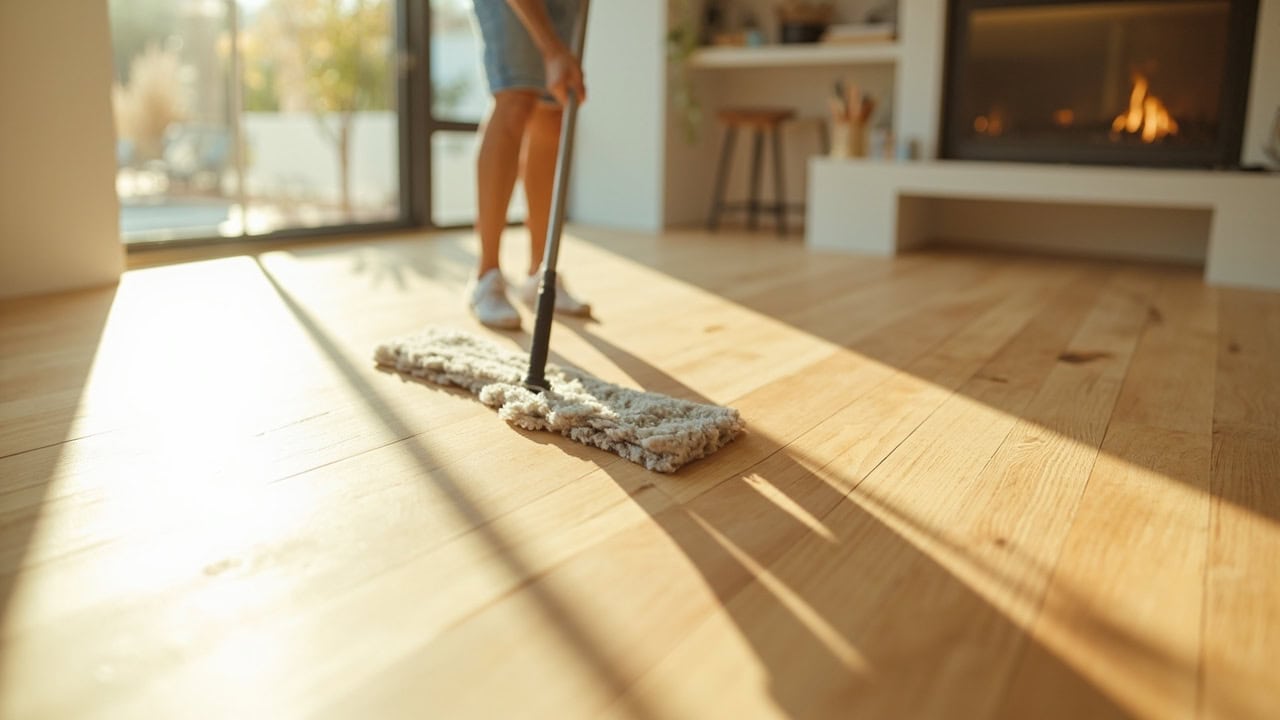
- Mop using barely-damp technique: Dip the microfiber head into the cleaning solution, then wring it out thoroughly until the fabric is nearly dry—it should leave no visible moisture trail on the floor. Mop in the direction of the wood grain using overlapping strokes, working in small sections. Overlap each stroke by approximately 30% to avoid streaking and ensure even coverage.
- Address stubborn spots: For adhesive residues, dried pet accidents, or scuff marks, spray the affected area with pH-neutral cleaner and let it dwell for 30 seconds. Gently agitate with a soft cloth or a non-abrasive nylon pad using circular motions. Never scratch with stiff brushes or razor blades, even for paint splatters—solvent-safe scrapers designed for wood floors are the only appropriate tool.
- Rinse if required: For areas with sticky residue or heavy soil buildup, go over the section with a fresh water-only damp mop immediately after scrubbing. Use the same barely-damp technique—still wrung nearly dry—to prevent residue redeposition.
- Dry immediately: Open windows, use portable fans, or turn on ceiling fans to circulate air and achieve surface-dry status within 2–3 minutes. Never allow the floor to air-dry naturally—still air allows water to pool in board gaps and seams. Position fans at floor level for maximum air exchange across the surface.
Hardwood Floor Finish Considerations
Every hardwood floor finish has a different chemical vulnerability. Using the wrong cleaner or dilution ratio can dull a finish permanently or, in the case of wax floors, dissolve the protective layer entirely. Match your approach to your floor’s finish type before you begin mopping.
| Finish Type | Safe Cleaners | Avoid | Notes |
|---|---|---|---|
| Polyurethane (water-based) | pH-neutral at 1:20 | Vinegar, ammonia, steam mops | Most common finish; most durable. Resists mild acids at proper dilution. |
| Polyurethane (oil-based) | pH-neutral at 1:20 | Abrasives, mineral spirits | Amber tone deepens over time; longer cure time of 7–30 days after application. |
| Penetrating seal | pH-neutral at 1:40 or mineral water | Excess water, acidic cleaners | Natural look showcases wood grain; requires re-sealing every 3–5 years in high-traffic areas. |
| Wax finish | Mineral water only | Water-based cleaners, pH agents | Soft sheen; paste wax maintenance required every 6–12 months to sustain protection. |
| Unfinished/natural | pH-neutral at 1:20 | Any prolonged water exposure | Requires sealing immediately after cleaning—bare wood absorbs liquid rapidly and stains permanently. |
Drying and Finishing Hardwood Floors
Drying is not a passive wait—it is an active process that prevents the most common and costly hardwood floor damage. Water that sits on a hardwood surface for more than a few minutes begins to infiltrate through seams and micro-cracks in the finish, reaching the wood substrate below.
- Never allow water to pool or stand on hardwood—wipe immediately with a dry microfiber cloth if you see any puddling, even small amounts
- Target air circulation for 2–3 minutes post-mopping to achieve surface dryness before the floor can absorb ambient moisture from the air
- For wax-finished floors: buff with a clean, soft cotton cloth after mineral water cleaning to restore shine and redistribute the wax layer evenly across the surface
- Apply floor polish or restorer only to polyurethane floors if dulling occurs—test on a scrap piece or inconspicuous area first, as some polishes create a film incompatible with the existing finish
- Re-seal high-traffic areas or unfinished floors within 24 hours if cleaning exposed bare wood—unsealed wood begins absorbing ambient moisture immediately and can swell or stain within hours
Common Mistakes to Avoid
These errors cause the majority of preventable hardwood floor damage. Every one of them is avoidable with proper technique and the right cleaning products.
Using vinegar or acidic cleaners
Vinegar’s acetic acid (pH 2.5–3.0) etches polyurethane finishes on contact, creating dull spots that cannot be polished out without full refinishing. The same acidity strips natural oils from exposed wood fibers in gaps, seams, and at board edges where the finish is thinnest. Even diluted vinegar solutions—commonly recommended online for tile cleaning—permanently damage hardwood within the first few applications.
Over-wetting the mop
A mop that leaves visible moisture on the floor delivers far more water than hardwood can safely absorb through its finish layer. The average hardwood board absorbs 0.1–0.3 liters of water per square meter before visible saturation, and once that threshold is crossed, cupping (upward curvature at board edges) and crowning (downward curvature at board centers) occur within 24–48 hours. Severe over-wetting causes irreversible board warping that requires replacement.
Skipping dry debris removal
Grit particles as small as 50 micrometers—barely visible dust—act as industrial-grade abrasives when walked across a hardwood floor. Each footstep grinds these particles into the finish, creating micro-scratches that are invisible individually but collectively produce a dull, hazy appearance that accumulates over months. This damage cannot be removed without mechanical buffing or full refinishing.
Using steam mops
Steam mop surfaces reach 120–140°C at the mop head, well above the glass transition temperature of most polyurethane finishes (60–80°C). This heat softens the finish and opens micro-cracks that allow steam condensation to infiltrate between boards. The combination of heat and trapped moisture causes finish bond failure, joint separation, and in severe cases, shell delamination where the finish layer separates from the wood substrate entirely.
Neglecting entry mats
Studies on floor care in residential settings consistently identify tracked-in debris as the primary source of finish abrasion. An entry mat without a proper walk-off zone (minimum 3–4 feet of mat surface before reaching the hardwood) provides inadequate debris removal—one step onto the floor from the mat still transfers 40–60% of particulate matter onto the hardwood surface. Place walk-off mats at every entry point and clean them regularly; a debris-filled mat is as damaging as no mat at all.
Frequently Asked Questions
Q: Can I use vinegar to clean hardwood floors?
A: No—vinegar is acidic (pH 2.5–3.0) and causes permanent etching on hardwood finishes while stripping natural oils from the wood fibers. Use a pH-neutral cleaner diluted at 1:20 instead, or mineral water for sensitive wax finishes.
Q: How often should hardwood floors be cleaned?
A: Dry sweep or vacuum high-traffic areas daily, damp-mop with pH-neutral cleaner weekly, and perform deep cleaning monthly. Homes with pets or children may require twice-weekly damp mopping to prevent ground-in debris accumulation.
Q: Will water damage my hardwood floors?
A: Standing water causes cupping, crowning, and board warping within 24–48 hours of exposure. Hardwood absorbs water through gaps between boards and finish layers, causing expansion that permanently distorts the floor surface.
Q: What is the best mop for hardwood floors?
A: A microfiber flat mop with a removable, washable head provides the best results because it traps debris without scratching, releases minimal water, and can be laundered to remove accumulated dirt that causes micro-scratching.
References
- National Wood Flooring Association. (NWFA). Floor Care Guidelines. https://www.nwfa.org/floor-care-guidelines
- Bona. How to Clean Hardwood Floors. https://www.bona.com/us/floor-care/how-to-clean-hardwood-floors/
- The Spruce. How to Clean Hardwood Floors. https://www.thespruce.com/how-to-clean-hardwood-floors-4178596
- U.S. Environmental Protection Agency (EPA). Guidance for Cleaning and Disinfecting. https://www.epa.gov/coronavirus/guidance-cleaning-and-disinfecting-buildings-facilities-and-schools
- American Society of Building Services (ASB). Floor Care Standards and Best Practices. https://www.nsf.org/consumer-resource-education/education-resources


