
How to Clean Laminate Floors Without Damaging Them

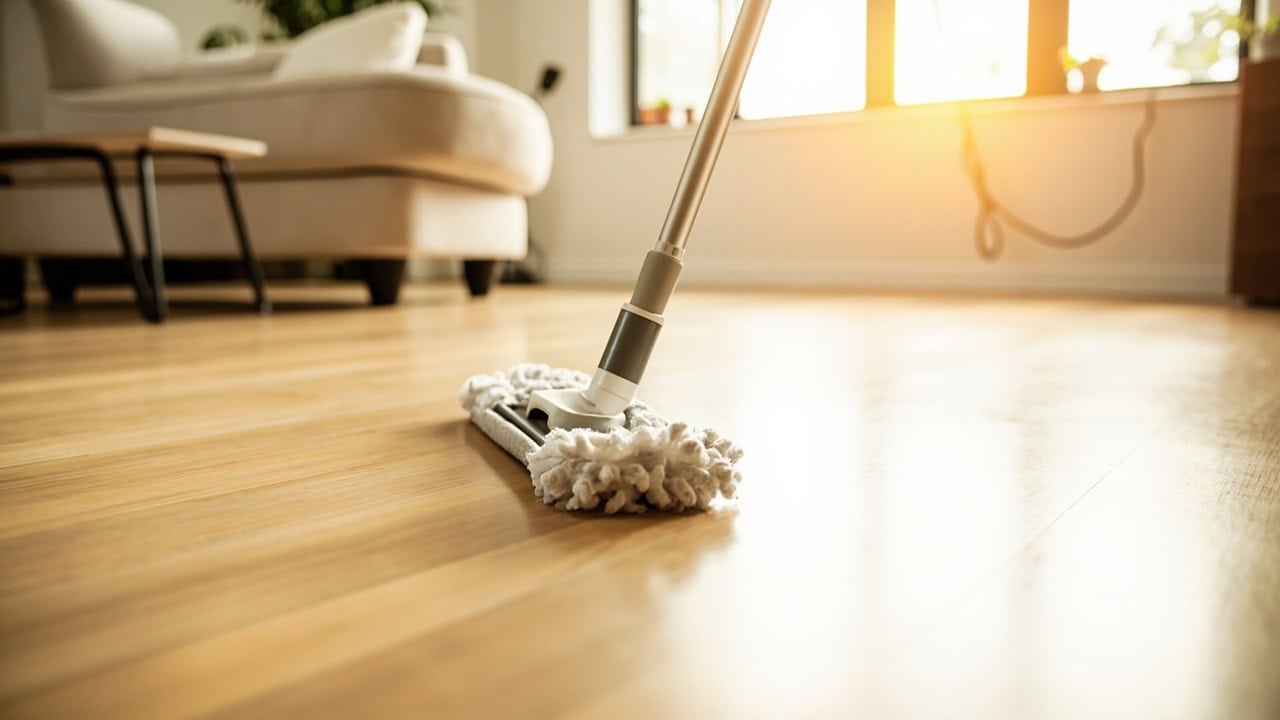
Laminate floors must be cleaned with a pH-neutral cleaner at a dilution ratio of 1:20 and a barely-damp microfiber mop to prevent water penetration between planks that leads to swelling and delamination. Avoid steam mops, acidic cleaners, and abrasive scrubbers that etch the melamine surface and strip the protective overlay. The key to maintaining laminate longevity is using minimal moisture and following a specific cleaning sequence that prevents debris from scratching the floor during mopping.
Unlike hardwood floors that can tolerate some moisture with proper sealing, laminate flooring has a semi-permeable surface that allows water vapor transmission — meaning excess moisture accumulates in the core layer rather than evaporating. This structural difference makes laminate significantly more vulnerable to water damage and requires a fundamentally different cleaning approach centered on cleaning chemistry principles rather than aggressive scrubbing.
What You Need Before You Start
Gathering the correct supplies before beginning ensures you won’t have to interrupt the cleaning process to search for missing items — and using improper tools mid-cleaning is how damage occurs. Laminate floor care requires precision in both tool selection and dilution ratios that other floor types do not demand.
Tools Required
- Microfiber mop (flat head preferred) — the flat design distributes pressure evenly and reduces the risk of pushing water into seams; replace mop pads when they show visible wear or discoloration
- Soft-bristled broom or vacuum with soft brush attachment — necessary for dry debris removal before any wet cleaning; never vacuum laminate without the soft brush setting as hard roller heads can scratch the surface
- Spray bottle — for applying cleaning solution to specific spots without saturating the floor
- Bucket — for mixing the cleaning solution at the correct dilution ratio
- Soft, absorbent towels or microfiber cloths — for the final dry pass and spot treatment
Cleaning Agents
- pH-neutral laminate floor cleaner — dilute at a 1:20 ratio with warm (room temperature) water; pH-neutral means a value of approximately 7 on the pH scale, which neither etches nor streaks the melamine surface
- Isopropyl alcohol (rubbing alcohol, 70% concentration) — for stubborn spots, adhesive residue, and scuff marks; the alcohol evaporates quickly without leaving moisture behind
What to Avoid
- Steam mops — steam exceeds 200°F at the mop head, causing rapid HDF core expansion and joint separation even from a single application
- Abrasive scrubbers — steel wool, rough scrub brushes, and magic erasers create micro-scratches that accumulate and permanently dull the melamine surface
- Acidic cleaners — vinegar (pH 2.5), lemon juice (pH 2.0), and bleach weaken and etch the protective overlay over time
- Oil-based polishes and waxes — laminate has a factory-applied protective layer; topical products create a film that traps moisture and attracts dust
Pro tip: Test any new cleaner on an inconspicuous area first — apply a small amount, wait 2 minutes, wipe dry and check for surface dulling. This 2-minute test catches compatibility issues before they affect the visible floor area.
Step-by-Step Cleaning Process
Following this exact sequence prevents the most common laminate cleaning mistakes: skipping dry debris removal (which turns dirt into an abrasive paste when wet), using too much water (which seeps into seams), and failing to dry the floor after mopping (which causes water spots and prolonged moisture exposure).
- Dry debris removal: Sweep or vacuum the entire floor using a soft brush attachment to remove loose dirt, pet hair, and debris that could scratch the surface during wet cleaning. Pet hair on laminate is notably easier to remove than on carpeted surfaces — the non-porous surface prevents hair from embedding, allowing it to be swept or vacuumed completely.
- Prepare cleaning solution: Mix pH-neutral laminate cleaner with warm water at a 1:20 dilution ratio in a bucket or spray bottle — do not exceed room temperature water as hot water can affect adhesive bonds between the planks. The 1:20 ratio (approximately 2.5 ounces of cleaner per gallon of water) provides sufficient cleaning action without leaving residue.
- Pre-treat high-traffic zones: Apply the cleaning solution to areas near entryways, around furniture legs, and along baseboards where grime accumulates — allow 30 seconds of dwell time without letting it dry. The dwell time allows surfactants to break down oils and footprints before physical agitation.
- Mop in sections: Dampen the microfiber mop lightly (it should feel barely moist to the touch, not wet), mop in the direction of the plank pattern using gentle overlapping strokes. Working in the direction of the planks follows the seams and prevents pushing water across the floor surface and into the joints.
- Address stubborn spots: For adhesive residue, scuff marks, or dried spills, apply a small amount of isopropyl alcohol to a soft cloth and rub gently in circular motions — never pour liquid directly on the floor. Isopropyl alcohol at 70% concentration evaporates within 15–30 seconds, dissolving adhesives without leaving moisture behind.
- Final dry pass: Follow immediately with a dry microfiber pad or clean towel to absorb any residual moisture and prevent water spots from forming on the surface. This step is critical — laminate is not sealed at the seams, and standing water can infiltrate within 15–30 minutes of exposure.
Laminate Floor-Specific Considerations
Understanding laminate’s unique construction explains why standard floor cleaning techniques cause damage. Laminate differs fundamentally from other hard surface floors in its layered composition and moisture sensitivity — knowledge that directly informs every cleaning decision.
Water Sensitivity and the HDF Core
Laminate consists of an HDF core (High Density Fiberboard) with a melamine decorative layer and aluminum oxide protective coating. Water penetrating the seams causes the HDF core to swell by up to 15% — a permanent, irreversible change that requires individual plank replacement rather than repair. Unlike hardwood, which can often be sanded and refinished, damaged laminate cannot be restored; the swelling collapses the internal bond structure permanently.
The seam gaps between planks — typically 4–5mm expansion gaps left during installation — are intentional but also vulnerable points. These gaps allow the floor to expand and contract with humidity changes, but they also create channels for water to reach the core. This is why even a small spill that sits for 15–30 minutes can cause visible cupping or peaking between planks.
Acidic Cleaner Damage
Vinegar (pH 2.5) and lemon juice (pH 2.0) have an acidity that etches the protective overlay over time, creating micro-scratches that dull the finish and make the floor more susceptible to staining. The melamine coating is a thermosetting polymer — meaning it is hardened during manufacturing and cannot be re-hardened once its surface chemistry is altered by acid exposure.
These micro-scratches accumulate with each acidic cleaning, progressively degrading the glossy appearance. The scratched surface also becomes more hydrophilic (water-attracting), meaning subsequent water exposure spreads further and penetrates deeper before evaporation begins — accelerating the very damage the cleaning was meant to prevent.
Steam Mop Hazards
Steam temperature exceeds 200°F at the mop head, causing rapid expansion of the HDF core and joint separation even from a single application. The thermal shock is particularly damaging because it affects the entire plank simultaneously, creating stress fractures within the core that may not become visible for days or weeks after the initial application.
Manufacturers universally void warranties for steam mop damage because the use violates the fundamental moisture and temperature limitations of the product. Even “vapor” settings marketed as safe for floors produce sufficient heat at the point of contact to cause damage.
Abrasive Scratching
Micro-scratches from dirt particles trapped in incorrect pad types or from dragging furniture create a cumulative dulling effect that cannot be polished out of melamine surfaces. Unlike hardwood, which can be sanded and refinished, or vinyl, which can be polished back to clarity, laminate’s surface is a factory-applied thermoset coating that cannot be restored on-site.
The aluminum oxide layer (found in AC4 and AC5 rated laminate) provides excellent scratch resistance for normal use, but cannot withstand the sustained pressure of dragging furniture or the grinding action of abrasive particles caught under a string mop. Felt pads under furniture legs and regular dry debris removal are the primary preventive measures.
Manufacturer Compatibility
Always check the warranty requirements — most require only manufacturer-approved cleaners and may void coverage if damage results from unapproved products. The warranty is your binding agreement with the manufacturer about what constitutes acceptable care; using unapproved products is a common reason warranty claims are denied.
When the original manufacturer cleaner is unavailable, stick to pH-neutral formulas specifically labeled for laminate. General all-purpose cleaners often contain solvents or citrus extracts that can affect the decorative layer’s adhesion to the core.
Drying and Finishing Laminate Floors
The drying process is not merely a final step — it is a critical part of the cleaning that prevents the moisture damage laminate is most vulnerable to. Proper drying technique matters as much as the cleaning itself.
- Never allow cleaning solution to pool or sit on the floor — laminate is not sealed at the seams and liquid infiltration causes swelling within 15–30 minutes of exposure; even clear water can cause the HDF core to swell visibly
- Ensure adequate ventilation during and after cleaning by opening windows or running fans for 10–15 minutes to accelerate surface drying; cross-ventilation is most effective at reducing relative humidity near the floor surface
- Do not apply floor polish or wax to laminate floors — the protective layer is factory-applied and topical polishes create a film that traps moisture and attracts dust, creating the exact opposite of the desired effect
- For high-gloss laminate variants, a quick buff with a dry microfiber after cleaning restores the shine without additional products; the buffing action redistributes the factory finish micro-level and removes any residual moisture
Common Mistakes to Avoid
| Mistake | Why It Damages Laminate | Prevention |
|---|---|---|
| Using vinegar or lemon juice | Acidic pH etches protective coating, creating micro-scratches that accumulate with each use and eventually compromise the decorative layer | Use only pH-neutral cleaners (pH 7) specifically formulated for laminate |
| Over-wetting the mop | Water seeps into plank seams causing HDF core to swell up to 15% — irreversible damage requiring plank replacement | Mop should feel barely damp, not wet; wring thoroughly and replace pad if saturated |
| Steam mopping | 200°F+ heat expands HDF core and breaks adhesive bonds between layers; thermal shock creates stress fractures | Never use steam on laminate — no exceptions, regardless of marketing claims |
| Using abrasive scrubbers | Micro-scratches accumulate and dull the melamine finish permanently; scratches catch light and create a hazy appearance | Use only soft microfiber or cloth; never steel wool, magic erasers, or rough brushes |
| Skipping dry debris removal | Dirt particles act as sandpaper during wet mopping, grinding into the surface with every stroke and creating fine scratches | Always sweep or vacuum with soft brush attachment before wet cleaning |
| Applying polish or wax | Creates film that traps moisture against the seam gaps and attracts dust, creating buildup that requires harsh removal | Laminate does not need topical products; the factory finish is designed to be the only protective layer |
Regular maintenance prevents most of these mistakes from causing lasting damage. The most critical habit is immediate spill response — kitchens and bathrooms with laminate flooring require particular attention because they experience the most liquid exposure.
If you’re deciding between laminate and luxury vinyl plank for a renovation, note that vinyl tolerates standing water significantly better due to its waterproof core. However, for existing laminate, proper care extends its serviceable life substantially — many homeowners get 15–20 years of use from laminate floors with consistent proper maintenance.
Frequently Asked Questions
Q: Can I use vinegar to clean laminate floors?
A: No, vinegar should never be used on laminate floors because its pH of 2.5 is acidic enough to etch the protective melamine coating over time, creating micro-scratches that dull the finish and make the floor more susceptible to staining and moisture infiltration. Even diluted vinegar solutions cause cumulative damage that becomes visible only after many applications.
Q: How often should laminate floors be cleaned?
A: Laminate floors should be dry-cleaned (swept or vacuumed) 2–3 times per week and wet-mopped with a pH-neutral cleaner once every 1–2 weeks depending on foot traffic — high-traffic areas like entryways may require more frequent cleaning to prevent abrasive dirt buildup. In homes with pets, increase sweeping frequency to daily in high-traffic zones to manage pet hair and the grit it collects.
Q: Why is my laminate floor still dirty after mopping?
A: Dirty mop technique is the most common cause — if the microfiber pad is already contaminated with debris, you’re simply redistributing dirt across the floor; rinse the pad frequently in clean water and replace pads when they appear worn or discolored. A simple test: if the pad doesn’t feel clean against your hand, it won’t clean the floor. Multiple pads allow you to rinse one while using a fresh one.
Q: How do I remove sticky residue from laminate floors?
A: Apply a small amount of isopropyl alcohol (rubbing alcohol) to a soft cloth and gently rub the sticky area in circular motions for 15–30 seconds — the alcohol breaks down the adhesive without damaging the laminate surface, then immediately wipe dry with a clean microfiber cloth. For particularly stubborn residue, allow the isopropyl alcohol to dwell for a full 60 seconds before wiping.
References
- wikipedia.org. (2026). Laminate flooring. Wikipedia.
- Bob Vila. (2026). How to Clean Laminate Floors. Bob Vila.
- Mr. Appliance. (2026). How to Clean Laminate Floors: A Complete Guide. Mr. Appliance.


