
The Complete Kitchen Cleaning Guide: Every Surface, Every Appliance

Why Kitchen Cleaning Requires a Surface-Specific Approach
Kitchen surfaces contact food directly, requiring safer chemical profiles than general-purpose cleaners. The FDA Food Code mandates that food-contact surfaces must be cleaned with agents that leave no toxic residue, which rules out many industrial-grade disinfectant products. Using the wrong cleaner on a food prep surface can introduce chemical contaminants that standard rinsing fails to remove entirely.
High-fat cooking environments create stubborn grease deposits that require alkaline-based degreaser agents to break down effectively. Moisture from food prep and handwashing promotes mold, mildew, and bacterial growth, particularly in sink basins, around faucet fixtures, and inside appliance door gaskets. Appliance manufacturers specify cleaning requirements in their warranty terms — using unapproved chemicals can void coverage on refrigerators, ovens, and dishwashers worth thousands of dollars.
Cross-contamination risks between raw meat preparation areas and ready-to-eat food surfaces demand separate cleaning protocols. The CDC identifies the kitchen sink and surrounding countertop as two of the highest-risk zones for bacterial transmission in the home, with studies finding Salmonella and E. coli persisting on surfaces for up to 32 hours after initial contact. For guidance on the chemistry behind effective cleaning products, see our cleaning chemistry guide, which covers pH scales, surfactant types, and chemical compatibility.
Kitchen Cleaning Tools and Products Reference
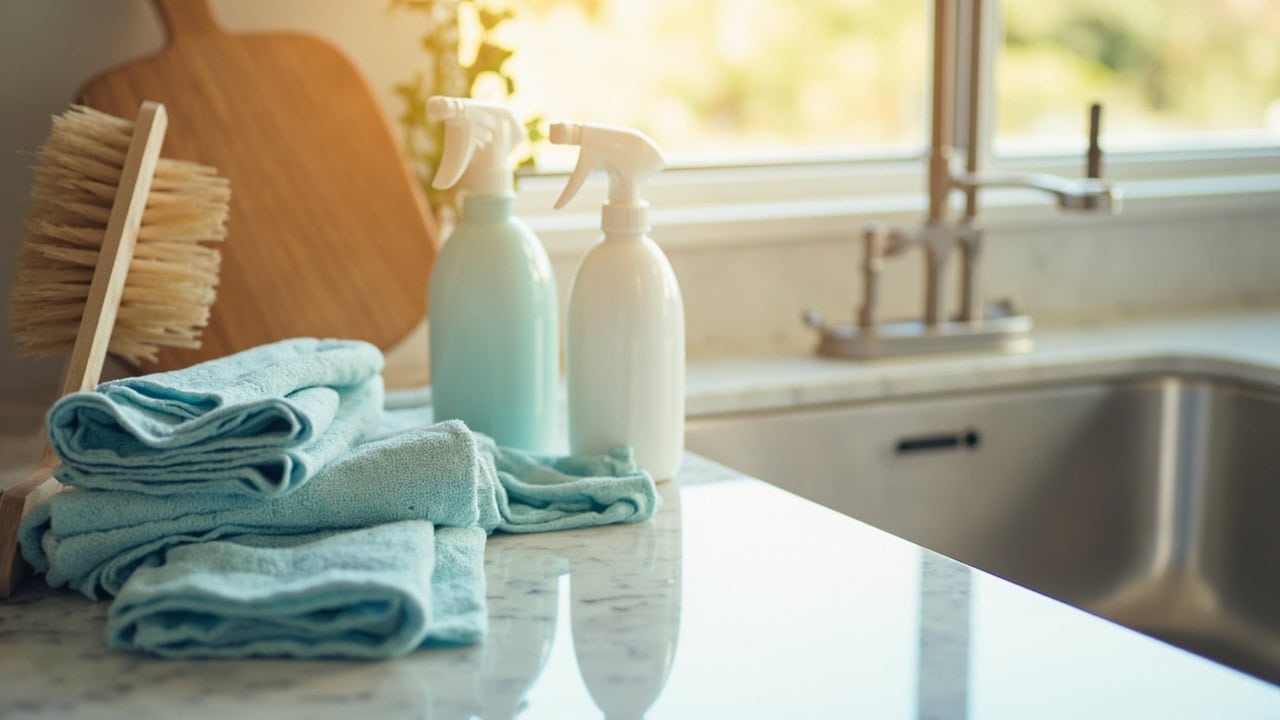
Building an effective kitchen cleaning kit requires selecting tools and products matched to each surface type. Using a single all-purpose product across every surface leads to either ineffective cleaning on heavily soiled areas or damage to sensitive materials.
- Microfiber cloths: Preferred for streak-free results on glass, stainless steel, and polished surfaces. Microfiber captures up to 99% of bacteria from smooth surfaces without chemical cleaners when used damp.
- Soft-bristle brushes: Necessary for textured surfaces like tile grout and embossed sink basins without scratching the base material.
- pH-neutral all-purpose cleaners: Safe for most kitchen surfaces including sealed stone, laminate, and stainless steel. Look for a pH between 6.5 and 7.5 on the product label.
- Degreasers: Alkaline-based formulas (pH 10–13) designed for stovetops, range hoods, and oven interiors where cooking oils polymerize into stubborn films.
- Disinfectants: Required for food prep surfaces after handling raw proteins. EPA-registered disinfectants with a claim against Salmonella and E. coli provide verified protection.
- Non-abrasive cleansers: Essential for stainless steel, glass, and polished stone. Abrasive powders scratch protective coatings and create micro-grooves that trap bacteria.
Kitchen Surface Directory
Countertops
Countertops are the most frequently cleaned surfaces in the kitchen, yet they are also the most commonly damaged by improper product selection. Each material has specific chemical tolerances that determine which cleaners are safe.
Granite and natural stone: Use pH-neutral cleaners only. Acidic products including vinegar (pH 2.5), lemon juice, and many bathroom cleaners dissolve the calcite binder in marble and limestone, causing irreversible etching that appears as dull, chalky patches. Granite is more acid-resistant than marble but still requires sealed-surface care. Reseal granite countertops every 12–18 months using a penetrating stone sealer to maintain the hydrophobic barrier against oil and water-based stains.
Quartz: Engineered quartz tolerates most household cleaners but avoid abrasive powders, bleach-based products, and high-alkaline degreasers. The resin binder in quartz surfaces can discolor under prolonged exposure to harsh chemicals. For routine cleaning, warm water with a drop of dish soap is sufficient.
Laminate: Non-abrasive cleaners prevent scratching the printed decorative layer. Avoid excessive water, which seeps into seams and causes the particleboard substrate to swell. Wipe spills immediately and dry with a clean cloth.
Butcher block: Clean with a vinegar-water solution (1:1 ratio) or mild dish soap, then dry immediately. After cleaning, apply food-safe mineral oil to condition the wood and prevent cracking. Re-oil butcher block surfaces every 4–6 weeks, or whenever water no longer beads on the surface.
Marble: Use a specialized stone cleaner formulated for calcareous stone. Marble requires sealing every 6–12 months due to its high porosity relative to granite. Never use vinegar, citrus-based cleaners, or any product with a pH below 7 on marble surfaces.
Sinks
Kitchen sinks harbor more bacteria than most toilet seats due to food residue, moisture, and the drain environment. Regular cleaning and disinfection are essential for food safety.
Stainless steel: Clean with dish soap and warm water using a soft sponge, then dry immediately to prevent water spots. The protective chromium oxide layer on stainless steel degrades under prolonged exposure to chlorine bleach and chlorides found in some cleansers. For deeper cleaning, use a baking soda paste (3:1 baking soda to water) applied with a soft cloth, rinsing thoroughly afterward. For comprehensive stainless steel care, see our guide on how to clean stainless steel appliances.
Cast iron enamel: Avoid abrasive cleansers and acidic foods left sitting in the sink, which can chip and discolor the enamel coating. Use a non-abrasive liquid cleanser and a soft sponge. Dry after each use to prevent mineral deposits.
Fireclay: Clean with gentle, non-abrasive liquid cleansers that preserve the glossy glaze finish. Fireclay is chip-resistant but can crack under thermal shock — never pour boiling water directly into a cold fireclay sink.
Composite granite: Scratch-resistant but requires specific cleaning agents to avoid discoloration. Use warm soapy water for daily cleaning and a manufacturer-approved composite sink cleaner for weekly maintenance. Avoid bleach and abrasive scrubbing pads.
Backsplashes
Backsplashes accumulate cooking grease and food splatter that regular kitchen ventilation does not fully capture. The cleaning method depends on the material.
Tile and grout: Alkaline cleaners penetrate grease and oil contamination in grout lines more effectively than acidic alternatives. Apply a grout-specific cleaner, allow 5–10 minutes of dwell time, then scrub with a grout brush. Seal grout lines annually to reduce future staining.
Glass backsplashes: Use a streak-free glass cleaner or a vinegar-water solution (1:4 ratio) with a microfiber cloth. Glass backsplashes show water spots and fingerprints more readily than other materials.
Stainless steel backsplashes: Wipe with the grain direction using a stainless steel cleaner and microfiber cloth to prevent streaking. Always dry completely after cleaning.
Kitchen Appliance Directory
Refrigerator
Clean the refrigerator interior using a baking soda solution at a 1:1 ratio of baking soda to warm water. This mildly alkaline mixture (pH 8–9) neutralizes acidic food odors without leaving toxic residue on food-contact surfaces. Remove all shelves and drawers, wash them separately in warm soapy water, and dry before reinserting. Wipe the interior walls, paying attention to the back panel where condensation accumulates.
Sanitize door gaskets with a diluted disinfectant solution (1 tablespoon of unscented chlorine bleach per gallon of water), as the folds in gasket material trap moisture and organic debris that support mold growth. Clean condenser coils every 6–12 months using a coil brush or vacuum attachment — clogged coils force the compressor to work harder, increasing energy consumption by up to 25% and shortening the appliance lifespan. After cleaning, verify the refrigerator temperature reads between 35°F and 38°F (1.7°C–3.3°C) and the freezer maintains 0°F (−18°C).
Oven and Stovetop
Self-cleaning ovens: The self-cleaning cycle heats the oven cavity to 800–900°F (427°C–482°C) for 4–6 hours, incinerating food residue to fine ash. Remove all racks and large debris before starting the cycle. Ensure kitchen ventilation operates throughout, as the process produces smoke and fumes from burning grease. Never use commercial oven cleaners inside a self-cleaning oven, as the chemicals damage the porcelain coating.
Manual oven cleaning: Apply an alkaline degreaser and allow 15–30 minutes of dwell time for the chemical reaction to break down carbonized grease. Scrub with a non-scratch scouring pad and wipe clean with a damp cloth. For baked-on deposits resistant to degreaser, a baking soda paste (3:1 ratio) left overnight softens residue for easier removal.
Glass stovetops: Use only cooktop-specific cerium oxide cleaners with a soft microfiber cloth or cooktop scraper. A razor blade scraper held at a 45-degree angle removes burnt-on residue without scratching the glass surface. Prevent cloudiness by cleaning spills immediately before they carbonize, and never use abrasive powders or the cooktop as a cutting surface. For stubborn grease across all cooking surfaces, see our detailed guide on how to remove grease from kitchen surfaces.
Gas burners: Disassemble burner caps and grates, then soak in hot soapy water for 20–30 minutes. Scrub with a wire brush to remove cooked-on food deposits. Ensure burner ports are clear before reassembly — a pin or needle removes clogs that cause uneven flames.
Dishwasher
Perform a monthly deep clean using white vinegar or a dedicated dishwasher cleaner. Place 2 cups of white vinegar in a dishwasher-safe bowl on the top rack and run the hottest cycle available. The vinegar’s acetic acid (5% concentration) dissolves mineral deposits, grease buildup, and soap scum inside the wash cavity and spray arms.
Clean the filter every 2–4 weeks depending on usage frequency. A clogged filter reduces cleaning performance and causes odors. Remove the filter assembly, rinse under warm water, and scrub with a soft brush to dislodge trapped food particles. Check spray arm jet holes for blockage — a toothpick clears mineral deposits that reduce water pressure. For hard water areas, run a citric acid cycle (2 tablespoons in the detergent dispenser) monthly to remove limescale from internal components. For complete maintenance procedures, refer to our guide on how to clean and maintain your dishwasher.
Microwave
Steam-clean the microwave interior by placing a microwave-safe bowl containing 1 cup of water and the juice of one lemon (or 2 tablespoons of white vinegar) inside. Heat on high for 2–3 minutes until the water boils and produces steam. Leave the door closed for an additional 5 minutes to allow the steam to loosen dried food splatter. Remove the turntable and roller ring, wash them in warm soapy water, and wipe the interior with a damp cloth using mild detergent. Dry all surfaces before reassembling.
Range Hood
Clean metal mesh filters monthly by running them through the dishwasher on the hottest setting, or soak them in hot water with degreasing dish soap for 30 minutes before scrubbing. Charcoal filters cannot be washed and require replacement every 3–6 months. Wipe the range hood exterior weekly with a degreaser to prevent grease film buildup. Inspect ductwork annually and schedule professional duct cleaning if airflow has noticeably decreased, as grease accumulation in ductwork creates a fire hazard.
Kitchen Cleaning Maintenance Schedule
Consistent maintenance prevents the buildup that makes deep cleaning sessions time-consuming and physically demanding. The following schedule allocates tasks by frequency, with time estimates for each. Following this routine keeps every kitchen surface and appliance in serviceable condition year-round.
| Frequency | Task | Surface/Appliance | Time Required |
|---|---|---|---|
| Daily | Wipe countertops | All countertops | 5 minutes |
| Daily | Clean sink after use | Kitchen sink | 3 minutes |
| Daily | Wipe stovetop | Cooktop | 5 minutes |
| Daily | Handwash or load dishwasher | Dishwasher | 10 minutes |
| Weekly | Deep clean countertops | All countertops | 15 minutes |
| Weekly | Clean refrigerator interior | Refrigerator | 20 minutes |
| Weekly | Wipe appliance exteriors | All appliances | 10 minutes |
| Weekly | Sweep and mop kitchen floor | Kitchen floor | 15 minutes |
| Monthly | Clean oven interior | Oven | 30 minutes |
| Monthly | Deep clean dishwasher | Dishwasher | 20 minutes |
| Monthly | Clean range hood filters | Range hood | 25 minutes |
| Monthly | Wipe cabinet exteriors | Kitchen cabinets | 15 minutes |
| Quarterly | Clean behind appliances | Under/behind all | 30 minutes |
| Quarterly | Check and replace filters | Range hood, refrigerator | 15 minutes |
| Quarterly | Deep clean grout lines | Tile backsplash/floor | 45 minutes |
| Annually | Professional appliance service | Oven, dishwasher | Varies |
Kitchen Cleaning Safety Principles
Never mix bleach with ammonia or acidic cleaners. This combination produces chloramine gas, which causes respiratory distress, eye irritation, and at high concentrations, can be fatal. Many glass cleaners contain ammonia, and vinegar is a common acidic cleaner — both react dangerously with sodium hypochlorite (the active ingredient in household bleach at 5.25–6% concentration).
Always verify that kitchen ventilation systems are functioning before using chemical cleaners. Range hoods and open windows provide necessary airflow to prevent vapor accumulation. Test all cleaning products on an inconspicuous area before full application — a small patch on the underside of a countertop overhang or inside a cabinet door reveals potential discoloration or damage before it affects visible surfaces.
Wear gloves when handling alkaline or acidic cleaning solutions, as both disrupt the skin’s acid mantle and cause contact dermatitis with repeated exposure. Allow proper dwell time for disinfectants before wiping — the EPA requires a minimum contact time of 3–5 minutes for most surface disinfectants to achieve their stated kill claims. Store all cleaning chemicals in their original containers, clearly labeled, and separated from food items in a locked or child-proof cabinet.
Getting Started With Your Kitchen Cleaning Routine
Begin every kitchen cleaning session by clearing clutter from all horizontal surfaces. Remove small appliances, cutting boards, utensil containers, and any items that block access to countertops and the stovetop. This preparatory step takes 2–3 minutes but dramatically improves cleaning efficiency by eliminating obstacles.
Work from top to bottom: upper cabinets and range hood first, then countertops, followed by lower cabinets and the sink area, finishing with the floor. This sequence prevents debris and cleaning solution from dripping onto surfaces you have already cleaned. Use separate cleaning cloths for different surface types — one for food-contact surfaces, another for sinks and drains, and a third for appliance exteriors — to prevent cross-contamination between zones.
Establish a cleaning schedule that matches your cooking frequency. Households that cook daily benefit from the full daily/weekly/monthly schedule outlined above, while those who cook less frequently can adjust intervals accordingly. Refer to the individual spoke articles linked throughout this guide for detailed procedures on specific surfaces and appliances. For cleaning floors in the kitchen, see our complete floor cleaning guide. For bathroom surfaces that share similar tile and grout cleaning challenges, visit our bathroom cleaning guide.
Frequently Asked Questions
Q: What is the best all-purpose cleaner for kitchen countertops?
A: A pH-neutral cleaner diluted at a 1:10 ratio with distilled water is safe for most countertop materials including laminate, quartz, and sealed granite. Avoid acidic cleaners like vinegar on marble, granite, or natural stone surfaces as they cause permanent etching that dulls the polished surface.
Q: How often should I deep clean my oven?
A: Ovens should receive a deep cleaning every 1–3 months depending on usage frequency. Light users can clean monthly, while heavy users (daily cooking with frequent baking or frying) should clean weekly or every two weeks to prevent carbonized grease buildup that becomes increasingly difficult to remove and creates a fire hazard.
Q: Can I use vinegar to clean my stainless steel sink?
A: While vinegar disinfects stainless steel, its acidity can degrade the protective chromium oxide layer with repeated use. For regular cleaning, use dish soap and warm water, then dry immediately to prevent water spots. Reserve vinegar for occasional sanitization (monthly maximum) followed by thorough rinsing and drying.
Q: What causes cloudiness on glass cooktops and how do I prevent it?
A: Cloudiness on glass cooktops results from using abrasive cleaners, cooktop cleaning products containing harsh chemicals, or residue from cleaning products that were not fully removed. Prevent cloudiness by using only cooktop-specific cleaners with a soft microfiber cloth, never using the cooktop surface as a cutting board, and cleaning spills immediately before they burn onto the surface.
References
- U.S. Food and Drug Administration. (2022). FDA Food Code 2022: Chapter 4 — Equipment, Utensils, and Linens. FDA.
- U.S. Environmental Protection Agency. (2023). Selected EPA-Registered Disinfectants. EPA.
- Centers for Disease Control and Prevention. (2023). Kitchen Sanitation and Food Safety Guidelines. CDC.
- Natural Stone Institute. (2023). Care and Cleaning of Natural Stone Surfaces. Natural Stone Institute.
- NSF International. (2022). The Germiest Places in Your Kitchen. NSF International.


