
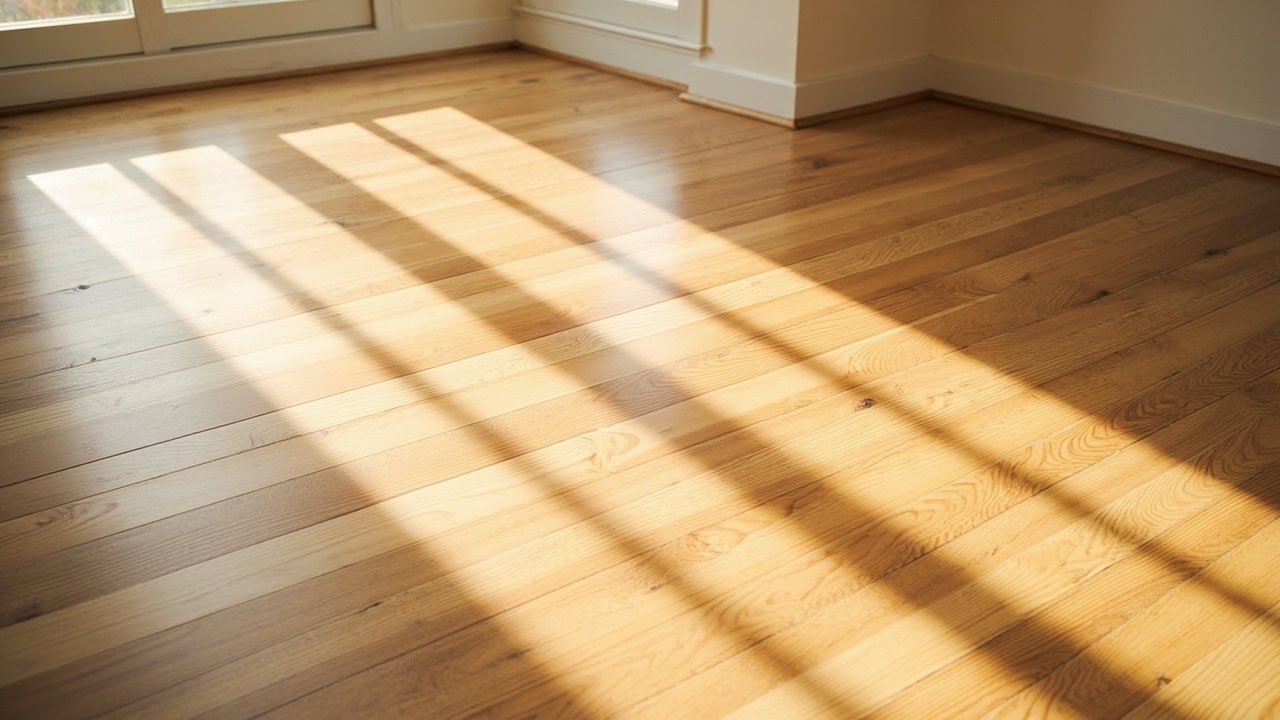
Hardwood Floor Cleaning & Care: The Complete Guide

Hardwood floor cleaning requires pH-neutral cleaners at a 1:20 dilution ratio with a barely-damp microfiber mop system — acid-based cleaners cause finish etching while excessive moisture penetrates between boards leading to warping and cupping. This comprehensive guide covers daily maintenance, seasonal deep cleaning, and preventive care protocols that preserve hardwood beauty for 20–30 years with proper care. Effective hardwood care combines dry soil removal through daily dust mopping, damp cleaning with pH-balanced solutions, and annual professional inspection of finish wear patterns.
What This Guide Covers
This hardwood floor cleaning and care guide serves as the central hub for all floor cleaning content, providing comprehensive coverage of:
- Daily and weekly maintenance routines for hardwood floors
- Deep cleaning protocols for different hardwood types and finishes
- Spot stain removal techniques for common hardwood floor spills
- Preventive care measures including area rugs, felt pads, and humidity control
- Professional maintenance including screen-and-coat and full refinishing
- Seasonal care adjustments for winter heating and summer humidity
- Damage prevention and restoration techniques for water damage, scratches, and sun fading
Why Hardwood Floor Care Matters
Hardwood floors represent a significant home investment, with solid hardwood costing $8–$15 per square foot installed and engineered hardwood at $6–$12 per square foot. Without proper care, hardwood floors deteriorate through two primary pathways: structural damage and finish degradation.
Structural Damage Mechanisms
Hardwood is a hygroscopic material — it continuously exchanges moisture with its environment. When this exchange becomes unbalanced, structural damage follows:
- Water penetration between boards causes cupping (edges raised, center sunken), crowning (center raised, edges sunken), and warping — moisture differential between the top and bottom of each board creates differential swelling that distorts the wood geometry.
- Grit and sand accumulation creates abrasive wear patterns in the finish. Particles as small as 50 microns (fine beach sand) act as microscopic sandpaper under foot traffic, slowly abrading through the protective finish layer.
- UV exposure leads to oxidation and color fading in the wood surface. Unprotected hardwood can fade 15–20% in as little as 6 months of direct sunlight exposure.
- High indoor humidity below 30% RH causes gapping and board separation as the wood releases moisture and contracts. Conversely, humidity above 75% RH causes swelling and buckling.
Finish Degradation
The finish layer is hardwood’s first line of defense. When it fails, the wood beneath is exposed to every threat simultaneously:
- Worn finishes expose raw wood to stains and moisture damage within days of exposure
- Acidic cleaner residue (vinegar at pH 2.5–3.0) continuously etches into polyurethane finishes, creating a hazy appearance that compounds with each cleaning
- Failure to recoat at appropriate intervals — typically when 50% of the original film thickness is worn away — requires more expensive full refinishing instead of simple screen-and-coat treatment
- Improper cleaning tools (steel wool, rough scrub pads, vacuum beater bars) create micro-scratches that scatter light and dull the shine even when the finish remains physically intact
Hardwood floors maintained with proper pH-neutral cleaners and preventive measures last 20–30 years before requiring refinishing, compared to 10–15 years for neglected floors — more than doubling the effective lifespan of your investment.
Getting Started: Your Hardwood Floor Care Routine
Follow this foundational protocol for optimal hardwood floor longevity. Consistent, gentle maintenance is far more effective than occasional deep cleaning — the cumulative effect of daily dry soil removal prevents the abrasive wear that damages finishes faster than any single cleaning event.
Daily Maintenance Protocol
- Dry dust mop or vacuum with hardwood-safe attachment to remove surface grit before it becomes embedded. Use a vacuum with a hardwood-floor-safe soft-bristle attachment or a dedicated microfiber dust mop — never a rotating beater bar, which mechanically abrades grit into the finish.
- Address spill spots immediately with a barely-damp microfiber cloth. Hardwood absorbs liquids within 15–30 seconds of contact for water-based spills; oil-based spills penetrate even faster. The faster you respond, the less likely staining or finish damage becomes.
- Rotate area rugs weekly to prevent uneven UV fading. Area rugs block UV rays from reaching the hardwood beneath them, creating a visible color difference (the “rug outline” effect) after just 2–3 months of placement.
Weekly Maintenance Protocol
- Damp mop with pH-neutral hardwood floor cleaner at 1:20 dilution (approximately 1 ounce of concentrate per 20 ounces of water). The optimal pH range for polyurethane-finished hardwood is 6.5–8.0. Cleaner below pH 6.5 begins to etch even durable polyurethane films with repeated exposure.
- Inspect for scratches, loose boards, or finish wear patterns. Catching finish wear early (before bare wood is exposed in traffic lanes) allows for screen-and-coat recoating — a $1–2 per square foot intervention. Once bare wood is exposed, full refinishing at $4–$8 per square foot becomes necessary.
- Check humidity levels and adjust with humidifier or dehumidifier as needed. Maintain indoor relative humidity between 35–55% year-round. During winter heating season, indoor RH can drop to 15–20% in unconditioned spaces, causing hardwood to contract and gap.
Seasonal Maintenance Protocol
- Spring: Deep clean with professional-grade hardwood cleaner. Remove any winter salt or sand residue tracked in during cold months. Inspect boards for winter gapping that may have appeared during dry heating season.
- Fall: Apply fresh coat of hardwood-safe polish or screen-and-coat prep if needed. This timing allows the fresh finish to cure before winter’s low-humidity stress period.
- Winter: Monitor indoor humidity and maintain 35–55% relative humidity. Use a humidifier when RH drops below 35%. Watch for gapping between boards — a gap wider than a dime (1.5mm) indicates excessive dryness and potential moisture loss.
Professional Maintenance Schedule
- Annual: Professional inspection of finish wear and board integrity. A professional can identify early crowning, cupping, or subfloor issues before they become visible to the untrained eye.
- Every 3–5 years: Screen-and-coat recoat for moderately worn floors. This process abrades the existing finish (screening) and applies a new topcoat, restoring protection without the dust and cost of full sanding.
- Every 10–15 years: Full refinishing for severely worn or damaged floors. This involves complete sanding to bare wood, staining if desired, and 3–4 coats of new finish. Well-maintained floors may go 20–30 years between full refinishes.
Common Hardwood Floor Care Mistakes to Avoid
These seven cleaning practices cause more hardwood floor damage than almost any other factor — yet all are extremely common:
- Using vinegar and water — Vinegar’s acetic acid creates a pH of 2.5–3.0, well below the safe threshold of 6.5 for polyurethane finishes. Each application dissolves a microscopically thin layer of finish; after 50–100 applications, the cumulative damage becomes visibly apparent as hazing and clouding of the surface.
- Steam cleaning — Direct heat at 210°F+ and sustained moisture from steam mop pads penetrates the finish seam between boards and the microscopic pores in the finish film itself. Steam cleaning on polyurethane-finished hardwood causes finish delamination, board separation, and cupping damage that may be irreversible.
- Wet mopping — Excessive moisture pools between boards and creates the water differential that causes cupping. Standing water on a hardwood floor for more than 2–3 minutes begins to penetrate finish seams. A properly damp (not wet) mop should leave no visible water standing on the surface.
- Vacuuming with beater bar — Rotating brush beater bars mechanically agitate grit particles against the floor surface, transforming loose dirt into an abrasive polishing compound. The micro-scratches created are invisible individually but collectively produce a visibly dulled finish.
- Wax-based products on polyurethane — Creates hazy buildup incompatible with factory-finished polyurethane. Wax cannot bond to polyurethane chemically (it’s a different polymer family), so it forms a separate surface layer that scatters light, attracts dust, and becomes increasingly hazy with each application.
- Ignoring humidity levels — Indoor climate control is foundational to hardwood stability. Wood is dimensionally stable only within a specific moisture content range (6–9% MC for most domestic hardwoods). When humidity drops below 30% RH, wood releases moisture and contracts; when it rises above 75% RH, wood absorbs moisture and swells.
Hardwood Floor Finish Types and Care Requirements
Different finish types require specific care approaches. Matching your cleaning chemistry and method to your floor’s finish is critical — an错误 approach on one finish type can be harmless on another but catastrophic on yet another.
| Finish Type | Cleaner pH | Moisture Tolerance | Recoat Interval |
|---|---|---|---|
| Polyurethane (oil-based) | 6.5–8.0 | Very low — barely damp only | 3–5 years |
| Polyurethane (water-based) | 6.5–8.0 | Very low — barely damp only | 2–4 years |
| Wax | 6.5–7.5 | Very low — dry or barely damp | Annual paste wax |
| Shellac | 6.5–7.5 | Low — dry method preferred | 2–3 years |
| Natural oil (linseed, tung) | 6.5–7.5 | Low — dry or barely damp | Annual re-oil |
| Acrylic-impregnated | 6.5–8.0 | Moderate — damp mop OK | 5–7 years |
For all hardwood floor finish types, always verify your dwell time for any cleaner — allow the cleaner to sit on the surface for 30–60 seconds before wiping to allow surfactants to work without prolonged chemical exposure to the finish.
Hardwood Floor Care Products Reference
Recommended Cleaner Categories
| Product Type | Active Chemistry | Best For |
|---|---|---|
| pH-neutral concentrates | Non-ionic surfactants (ethoxylated alcohols) | Daily maintenance cleaning |
| Plant-based hardwood cleaners | Modified coconut oil + surfactants | Eco-conscious cleaning |
| Hardwood floor wipes | Isopropyl alcohol + emollients | Quick spot cleaning |
| Microfiber spray mops | N/A (delivery system) | Efficient damp cleaning |
Products to Avoid
- Vinegar and water solutions (acetic acid at pH 2.5–3.0 — finish-damaging)
- Bleach-based cleaners (oxidative wood damage — causes fiber degradation and color loss)
- Ammonia-based cleaners (finish clouding and yellowing, especially on water-based poly)
- Steam mops (direct moisture and heat damage — see above)
- Oil-based furniture polishes (slip hazards, incompatible with polyurethane, dust attraction)
For product recommendations and specific brand comparisons, see the dedicated spoke article Best Cleaner for Hardwood Floors.
Frequently Asked Questions
Q: What is the best way to clean hardwood floors daily?
A: Daily hardwood floor cleaning requires dry soil removal using a quality microfiber dust mop or vacuum with a hardwood-floor-safe soft-bristle attachment. This removes abrasive grit before it scratches the finish. For spots, use a barely-damp microfiber cloth with a pH-neutral cleaner at 1:20 dilution. Always clean in the direction of the wood grain to minimize visible streaks.
Q: Can you use vinegar on hardwood floors?
A: No — vinegar has a pH of 2.5–3.0 and is too acidic for hardwood floor finishes. Repeated use etches into polyurethane and other finish coatings, causing premature wear, clouding, and finish delamination. Use a pH-neutral hardwood floor cleaner with a dilution ratio of 1:20 instead.
Q: How often should hardwood floors be professionally cleaned?
A: Professional deep cleaning is recommended every 12–18 months for moderately trafficked residential hardwood floors. High-traffic areas may need annual professional cleaning. This includes inspection of finish wear patterns, board integrity, and early detection of moisture damage or subfloor issues.
Q: How do I know when my hardwood floors need refinishing?
A: Hardwood floors need refinishing when the finish shows widespread wear patterns, bare wood is visible in high-traffic areas, deep scratches penetrate the finish layer, or the floor has a consistently dull appearance that cannot be restored with screen-and-coat treatment. Typically this occurs every 10–15 years with proper care, or sooner with neglect.
References
- National Wood Flooring Association (NWFA). (2024). Installation Guidelines and Reference Manual. NWFA. https://nwfa.org/
- Bona US. (2024). Professional Floor Care: Products and Protocols for Hardwood Floor Maintenance. Bona. https://www.bona.com/
- World Floor Covering Association (WFCA). (2023). Hardwood Flooring Care and Maintenance Technical Bulletin. WFCA. https://www.flooring.org/
- U.S. Forest Products Laboratory. (2021). Wood Handbook: Wood as an Engineering Material (Centennial Edition). USDA Forest Service. https://www.fpl.fs.fed.us/
- Mayo Clinic Health System. (2023). Indoor Air Quality and Humidity: Health Impacts and Measurement Guidelines. Mayo Clinic. https://www.mayoclinichealthsystem.org/


