
Tile & Grout Cleaning: The Complete Guide

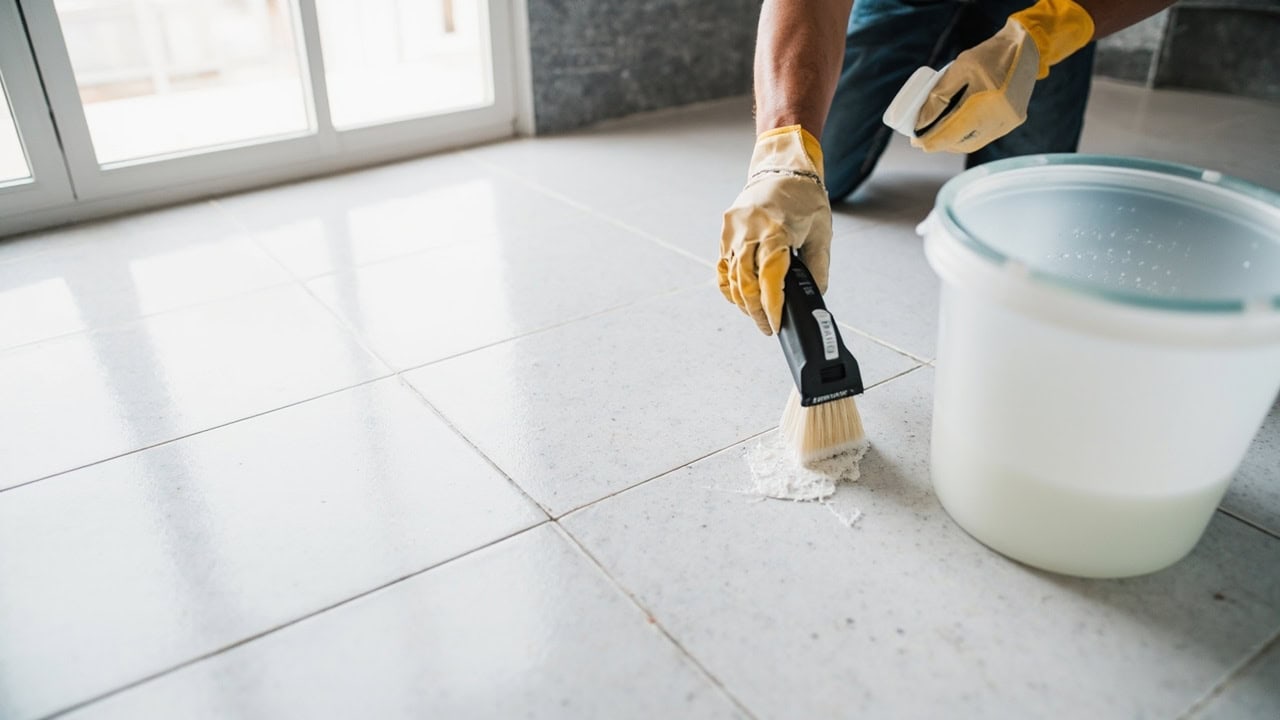
Tile and grout cleaning requires a pH-neutral cleaner at a 1:10 dilution ratio followed by mechanical agitation with a stiff-bristled brush and a final acid rinse for mineral deposits — enzymatic cleaners alone cannot break down cementitious grout haze. Porcelain tile withstands alkaline cleaners with pH 10–12, while natural stone requires pH 7–9 to prevent etching on calcite surfaces. The complete tile grout cleaning process takes 45–90 minutes for a standard 150 sq ft area depending on grout condition and cleaning method chosen.
What This Guide Covers
This guide provides complete tile and grout cleaning methodology for residential and commercial environments. It addresses ceramic tile, porcelain tile, natural stone tile (including marble, travertine, slate, and granite), quarry tile, terracotta, cementitious grout, epoxy grout, and urethane grout. The cleaning methods covered include chemical cleaning (alkaline, acidic, and enzymatic approaches), steam cleaning, pressure-assisted extraction, manual scrubbing, and encapsulation cleaning. This guide does not cover tile and grout sealing (see Spoke #3-B: Grout Sealing Guide), grout recoloring and repair (see Spoke #3-C: Grout Restoration Guide), or stone restoration and honing (see Spoke #3-D: Stone Restoration Guide).
Why Tile and Grout Cleaning Matters
Grout is porous at 15–20% porosity by volume, creating capillary networks that harbor Salmonella, E. coli, and Staphylococcus aureus at concentrations 10–100× higher than adjacent tile surfaces. This makes grout lines one of the most significant hygiene failure points in any tiled installation. Beyond bacterial contamination, built-up soil on tile and grout becomes a reservoir for dust mite allergens, mold spores, and volatile organic compound (VOC) off-gassing from degraded organic matter — directly degrading indoor air quality.
Soil accumulation in grout lines causes irreversible discoloration in cementitious grout after 6–12 months without proper maintenance. Acid infiltration from cleaning agents or acidic substances accelerates this process significantly. Additionally, abrasive soil particles act as cutting agents under foot traffic, gradually eroding grout’s mitered edges and creating low spots that collect more soil — a self-reinforcing cascade effect that progressively worsens appearance and hygiene. Proper cleaning restores the coefficient of friction to safe levels (0.42–0.60 for level floors) per OSHA guidelines, reducing slip hazards in wet areas like bathrooms and kitchens.
Directory of Tile & Grout Cleaning Spoke Articles
| Spoke # | Article Title | Target Keyword | Schema | Word Count |
|---|---|---|---|---|
| 3-1 | How to Clean Ceramic Tile Floors | how to clean ceramic tile floors | HowTo | 1800 |
| 3-2 | How to Clean Porcelain Tile | how to clean porcelain tile | HowTo | 1500 |
| 3-3 | How to Remove Grout Haze from Tile | remove grout haze from tile | Article | 1200 |
| 3-4 | How to Clean Natural Stone Tile | clean natural stone tile | Article | 1600 |
| 3-5 | How to Deep Clean Tile and Grout | deep clean tile and grout | HowTo | 2000 |
| 3-6 | How to Clean Epoxy Grout | clean epoxy grout | HowTo | 1200 |
| 3-7 | Tile and Grout Maintenance Schedule | tile grout maintenance schedule | Article | 1400 |
| 3-8 | Why Does My Grout Discolor? | grout discoloration causes | Article | 1100 |
Getting Started: Choosing the Right Tile and Grout Cleaning Method
For Routine Maintenance (Weekly Light Cleaning)
Regular maintenance cleaning prevents soil accumulation and extends the interval between deep cleaning sessions. Begin with a dry sweep or vacuum using a hard-floor attachment to remove loose particulate matter from grout lines and tile joints. Mix a pH-neutral cleaner at a 1:20 dilution ratio (1 oz concentrate per 20 oz water) and apply with a damp microfiber mop using overlapping S-pattern strokes. Rinse the floor with clean water using a second mop or damp rinse cloth, then allow to air dry or use a clean dry microfiber pad for the final pass. Perform this routine every 5–7 days for high-traffic zones such as kitchens and bathroom entries, and every 10–14 days for low-traffic areas.
For Periodic Deep Cleaning (Monthly or Quarterly)
Deep cleaning addresses embedded soil that routine maintenance cannot remove. Clear all furniture and loose items from the floor area, then dry vacuum all grout lines and tile joints to remove embedded particulate. Apply an alkaline tile cleaner at 1:10 dilution using a pump sprayer — this higher concentration compared to routine cleaning is necessary to emulsify oils and break protein bonds. Allow a 5–10 minute dwell time without letting the solution dry on the surface. Agitate with a stiff-bristled nylon brush or slow-speed rotary floor machine equipped with a soft nylon pad (175 RPM maximum). Extract the spent solution with a wet/dry vacuum or extraction machine, then perform an acid rinse with diluted phosphoric acid (1:20) or a commercial grout brightener to neutralize alkalinity and dissolve mineral deposits. Complete with a final extraction and rinse using a clean pH-neutral solution, then allow a 24–48 hour cure time before wet mopping or applying any sealer.
Method Selection by Tile Type
| Tile Type | Cleaner pH Range | Safe Acids | Avoid | Notes |
|---|---|---|---|---|
| Ceramic (glazed) | 7–10 | Phosphoric, citric | Hydrofluoric | Most forgiving surface |
| Porcelain (through-body) | 7–12 | Phosphoric, citric, muriatic (diluted) | Hydrofluoric | Can withstand stronger alkaline |
| Porcelain (glazed) | 7–10 | Same as ceramic | Same as ceramic | Check glaze hardness first |
| Marble/Limestone | 7–9 | None (acid will etch) | All acids, ammonia | Use only pH-neutral |
| Travertine | 7–9 | None | All acids | Prone to pitting from acid |
| Slate | 7–10 | Phosphoric (diluted) | Strong acids | May darken with alkaline |
| Granite (polished) | 7–10 | None | Acids on polished surface | pH-neutral preferred |
| Quartz (engineered) | 7–10 | Phosphoric (diluted) | Strong acids, solvents | Very forgiving |
Method Selection by Grout Type
| Grout Type | Composition | Cleaner pH | Special Considerations |
|---|---|---|---|
| Cementitious (sanded) | Portland cement + sand | 7–10 (alkaline preferred) | Porous; absorbs soil readily; seal after cleaning |
| Cementitious (unsanded) | Portland cement only | 7–10 | Even more porous than sanded; scratch-prone on stone |
| Epoxy | Epoxy resin + hardener | 7–12 (broad range) | Non-porous; chemically resistant; cleaner residue causes hazing |
| Urethane | Pre-mixed urethane | 7–12 | Sensitive to solvent-based strippers; steam may weaken bond |
| Furan | Furan resin | 1–3 (acid-safe) | Chemical-resistant; requires specialized cleaners |
Grout Cleaning Chemistry Reference
pH Scale Quick Reference
Understanding pH is essential for selecting the correct cleaning agent and avoiding surface damage. Strong acids at pH 1–4 should only be used for mineral deposits on acid-safe surfaces such as porcelain and ceramic — and only with proper dwell time controls. Weak acids at pH 5–6 are safe for most ceramic and through-body porcelain but will etch marble and limestone surfaces. A neutral pH of 7 is safe for all surfaces but provides weaker cleaning action on oils and fats. Weak alkalis at pH 8–9 are effective for organic soils and safe for most surfaces. Strong alkalis at pH 10–12 effectively remove oils, fats, and protein soils but will etch marble, travertine, and polished granite. Very strong alkalis at pH 13–14 are reserved for industrial use only and will damage most stone and grout surfaces.
Common Tile and Grout Cleaning Mistakes to Avoid
Using vinegar on marble or limestone is among the most damaging common errors. Acetic acid at 5–8% concentration will etch calcite-based stone within 30–60 seconds of contact, producing immediately visible dulling. On colored grout, bleach oxidizes iron oxide pigments, causing permanent fading and a chalky appearance. Abrasive tools such as steel wool, wire brushes, and aggressive scrub pads create micro-scratches on polished stone that dull the finish and create future soil-holding surfaces.
Always test any cleaning solution on a 6×6 inch area in an inconspicuous location such as a corner or closet, and wait 5 minutes before full application. Avoid letting cleaner dwell longer than 15 minutes — extended dwell times allow solutions to penetrate grout capillaries and cause efflorescence or degrade sealer bonds. Over-wetting cementitious grout during cleaning re-wets the grout joints and can cause efflorescence, appearing as white mineral salt deposits as water evaporates. Finally, oil-based cleaners on porcelain leave streaking on polished surfaces and create slip hazards.
- Never use vinegar on marble, limestone, travertine, or polished granite — acetic acid etches calcite-based stone within 30–60 seconds
- Avoid bleach on colored grout — sodium hypochlorite oxidizes iron oxide pigments, causing permanent fading
- Never use steel wool, wire brushes, or aggressive pads on polished stone — micro-scratches create future soil-holding surfaces
- Always test in an inconspicuous 6×6 inch area and wait 5 minutes before full application
- Keep dwell times under 15 minutes — longer exposure risks efflorescence and sealer degradation
- Avoid over-wetting cementitious grout — water re-entry causes efflorescence (white mineral salt deposits)
- Do not use oil-based cleaners on polished porcelain — they leave streaking and create slip hazards
How to Know When Tile and Grout Need Professional Cleaning
Certain signs indicate that DIY cleaning has reached its limits and professional intervention is necessary. Grout lines showing visible discoloration despite regular mopping — brown or grey from embedded soil, or black from mold in wet areas — signal deep contamination that surface cleaning cannot reach. A hazy or streaked tile surface after self-cleaning attempts suggests residue buildup or surface etching that requires professional restoration. If grout joints have recessed edges indicating erosion of 1mm or more from the original profile, professional re-grouting or refinishing may be needed.
Repeated efflorescence deposits appearing within days of cleaning indicate subsurface moisture issues that professional diagnosis can identify and address. Natural stone tiles that have lost luster and exhibit water-spotting patterns require professional honing and re-polishing. Caulk joints between tile and dissimilar surfaces such as tubs and countertops that show mold regrowth within days of cleaning may indicate failed caulk or underlying moisture intrusion requiring professional repair. Professional deep cleaning uses truck-mounted extraction equipment generating 500–1,000 PSI of pressure and controlled water flow rates that significantly outperform consumer-grade tools, reaching into grout capillaries to extract embedded soil and restore original color.
Frequently Asked Questions
Q: What is the best way to clean tile and grout at home without professional equipment?
A: The most effective home method combines a pH-neutral cleaner applied at 1:10 dilution with a stiff-bristled nylon brush for agitation, followed by thorough rinsing with a clean damp cloth. For grout lines specifically, a toothbrush-sized grout brush provides better access than larger scrub brushes. Change rinse water frequently — dirty rinse water re-deposits soil into grout capillaries. For best results, clean grout in sections no larger than 3×3 feet before moving to the next section.
Q: Can I use vinegar to clean grout?
A: Vinegar (acetic acid at 5–8%, pH 2.5–3.0) is safe for cleaning grout on ceramic and through-body porcelain tile only if diluted to pH 4–5 and applied for no more than 2–3 minutes. Undiluted vinegar will slowly erode cementitious grout over repeated use and will immediately etch marble, travertine, limestone, and polished granite surfaces. If you need acid for mineral deposit removal, phosphoric acid at pH 2–3 is less damaging to grout and can be neutralized more easily than vinegar.
Q: How often should tile and grout be professionally deep cleaned?
A: Residential tile and grout should receive professional deep cleaning every 12–18 months in households with 1–2 occupants, and every 6–12 months in households with 3+ occupants, pets, or high-traffic kitchen/bathroom areas. Commercial kitchens, restaurant dining areas, and healthcare facilities typically require quarterly to monthly professional extraction cleaning due to health code requirements and higher soil loads.
Q: Will steam cleaning damage tile or grout?
A: Steam cleaning is safe for ceramic, through-body porcelain, and sealed natural stone at temperatures of 200–300°F when applied with a handheld steamer or floor machine with steam function. However, steam can degrade old or worn sealers on cementitious grout, cause moisture intrusion into unsealed grout leading to efflorescence, and may weaken adhesive bonds in older installations (pre-1990). Always verify grout is properly sealed before steam cleaning and test on an inconspicuous area first.
References
- U.S. Environmental Protection Agency. (2024). Disinfectants and Cleaning Methods for Commercial Spaces. EPA.
- Centers for Disease Control and Prevention. (2023). Cleaning and Disinfection Principles for Healthcare Settings. CDC.
- Occupational Safety and Health Administration. (2022). Walking-Working Surfaces: Slip, Trip, and Fall Prevention Standards. OSHA.
- American Society of Heating, Refrigerating and Air-Conditioning Engineers. (2021). Indoor Air Quality and Cleaning Standards for Residential Environments. ASHRAE.
- National Sanitation Foundation. (2023). Chemical Dilution Ratios and pH Requirements for Food Service Surface Cleaning. NSF International.
- Stone World Magazine. (2022). Natural Stone Maintenance Standards: pH Requirements for Calcite-Based Surfaces. Trade Press Media Group.


