
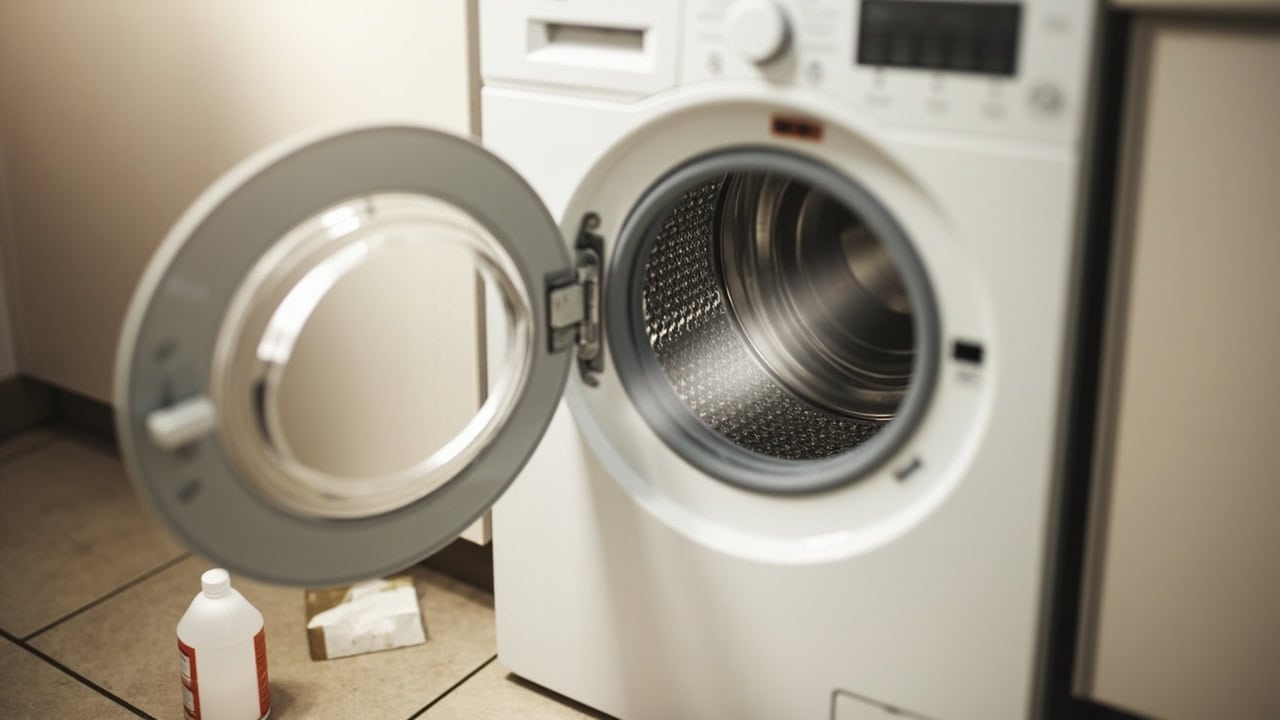
How to Clean a Washing Machine: Complete Guide

A washing machine must be cleaned monthly using a hot water cycle with 2 cups of white vinegar followed by a second cycle with ½ cup of baking soda to eliminate odor-causing bacteria, mold residue, and hard water deposits that accumulate in the drum, gasket, and detergent dispenser. This cleaning process takes approximately 2 hours and requires only household ingredients. Neglecting this maintenance leads to musty odors transferring to clothing and can reduce cleaning efficiency by up to 30% over time as biofilm and mineral scale build up on internal components.
What You Need Before You Start
Gathering supplies before you begin ensures the entire cleaning process runs without interruption. White vinegar provides the primary cleaning and sanitizing power at pH 2.5 due to its 5% acetic acid concentration, which dissolves mineral scale and kills roughly 90% of bacteria and 80% of mold species on contact. Baking soda (sodium bicarbonate) serves as a mild abrasive and natural deodorizer that scrubs residual deposits the vinegar loosens.
- White vinegar (distilled, 5% acidity) — 2 cups for the main cleaning cycle
- Baking soda — ½ cup for the scrubbing cycle
- Microfiber cloth or soft brush for gasket and door seal cleaning
- Warm water and mild dish soap for external wiping
- Old towels to protect floors during deep cleaning Old toothbrush for crevices in the gasket and detergent drawer
- Optional: Washing machine cleaner tablets for maintenance between deep cleans
Hard water affects approximately 85% of homes in the United States according to the United States Geological Survey, making mineral deposit buildup in washing machines a widespread problem. If your home has hard water, you may need to increase cleaning frequency to every 2–3 weeks rather than monthly. For more on how water chemistry affects cleaning performance, see our Cleaning Chemistry Hub.
Step-by-Step Cleaning Process
Step 1: Clean the Gasket and Door Seal
- Mix 1 part white vinegar with 1 part warm water in a small bowl.
- Dip a microfiber cloth into the solution and wipe around the entire rubber gasket, pulling back the folds to expose hidden areas where black mold spots and debris collect.
- Pay special attention to the bottom of the gasket where water pools — this is where 80% of front-loader odor problems originate, according to Consumer Reports testing.
- Use an old toothbrush to scrub crevices and tight corners that the cloth cannot reach.
- Wipe the gasket dry with a clean, dry microfiber cloth to prevent new moisture from promoting mold growth.
Front-loading machines are particularly susceptible to gasket mold because the rubber seal traps moisture between loads. If you discover extensive mold growth that does not respond to vinegar cleaning, see our guide on how to remove mold from washing machine gasket for targeted treatment methods using stronger solutions.
Step 2: Clean the Detergent Dispenser
- Remove the detergent drawer completely — most machines have a release latch or button (consult your owner’s manual for the specific mechanism).
- Soak the drawer in a basin of hot water mixed with ½ cup of white vinegar for 15 minutes to dissolve hardened surfactant residue and fabric softener buildup.
- Use a small brush or old toothbrush to scrub inside the drawer compartments and the housing cavity where the drawer inserts.
- Rinse each component thoroughly under running water and dry completely before reinserting.
Detergent dispensers are a common source of musty smells because leftover surfactant and fabric softener create a sticky film that harbors bacteria. Using the correct amount of HE detergent — typically 2 tablespoons per load for a standard front-loader — prevents the excess sudsing that causes residue to accumulate in the first place. For specific detergent recommendations, see our article on the best HE detergent for high-efficiency washing machines.
Step 3: Run the Vinegar Cycle (Main Cleaning)
- Set your machine to the hottest and longest cycle available — a sanitize cycle or a cycle that reaches 90°C (194°F) is ideal for killing bacteria and dissolving mineral deposits.
- Pour 2 cups of white vinegar directly into the drum. Do not add vinegar to the detergent drawer, as the acid can degrade rubber hoses inside the dispenser housing over time.
- Run the complete cycle with no clothing inside. The heated acidic solution at pH 2.5 dissolves limescale, breaks down detergent residue, and kills odor-causing bacteria throughout the drum and internal hoses.
The dwell time of the vinegar solution matters — a longer cycle gives the acetic acid more contact time with mineral deposits and biofilm. If your machine has a “soak” or “pre-wash” option, enabling it extends the contact time and improves cleaning results. The Environmental Protection Agency recommends water temperatures of at least 60°C (140°F) for effective thermal disinfection, and thesanitize cycle at 90°C provides an additional margin of safety.
Step 4: Run the Baking Soda Cycle (Deep Scrub)
- After the vinegar cycle completes, sprinkle ½ cup of baking soda directly into the drum.
- Run another hot water cycle on the same high-temperature setting used in Step 3.
- Baking soda acts as a gentle abrasive with a pH-neutral to mildly alkaline profile (pH 8.1) that scrubs remaining deposits from the drum walls without causing pitting on stainless steel surfaces.
- The baking soda cycle also freshens and deodorizes internal components, neutralizing any lingering vinegar scent.
Never combine vinegar and baking soda in the same cycle. When mixed, acetic acid and sodium bicarbonate undergo a rapid neutralization reaction that produces water, carbon dioxide gas, and sodium acetate — none of which provide meaningful cleaning power. Running them as separate cycles ensures each agent works at its full strength during its respective cycle.
Washing Machine-Specific Considerations
For Front-Loading Machines
Front-loading washers use less water than top-loaders, which means detergent residue and mineral deposits concentrate more readily in the drum, gasket, and drain system. The rubber door seal on a front-loader traps moisture between loads, creating an ideal environment for mold and mildew. Cleaning the gasket monthly and leaving the door ajar after every load prevents this moisture buildup.
- Gasket mold is the primary odor concern — clean the rubber seal monthly using the vinegar-and-water method in Step 1.
- Leave the door ajar between cycles to allow air circulation and prevent moisture buildup that promotes mold growth.
- Use only HE (High-Efficiency) detergent at reduced amounts — typically 2 tablespoons per load — to prevent excess sudsing that leaves residue.
- Check and clean the drain filter monthly. Most front-loaders have an accessible drain pump filter behind a lower access panel that collects lint, coins, and debris.
For Top-Loading Machines
Top-loading machines have fewer moisture-trapping seals than front-loaders, but the agitator or impeller base and the underside of the lid can harbor hidden grime. Top-loaders also tend to use more water, which means more mineral deposits in hard-water homes. Add the vinegar directly to the drum and the baking soda in the same location — the cleaning method is identical, but pay extra attention to the agitator column and lid rim.
- Clean the agitator or impeller with a long-handled brush to reach under the base where fabric lint and detergent residue collect.
- Wipe the lid and surrounding chrome or enamel areas to prevent rust formation, especially around hinges where moisture accumulates.
- Use approximately half the manufacturer-recommended detergent amount — most detergent caps mark lines for heavily soiled loads, but standard loads need far less.
- Top-loaders retain less moisture between cycles, so a monthly cleaning schedule is usually sufficient unless you have hard water.
What to Avoid
Never mix bleach and vinegar — the combination produces toxic chlorine gas that causes respiratory damage, coughing, and eye irritation at low concentrations and can be fatal in enclosed spaces. This is a chemical reaction between sodium hypochlorite (the active ingredient in bleach) and acetic acid. If you want to use bleach for sanitizing, run it in a completely separate cycle with no vinegar present, and run a rinse cycle between the two.
- Never use bleach and vinegar together — the reaction produces chlorine gas, a potent respiratory toxin.
- Avoid commercial cleaners with harsh fragrances if you are sensitive to volatile organic compounds (VOCs). Many washing machine cleaning tablets contain synthetic fragrances that leave residue on clothing.
- Do not use steel wool or abrasive scrubbers on stainless steel drums — these cause pitting that creates crevices for bacteria to colonize.
- Never submerge electronic components or the detergent drawer housing in water — moisture damage to circuit boards is a common cause of washer failure.
Drying and Finishing Your Washing Machine
After both cleaning cycles complete, the finishing steps ensure your machine stays fresh until the next monthly cleaning. Proper drying prevents the same moisture that caused the original odor problem from returning immediately.
- Wipe the drum interior with a dry microfiber cloth to remove any remaining moisture and loosened debris.
- Clean the door glass with a pH-neutral glass cleaner for a streak-free shine — avoid ammonia-based products on tinted glass doors.
- Wipe down the exterior body with a cloth dampened with mild soap and water, then dry immediately.
- Leave both the door and the detergent drawer open to air-dry completely — this typically takes 4–6 hours depending on humidity.
- Run one empty rinse cycle if any vinegar odor remains after air-drying.
Your machine is now ready for fresh, clean laundry. If clothes still carry a musty smell after washing, the issue may extend beyond the machine itself — our guide on why your laundry smells musty after washing covers additional troubleshooting for persistent odor problems.
Common Mistakes When Cleaning a Washing Machine
Avoiding these frequent errors keeps your cleaning routine effective and prevents damage to your machine’s internal components.
- Using too much detergent — Excess detergent creates suds that do not fully rinse away, leaving a residue that feeds bacteria and causes odors. This residue builds up faster than most people realize and requires more frequent deep cleaning to remove. Stick to 2 tablespoons of HE detergent per standard load.
- Only cleaning when odors appear — By the time you smell mustiness, bacteria and mold colonies have already established a biofilm inside the drum and hoses. Monthly prevention prevents this biofilm from forming in the first place and is far easier than removing established growth.
- Ignoring the rubber gasket — Testing by Consumer Reports found that the rubber gasket is where 80% of front-loader odor problems originate. Skipping this step means the rest of your cleaning effort is undermined every time the machine runs and splashes water across a contaminated seal.
- Skipping maintenance between deep cleans — A quick wipe of the gasket and drum after each load with a dry cloth prevents moisture from sitting, dramatically reducing the rate of mold and mildew growth.
- Running cleaning cycles with laundry inside — Clothing absorbs the vinegar and baking soda, reducing their concentration on the machine surfaces where they are needed. Clothes may also retain a vinegar smell or suffer color fading from the acidic solution.
For a broader overview of laundry room maintenance and fabric care routines, visit our Laundry Care Hub. If your cleaning routine involves stain treatment, our Stain Removal Hub connects washing machine maintenance to the pre-treatment methods that keep stains from setting during the wash cycle.
Frequently Asked Questions
Q: How often should you clean a washing machine?
A: Clean your washing machine at minimum once per month with vinegar and baking soda cycles. Households with hard water, heavy laundry loads, or high humidity should clean every 2–3 weeks to prevent mineral deposits and bacterial growth that cause odors. The United States Geological Survey estimates that hard water affects approximately 85% of American homes, making frequent cleaning essential for most households.
Q: Can I use bleach instead of vinegar to clean my washing machine?
A: Bleach kills 99.9% of bacteria and is a powerful sanitizer, but it damages rubber seals over time and leaves chemical residues that require multiple rinse cycles to remove. White vinegar at 5% acetic acid concentration kills roughly 90% of bacteria and 80% of mold species, is safer for your machine’s rubber and plastic components, and produces no harmful fumes. If you do use bleach, never combine it with vinegar in the same cycle — the mixture produces toxic chlorine gas.
Q: Why does my washing machine still smell after cleaning?
A: Residual odor after cleaning indicates buildup in hidden areas the standard cleaning cycles cannot reach: the drain pump filter, the gap between the outer and inner drums, or the drain hose itself. Remove and clean the drain filter (usually located behind a lower access panel on front-loaders), and consider running two consecutive cleaning cycles or using a commercial enzymatic cleaner designed to break down stubborn biofilm. For persistent issues, see our guide on why your laundry smells musty after washing.
Q: Is it safe to put vinegar and baking soda in the same cycle?
A: No — never mix vinegar and baking soda in the same wash cycle. The acid-base reaction between acetic acid (vinegar, pH 2.5) and sodium bicarbonate (baking soda, pH 8.1) neutralizes both agents, producing water, carbon dioxide gas, and sodium acetate — none of which clean your machine. Always run separate cycles: vinegar first to dissolve minerals and kill bacteria, then baking soda to scrub residual deposits and deodorize.
References
- United States Geological Survey. (2024). Hardness of Water. USGS Water Science School.
- United States Environmental Protection Agency. (2024). National Primary Drinking Water Regulations. EPA.
- Rutala, W. A., & Weber, D. J. (2016). Guideline for Disinfection and Sterilization in Healthcare Facilities. CDC.
- Lucky, K., & Manegold, E. (2024). How to Clean a Washing Machine. Bob Vila.


