
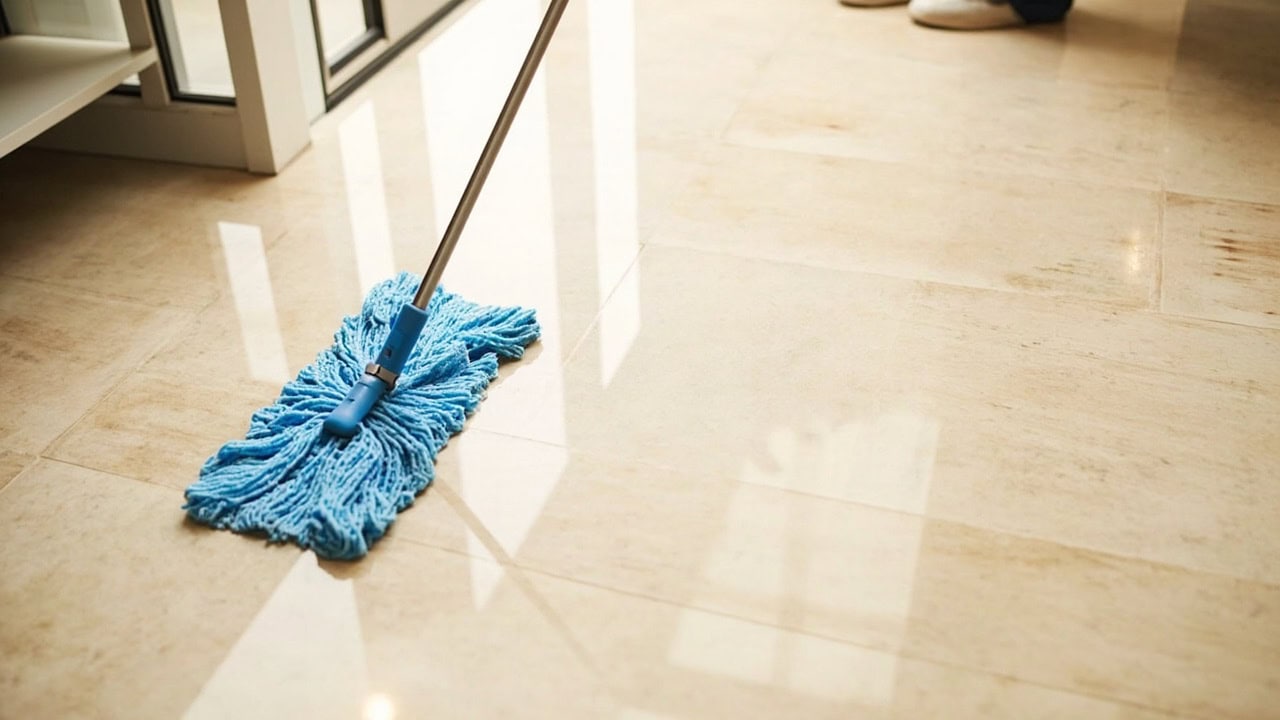
How to Clean Linoleum Floors

Linoleum floors must be cleaned with a pH-neutral cleaner at a dilution ratio of 1:20 and a barely-damp microfiber mop to preserve the protective finish and prevent moisture penetration. The cleaning process involves sweeping or vacuuming debris first, then mopping with the diluted solution in a figure-eight pattern, and allowing the floor to air-dry completely. Stubborn spots require a soft-bristled non-abrasive scrub brush applied with gentle circular motions and immediate rinsing. Never use bleach, ammonia, or steam cleaners on linoleum — these cause permanent etching, discoloration, and surface degradation.
What You Need Before You Start
Gathering the right supplies before you begin ensures the cleaning process goes smoothly and protects your linoleum from accidental damage. Using incorrect tools or products is the leading cause of finish degradation in linoleum floors, so precision matters here more than with most other hard-surface floors.
- Soft-bristled broom or vacuum with bare-floor attachment — the bare-floor setting disengages the beater bar that can scratch and dent linoleum surfaces
- pH-neutral cleaner (pH 7–8) at 1:20 dilution ratio with warm (lukewarm) water — alkaline or acidic cleaners outside this range break down the protective urethane coating
- Microfiber mop with a barely-damp application technique — microfiber traps dirt and debris without scratching, and keeping the mop barely damp prevents moisture from pooling at seams
- Non-abrasive scrub brush for spot treatment — nylon-bristled or soft-bristled brushes are safe; never use steel wool or scouring pads
- Two buckets — one for the cleaning solution, one for clean rinse water — deters residue buildup that sticky dirt faster
- Optional: linoleum floor polish or finish sealer for monthly maintenance — use only products formulated specifically for linoleum; wax-based products cause yellowing with repeated use
Step-by-Step Cleaning Process
Follow these steps in sequence for the most effective clean and the longest-lasting results. Skipping the rinse step or using excessive water are the two most common mistakes that compromise linoleum’s appearance between cleanings.
- Remove loose debris — Sweep or vacuum the entire linoleum surface to eliminate dust, dirt, and pet hair. Use a soft-bristled attachment or a vacuum set to bare-floor mode to prevent scratching the floor’s protective layer. Dust and grit act as abrasive particles underfoot; daily sweeping in high-traffic areas prevents these particles from being ground into the finish.
- Prepare cleaning solution — Mix pH-neutral cleaner with warm (lukewarm) water at a 1:20 dilution ratio in a bucket. Always test on a small inconspicuous area first — a spot near a cabinet or in a corner — to confirm no discoloration or finish damage occurs before proceeding across the entire floor. Water temperature should be lukewarm or cool; never use hot water, as heat can soften the adhesive under linoleum seams.
- Apply solution with microfiber mop — Dip the microfiber mop into the solution and wring out until barely damp. Working in four- to six-foot sections, mop in a figure-eight pattern from the far corner toward the door. The figure-eight pattern ensures even coverage without pushing dirty water into clean areas. A barely-damp mop prevents moisture from pooling at seams and corners, where linoleum expands and contracts.
- Spot-treat stubborn areas — For scuff marks or sticky spots, apply a small amount of the cleaning solution directly and scrub gently with a soft non-abrasive scrub brush using circular motions. For tougher scuffs, a paste of baking soda applied gently also works without damaging the finish. Rinse the spot immediately with clean water to remove any residue. Some professionals also use a few drops of baby oil or WD-40 applied to the scuff, followed by a thorough rinse — but these should be used sparingly and only on stubborn marks.
- Rinse the floor — Fill a second bucket with clean, cool water and rinse the mop. Go over the entire floor with the clean water to remove any detergent residue left by the cleaning solution. Detergents left behind create a sticky film that attracts dirt faster, causes streaking, and eventually dulls the finish. Change the rinse water when it becomes visibly dirty.
- Allow to air-dry completely — Let the linoleum dry naturally for 30–60 minutes before walking on it. Do not use a fan or heat source as rapid drying can cause warping at seams. The floor must be thoroughly dry before applying any polish or finish sealer. Walking on a damp linoleum floor creates footprints in the finish and can cause slipping hazards.
- Apply optional finish sealer (monthly) — For monthly maintenance, apply a thin coat of linoleum floor polish or finish sealer with a clean microfiber applicator. Apply 1–2 thin coats, allowing each to dry completely between applications — typically 20–30 minutes per coat. This restores shine and adds an extra layer of protection against wear. Linoleum manufacturers recommend polishing floors when they begin to look dull. Do not over-work any area during application, as this causes streaking.
Linoleum-Specific Considerations
Linoleum differs from other hard-surface floors in a critical way: it is water-resistant but not waterproof at the seams. The linseed oil and cork content in linoleum make it susceptible to moisture damage if liquids are allowed to pool or seep beneath the surface. Understanding what damages linoleum is just as important as knowing how to clean it.
| Action | Recommendation |
|---|---|
| Steam cleaning | Never — steam penetrates seams and causes delamination of the adhesive layer beneath the linoleum |
| Bleach or ammonia | Never — causes permanent discoloration, finish etching, and degrades the urethane protective coating |
| Abrasive scrubbers | Never — steel wool and scouring pads scratch and permanently damage the protective layer |
| Excessive water | Avoid — linoleum is water-resistant but not waterproof at seams; saturated mops leave moisture that causes peeling and mold growth |
| Vinegar (undiluted or diluted) | Avoid — vinegar’s 5% acetic acid content degrades the finish over time, even at low concentrations |
| Wax-based products | Use sparingly — modern linoleum with factory-applied finishes does not require wax; buildup creates yellowing and stripping difficulty |
| Hot water | Never — heat softens the adhesive under linoleum seams, leading to edge curling and bubbling |
| Rubber-backed rugs | Avoid — rubber backing traps moisture and can stain or discolor the linoleum surface over time |
Drying and Finishing Linoleum Floors
Proper drying is a critical and often overlooked step in linoleum care. Unlike ceramic tile or vinyl plank, linoleum is a bio-based material that responds to changes in temperature and humidity. Rushing the drying process or applying polish to a damp floor creates more problems than it solves.
Linoleum requires complete air-drying to prevent moisture from settling into seams and causing edge curling or subfloor damage. The natural drying time is 30–60 minutes depending on room temperature, humidity, and airflow. Using fans or heat sources to accelerate drying may seem helpful but causes the surface to dry faster than the seams, leading to warping at joints and separation at edges.
Walking on a damp linoleum floor creates visible footprints in the finish and poses a slipping hazard. Even after the surface appears dry, allow an additional 30 minutes before heavy foot traffic or moving furniture back into the room. Floor polish or finish sealer should only be applied after the floor has fully cured — at least 1 hour after cleaning — for optimal adhesion. Applying polish to a barely-dry surface results in streaking, clouding, and poor bonding to the underlying finish.
To maintain the floor’s shine between full cleanings, dust-mop daily using a clean microfiber pad to pick up abrasive particles before they scratch the surface. Perform a full wet-mop with the pH-neutral solution weekly, and apply a thin coat of finish sealer monthly in high-traffic areas. A well-maintained linoleum floor can retain its original appearance for 20–40 years; neglect dramatically shortens this lifespan.
Common Mistakes When Cleaning Linoleum Floors
These mistakes account for the majority of linoleum damage complaints and premature wear. Every one of them is preventable with the right approach.
Using too much water
Saturated mops leave moisture at seams and corners where linoleum expands and contracts, leading to peeling, edge curling, and mold growth in the subfloor. Always wring the mop until it is barely damp and work in small sections. If a spill occurs, dry the area immediately — do not allow liquid to sit for any length of time.
Using acidic or alkaline cleaners
Products outside the neutral pH range of 7–8 break down the protective urethane coating on modern linoleum and cause permanent dulling. Vinegar — even diluted — is too acidic for linoleum. Ammonia-based cleaners strip polish and degrade the adhesive beneath the surface. Always verify the pH of any cleaner before use, and when in doubt, choose a product specifically labeled for linoleum.
Skipping the rinse step
Cleaning solution residue creates a sticky film that attracts dirt faster and causes streaking on the final result. Detergent buildup also gradually dulls the finish and can cause a hazy appearance that is difficult to remove without stripping. Always finish with a clean-water rinse, even if the floor looks clean after mopping.
Applying wax unnecessarily
Modern linoleum with factory-applied urethane finishes does not require wax. Wax buildup creates yellowing over time and becomes extremely difficult to remove without aggressive stripping chemicals that themselves damage the floor. If the floor appears dull after proper cleaning, a thin coat of linoleum-specific floor polish (not wax) is the correct solution. Floors should never be stripped more than once per year.
Using a standard vacuum without bare-floor mode
Vacuum beater bars spin at high speed and can scratch, dent, and scuff the linoleum surface, especially in high-traffic areas. Always engage the bare-floor setting or use a soft-bristled broom before wet-mopping. This is the single most impactful daily-prevention step for maintaining a scratch-free surface.
Frequently Asked Questions
Q: What is the best cleaner for linoleum floors?
A: A pH-neutral cleaner with a dilution ratio of 1:20 is the best choice for linoleum floors — it cleans effectively without degrading the protective urethane finish. The ideal pH range is 7–8 (neutral to slightly alkaline). Avoid vinegar, bleach, ammonia, and steam, as these cause permanent etching, discoloration, and seam damage.
Q: Can I use a steam mop on linoleum floors?
A: No — steam mops should never be used on linoleum floors. The high temperature and moisture penetrate seams and cause the adhesive beneath to soften, leading to edge curling, delamination, and bubbling that cannot be repaired. Steam also degrades the protective urethane coating on modern linoleum.
Q: How do I remove scuff marks from linoleum?
A: Remove scuff marks from linoleum by applying a small amount of pH-neutral cleaner directly to the spot and scrubbing gently with a soft non-abrasive scrub brush using circular motions. Rinse immediately with clean water and allow to dry. For tough scuffs, a baking soda paste applied gently also works without damaging the finish. Some professionals also use small amounts of baby oil or WD-40, followed by a thorough rinse — but these should be used sparingly and only on stubborn marks.
Q: How often should linoleum floors be cleaned?
A: Linoleum floors should be dust-mopped or vacuumed daily and wet-mopped with a pH-neutral solution weekly to maintain their appearance and protective finish. High-traffic areas may require more frequent cleaning. A monthly application of floor polish or finish sealer (1–2 thin coats) restores shine and adds an extra layer of protection. Floors should never be stripped (deep-stripped) more than once per year.
References
- Bob Vila. (n.d.). How to Clean Linoleum Floors. Bob Vila. https://www.bobvila.com/articles/how-to-clean-linoleum-floors/
- Armstrong Flooring. (n.d.). How to Clean Linoleum Floors. Armstrong Flooring. https://www.armstrongflooring.com/
- The Spruce. (n.d.). How to Clean Linoleum Floors. The Spruce. https://www.thespruce.com/how-to-clean-linoleum-floors-5089659
- U.S. Environmental Protection Agency. (n.d.). Cleaning and Disinfection for Households. EPA. https://www.epa.gov/coronavirus/cleaning-and-disinfecting-households


