
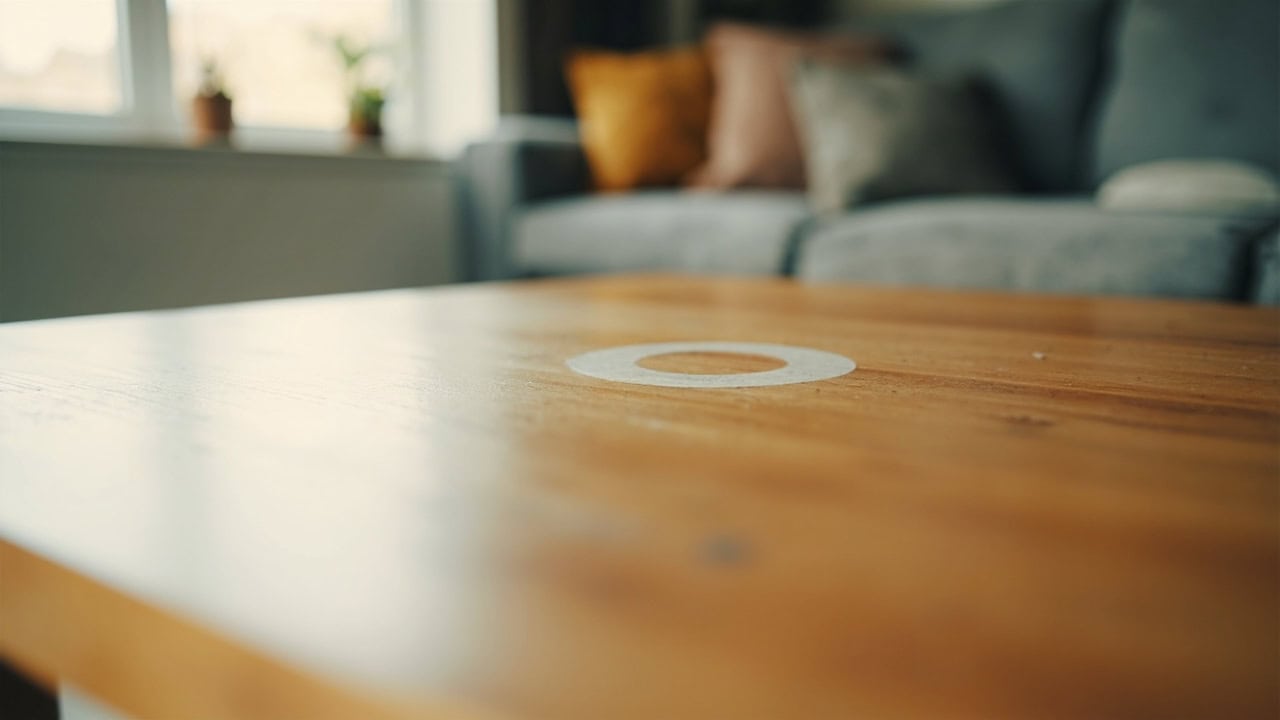
How to Remove White Rings from Wood Furniture

White rings on wood furniture are caused by moisture trapped between the finish and the wood surface, creating a hazy milky appearance. These rings can be removed using heat evaporation, mild acid treatment, or abrasive refinement depending on the depth of the damage. The most effective household method is applying heat from a hair dryer held 6 inches from the surface while buffing with a soft cloth. For penetrating rings that reach the wood grain, commercial ring removal products or a mild abrasive paste may be required.
What Causes White Rings on Wood Furniture
White rings occur when moisture penetrates the wood finish without reaching the actual wood grain. The trapped water molecules scatter light, creating the milky or cloudy appearance that gives these marks their characteristic look. When water vapor becomes entrapped beneath a film-forming finish such as polyurethane, lacquer, or shellac, the light refraction at the moisture-finish interface produces the white coloration rather than the water itself being visible.
These rings commonly form from hot mugs, cold glasses, sweating bottles, or wet objects placed on unprotected wood surfaces. A hot coffee mug creates condensation on the base that can seep through microscopic pores in the finish, while a cold glass of iced tea causes moisture to condense on warm room-temperature wood. The temperature differential accelerates moisture penetration into the finish layer. Leaving wet items on wood for extended periods virtually guarantees ring formation, with visible rings appearing in as little as 15 to 30 minutes depending on the temperature differential and the condition of the finish.
Rings that appear white or cloudy are trapped in the finish layer and represent surface-level damage that is often reversible. Rings that appear dark have penetrated through the finish to bare wood itself, where the water has interacted with tannins or dyes in the wood fiber, causing discoloration that extends deeper and requires more intensive treatment. The color difference serves as a diagnostic tool: white means the damage is confined to the finish layer and can be treated without sanding, while dark rings indicate the wood itself has been affected.
What NOT to Use on White Rings
Understanding which cleaning approaches cause further damage is just as important as knowing which methods work. Many common household treatments can worsen the problem or permanently damage the wood finish, extending treatment time and potentially requiring professional refinishing to correct.
- Do not apply water directly to the ring — this worsens the moisture problem by adding more liquid to an already moisture-saturated finish layer
- Avoid silicone-based furniture polishes that seal in moisture and prevent evaporation, effectively locking the ring into the finish permanently
- Never use ammonia-based cleaners on polyurethane finishes as they cause clouding, oxidation, and premature degradation of the polymer coating
- Do not use abrasive scrubbers, steel wool, or rough cloths that scratch the finish and create pathways for moisture to penetrate deeper
- Avoid placing hot items directly on wood without coasters or protective pads — prevention costs nothing compared to treatment time
Methods to Remove White Rings from Wood
The appropriate removal method depends on the depth of the ring and the type of finish on your furniture. Begin with the gentlest method first and progress to more aggressive treatments only if necessary. Surface-level rings typically respond to heat treatment within a few applications, while deeper rings may require chemical treatment or commercial products.
Method 1: Heat and Buff (For Light Surface Rings)
This method works by applying gentle heat to evaporate the trapped moisture from the finish layer. The heat raises the temperature of the finish, increasing vapor pressure and allowing water molecules to escape through the surface. This is the least invasive method and is safe for all types of film-forming finishes including polyurethane, lacquer, and shellac.
- Set hair dryer to medium heat — approximately 130°F to 150°F (54°C to 66°C) at the surface — and hold the dryer 6 inches (15 cm) above the white ring
- Keep the dryer moving in small circular motions to avoid overheating any single spot, which can cause finish damage or discoloration
- Monitor the ring as the heat evaporates trapped moisture — the milky appearance will begin to fade within 30 to 60 seconds of heat application
- Buff the area immediately with a soft microfiber cloth using gentle circular motions to avoid scratching the softened finish
- If ring persists, repeat 2–3 times with 30-second intervals between applications to allow the finish to cool and stabilize
Method 2: White Vinegar Solution (For Moderate Rings)
White distilled vinegar contains 5% acetic acid by volume, giving it a pH of approximately 2.5 to 3.0. This mild acidity helps break down the bond between the trapped moisture and the finish while the oil component (olive oil) lubricates the surface and conditions the finish. The acid does not penetrate deeply enough to damage the underlying wood when used correctly, but it does help dissolve mineral deposits and residue that can trap moisture in the finish layer.
- Mix 1 part white distilled vinegar (pH 2.5–3.0) with 2 parts olive oil in a small bowl — the oil serves as a carrier and prevents the vinegar from drying too quickly
- Dip a soft cotton cloth into the solution and wring out excess — the cloth should be damp but not saturated
- Apply to the white ring using gentle circular motions, working from the outside edge toward the center to avoid spreading the moisture ring
- Let the solution sit for 2–3 minutes to penetrate the finish layer and dissolve trapped moisture residues
- Buff dry with a clean soft cloth working with the wood grain to avoid leaving streaks or residue buildup
Method 3: Commercial Ring Remover (For Stubborn Rings)
Commercial ring removal products are formulated specifically for use on wood finishes and contain a balanced combination of mild abrasives, solvents, and conditioning agents that work together to lift trapped moisture from the finish layer. Products such as Howard’s Restor-A-Finish, Weiman Furniture Polish, or specialized ring removal gels are designed to be safe on all types of wood finishes when used according to manufacturer instructions.
- Apply a small amount (approximately 1/4 teaspoon) of commercial ring removal product designed for wood finishes to a soft cotton cloth
- Work the product into the ring using a soft cotton cloth with gentle pressure in circular motions — let the product do the work rather than forcing it
- Follow product instructions for dwell time — typically 30–60 seconds for gel-formulated products, allowing the active ingredients to penetrate and dissolve trapped moisture
- Wipe away excess product with a clean microfiber cloth, working with the grain to avoid streaking
- Polish the entire surface with a fresh cloth to blend the treated area with surrounding finish and restore uniform sheen
How to Prevent Future White Rings on Wood
Prevention is significantly more effective and less time-consuming than treatment. Implementing a consistent set of protective practices will virtually eliminate the occurrence of white rings on wood furniture while also extending the life of the finish and maintaining the furniture’s appearance.
- Always use coasters under glasses, mugs, and bottles on wood surfaces — felt-bottomed coasters provide additional protection against scratching
- Apply felt pads to the bottom of decorative objects, vases, candle holders, and collectibles to prevent both scratches and moisture transfer
- Use trivets or hot pads under hot dishes, serving ware, and cooking utensils — heat creates condensation and accelerates moisture penetration
- Reapply wood furniture polish or paste wax every 3–6 months to maintain a protective barrier on the finish surface
- Keep wood furniture away from direct sunlight and heat sources that cause temperature fluctuations leading to condensation
- Wipe up spills immediately using a soft dry cloth rather than allowing them to sit — the faster the response, the less chance of penetration
- Maintain indoor humidity levels between 30% and 50% relative humidity to minimize condensation formation on wood surfaces
When White Rings Require Professional Refinishing
Some ring damage extends beyond what home treatment methods can address. Recognizing when to involve a professional furniture restorer prevents wasted effort on treatments unlikely to succeed and protects the piece from further damage caused by excessive handling.
- Deep burns or scorches that have charring in the wood grain — heat damage that blackens the wood surface requires sanding and refinishing
- Rings that persist after trying all three removal methods — multiple failed attempts indicate the damage extends deeper than surface treatments can reach
- Multiple overlapping rings covering a large surface area — widespread damage requires complete finish removal and reapplication
- Antique furniture with fragile or cracked finish layers — older finishes may be more susceptible to further damage from treatment products
- Water damage with associated wood swelling or warping — structural wood damage requires professional assessment and potentially structural repairs
- Pieces with inlaid designs, veneer surfaces, or decorative finishes that could be damaged by abrasive treatment methods
Frequently Asked Questions
Q: Does mayonnaise really remove white rings from wood?
A: Mayonnaise can sometimes work on light white rings because the oil content helps lubricate and release trapped moisture from the finish. Apply a thick layer of mayonnaise to the ring, let it sit overnight (8–12 hours), then wipe clean and buff. The oils in mayonnaise — typically containing soybean oil at approximately 80% with egg yolk emulsifiers — penetrate the finish and help displace water molecules. This method is less reliable than heat or vinegar solutions but is safe for most finishes and worth trying on valuable antiques where chemical products pose too much risk.
Q: Can I use a clothes iron to remove white rings from wood?
A: Yes, but only with extreme caution. Place a soft cotton cloth over the ring and set an iron to low heat (synthetic setting, approximately 200°F to 250°F / 93°C to 121°C). Iron the cloth in small circles for 10–15 seconds, checking frequently. Never place a hot iron directly on wood or use high heat, as this can cause additional finish damage, melting, or discoloration. This method works on the same principle as hair dryer heat treatment but provides more direct and controllable warmth. Lift the cloth frequently to monitor progress and prevent overheating.
Q: Are white rings on wood permanent?
A: White rings that remain in the finish layer are not permanent and can usually be removed with heat, mild acid treatment, or commercial products. The trapped moisture can evaporate or be displaced using the methods described above. However, rings that have darkened the wood itself have penetrated deeper and may require sanding and refinishing to fully eliminate. Dark rings indicate the water has reached the bare wood and interacted with natural dyes or tannins in the wood fiber, causing staining that extends below the finish line.
Q: How long does it take for white rings to appear on wood?
A: White rings can form in as little as 15–30 minutes when moisture contacts unprotected wood finish. Hot liquids cause faster penetration than cold liquids due to increased vapor pressure and the greater temperature differential between the liquid and the wood surface. A hot coffee mug at 180°F to 200°F (82°C to 93°C) will create ring formation faster than a cold glass of iced tea at 40°F (4°C). Leaving wet items on wood surfaces overnight — approximately 8 hours — almost guarantees visible ring formation, particularly on newer or previously undamaged finishes.
References
- Wood Magazine. (2024). Wood Finishing: Types of Finishes and Application Techniques. Publisher.
- Bob Vila. (2024). How to Remove White Rings from Wood Furniture. Published guidance on household wood furniture restoration.
- Good Housekeeping. (2024). How to Remove Water Stains from Wood. Home care advisory with product recommendations.
- University of Wisconsin Wood Products Program. (2023). Wood Finish Selection Guide. Extension publication on finish types and applications.
- The Spruce. (2024). How to Remove White Rings from Wood Furniture. Home improvement resource with step-by-step instructions.


