
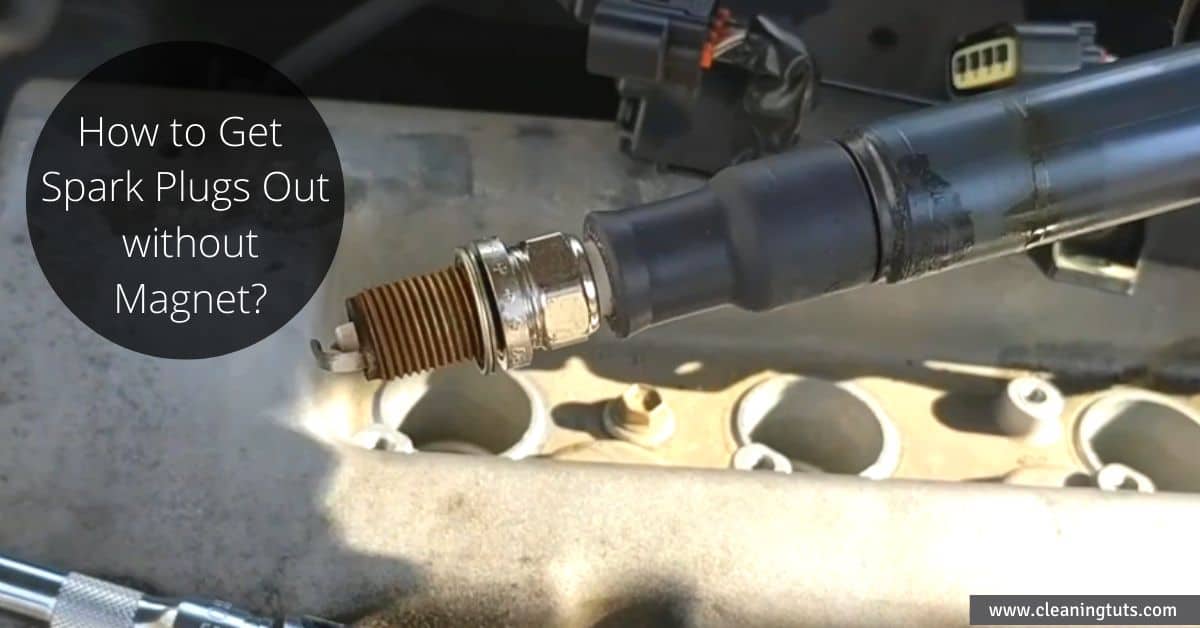
How to Get Spark Plugs Out without Magnet?

Removing spark plugs without a magnet requires a spark plug socket with a rubber insert that grips the plug’s ceramic body. A 5/8-inch (16mm) socket fits most passenger vehicle spark plugs; slide the socket over the plug, engage the hex head, and turn counterclockwise with a ratchet to back it out. If the socket won’t grip, use needle-nose pliers to grasp the exposed terminal and twist while pulling upward.
This guide covers four removal methods, step-by-step procedures, safety tips, and maintenance intervals so you can extract even seized spark plugs without a magnet.
Four Ways to Remove Spark Plugs Without a Magnet
Whether you’re dealing with a seized plug or just don’t have a magnet handy, these methods work on most passenger vehicle engines with standard 14mm or 16mm spark plug threads.
Spark Plug Socket with Rubber Insert
A spark plug socket is the most reliable tool for magnet-free removal. The rubber insert grips the spark plug’s ceramic insulator when the hex head engages. For most U.S. vehicles, a 5/8-inch (16mm) socket is standard; for metric applications, a 14mm socket covers most Asian and European engines.
Attach the socket to a ratchet and extension bar for leverage, then lower the socket over the spark plug until it seats fully. Turn counterclockwise until the plug backs out of the cylinder head.
Spark Plug Boot Remover Tool
A spark plug boot remover is a small handheld hook that releases the rubber boot sealing the spark plug well. Hook the end under the boot’s edge and pull upward to break the vacuum seal. Once the boot is off, the spark plug is exposed and accessible for socket removal.
Needle-Nose Pliers
When no socket is available, needle-nose pliers can grip the exposed spark plug terminal. Twist the pliers clockwise while applying steady upward pull to break the plug free from the cylinder head threads.
For particularly seized plugs, wrap the pliers’ tips with electrical tape to protect the terminal’s threads and prevent scratching the cylinder head bore.
Penetrating Lubricant for Seized Plugs
If rust or carbon buildup has seized the spark plug in the cylinder head, apply a penetrating oil such as WD-40 or a dedicated penetrating lubricant like PB Blaster. Allow 5–10 minutes for the lubricant to wick into the threads before attempting removal.
Spray the lubricant around the base where the spark plug meets the cylinder head. The lubricating agents reduce corrosion between the steel plug and aluminum cylinder head threads, preventing thread galling during extraction.
Step-by-Step Spark Plug Removal Without a Magnet
Tools Required
- Spark plug socket — 5/8-inch (16mm) for U.S. vehicles, 14mm for most import engines
- Ratchet with 3/8-inch drive
- Extension bar (6-inch minimum for deep-well plugs)
- Penetrating lubricant (WD-40, PB Blaster, or Kroil)
- Flashlight or inspection mirror
Step 1: Select the Correct Socket Size
Most passenger vehicle spark plugs require a 5/8-inch (16mm) or 14mm hex socket. Using the wrong size rounds the plug’s hex head, making subsequent removal nearly impossible. Check your vehicle’s service manual for the exact specification.
Step 2: Inspect the Rubber Insert
The rubber insert inside the socket holds the spark plug for extraction. If the insert is cracked, hardened, or missing, the socket cannot grip the plug. Replace worn sockets with a new one featuring a flexible rubber or foam collar that conforms to the spark plug’s ceramic body.
Step 3: Apply Penetrating Lubricant if Seized
For spark plugs that have not been removed in 30,000 miles or more, thread seizure is common. Apply penetrating lubricant at the base of the plug and wait 5–10 minutes before attempting removal. Never force the ratchet — excessive torque on seized threads risks snapping the plug’s porcelain.
Step 4: Extract the Spark Plug
Place the socket over the spark plug and push down to engage the hex head fully. Turn counterclockwise with the ratchet. If resistance is felt, stop and reapply lubricant rather than forcing through — snapped spark plugs require a helicoil repair or cylinder head removal.
Step 5: Inspect the Threads
After removal, inspect the cylinder head threads for damage. Dirty or damaged threads should be cleaned with a thread chaser tool before installing new plugs. Apply anti-seize compound to the threads of the new spark plug to prevent future seizing.
Spark Plug Replacement Intervals by Type
Replacing spark plugs at the correct interval prevents misfiring, poor fuel economy, and hard starting. Interval varies significantly by plug type:
| Spark Plug Type | Replacement Interval | Typical Gap |
|---|---|---|
| Copper (single-ground) | 10,000–20,000 miles | 0.025–0.035 in (0.6–0.9 mm) |
| Platinum (single-ground) | 30,000–60,000 miles | 0.035–0.045 in (0.9–1.1 mm) |
| Double platinum (extended life) | 60,000–100,000 miles | 0.040–0.050 in (1.0–1.3 mm) |
| Iridium (longest life) | 60,000–100,000+ miles | 0.040–0.052 in (1.0–1.3 mm) |
Safety Warnings and Common Mistakes
Avoiding these errors prevents cylinder head damage, broken plugs, and personal injury:
Using the Wrong Socket Size
A 1/2-inch socket applied to a 5/8-inch plug rounds the hex head. Once rounded, no tool can grip the plug — extraction then requires drilling or a special broken plug remover kit.
Forcing a Seized Plug
Exceeding 25–30 ft-lbs of torque on seized plug threads snaps the porcelain. Broken spark plug pieces left in the cylinder head require professional extraction with a tap-and-die kit or helicoil insert.
Skipping Anti-Seize on Reinstallation
Aluminum cylinder heads react with steel plug threads, causing galvanic corrosion. Apply a thin coat of nickel-based anti-seize compound (rated to 1800°F) to the plug threads before reinstallation to prevent future seizing.
Over-Applying Lubricant
Excessive penetrating oil drips into the cylinder bore and contaminates the oil film on the cylinder wall, causing misfiring. Apply lubricant sparingly — a single spray at the base is sufficient.
Frequently Asked Questions
How can you prevent your spark plugs from going bad?
Replace copper spark plugs every 10,000–20,000 miles, platinum plugs every 30,000–60,000 miles, and iridium plugs every 60,000–100,000 miles. Avoid driving on dusty roads and ensure your ignition system is functioning properly to prevent fouling.
What happens if you don’t replace your spark plugs?
Worn spark plugs cause engine misfiring, reduced fuel economy (up to 30% worse), hard starting, rough idle, and increased hydrocarbon emissions. In severe cases, a failed plug damages the catalytic converter, which costs $500–$2,000 to replace.
How often do you need to replace your spark plugs?
Replacement intervals range from 10,000 miles (copper) to 100,000 miles (iridium). Check your vehicle’s owner manual for the manufacturer’s specific recommendation.
How do you know when it’s time to replace your spark plugs?
Signs include decreased fuel economy of 1–3 mpg, engine misfiring under load, hard starting in cold weather, rough idle, and the check engine light illuminating with codes P0300–P0308 (cylinder misfire).
Do all cars have spark plugs?
No. Gasoline and natural gas engines use spark plugs. Diesel engines compress air until it reaches ignition temperature and do not require spark plugs. Some hybrid vehicles use both a gasoline engine (with spark plugs) and an electric motor.
What socket size fits most spark plugs?
A 5/8-inch (16mm) socket fits most U.S. and Asian passenger vehicle spark plugs. European and some Asian manufacturers use 14mm hex sockets. Consult your owner’s manual for the exact size.
Quick-Reference Specifications
| Specification | Value |
|---|---|
| Common socket sizes (U.S.) | 5/8 inch (16mm) |
| Common socket sizes (import) | 14mm |
| Spark plug gap range | 0.024–0.071 in (0.6–1.8mm) |
| Seized plug torque limit | 25–30 ft-lbs before risk of breakage |
| Anti-seize temperature rating | 1800°F (980°C) |
| Penetrating oil dwell time | 5–10 minutes |
Tools for Similar Tight-Fit Jobs
Just as a spark plug socket with a rubber insert grips and pulls without a magnet, the right specialized tool solves other hard-to-reach automotive problems. Learn how to remove a jack from under a car using the right leverage approach, and explore the Cleaning Glossary for more automotive and household extraction techniques.
References
- Wikipedia. (2024). Spark plug — Wikipedia. Wikipedia.
- Champion Auto Parts. (2024). Spark Plug Application Catalog. Champion Auto Parts.
- NGK Spark Plugs. (2024). Spark Plug Technical Information. NGK Spark Plugs.
- U.S. Department of Energy, Office of Energy Efficiency and Renewable Energy. (2024). Vehicle Maintenance: Spark Plugs. U.S. DOE.

