
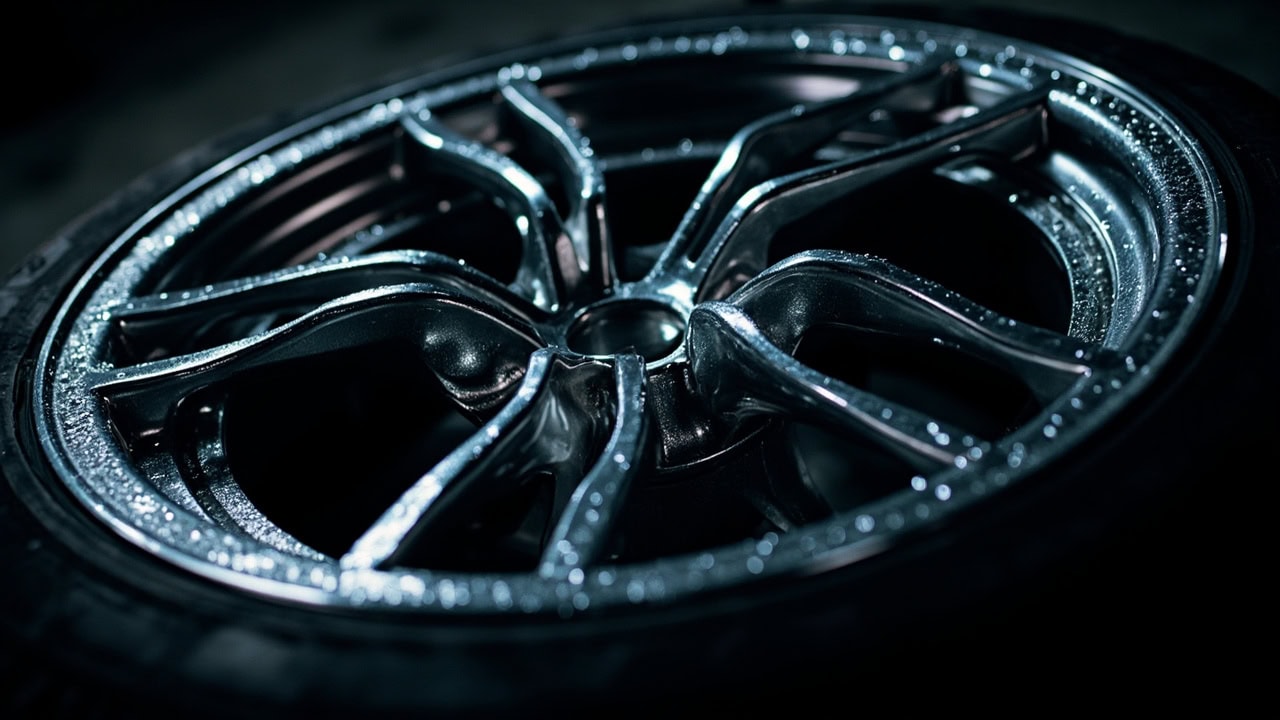
How to Clean Car Tires and Rims

The most effective method to clean car tires and rims involves applying a pH-neutral tire-specific cleaner at a 1:10 dilution ratio, agitating with a detailing brush to loosen brake dust and road grime, rinsing thoroughly at 1200–1700 PSI, and drying completely with a microfiber towel to prevent water-spot etching on polished rims. Always clean tires before rims to prevent dirty rinse water from recontaminating cleaned surfaces, and never use acidic wheel cleaners on aluminum or chrome rims because they cause irreversible pitting and dezincification.
Brake dust — composed primarily of iron particles abraded from grey cast iron brake rotors (SAE specification J431 G3000), along with carbon residue and pad friction material — is the single most damaging contaminant your wheels face. This metallic dust bonds to wheel finishes through heat-generated adhesion, and if left untreated, corrodes chrome, stains aluminum alloys, and etches clear-coated surfaces. A disciplined cleaning routine using the correct tools and chemicals removes this dust before it causes permanent damage.
What You Need Before You Start
Gathering the right supplies before you begin prevents mid-process delays that allow cleaners to dry on the wheel surface — one of the most common causes of streaking and residue buildup. Every item below serves a specific purpose in the cleaning sequence, and substituting improper alternatives is the fastest path to scratched rims or degraded finishes.
- pH-neutral tire and wheel cleaner — Use a 1:10 dilution ratio for standard maintenance cleaning and 1:1 for heavy brake dust accumulation. pH-neutral formulas (pH 6.5–7.5) clean effectively without corroding metal finishes or degrading protective clear coats.
- Pressure washer or garden hose with spray nozzle — 1200–1700 PSI is the optimal range for automotive wheel cleaning, providing sufficient force to rinse away embedded contaminants without forcing water past wheel bearings or damaging delicate finishes.
- Detailing brush with soft nylon bristles — Never use metal wire brushes on any wheel surface. Soft nylon bristles agitate cleaner into crevices without scratching polished chrome, aluminum, or painted rims.
- Wheel-specific microfiber wash mitt — Dedicated solely to wheel cleaning to prevent cross-contamination with body-panel washing.
- Tire shine applicator or foam applicator pad — For even distribution of tire dressing across the sidewall. Two microfiber drying towels — One dedicated to rims, one to tires. Never use the same towel on both surfaces.
- Wheel well brush — Long-handled with flexible bristles for accessing the inner rim barrel where brake dust settles heaviest.
- Optional: dedicated wheel chocks or wheel stand — Allows 360° access around each wheel for thorough cleaning of the barrel and behind-spoke areas.
Work in a shaded area or during cooler parts of the day whenever possible. Direct sunlight heats wheel surfaces to temperatures exceeding 60 °C (140 °F), which causes cleaners to evaporate before their full dwell time is reached, reducing cleaning effectiveness and increasing the risk of residue staining.
Step-by-Step Cleaning Process
Follow this seven-step sequence from start to finish without skipping steps or reversing the order. The process is designed to move contaminants away from cleaned surfaces — cleaning tires before rims prevents dirty rinse water from running down onto freshly cleaned wheel faces.
- Rinse the wheels — Begin by rinsing all four wheels with plain water to remove loose dirt, sand, and road debris. This preliminary rinse prevents these abrasive particles from being ground into the wheel finish during the scrubbing phase. Work from the top of each wheel downward, ensuring the inner barrel receives a direct stream of water to dislodge loose brake dust accumulation.
- Apply tire cleaner — Spray pH-neutral tire cleaner onto the tire sidewall at a distance of 6–8 inches, working from top to bottom in an even sweeping motion. Apply enough product to coat the entire sidewall with a visible layer of foam. Allow a 3–5 minute dwell time for the surfactant agents to penetrate and break down road film, grease, and embedded brake dust particles. Do not allow the cleaner to dry on the surface — if temperatures are high, work on one wheel at a time to maintain wet contact.
- Agitate with detailing brush — Use the soft nylon detailing brush to scrub the tire sidewall in firm circular motions, working the cleaner deep into the tread grooves and shoulder blocks where road film accumulates most heavily. The mechanical agitation is essential — surfactant chemistry alone cannot break the adhesive bond between brake dust particles and rubber without physical assistance. Pay particular attention to the tire sidewall lettering and rim protector ridge, where grime collects in the recessed mold details.
- Clean the rims — Spray wheel cleaner onto the rim surface and use the wheel-specific wash mitt to clean the entire rim face, barrel, and behind-spoke areas. The inner barrel is the most critical and most often neglected area — brake dust settles here in the heaviest concentrations because the centrifugal force of wheel rotation flings particles outward against the inner rim surface. Use the wheel well brush to reach deep into the barrel, scrubbing in a back-and-forth motion along the barrel circumference. For multi-spoke designs, thread the brush between each spoke gap to access the barrel surface behind each spoke.
- Rinse thoroughly — Pressure washing at 1200–1700 PSI rinses each wheel completely, working from top to bottom to direct contaminated water away from cleaned areas. Hold the pressure washer nozzle at least 12 inches from the rim surface to avoid concentrating force on any single point, which could damage clear coats or force water past wheel seals. Incomplete rinsing leaves surfactant residue that causes streaking, filming, and actually attracts more brake dust to the wheel surface through electrostatic adhesion.
- Dry the rims — Use a dedicated microfiber drying towel to hand-dry all rim surfaces immediately after rinsing. Pat dry rather than wipe on polished chrome to avoid micro-scratches from any debris particles that may remain trapped in the towel fibers. Dry the barrel, behind spokes, center cap, and valve stem area completely. Water left to air-dry on polished aluminum or chrome causes mineral deposit etching — permanent marks that require polishing compound to remove.
- Apply tire dressing — Apply a water-based tire shine evenly across the entire sidewall using an applicator pad, working in thin overlapping passes. Avoid silicone-based dressings — while they produce a higher-gloss finish, they are more prone to sling-off onto the freshly cleaned rims and adjacent body panels when the vehicle is driven. Tire dressing should be applied only to a completely dry tire surface; water trapped beneath the dressing causes uneven coverage and reduces product adhesion.
Tire and Rim-Specific Considerations
Not all wheel materials respond the same way to cleaning chemicals and mechanical agitation. Using a single approach across different rim types is a common cause of finish damage. The following material-specific guidelines ensure you match your cleaning method to the wheel surface you are treating.
Chrome Rims
Chrome rims are the most chemically sensitive wheel finish. Avoid acidic or abrasive wheel cleaners entirely — chrome plating is extremely thin (typically 0.5–1.5 microns) and any acid exposure causes dezincification, the selective leaching of zinc from the underlying brass and zinc-alloy layers. This process produces irreversible pitting, cloudiness, and structural weakening of the chrome layer. Chloride-based brake dust compounds accelerate this corrosion when combined with moisture, making prompt cleaning essential. Use only pH-neutral formulas and the softest available detailing brush. For more on chrome surface care across automotive and household applications, see our guide to cleaning chrome car accessories.
Aluminum Alloy Rims
Aluminum alloy wheels — the most common factory wheel type — share chrome’s sensitivity to acidic cleaners. Avoid bleach-containing products specifically, as sodium hypochlorite causes rapid oxidation and darkening of bare aluminum surfaces. Clear-coated alloys tolerate pH-neutral cleaners well but can be damaged by harsh solvents that dissolve the clear coat layer. If the clear coat is already compromised (visible as dull, chalky patches), extra care is required because the exposed aluminum beneath oxidizes rapidly when exposed to alkaline cleaning solutions.
Painted or Powder-Coated Rims
Painted and powder-coated wheels are the most tolerant of pH-neutral cleaners and can withstand slightly more aggressive agitation. However, harsh solvents — including those containing petroleum distillates or strong alkalies — will degrade the paint or powder coating over time, causing discoloration, peeling, or loss of gloss. Always rinse immediately if wheel cleaner overspray contacts painted body panels adjacent to the wheel wells, as the cleaner can streak or dull automotive clear coat if left to dry.
Steel Wheels
Steel wheels — typically found on base-model vehicles or used as spare tires — are more resistant to chemical damage than alloy or chrome wheels. They can tolerate mildly acidic cleaners, but a pH-neutral approach remains the best practice for consistency and to protect the tire-to-rim bead seal. Steel wheels are primarily vulnerable to rust rather than chemical etching; ensure thorough drying after each cleaning, particularly in the recessed areas where water pools around the lug nut seats.
Run-Flat Tires and Low-Profile Tires
Run-flat tires and low-profile tires (aspect ratios of 40 or below) require extra caution around the tire sidewall near the rim edge. The reinforced sidewall construction of run-flat tires makes the bead area stiffer and less forgiving — aggressive scrubbing with stiff bristles near the rim lip can cause abrasion marks. Use only soft-bristled brushes and avoid applying heavy downward pressure when cleaning the shoulder area where the tire meets the rim. For low-profile tires, the reduced sidewall height means less buffer between your brush and the rim edge, increasing the risk of contact scratches.
Drying and Finishing
The drying and finishing stage is where the difference between an acceptable result and a professional-quality result becomes apparent. Cutting corners here undermines the entire cleaning effort — residual moisture causes water spots, and improperly applied dressing creates sling-off that recontaminates the rims you just cleaned.
- Pat dry rather than wipe on polished chrome rims to avoid micro-scratches from trapped debris particles. Wiping motions drag any remaining grit across the surface, creating fine linear scratches visible in direct sunlight.
- Use a separate dedicated microfiber towel for rims versus tires to prevent cross-contamination of dressing products. Tire dressing transferred onto rim surfaces creates an oily film that attracts brake dust at an accelerated rate.
- Inspect for remaining brake dust in barrel recesses and behind spokes after drying. Touch up with the wheel well brush and a fresh application of cleaner if dark patches remain — brake dust left after the first pass will bond more firmly as it dries.
- Allow freshly applied tire dressing to cure for 10–15 minutes before driving. This curing period lets the water-based solvents evaporate and the dressing polymers bond to the rubber surface. Driving before the cure is complete causes sling-off — dressing droplets spun onto the rims, fenders, and adjacent body panels.
Common Mistakes to Avoid
Even experienced detailers make these errors. Each mistake has a specific mechanism of damage — understanding why it matters helps you avoid the shortcut entirely.
- Using household glass cleaners or all-purpose cleaners on rims — These products frequently contain ammonia, alcohol, or acidic compounds that degrade the protective clear coats on alloy wheels. Automotive clear coats are formulated to resist road contaminants, not household cleaning chemicals. Ammonia-based glass cleaner strips the hydrophobic layer from the clear coat, leaving the wheel surface vulnerable to brake dust adhesion and UV degradation.
- Letting tire cleaner dry completely before rinsing — When surfactant-based cleaners dry on the wheel surface, the dissolved contaminants re-deposit in a concentrated film that is more difficult to remove than the original soil. This dried residue also creates a sticky surface layer that actively attracts additional brake dust through electrostatic adhesion. Work in small sections and rinse before the cleaner flashes dry.
- Using a single wash mitt for both tires and rims — Brake dust contains microscopic iron particles (primarily from grey cast iron rotors per SAE J431 G3000 specification) that embed in wash mitt fibers. Using the same mitt on polished rims transfers these iron abrasives directly onto the wheel face, causing micro-scratching that appears as a hazy, swirled finish under bright light. This damage is cumulative and requires machine polishing to correct.
- Applying tire dressing to a wet tire — Water trapped between the tire sidewall and the dressing layer creates a barrier that prevents the dressing polymers from bonding to the rubber surface. The result is uneven coverage with dark streaks where the dressing concentrated and light patches where water diluted it. The dressing also washes off within days rather than lasting the expected 1–2 weeks.
- Skipping the wheel well area — The wheel well (inner fender liner) accumulates road grit, salt, and debris that readily redeposits onto the clean rim and tire sidewall during driving. A clean wheel inside a filthy wheel well will appear dirty again within miles of driving. Rinse the wheel well during each cleaning session using the pressure washer’s wide-fan spray pattern.
Frequently Asked Questions
Q: What is the best pressure washer PSI for cleaning car rims?
A: A pressure washer between 1200 and 1700 PSI provides enough force to rinse brake dust and cleaner residue without damaging wheel finishes or forcing water past seals. Stay at least 12 inches away from the rim surface when spraying. Pressure below 1200 PSI may require additional manual agitation to fully remove embedded contaminants, while pressure above 1700 PSI risks forcing water past wheel bearing seals and damaging delicate chrome or clear-coat finishes.
Q: Can I use the same brush to clean my car tires and rims?
A: No — always use separate brushes or mitts for tires and rims. Brake dust contains microscopic iron particles (abraded from grey cast iron rotors) that embed in brush bristles; using the same brush on rims transfers these abrasives directly onto polished surfaces, causing micro-scratching that appears as a permanent hazy swirl pattern. This damage accumulates over repeated cleaning sessions and requires machine polishing with a cutting compound to remove.
Q: How often should I clean my car tires and rims?
A: Clean car tires and rims every 1–2 weeks under normal driving conditions. Increase the frequency to weekly if you drive in conditions that produce heavy brake usage (stop-and-go city traffic, mountain roads), coastal environments with salt air, or regions that apply winter road treatments containing magnesium chloride and sodium chloride — both of which accelerate corrosion on exposed metal wheel surfaces.
Q: What is dezincification and how does it affect car rims?
A: Dezincification is the selective removal of zinc from brass and zinc-alloy wheel components (such as chrome-plated lug nuts and valve stems) due to exposure to acidic cleaners or galvanic corrosion. The process leaves behind a porous copper-rich surface that appears discolored, feels rough, and loses structural integrity over time. Chrome rims are particularly vulnerable because the chrome plating layer is thin enough (0.5–1.5 microns) that acid penetrates to the zinc-alloy underlayer. Once dezincification occurs, the damage is irreversible — the affected component must be replaced. This same corrosion mechanism affects chrome bathroom fixtures, which is why pH-neutral cleaning is universally recommended across all chrome surfaces.
References
- Ihm, M. “Introduction to Gray Cast Iron Brake Rotor Metallurgy.” SAE Technical Paper. SAE International. SAE.org
- EBC Brakes. “Brake Dust — Composition and Wheel Finish Damage.” EBC Brakes Technical Library. EBCBrakes.com
- “Disc Brake.” Wikipedia, Wikimedia Foundation. Wikipedia — Disc Brake
- ASTM International. “ASTM B689 — Standard Specification for Electroplated Engineering Chromium Coatings on Ferrous Substrates.” ASTM.org. ASTM.org


