
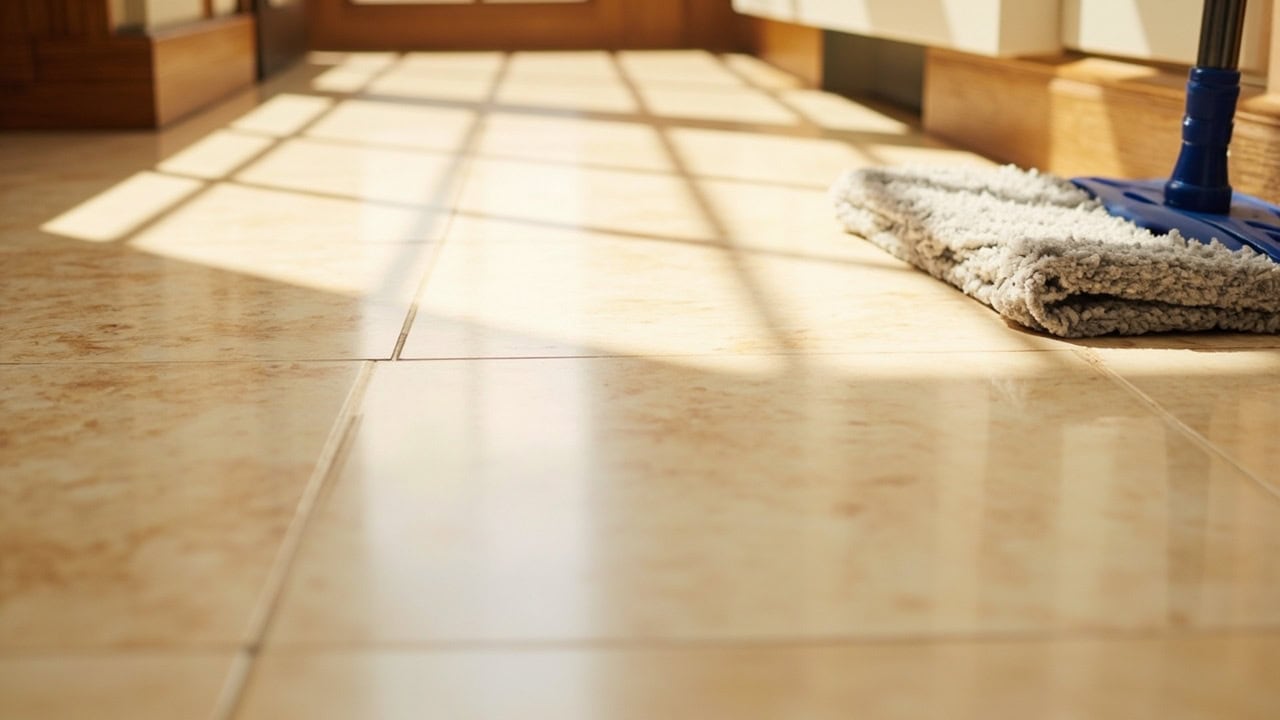
How to Clean Travertine Floors: Complete Guide

Travertine floors must be cleaned with a pH-neutral cleaner at a 1:20 dilution ratio and a barely-damp microfiber mop to prevent etching — the calcium carbonate composition makes travertine highly vulnerable to acid-based cleaners that cause dull spots and surface degradation. Unlike ceramic or porcelain tile, travertine’s porous limestone structure absorbs liquids and stains quickly, requiring immediate spill cleanup and periodic resealing every 3–5 years to maintain its natural finish. Avoid vinegar, bleach, ammonia, and abrasive tools on travertine floors, as these cause permanent surface damage that cannot be restored without professional grinding.
What You Need Before You Start
Having the correct tools and cleaning solutions on hand before you begin prevents unnecessary floor traffic and ensures you never have to leave a freshly cleaned surface unattended while searching for supplies. Travertine requires soft-bristled tools and pH-neutral solutions exclusively — using the wrong implement even once can leave scratches that mirror the damage caused by a single application of acidic cleaner.
Tools
- Soft-bristled push broom or vacuum with soft brush attachment (no beater bar)
- Microfiber mop (barely-damp, not wet)
- pH-neutral stone cleaner or mild liquid dish soap
- Soft nylon brush or soft scrub brush for grout lines
- Clean bucket with wringer or spray bottle
- Terry cloth towels or absorbent microfiber cloths
- Travertine sealer (for periodic resealing)
Cleaning Agents & Dilution Ratios
- pH-neutral stone cleaner: 1:20 dilution with warm water
- Mild liquid dish soap (castile-based): 1:30 dilution as alternative
- Distilled water for final rinse to prevent water spot deposits
The dilution ratios above are not suggestions — they are thresholds. Exceeding 1:20 concentration with stone cleaner leaves surfactant residue on travertine’s porous calcium carbonate surface that attracts dirt and creates a hazy film. Using a stronger dish soap solution risks leaving soap scum buildup that is difficult to remove without repeated rinsing, and soap scum itself can degrade the stone’s natural polish over time.
Step-by-Step Cleaning Process
Follow each step in sequence. Travertine’s porosity means that working quickly and methodically — rather than allowing solutions to dwell unchecked — produces the best results and minimizes moisture penetration into the stone.
- Dry debris removal — Sweep or vacuum the entire floor using a soft brush attachment to remove loose dirt, dust, and debris. Never use a vacuum with a beater bar on travertine, as the rotating brush can scratch the surface and push grit into the natural pitting.
- Prepare cleaning solution — Mix pH-neutral stone cleaner with warm water at a 1:20 dilution ratio in a clean bucket. For heavily soiled areas, allow the solution to dwell on the surface for 2–3 minutes without scrubbing to emulsify grime. Do not exceed 3 minutes of dwell time — longer exposure risks moisture penetration into porous travertine pitting.
- Mop with barely-damp technique — Dip the microfiber mop into the solution, wring out thoroughly until almost dry, and mop the floor in overlapping figure-eight patterns. The mop should leave no visible puddles — excess moisture penetrates travertine’s porous structure and can cause efflorescence or mold in the grout lines.
- Address grout lines and pitting — For dirt buildup in grout lines and natural travertine pitting, use a soft nylon brush with the cleaning solution. Scrub gently in circular motions, then immediately wipe away slurry with a clean damp cloth. Allowing the slurry to dry redistributes grime into the pitting and can leave hard-to-remove mineral deposits.
- Rinse with clean water — Rinse the mop or switch to a fresh solution of clean distilled water. Go over the floor once more to remove any residual cleaner that could leave filming on the calcium carbonate surface. Using tap water for rinsing introduces dissolved minerals (calcium, magnesium) that can leave filming — distilled water eliminates this risk.
- Dry immediately — Use absorbent microfiber cloths or Terry cloth towels to hand-dry the floor surface. Do not allow travertine to air-dry, as mineral deposits from hard water leave water spots and streaks on the polished surface. Work from the farthest corner toward the exit to avoid stepping on dried areas.
Travertine-Specific Considerations: What to Avoid
Travertine’s calcium carbonate (CaCO₃) composition makes it chemically reactive with acids — a property it shares with all natural limestone. Once etching occurs, the damaged surface layer cannot be restored by surface cleaning alone; professional grinding and repolishing is the only remedy. The products and tools listed below cause irreversible damage and should be permanently excluded from your travertine cleaning routine.
Products That Damage Travertine
- Vinegar (acetic acid) — Dissolves calcium carbonate at pH 2.5–3.5, causing etching and dull spots on polished surfaces. Even diluted vinegar remains too acidic for safe use on travertine.
- Bleach (sodium hypochlorite) — Degrades the stone binder at pH 11–13, causing discoloration and surface pitting. Bleach also strips sealer, leaving the stone more vulnerable to future staining.
- Ammonia-based cleaners — Similar etching risk to vinegar when used repeatedly, and produces toxic fumes in enclosed spaces such as bathrooms.
- Citrus-based cleaners — Contain citric acid (pH 2–3) that etches polished travertine on contact, even at low concentrations.
- Abrasive scrubbers — Steel wool, stiff bristle brushes, and magic erasers scratch the polish and create dull scratches that trap dirt, requiring professional refinishing to correct.
- Steam cleaners — Excessive heat (typically 200°F–300°F) and sustained moisture penetrate travertine’s porous structure (10–70% porosity depending on formation type), causing thermal expansion stress and moisture-related damage including warping and grout mold.
Why Travertine Is Vulnerable
Travertine is a form of limestone deposited by mineral springs, composed primarily of calcium carbonate (CaCO₃). This composition reacts readily with acids (pH below 7), undergoing a chemical dissolution process called acid etching that creates dull, frosted spots on polished surfaces. The natural pitting and voids in unfilled travertine also trap grime and moisture, making proper drying and sealing critical for long-term appearance retention.
Travertine porosity varies significantly by formation type: cold spring travertine averages approximately 50% porosity while hot spring travertine averages approximately 26%. This variability means some travertine tiles will absorb liquid faster than others, making consistent sealing and prompt spill cleanup universally important regardless of the specific tile variety.
Drying and Finishing Travertine Floors
Drying is not optional cleanup — it is a critical step that directly determines whether your cleaning session preserves or damages your travertine. Allowing travertine to air-dry after cleaning leaves mineral deposits from any remaining water on the surface, creating water spots and streaks that defeat the purpose of the entire cleaning process.
- After the final rinse, immediately hand-dry the entire floor with absorbent microfiber or Terry cloth towels working from the farthest corner toward the exit
- For large areas, work in sections to ensure no area air-dries before being dried
- Allow 15–20 minutes of air time after manual drying before walking on the floor to ensure all residual moisture has evaporated from the grout lines and pitting
- Apply a travertine sealer every 3–5 years using a lambswool applicator or soft roller, following manufacturer dwell time instructions (typically 10–15 minutes) before buffing to an even finish with a soft cloth
Sealer application should only occur on a completely dry surface — applying sealer over residual moisture traps water beneath the protective barrier, creating ideal conditions for efflorescence, a white mineral salt deposit that forms when water evaporates through the stone and leaves dissolved minerals on the surface.
Common Mistakes When Cleaning Travertine Floors
| Mistake | Why It Causes Damage | Correct Approach |
|---|---|---|
| Using vinegar or acid-based cleaners | Acid etching dissolves calcium carbonate surface at pH below 7, creating dull white spots requiring professional grinding to remove | Use only pH-neutral (7.0) stone cleaners specifically formulated for natural stone |
| Wet mopping with pooling water | Moisture penetrates porous travertine (10–70% porosity), causing efflorescence and mold growth in grout lines within 24–48 hours | Use barely-damp microfiber mop, wring until almost dry, and never leave puddles |
| Skipping regular sealing | Unsealed travertine absorbs spills and stains immediately; unsealed pitting traps grime that becomes impossible to clean out | Reseal every 3–5 years with penetrating stone sealer; annually in high-traffic zones |
| Using abrasive scrubbers | Scratches remove polished finish and create dull spots that trap dirt and require professional refinishing to correct | Use only soft nylon or nylon brushes on grout lines; microfiber for general cleaning |
| Allowing spills to sit | Oil and acidic liquids (wine, coffee, juice) penetrate the stone surface within 3–5 minutes and begin chemically etching the calcium carbonate | Blot spills immediately with soft cloth — never wipe, as spreading increases stain surface area |
| Using hard water for rinsing | Dissolved calcium and magnesium in tap water leave filming and water spots on the polished calcium carbonate surface | Use distilled or filtered water for final rinse to eliminate mineral deposits |
How to Prevent Future Damage and Maintain Travertine
Preventive maintenance is the only way to preserve travertine’s natural finish without incurring the cost of professional restoration. Unlike ceramic or porcelain tile, travertine’s calcium carbonate composition means that damage accumulates invisibly beneath the surface before becoming visible — by the time etching or staining appears, the chemical damage has already occurred.
- Place entry mats at exterior doors to trap grit and reduce abrasive dirt tracked onto travertine floors — grit is the primary cause of micro-scratches that dull the polish over time
- Dust mop frequently (2–3 times per week) to prevent scratching from loose particulate matter before it gets ground into the stone surface by foot traffic
- Blot spills immediately with a soft cloth — never wipe, as wiping spreads the liquid and increases the stain contact area on the porous stone surface
- Use furniture pads on chair legs and table bases to prevent scratching from movement — even small lateral shifts can chip travertine edges and create scratches in the surface polish
- Reseal annually in high-traffic areas (kitchens, entryways), every 3–5 years in low-traffic zones — test sealer effectiveness by placing a few drops of water on the surface; if water darkens the stone within 5 minutes, resealing is needed
- Avoid high heels and cleated shoes on travertine floors — point loads from heel strikes can chip edges and create impact marks on the stone surface
- Trim pet nails to prevent scratches from claws on the calcium carbonate surface — dog and cat claws create fine scratches that dull the polish and trap dirt
Regular dust mopping accomplishes what many homeowners overlook: it removes the finest abrasive particles — sand, silt, and dust — before they settle into travertine’s natural pitting. Once embedded in pitting, these particles become impossible to remove without extracting them with a soft brush and are the primary cause of the gradual, invisible polishing loss that makes older travertine floors look dull even after cleaning.
Frequently Asked Questions
Q: Can I use vinegar to clean travertine floors?
A: No — vinegar (acetic acid) causes irreversible chemical etching on travertine’s calcium carbonate surface, creating dull white spots that require professional grinding to remove. Use only pH-neutral cleaners with a pH of 7.0 specifically formulated for natural stone.
Q: How often should travertine floors be sealed?
A: Travertine floors should be resealed every 3–5 years in normal traffic areas. High-traffic kitchens and entryways may need annual sealing. Test sealing need by placing a few drops of water on the surface — if the water darkens the stone within 5 minutes, the sealer has degraded and resealing is needed.
Q: What is the best mop for travertine floors?
A: A microfiber mop with a barely-damp technique is best for travertine. The microfiber traps grit and absorbs moisture effectively without scratching the surface. Avoid string mops that leave excessive moisture and wet mops that pool water on the porous stone.
Q: How do I clean travertine grout lines without damaging the stone?
A: Use a soft nylon brush (not stiff bristles) with pH-neutral stone cleaner. Apply the solution to the grout lines, scrub gently in circular motions, and immediately wipe away the slurry with a clean damp cloth — do not let the dirty solution dry on the surface.
References
- Travertine. (2024). Wikipedia, The Free Encyclopedia.
- Wikihow contributors. (2024). How to Clean Travertine Floors. WikiHow.


