
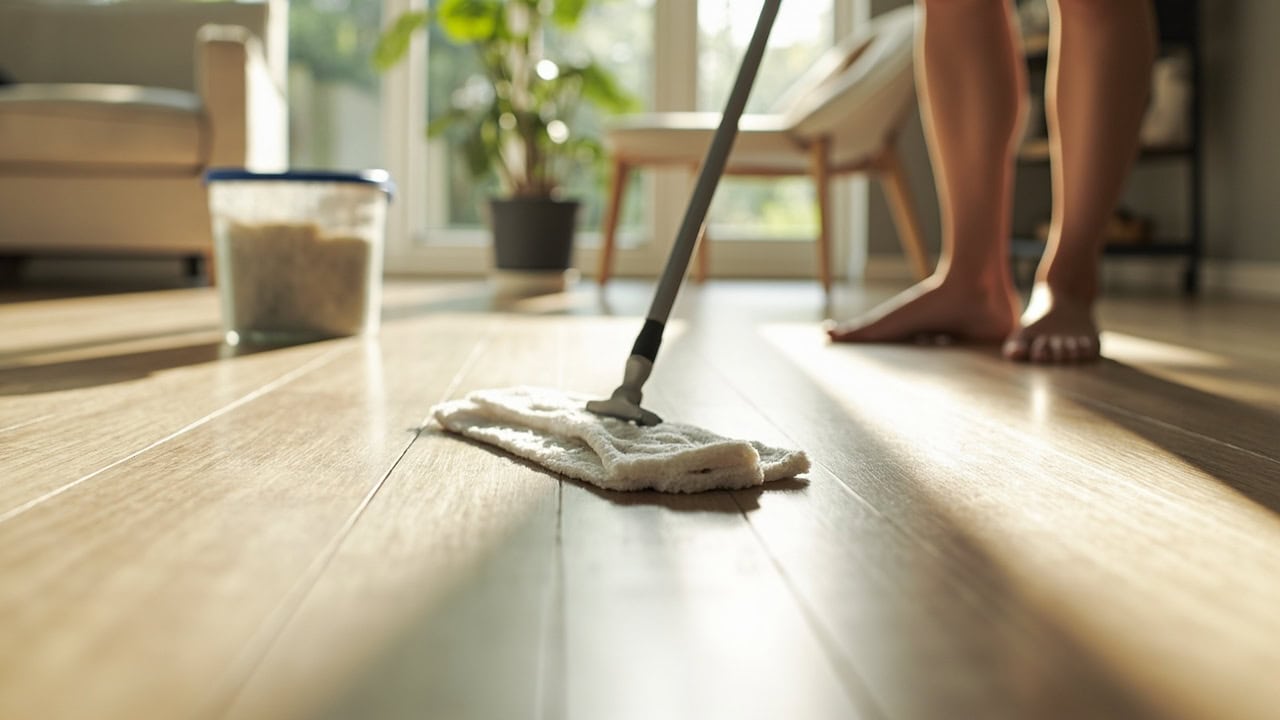
How to Clean WPC Flooring: Complete Guide

WPC flooring must be cleaned with a pH-neutral cleaner at a 1:20 dilution ratio and a barely-damp microfiber mop — excessive water causes swelling at the seams and steam cleaning permanently damages the polymer layer. Regular sweeping or vacuuming prevents abrasive debris from scratching the wear layer, and spills should be wiped immediately to avoid staining the decor layer beneath the UV coating.
Wood-Plastic Composite (WPC) flooring is a resilient luxury vinyl product engineered with a core typically comprising wood flour, thermoplastics (polyethylene, polypropylene, or polyvinyl chloride), and calcium carbonate. This composition makes WPC dimensionally stable and water-resistant, yet distinct from traditional vinyl in that its thicker, rigid core resists indentation more effectively. The multi-layer construction — UV-cured acrylic wear layer, decor film, WPC/SPC core, and acoustic underlayment — requires specific cleaning chemistry to preserve each layer’s integrity.
What You Need Before You Start
- Soft-bristle broom or vacuum with hardwood-safe attachment for dry debris removal
- pH-neutral cleaner specifically formulated for vinyl or WPC flooring (no bleach, no ammonia)
- Flat microfiber mop — string mops scratch the UV wear layer and retain excessive water
- Clean water at room temperature (68–72°F / 20–22°C)
- Dilution ratio: 1 part cleaner to 20 parts water (1:20)
- Absorbent microfiber cloths for spill spot-cleaning
The pH of the cleaning solution is critical. WPC’s UV-cured acrylic-urethane wear layer is chemically sensitive — cleaners with a pH below 6.0 cause micro-etching that dulls the surface permanently, while highly alkaline cleaners (pH above 9.0) can degrade the adhesive bonds between layers over repeated exposure. A neutral pH range of 6.0–8.0 is the manufacturer’s standard for all resilient luxury vinyl products.
Step-by-Step WPC Flooring Cleaning Process
WPC flooring cleaning follows a strict dry-first methodology. Skipping the initial debris removal step is the single most common cause of premature wear layer failure — particles as small as 0.3mm in diameter act as abrasive grit under a wet mop, creating micro-scratches that accumulate into visible surface damage within weeks.
Step 1: Dry Debris Removal
Sweep or vacuum the entire floor to remove loose dirt, dust, and abrasive particles. Do not skip this step; debris under a wet mop acts as sandpaper against the wear layer. Use a vacuum with a hardwood-safe soft-bristle attachment or a felt-bottomed head to avoid scratching the UV coating. For large areas, a dust mop with microfiber head works effectively — push it in the direction of the plank’s long axis to avoid rotating debris into the click-lock joint gaps.
Step 2: Prepare the Cleaning Solution
Mix pH-neutral floor cleaner with room-temperature water at a 1:20 dilution ratio in a clean bucket. Do not use hot water; temperatures above 85°F (29°C) soften the polymer wear layer over time, causing temporary clouding and eventually permanent surface deformation in heavily trafficked areas. Room-temperature water (68–72°F / 20–22°C) is optimal for both chemical activation of the cleaner and thermal safety of the floor.
If a commercial pH-neutral vinyl cleaner is not immediately available, a diluted solution of non-ionic surfactant-based cleaner (like a few drops of Dawn-free concentrate in warm water) can serve as an interim substitute — but never use dishwashing liquid as a regular cleaner, as repeated use leaves residue that attracts dirt.
Step 3: Wring the Microfiber Mop Thoroughly
The mop should be barely damp, releasing no free water when wrung. WPC flooring is water-resistant, not waterproof — water pooling at seams penetrates the click-lock joints and can cause the SPC (Stone Plastic Composite) or WPC core to swell, creating visible peaking or gapping between planks. A proper wrung mop will leave the surface looking slightly moist but not shiny with pooled water, and should dry completely within 5–10 minutes under normal ventilation.
Step 4: Mop in the Direction of the Planks
Follow the long axis of the WPC planks to prevent pushing debris into the click-lock joints. Overlap each pass by 2–3 inches (5–7.5 cm) to avoid streaking. Working parallel to the planks reduces the chance of the mop head catching on plank edges and ensures the cleaning solution is distributed evenly across the surface without pooling in the joints.
Step 5: Rinse the Mop Frequently
A dirty mop releases dissolved grime back onto the floor. Rinse in clean water after every 50–60 sq ft (4.6–5.6 sq m). A microfiber mop head loaded with dirt becomes an applicator for soil — professional cleaning services typically change mop water every 100 sq ft, but for home cleaning, the 50–60 sq ft guideline accounts for higher dissolved solids in typical household cleaning solution. If the water turns visibly gray or murky before reaching the 50 sq ft mark, rinse immediately.
Step 6: Spot-Clean Stubborn Marks
Spray a 1:1 mixture of pH-neutral cleaner and water onto a microfiber cloth, not directly onto the floor. Gently blot persistent spots; do not scrub aggressively. For scuff marks from rubber-soled shoes or furniture legs, a soft white eraser pad or a barely-damp melamine foam block (like Mr. Clean Magic Eraser) can be used — test in an inconspicuous area first, as aggressive scrubbing can slightly dull the wear layer’s surface sheen over time.
Step 7: Dry the Floor Immediately
Allow the floor to air-dry with good ventilation, or use a dry microfiber mop to speed drying. Drying time should not exceed 5–10 minutes under normal room conditions (70°F / 21°C, 40–60% relative humidity). Walking on damp WPC flooring leaves foot impression marks in the polymer surface layer — these are not permanent damage but can be cosmetically annoying and may track soil from feet onto the cleaning path.
WPC Flooring-Specific Considerations
WPC flooring’s multi-layer construction introduces specific vulnerability points that standard vinyl cleaning approaches do not account for. Understanding these boundaries prevents both immediate damage and cumulative degradation that shortens the floor’s serviceable lifespan.
Steam Mops Are Prohibited
Temperatures exceeding 140°F (60°C) permanently damage the polymer wear layer, causing clouding, peeling, or warping of the topcoat. Steam mops generate surface temperatures of 200°F (93°C) or higher at the mop head, well above the glass transition temperature of the acrylic-urethane coating. Once the polymer cross-links are disrupted by heat, the damage is irreversible — the only remedy is plank replacement. This prohibition applies to all WPC and rigid core luxury vinyl products regardless of manufacturer.
Never Use Wax or Polish
WPC flooring has a factory-applied UV coating that is incompatible with floor finishes; adding wax creates hazing and is difficult to remove. The factory UV-cured acrylic coating provides both chemical and abrasion resistance through a cross-linked polymer network — adding petroleum-based or acrylic floor polishes creates a soft layer between the UV coating and the polish that traps soil, dulls the finish, and requires solvent-based strippers to remove. Some manufacturers void warranties if evidence of topical polish application is found during a warranty claim inspection.
Acidic Cleaners Cause Etching
Vinegar, lemon juice, and pH-below-6 cleaners chemically attack the acrylic-urethane wear layer, dulling the surface permanently through micro-etching. The acetic acid in standard household vinegar (typically 5% concentration, pH ~2.5) is particularly damaging to UV-cured acrylic coatings — it breaks down the polymer surface bonds at a microscopic level, creating a roughened area that appears hazy or dull. Over repeated exposure, the etched area becomes more hydrophilic, attracting and retaining soil faster, compounding the visual deterioration. Always check cleaner labels for acidic ingredients before use on WPC.
Bleach and Ammonia Destroy the Decor Layer
Even diluted bleach can fade or discolor the printed wood-grain layer beneath the wear layer. WPC flooring’s decor layer is a printed film — typically 0.15–0.35mm thick — that sits between the wear layer and the core. Oxidizing agents like sodium hypochlorite (bleach) and alkaline agents like ammonia attack the organic dyes in the printed film, causing yellowing, bleaching, or color shifts that are visible through the clear wear layer. This damage cannot be reversed by re-coating, as the dye degradation is structural to the printed layer itself.
Wheeled Furniture Risks
Office chairs and heavy furniture with unprotected wheels dent and scratch the click-lock joints. The click-lock system between WPC planks is designed for floating installation and has limited shear resistance — rolling loads from office chairs generate point loads of 200–400 PSI through caster wheels, sufficient to crack or deform the locking mechanism over time. Felt pad protectors under all furniture legs distribute loads over a wider area, reducing stress on individual joints. For rolling office furniture, chair mats with hard-substrate polycarbonate bases are recommended — avoid rubber-backed mats, as the plasticizer compounds in rubber can migrate into the vinyl and cause surface staining.
Drying and Finishing WPC Floors
Proper drying is a continuation of the cleaning process — inadequate drying undermines the entire effort and risks damage to the floor and subfloor.
Open windows or use a ceiling fan to accelerate air drying to under 5 minutes. Cross-ventilation dramatically reduces drying time by replacing humid air at the floor surface with drier ambient air. In bathrooms or interior rooms without windows, an exhaust fan running continuously during and after cleaning maintains airflow and reduces relative humidity near the floor.
Do not walk on the floor until the surface is completely dry to prevent foot impression marks in the damp polymer layer. Once the floor appears dry to the eye, wait an additional 1–2 minutes — the polymer surface can retain moisture from a damp mop without appearing wet, and foot traffic during this window creates subtle impressions in the outer wear layer that may become permanent as the floor fully cures.
For commercial spaces, use a dry auto-scrubber with soft pad attachment if faster drying is required. Auto-scrubbers with soft nylon pads (not stiff polypropylene) provide mechanical soil removal without moisture retention. Set the solution flow to the minimum rate needed for soil suspension — the goal is cleaning, not flooding the floor.
Inspect the UV wear layer for any pre-existing damage before cleaning — document and photograph for warranty purposes. Look for areas where the wear layer appears thinner (often at building entrances and high-traffic corridors), has already delaminated from the decor layer, or shows surface scratching that predates your cleaning. Cleaning cannot repair these conditions, and documenting them before cleaning begins protects you from warranty claims that might incorrectly attribute the damage to your maintenance practices.
After drying, inspect for remaining spots and touch up as needed. Stubborn spots identified during the post-dry inspection are best treated with a focused application of pH-neutral cleaner on a microfiber cloth rather than re-mopping the entire floor, which introduces unnecessary moisture to already-clean areas.
Common Mistakes When Cleaning WPC Flooring
| Mistake | Consequence | Prevention |
|---|---|---|
| Using steam mop | Permanent clouding and delamination of wear layer at temperatures above 140°F (60°C) | Use only barely-damp microfiber; never steam |
| Over-wetting the floor | Water penetrates seams, swells SPC/WPC core, causes peaking or gapping | Wring mop until no free water drips; 1:20 dilution only |
| Using vinegar or acidic cleaners | Chemical etching of acrylic-urethane wear layer, permanent surface dulling at pH <6.0 | Use only pH-neutral vinyl-safe cleaners (pH 6.0–8.0) |
| Skipping dry debris removal | Abrasive particles scratch wear layer; micro-abrasions accumulate into visible damage | Always sweep or vacuum before wet mopping |
| Using string or sponge mops | Physical abrasion from rough mop fibers and excessive water retention in sponge | Use only flat microfiber mop heads |
Frequently Asked Questions
Q: Can I use a steam mop on WPC flooring?
A: No — steam mops must never be used on WPC flooring. Temperatures above 140°F (60°C) permanently damage the polymer wear layer, causing clouding, peeling, and warping. The wood-plastic composite core is water-resistant but the heat from steam breaks down the adhesive bonds between layers.
Q: What is the best cleaner for WPC flooring?
A: A pH-neutral cleaner specifically formulated for vinyl or WPC flooring at a 1:20 dilution ratio is optimal. The pH should be between 6.0 and 8.0. Avoid any cleaner containing bleach, ammonia, acetone, or citrus extracts, as these degrade the UV-cured acrylic wear layer.
Q: How often should WPC flooring be mopped?
A: Light mopping with a barely-damp microfiber mop should be done weekly in low-traffic areas and 2–3 times per week in high-traffic zones. Dry sweeping or vacuuming should occur daily in high-traffic households to prevent abrasive debris from accumulating and scratching the wear layer.
Q: Why is my WPC flooring still dirty after mopping?
A: This occurs when the mop is too wet (pushing dirty water into seams), the cleaning solution is too concentrated (leaving residue), or the mop head is dirty and redepositing grime. Always use a thoroughly wrung microfiber mop and rinse the mop head frequently during cleaning.
References
- Bob Vila. (2024). How to Clean Vinyl Flooring. Bob Vila.
- Wikipedia. (2024). Wood-plastic composite. Wikipedia.
- Mannington Flooring. (2024). Luxury Vinyl Tile Care & Maintenance. Mannington Commercial.


