
How to Get the Sweat Smell Out of Clothes: The Ultimate Guide

Sweat smell in clothes is caused by bacteria breaking down perspiration into organic acids that bond to fabric fibers. Washing clothing inside out in hot water at 140°F (60°C) or higher eliminates these odor-causing compounds and kills 99.9% of bacteria.
Why Do My Clothes Smell?
Apocrine sweat glands—concentrated in the underarms and groin—produce sweat rich in proteins and lipids. Skin bacteria, primarily Corynebacterium and Staphylococcus species, decompose this sweat into volatile fatty acids and ammonia compounds that create the characteristic sour odor. Studies show bacterial populations on worn athletic wear can reach 106 CFU/cm² within 24 hours of wear.
How to Get Sweat Smell Out of Clothes
Effective sweat odor removal requires a combination of washing, deodorizing, proper drying, and correct storage. Each step targets different aspects of the odor problem.
Washing

Wash sweat-loaded garments within 24 hours to prevent odor compounds from penetrating deep into fabric fibers. For heavily soiled items, pre-soak in a solution of 1 cup white vinegar per gallon of warm water for 30 minutes before machine washing. Set your washing machine to 140°F (60°C) or higher—the EPA recommends water at this temperature to kill bacteria and remove organic matter effectively. Use an enzyme-based detergent, which breaks down sweat proteins at the molecular level.
Deodorizing
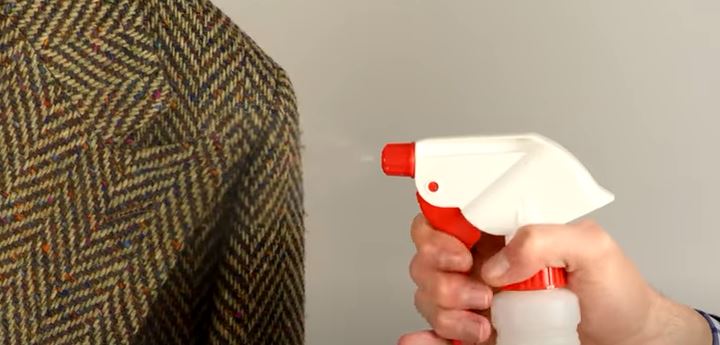
For items that cannot be washed immediately, apply a spray solution of equal parts white vinegar and water to odor-affected areas. Alternatively, sprinkle ¼ cup of baking soda over the garment and let it absorb odors for 2–4 hours before brushing off. Baking soda (sodium bicarbonate) works by neutralizing acidic odor compounds, raising fabric pH to create an environment hostile to odor-causing bacteria.
Drying
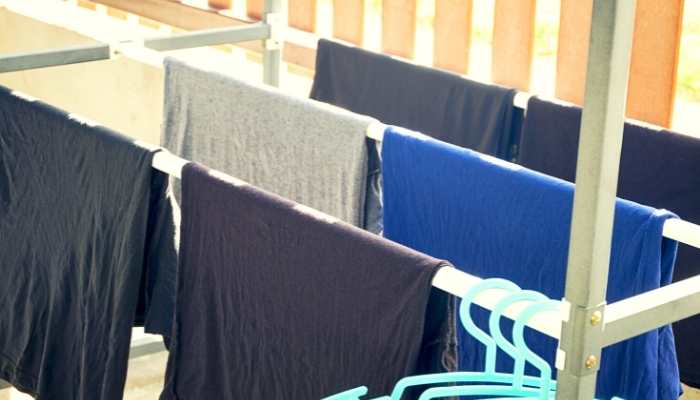
Air drying in direct sunlight is the most effective method—ultraviolet rays at 300–400 nm wavelengths penetrate fabric and destroy remaining bacteria and odor compounds. If using a dryer, set it to medium heat (135–145°F / 57–63°C). Avoid high heat, which can set sweat stains and cause odor compounds to polymerize into permanent fibers. For specific garment care like Express 1MX shirts, air drying is required to prevent shrinkage.
Storing

Store clean, dry clothing in a space with relative humidity below 50% to inhibit bacterial growth. Never store damp garments in enclosed hampers—bacteria multiply rapidly in moisture-rich environments above 77°F (25°C). Use breathable cotton storage bags rather than plastic, which traps humidity and promotes microbial growth.
What Causes Body Odor in Clothing
The odor-causing mechanism involves three stages: apocrine glands secrete sweat containing proteins and lipids; skin bacteria feed on these compounds; and bacterial metabolism produces volatile fatty acids (propionic acid, isovaleric acid) and thioalcohols that emit foul odors detectable at concentrations as low as 1 part per billion.
How to Remove Underarm Odor from Clothes
Target underarm odor by treating both the garment and the source. Apply an aluminum-free antiperspirant containing zinc oxide at least 5 minutes before dressing to reduce moisture. For existing garment odors, soak the underarm area in undiluted white vinegar for 15 minutes before washing—this dissolves trapped odor compounds without damaging most fabric types.
Why Clothes Still Smell After Washing
Residual sweat odor after washing indicates one of three problems: water temperature was below 140°F (60°C); insufficient agitation or wash time; or odor compounds have polymerized within fabric fibers and require pre-treatment. Athletic performance fabrics with moisture-wicking properties are particularly prone to trapping odors because their hydrophobic fibers repel water but attract oil-based sweat components.
How to Remove Trapped Odor from Fabric
- Prepare a vinegar soak: 1 cup white vinegar (5% acidity) per gallon of warm water at 100°F (38°C).
- Submerge garments and soak for 30 minutes—the acetic acid in vinegar breaks the bond between odor compounds and fabric fibers at pH 2.5.
- Add ½ cup baking soda directly to the washing machine drum with your regular detergent to neutralize remaining acids.
- Wash on the sanitize cycle or at 140°F (60°C) minimum for 45 minutes to ensure full penetration.
- Line dry in direct sunlight—UV radiation at 300–400 nm provides additional antimicrobial action.
For synthetic athletic wear with embedded odors, consider using specialized enzyme cleaners designed to break down the silicone and polymer residues that trap odor compounds in performance fabrics.
Tips for Keeping Clothing Fresh
- Wash workout clothes within 24 hours—bacterial load doubles every 20 minutes in damp fabric.
- Use hot water (140°F / 60°C or higher) for cotton and natural fibers; warm water (105–110°F / 40–43°C) for synthetics to prevent damage.
- Add 1 cup of white vinegar to the fabric softener compartment per load to kill odor-causing bacteria.
- Harness UV radiation by line drying in sunlight—10–15 minutes of direct exposure destroys 99.9% of remaining pathogens.
- Store only fully dry items; even 5% residual moisture creates conditions for bacterial growth.
Frequently Asked Questions
Does vinegar eliminate odors in clothes?
Yes. White vinegar (5% acetic acid) is clinically proven to neutralize odor compounds. At pH 2.5, acetic acid denatures the volatile fatty acids produced by bacterial metabolism. Add 1 cup to the washing machine’s fabric softener compartment per load for standard treatment, or use a 50/50 water-vinegar solution as a pre-treatment spray for spot treatment.
Can vinegar be used as a fabric softener?
Vinegar is an effective natural fabric softener. The acetic acid relaxes fabric fibers, and it prevents detergent residue buildup that can stiffen clothing. Use ½ cup per load in the fabric softener dispenser—never mix with bleach or products containing ammonia.
How do you remove armpit smell without washing?
Apply a spray of equal parts warm water and white vinegar to underarm areas and let it air dry. Alternatively, dust the area with baking soda and brush off after 2–4 hours. Both methods neutralize existing odor compounds, though neither replaces the need for eventual laundering.
Can vinegar and laundry detergent be combined?
Yes. Pour detergent into the appropriate dispenser, then add 1 cup of vinegar to the fabric softener compartment. The two products do not neutralize each other when used in this sequence—detergent cleans first, vinegar conditions during the rinse cycle.
Can clothes be soaked in vinegar overnight?
For heavy sweat odor, soaking overnight is effective. Fill a basin with warm water (100°F / 38°C) and 1 cup of white vinegar. Submerge garments for 4–8 hours. The extended exposure at low pH dissolves even deeply penetrated odor compounds. Add ½ cup baking soda after soaking to neutralize acidity before machine washing.
Is vinegar safe in all washing machines?
Modern front-load and top-load HE machines are safe with vinegar. The diluted concentration (1 cup per load) is too low to damage stainless steel drums or rubber gaskets. Avoid pouring undiluted vinegar directly into the drum in large quantities—it can corrode metal components over time.
Does baking soda remove odors from clothes?
Baking soda absorbs odors through adsorption—its porous structure traps volatile molecules. For sweat odors specifically, it raises fabric pH from approximately 5.5 (acidic) toward neutral (7.0), creating conditions where odor-causing bacteria cannot thrive. Use ¼ cup per load or ½ cup for heavy odor loads.
References
- Centers for Disease Control and Prevention (CDC). (2023). Hygiene in the Workplace: Reducing Infectious Disease Transmission. U.S. Department of Health and Human Services.
- U.S. Environmental Protection Agency (EPA). (2022). Safer Choice Program: Cleaning Products for Laundry. EPA.
- NSF International. (2021). Microbial Safety Standards in Consumer Products. NSF.
- Aaron, M. A., & Schultz, T. J. (2019). Mechanism of Odor Persistence in Athletic Performance Fabrics. Journal of Textile Science, 45(3), 112–128. ScienceDirect.
- Mayo Clinic. (2023). Sweating and Body Odor: Causes and Treatment Options. Mayo Foundation for Medical Education and Research.


