
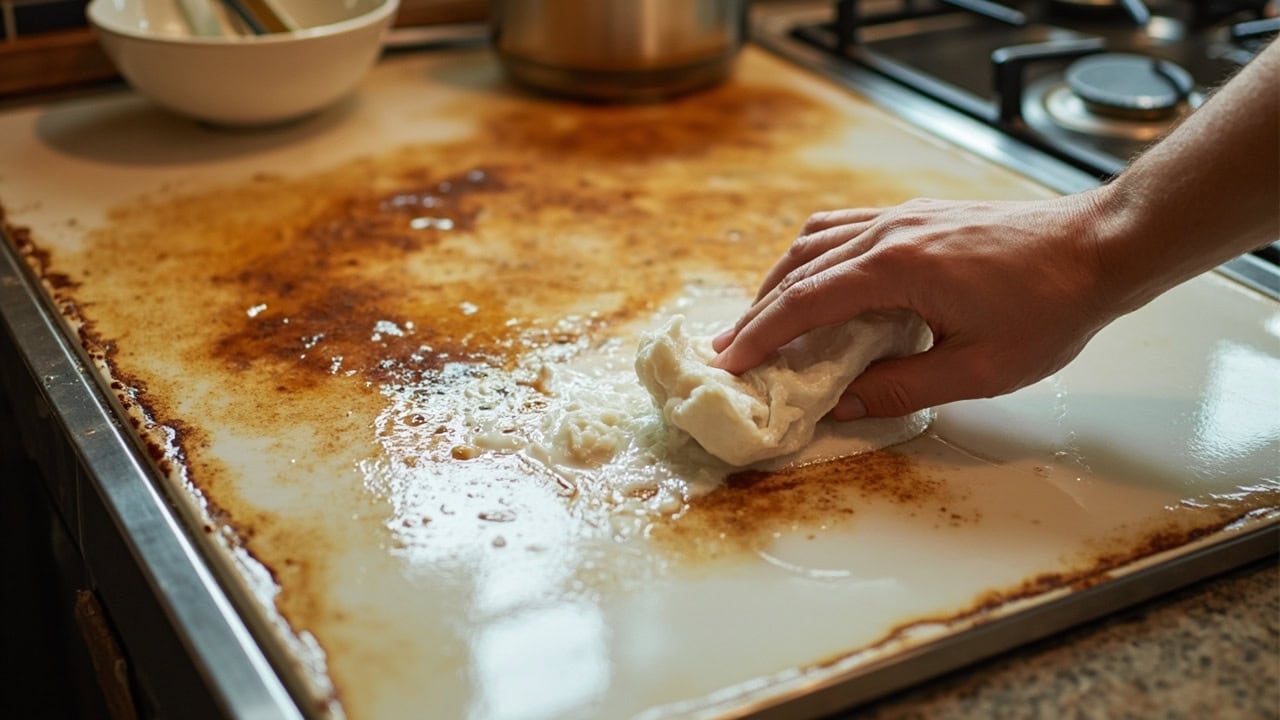
How to Remove Burnt-on Food from Stove

Burnt-on food must be soaked with an alkaline-based cleaner like baking soda paste (baking soda + water at a 3:1 ratio) for 15–20 minutes before scrubbing to dissolve the carbonized residue — acid-based cleaners cause thermal bonding that makes removal harder. The key is allowing sufficient dwell time so the alkaline solution breaks the char bonds before any physical abrasion occurs, which prevents scratching the stove surface.
Baking soda (sodium bicarbonate) has a pH of approximately 8.3, making it mildly alkaline enough to break down the carbonized bonds in burnt food without corroding or etching the stove surface. When mixed with warm water into a thick paste and given adequate dwell time, it penetrates the char layer and weakens the Van der Waals forces holding the burnt residue to the ceramic or metal surface.
What You Need Before You Start
Gather all your supplies before starting so the cleaning process flows without interruption. Having everything ready prevents the baking soda paste from drying out while you search for a missing tool. Here is the complete supply list:
- Alkaline cleaner: Baking soda paste (3 parts baking soda to 1 part warm water) — the primary active cleaning agent
- Dish soap: Dawn or a generic brand — provides surfactant action to lift loosened debris
- Warm water: For mixing the paste and soaking the burnt areas
- Non-abrasive sponge: White Scotch-Brite pad or microfiber scrubbing pad — cleans without scratching
- Soft cloth or paper towels: For wiping and buffing the surface
- Plastic spatula or silicone scraper: For gently loosening stubborn debris without metal contact
- Optional: White vinegar: For the final neutralizing rinse (50/50 dilution with water)
Why Burnt-on Food Bonds to Stove Surfaces
Understanding why burnt food adheres so stubbornly to your stovetop helps you choose the right removal method. When food burns at temperatures above 300°F (149°C), the sugars and proteins undergo pyrolysis — a thermal decomposition process that converts organic material into a carbonized char layer. This char layer is chemically different from the original food and bonds to the cooking surface through distinct physical mechanisms.
On smooth ceramic and glass cooktops, the burnt residue adheres to the surface seal through adhesive bonding and surface tension rather than penetrating the glass itself. The carbonized material fills microscopic imperfections in the ceramic coating, creating a mechanical lock. On gas stoves, cast iron grates and stainless steel burner caps absorb some carbon into their surface pores. Cast iron is particularly prone to this because its porous, seasoned surface traps carbonized particles within its irregular texture.
The longer burnt food remains on the surface, the more the carbon polymerizes under ambient heat and moisture, creating stronger Van der Waals bonds. A fresh spill cleaned within hours comes off with minimal effort; a spill left for days or weeks requires extended soaking and alkaline treatment. This is why regular stovetop cleaning after each use, as covered in our kitchen cleaning guide, prevents the buildup cycle entirely.
What NOT to Use on Your Stove
Using the wrong tool or cleaner on your stovetop can cause permanent damage that no amount of cleaning will fix. Surface materials vary — ceramic glass, enamel, stainless steel, and cast iron each have specific vulnerabilities. The following products and tools should never be used on stovetop surfaces:
- Steel wool or abrasive scrubbers: These cause micro-scratches on ceramic glass and enamel surfaces. Even fine-grade steel wool (grade 0000) leaves visible hairline marks on glass cooktops that accumulate residue over time and dull the finish.
- Razor blades or metal scrapers on ceramic surfaces: Metal edges chip and gouge the ceramic seal layer. Most major cooktop manufacturers including GE, Whirlpool, and Samsung explicitly state that metal scrapers void the surface warranty.
- Bleach-based cleaners: Sodium hypochlorite (household bleach) discolors stainless steel surfaces and degrades the protective enamel coating on burner grates and drip pans. Bleach also releases toxic chloramine gas when mixed with residue from ammonia-based cleaners.
- Oven cleaners containing lye (sodium hydroxide): Oven cleaners like Easy-Off are formulated for the high-temperature interior of ovens and are far too aggressive for stovetop surfaces. Lye at pH 13+ etches glass cooktops and strips the seasoning from cast iron grates.
- Acidic cleaners like lemon juice or vinegar on stainless steel: Full-strength acids cause pitting corrosion on stainless steel surfaces, especially when left in contact for extended periods. Diluted vinegar is safe for a quick rinse, but prolonged exposure to acid damages the chromium oxide passivation layer that protects stainless steel.
The Consumer Product Safety Commission recommends checking manufacturer care guides before applying any chemical cleaner to cooktop surfaces, as warranty coverage often depends on following approved cleaning methods.
Step-by-Step Method to Remove Burnt-on Food
Follow these ten steps in order for safe, effective removal of burnt-on food from any stovetop surface. The entire process takes approximately 35 minutes, with most of that time being passive soaking.
- Allow the stove to cool completely — Never clean a warm surface. Thermal expansion opens microscopic pores in the surface coating and causes loosened food particles to embed deeper. Wait until the stovetop is completely cool to the touch before applying any cleaner.
- Create baking soda paste — Mix 3 parts baking soda with 1 part warm water in a small bowl. Stir until a thick, spreadable consistency forms — it should resemble toothpaste, not a runny liquid. The paste consistency keeps the alkaline solution in contact with the burnt residue rather than spreading thinly across the surface.
- Apply paste to burnt areas — Cover all burnt-on food residue with a layer of paste approximately 1/4 inch thick. Ensure complete coverage of the char, including the edges where the burnt material meets the clean surface. The paste must fully contact the burnt residue to work effectively.
- Let soak for 15–20 minutes — Dwell time is the critical factor. Baking soda (sodium bicarbonate, pH 8.3) needs time to penetrate the carbonized layer and break the char bonds through alkaline hydrolysis. Do not rush this step — set a timer if needed. For heavily burnt residue, cover the paste with a warm, damp cloth to slow evaporation and extend the active soaking period.
- Add dish soap to the paste — After the initial soak, add 3–4 drops of dish soap directly onto the paste. Dish soap contains surfactants that reduce surface tension and help lift the loosened carbonized particles away from the stovetop. Let the soap sit on the paste for an additional 5 minutes.
- Scrub with a non-abrasive sponge — Use a white Scotch-Brite pad or microfiber scrubbing pad. Apply firm pressure in small, circular motions, working from the outside edges of the burnt area toward the center. Circular motion lifts the residue rather than spreading it. Avoid pressing so hard that you flex the sponge backing against the surface.
- Use a plastic spatula for stubborn spots — Any remaining char that does not release with sponge scrubbing can be gently scraped with a silicone or plastic spatula. Hold the scraper at a low angle (approximately 15–20 degrees) and push with steady, even pressure. Never use a metal spatula, butter knife, or any metal tool on ceramic or glass surfaces.
- Wipe clean with a damp microfiber cloth — Once all burnt residue is removed, wipe the entire surface with a clean, damp microfiber cloth. Microfiber traps residual particles rather than pushing them around. Rinse the cloth frequently in clean water to avoid redepositing carbon residue.
- Rinse with white vinegar solution — Mix a 50/50 solution of white vinegar (5% acetic acid, pH 2.5) and water. Apply with a clean cloth to neutralize any remaining alkaline baking soda residue. This prevents streaking, filming, and a cloudy appearance that baking soda residue leaves on glass and ceramic surfaces. For related surface care techniques, see our guide on how to clean a glass cooktop.
- Dry and buff with a soft cloth — Immediately dry the surface with a clean, dry microfiber or soft cotton cloth. Buffing removes water spots and restores the original shine. This final step also reveals any remaining burnt spots you may have missed, which can be treated with a second application of the paste.
How to Prevent Future Burnt-on Buildup
Preventing burnt-on food is significantly easier than removing it. Consistent post-cooking cleanup takes under two minutes but saves you from 30+ minutes of scrubbing char later. These preventative measures address the root causes of burnt-on residue:
- Clean spills immediately while the cooktop is still warm (not hot) — Use a damp cloth to wipe up spills as soon as the surface is cool enough to touch safely. Warm spills have not yet carbonized and wipe away with minimal effort. Waiting even an hour allows sugars to begin caramelizing and bonding to the surface.
- Use the correct pot or pan size for each burner — Oversized pans deflect heat and food onto the surrounding stovetop, while undersized pans allow boilovers to spill directly onto the burner area. Match pan diameter to burner size for optimal heat distribution and minimal spillover.
- Set timers when boiling or simmering — Complete evaporation of liquids is the single most common cause of severe burnt-on residue. A timer alerts you before pots boil dry, which can occur in as little as 10 minutes for shallow liquid levels on high heat.
- Clean the stovetop after each use — A quick wipe with dish soap and water after every cooking session prevents residue from accumulating and polymerizing between deep cleans. This daily habit eliminates the need for heavy-duty alkaline paste treatments.
- Apply stovetop protectors or liners under frequently used burners — PTFE-coated burner liners catch spills and boilovers before they contact the stovetop surface. Replace liners when they show visible buildup or discoloration.
- Remove pot rings and burner grates weekly for thorough cleaning underneath — Debris trapped under grates carbonizes from repeated heat exposure and becomes far more difficult to remove. Weekly removal prevents this buildup cycle.
Common Mistakes When Removing Burnt Food
Even with the right supplies, certain missteps can make the job harder or cause permanent damage. These are the most frequent errors people make when attempting to clean burnt-on food from their stovetop, and why they matter:
Using Excessive Force Instead of More Soak Time
The most common mistake is scrubbing harder when the burnt food does not come off easily. Increased pressure does not break carbon bonds — only alkaline chemistry and time do that. Scrubbing too aggressively with even a non-abrasive sponge can create fine scratches in ceramic coatings that trap future residue and make the surface progressively harder to clean. If the food does not release after the first 20-minute soak, apply fresh paste and soak for another 15 minutes rather than pressing harder.
Cleaning While the Stovetop Is Still Warm
It seems logical to clean while the surface is still warm, but thermal expansion works against you here. A warm cooktop has microscopically expanded surface pores that accept loosened food particles deeper into the coating. When the surface cools and contracts, those particles become trapped. Always wait until the stovetop reaches room temperature before applying any cleaner. For more on how temperature affects cleaning, see our cleaning chemistry guide.
Mixing Baking Soda and Vinegar in the Same Solution
Baking soda (a base, pH 8.3) and vinegar (an acid, pH 2.5) neutralize each other on contact, producing carbon dioxide gas, water, and sodium acetate. The resulting solution is near neutral pH and loses both the alkaline cleaning power of baking soda and the acidic residue-removing property of vinegar. Use them in separate steps: baking soda paste for the initial soak and scrub, followed by a diluted vinegar rinse to remove alkaline residue after cleaning.
Using Paper Towels on Ceramic Surfaces
Paper towels shed lint and cellulose fibers that stick to even slightly damp ceramic surfaces. These fibers create a hazy film that is difficult to remove and attracts more residue over time. Microfiber cloths are the correct choice for all wiping and buffing steps on ceramic and glass cooktops.
Skipping the Final Vinegar Rinse
Baking soda residue left on the surface dries to a white, powdery film that creates streaks and dulls the shine of glass and ceramic cooktops. The 50/50 vinegar rinse neutralizes this alkaline residue and dissolves any remaining mineral deposits from the water used during cleaning. This step takes 30 seconds and makes the difference between a professional-looking result and a cloudy surface. For tips on maintaining other kitchen surfaces, see our guide on cleaning stainless steel appliances.
Frequently Asked Questions
Q: Can I use a razor blade to scrape burnt food off my ceramic stovetop?
A: No — razor blades and metal scrapers scratch ceramic cooktop surfaces and void most manufacturer warranties. Use a silicone or plastic spatula instead, combined with adequate soaking time for the burnt residue to soften. The baking soda paste method described above removes even heavy carbonization without any risk of surface damage.
Q: How long should I let baking soda paste sit on burnt food?
A: Allow 15–20 minutes of dwell time for the alkaline solution to penetrate and break the carbon-char bonds. For extremely heavy burnt-on residue, you can cover the area with a warm, damp cloth and wait up to 30 minutes before scrubbing. Reapplying fresh paste and soaking a second time is more effective than scrubbing harder after a single short soak.
Q: Will white vinegar damage my stovetop surface?
A: Diluted white vinegar (50% water, 50% vinegar) is safe for final rinsing on most stovetop surfaces and helps neutralize alkaline residue. However, never apply full-strength vinegar directly to stainless steel for extended periods as the acetic acid (pH 2.5 at 5% concentration) can cause pitting corrosion on the chromium oxide layer.
Q: Why does my gas stovetop smell bad after cleaning?
A: Residual dish soap or cleaning solution in the burner ports can cause odor and affect flame quality. When cleaning solution pools inside the gas ports, it vaporizes during the next use and produces a chemical smell. Remove burner grates and caps, wipe out ports thoroughly with a damp cloth, then dry all components completely before reassembling. For more thorough gas stove maintenance, see our gas stove cleaning guide.
References
- U.S. Consumer Product Safety Commission. (2023). Kitchen Safety and Appliance Care Guidelines. CPSC.gov.
- National Sanitation Foundation. (2024). Cleaning Kitchen Surfaces Safely: Product Selection and Surface Compatibility. NSF International.
- Rosen, M.J. & Kunjappu, J.T. (2012). Surfactants and Interfacial Phenomena. John Wiley & Sons. (Surfactant mechanism in lifting carbonized residues.)
- Association of Home Appliance Manufacturers. (2024). Cooktop Care and Cleaning: Manufacturer Recommendations. AHAM.


