
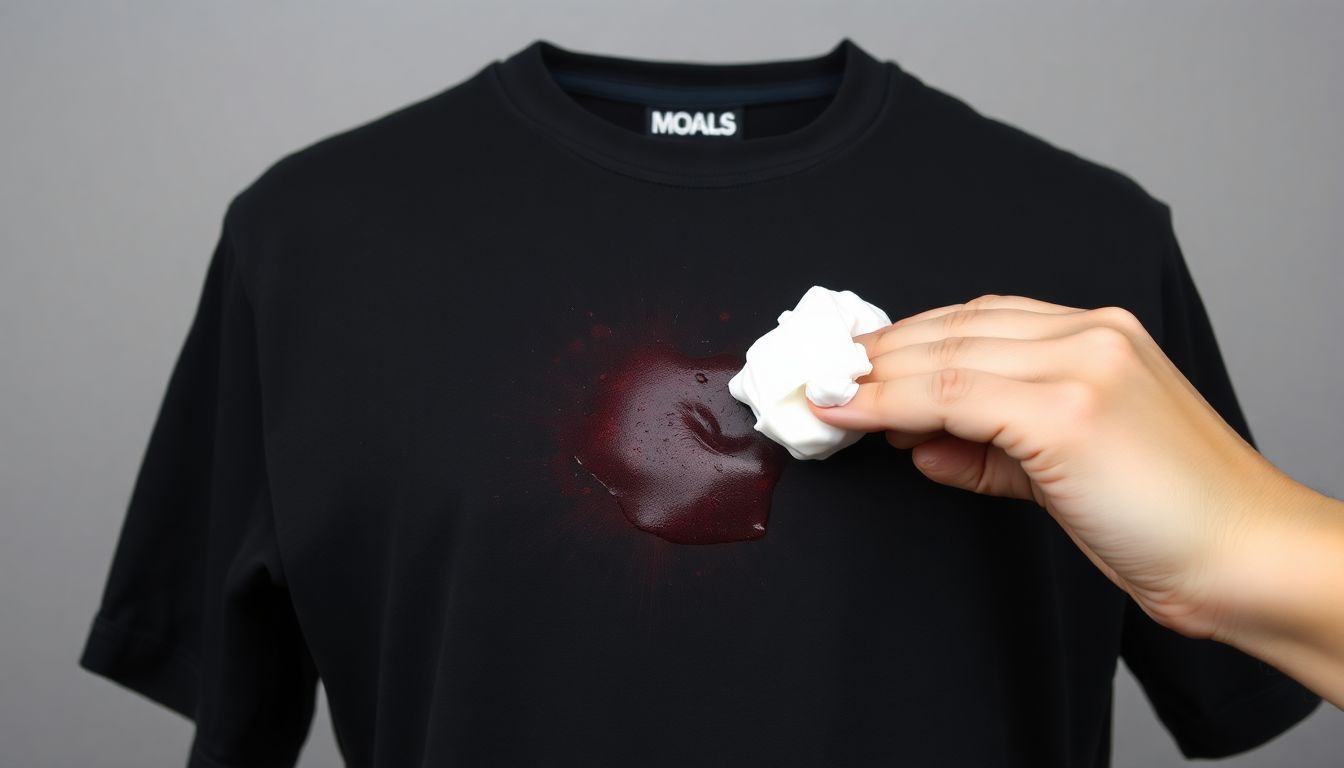
How to Remove Stains from Black Clothes: Complete Guide

Black clothes require specialized stain removal that protects the dark dye while eliminating contaminants — oil-based stains respond to dish soap applied directly and worked in with fingertips, while sweat protein stains lift with a 1:1 white vinegar and cold water solution soaked for 30 minutes before gentle agitation. The key distinction from treating lighter fabrics is that every product and technique must preserve the black dye layer, which is often less colorfast than lighter dye formulations.
Why Black Clothes Stain Differently
Black dye on fabric is often less colorfast than lighter dyes because dark dye molecules are larger and bond less securely to fiber surfaces during the manufacturing process. This means that any stain treatment carries a higher risk of lifting dye along with the stain. Dark fabrics also show both the stain and the treatment method more visibly — a water ring or slight bleaching that would be invisible on white fabric becomes obvious on black cotton or polyester.
Setting stains on black clothes is especially problematic because the contrast between the stained area and surrounding fabric creates a permanent visible mark. Once a stain bonds to dark fibers and sets through heat or drying, it becomes nearly impossible to remove without also stripping the black dye. Cold water is critical for black fabrics because hot water opens fiber structures and pushes contaminants deeper into the weave, where they lock in place as the fabric cools.
The darkness of black fabric can actually mask early staining, allowing stains to set before you even notice them. By the time a food grease spot or sweat mark becomes visible on a black garment, it has often been sitting in the fibers for hours or days, making removal significantly harder. This is why regular inspection under bright light and immediate treatment of fresh stains is essential for maintaining black clothing.
What Removes Stains from Black Clothes: The Direct Answer
Different stain types require targeted treatments on black fabric, because using the wrong product can cause more damage than the original stain. The following methods are proven safe for dark dyes while effectively lifting the specific contaminant.
Oil-Based Stains (Food Grease, Makeup, Body Oil)
Dish washing liquid applied directly to the stain is the most effective treatment for oil-based stains on black clothes. Dish soap contains surfactants that break down hydrophobic oils at the molecular level, lifting grease from fabric fibers without attacking dye molecules. Apply a small drop directly to the stain, work it in gently with your fingertips, and let it dwell for 15–30 minutes before rinsing with cold water. For more detailed oil stain techniques, see our guide on how to remove oil stains from clothes.
Protein Stains (Sweat, Blood, Grass)
Protein stains require cold water treatment immediately — never warm or hot water, which will cook the proteins into the fiber structure permanently. After a cold water rinse, soak the affected area in a 1:1 solution of cold water and white vinegar (5% acetic acid, pH approximately 2.5) for 30 minutes. The mild acidity of vinegar breaks down protein bonds without bleaching the black dye. After soaking, gently agitate the fabric and rinse thoroughly with cold water.
Ink Stains
Ink stains on black fabric respond to either hairspray or rubbing alcohol (isopropyl alcohol, 70% concentration) applied with a cotton ball. The critical technique is to dab from the outside of the stain edge inward — never rub outward, which spreads the ink across a larger surface area. Place a clean cloth underneath the stained area to absorb ink as it transfers out of the fabric. Repeat applications until no more ink transfers to the cotton ball, then rinse with cold water.
Mud Stains
Counterintuitively, the first step for mud on black clothes is to let it dry completely. Attempting to remove wet mud spreads it deeper into the fabric weave. Once dry, brush off the dried mud particles with a soft-bristle brush. Treat any remaining ground-in stain with a pH-neutral laundry pre-treatment stick, let it dwell for 10 minutes, then wash in cold water on a gentle cycle.
Coffee and Tea Stains
Coffee and tea contain tannins that bind to fabric fibers and create yellow-brown discoloration. Rinse the stained area with cold water immediately, then apply laundry detergent directly to the stain and let it sit for 5 minutes before washing. For set-in coffee stains, a solution of 1 tablespoon white vinegar in 1 cup cold water can help break down the tannin bonds. Always test vinegar solutions on an inconspicuous area of black fabric first to check for any dye sensitivity.
Why Stains Bond to Black Fabric: The Mechanism
Understanding how stains bond to fabric helps explain why specific treatments work. Oil-based stains penetrate fabric fibers through wicking action — the hydrophobic oils are drawn into the microscopic spaces between individual fibers, where they adhere to fiber surfaces through Van der Waals forces. On black fabric, these oils also attract and hold dust particles, creating a visible dark spot that contrasts with the surrounding dye.
Protein stains bond through coagulation — when heated or exposed to air over time, the proteins in sweat, blood, and grass denature and lock into the fiber structure. This is why hot water is disastrous for protein stains on black clothes: it accelerates denaturation, permanently welding the protein into the fabric weave. Sweat contains both salts and fatty acids that deposit into the fabric weave, creating both discoloration and odor simultaneously.
Ink stains bond through capillary action — the liquid ink is drawn into fiber spaces and then the solvent evaporates, leaving pigment particles physically trapped within the weave. The smaller the pigment particles, the deeper they penetrate, making some inks much harder to remove than others. This mechanism is also why dabbing from outside inward is critical: you are working against the capillary flow, pulling pigment back toward the surface.
What NOT to Use on Black Clothes
Using the wrong product on black fabric can cause permanent damage that is far more visible than the original stain. The following products and techniques should be avoided entirely when treating dark-colored garments.
Bleach and Oxygen Bleach
Chlorine bleach and oxygen bleach (sodium percarbonate) both remove black dye along with the stain. Chlorine bleach strips dye through oxidation, creating orange or white patches on black fabric that cannot be reversed. Oxygen bleach products like OxiClean contain sodium percarbonate, an oxidizer that breaks down color molecules — while gentler than chlorine bleach, it still causes progressive color loss on black garments with each use. For safer alternatives, see our broader techniques in the stain removal guide.
Hot Water
Hot water opens fabric fibers and pushes stains deeper into the weave. On black clothes, this is doubly damaging: the stain penetrates further and the heat can cause localized dye bleeding, leaving a faded ring around the treatment area. Protein stains exposed to water above 40°C (104°F) will denature and set permanently into the fiber structure.
Vigorous Scrubbing and Harsh Solvents
Aggressive scrubbing creates fabric wear patterns and pilling on dark delicate fabrics — the resulting texture change is as visible as the original stain on black material. Harsh solvents including acetone, paint thinner, and industrial degreasers can dissolve black dye directly or leave chemical ring marks on dark fabrics. Paper towels should also be avoided for blotting, as they transfer lint onto the damp black surface and spread the stain across a wider area.
Step-by-Step Stain Removal for Black Clothes
Follow this nine-step process to safely remove stains from black garments while preserving dye integrity. The exact dilution ratio and dwell time will vary based on stain type and severity, but the sequence remains the same.
- Act immediately. Rinse fresh stains with cold water from the back of the fabric to push the stain out rather than deeper into the fibers. Hold the garment with the stained side facing down and run cold water through the back of the fabric for 30 seconds.
- Identify the stain type. Determine whether the stain is oil-based (food grease, makeup, body oil), protein-based (sweat, blood, grass), or ink-based. Each category requires a different treatment chemistry — using the wrong method wastes time and risks dye damage.
- Apply the appropriate treatment. Use dish soap for oil-based stains, a 1:1 cold water and white vinegar solution for sweat and protein stains, or rubbing alcohol (70% isopropyl) applied with a cotton ball for ink stains. Apply treatment directly to the stained area.
- Let the treatment dwell. Allow 5 minutes for mild stains, 15 minutes for moderate stains, and up to 30 minutes for severe or set-in stains. Do not let the fabric dry completely during this period — keep it damp with additional treatment solution if needed.
- Gently agitate the stained area. Use your fingertips or a soft-bristle toothbrush in small circular motions, working from the outside edge of the stain inward. This prevents spreading the contaminant to clean surrounding fabric.
- Rinse thoroughly with cold water. Continue rinsing until all treatment residue is removed — residual dish soap or vinegar can attract dirt and cause new staining over time. Hold the fabric under running cold water for at least 20 seconds.
- Check the stain under bright light before drying. Examine the area carefully under direct light. If any stain remains visible, repeat steps 3 through 6 before proceeding to machine washing. Heat from a dryer will set any remaining trace stain permanently.
- Machine wash on a cold, gentle cycle. Turn the garment inside out to protect the outer surface from friction. Use a small amount of detergent formulated for dark colors — these contain dye-replenishing additives that help maintain black depth. Avoid fabric softener on stain-treated areas, as it coats fibers and can seal in remaining contaminants.
- Air dry to verify complete removal. Skip the machine dryer and hang or lay the garment flat to dry. Heat from a dryer bakes in any microscopic trace stain residue that survived washing. Air drying gives you a chance to inspect the fabric one final time under natural light.
How to Prevent Future Stains on Black Clothes
Prevention is more effective than treatment, especially on black fabrics where even successful stain removal can leave subtle texture changes. These strategies protect dark garments from both staining and the dye loss that makes them look faded over time.
- Apply a fabric protector spray specifically formulated for dark colors before the first wear — these create an invisible barrier that causes liquid spills to bead on the surface rather than soaking into fibers.
- Wash black clothes inside out in cold water (30°C / 86°F maximum) to reduce surface friction and minimize dye loss during each wash cycle.
- Use a laundry detergent designed for dark colors — these contain mild dye-replenishing additives that deposit small amounts of black pigment to replace what is lost during washing.
- Add 1/2 cup white vinegar to the rinse cycle to help set remaining dye and soften fabric naturally without residue-coating fabric softeners.
- Avoid overloading the washing machine — garments packed too tightly experience excessive friction against each other, causing surface wear, dye transfer, and premature fading on dark fabrics.
- Spot treat visible stains immediately rather than waiting for laundry day — fresh stains require milder treatments and shorter dwell times, reducing the risk to black dye.
Common Mistakes When Removing Stains from Black Clothes
Even experienced launderers make errors that damage black fabric during stain treatment. Avoiding these common mistakes preserves both the garment’s appearance and the effectiveness of stain removal efforts.
- Using warm or hot water to dissolve stains. The logic seems sound — heat dissolves grease — but on protein-based stains, temperatures above 40°C (104°F) cause permanent denaturation. On black fabric, hot water also causes localized dye bleeding that leaves visible light patches.
- Rubbing the stain aggressively. Friction creates wear zones on dark fabric that appear as lighter patches even after the stain is gone. The abrasion roughens fiber surfaces, scattering light differently from the surrounding undisturbed fabric.
- Applying stain treatment after the garment has dried. Dried stains have already bonded to fiber surfaces through evaporation of the carrier liquid. They require significantly stronger treatments — which carry higher risk to black dye — compared to fresh stains that can be lifted with mild solutions.
- Skipping the spot check before using the dryer. Heat from a machine dryer bakes any remaining stain residue into the fiber structure at a molecular level. Always inspect under bright light first, and repeat treatment if any trace remains.
- Using fabric softener on stain-treated areas. Fabric softener coats individual fibers with a silicone-based film that prevents future treatments from penetrating. If stain residue remains beneath this coating, it becomes trapped permanently against the fiber surface.
For comprehensive fabric care guidance including washing temperatures, detergent selection, and storage tips for dark garments, visit our laundry care guide. If you are treating sweat stains on lighter-colored garments, the approach differs significantly — see our guide on removing sweat stains from white clothes for the correct chemistry on opposite-color fabrics. For enzymatic cleaner definitions and other technical terms used throughout this guide, our cleaning glossary provides detailed explanations.
Frequently Asked Questions
Q: Does vinegar damage black clothes?
A: White vinegar at standard dilution (1:1 with water for soaking) is safe for black fabrics and actually helps set remaining dye. Undiluted vinegar applied directly may cause localized dye loss on sensitive fabrics — always test on an inconspicuous area first.
Q: Can you use OxiClean on black clothes?
A: Oxygen bleach (OxiClean) can cause color loss on black clothes because it contains sodium percarbonate, an oxidizer that breaks down color molecules. Use only color-safe oxygen products specifically labeled for dark colors, or stick to enzyme-based pre-treatment instead.
Q: How do you get white deodorant stains off black shirts?
A: White deodorant buildup on black shirts is aluminum and surfactant residue. Mix 1 tablespoon baking soda with just enough water to form a paste, apply to the affected area, let sit 15 minutes, then wash in cold water inside out. Repeat if necessary.
Q: Why do black clothes stain more easily than other colors?
A: Black clothes don’t actually stain more easily — they mask stains visually until damage is done. By the time a stain becomes visible on black fabric, it has often set into the fibers. Regular inspection and immediate treatment of fresh stains prevents permanent discoloration.
References
- American Cleaning Institute. (n.d.). Stain Removal Guide for Clothing. ACI.
- International Fabricare Institute. (n.d.). Stain Removal Procedures for Professional Textile Care. IFI.
- U.S. Consumer Product Safety Commission. (n.d.). Care Labeling of Textile Wearing Apparel. CPSC.


