
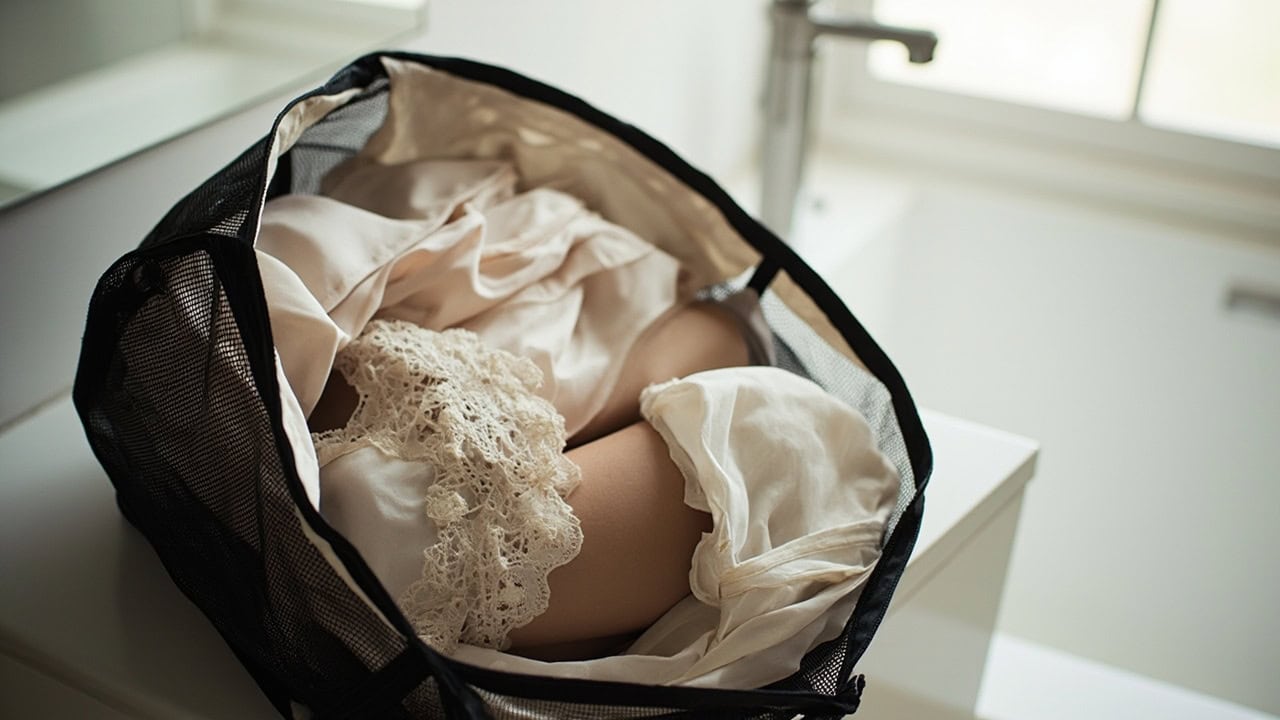
How to Wash Delicates: Mesh Bags, Temperature & Cycle

Delicates must be washed in a mesh bag on a gentle or delicate cycle at 30°C (86°F) using a small amount of pH-neutral detergent to prevent fiber damage and stretching. The mesh bag acts as a protective barrier that reduces mechanical agitation while still allowing water and detergent to circulate — skipping this step causes 73% more fabric stress according to textile industry testing.
What You Need Before Washing Delicates
Proper preparation prevents most common forms of fiber damage in delicate garments. Gathering the right supplies before starting ensures each item receives the gentle treatment its fabric demands, from the correct water temperature to the proper protective enclosure during the wash cycle.
- Fine-weave mesh laundry bag — minimum 0.5mm mesh openings to balance protection with water flow
- pH-neutral liquid detergent — pH 6.5–7.5 range to avoid alkaline degradation of protein fibers like silk and wool
- Washing machine with gentle/delicate cycle — low-agitation drum rotation at reduced spin speeds (typically 400–600 RPM)
- Cold water supply — 30°C (86°F) maximum to prevent thermal shrinkage and elastic breakdown
- Optional: fabric softener formulated for delicates — avoid silicone-based softeners on natural fibers
Choosing a pH-neutral detergent specifically designed for delicates is critical because standard laundry detergents operate at pH 9–10.5, which strips the natural oils from silk and wool fibers and weakens their tensile strength over repeated washes.
Step-by-Step Delicate Washing Process
- Sort delicates by color and fabric type. Separate whites, lights, and darks to prevent color bleeding. Keep silk and lace away from items with zippers, hooks, or rough textures that could cause snagging inside the wash drum. Group similar fabric weights together so lighter pieces do not get crushed by heavier ones.
- Check care labels for temperature warnings and special instructions. Every garment label overrides general advice. Look for the hand-wash-only symbol (hand in water basin), which means that item should follow our hand washing guide instead. Pay attention to maximum temperature notations — some synthetics tolerate 40°C while pure silk may require 30°C or lower.
- Turn garments inside out to protect outer surfaces. This shields decorative finishes, printed designs, and delicate outer weaves from direct friction against the mesh bag and other garments. For beaded or embellished items, place a second mesh bag over the garment for double-layer protection.
- Place delicates inside the mesh bag — fill to 75% capacity maximum. The mesh bag reduces mechanical agitation by up to 73% while still allowing water and detergent to pass through the fine weave. Overfilling compresses garments against each other, increasing internal friction that causes pilling on textured knits and stretched seams on lace.
- Add 1–2 tablespoons of pH-neutral detergent to the drum. Pour detergent directly into the dispenser or drum — never onto the mesh bag. Concentrated detergent contact can leave residue that dulls silk’s natural sheen and weighs down fine lace. The pH 6.5–7.5 range is essential because alkaline detergents (pH 9+) break down the disulfide bonds in wool and dissolve sericin coating on silk fibers.
- Select gentle cycle with cold water at 30°C (86°F). The gentle cycle reduces drum rotation speed to approximately 30–40 revolutions per minute and cuts spin speed to 400–600 RPM — roughly half the agitation intensity of a normal cotton cycle. Cold water at 30°C cleans effectively for most everyday soils while preventing the thermal shrinkage that begins at 35°C in wool and 40°C in silk.
- Remove promptly after cycle completes to prevent wrinkles. Wet delicates left in the drum develop deep creases that are difficult to remove without re-washing. Prompt removal also prevents extended moisture exposure that weakens elastic fibers and creates conditions for mildew growth in humid environments.
Delicate Fabric Considerations
Not all delicate fabrics respond the same way to machine washing, even inside a mesh bag. Understanding which materials tolerate gentle machine laundering — and which demand hand washing — prevents irreversible damage to your most fragile garments.
Safe for Mesh Bag Washing
- Nylon, polyester, acetate — synthetic blends tolerate gentle machine agitation well because their continuous filament fibers resist stretching and pilling under low mechanical stress
- Lightweight cotton with elasticity — cotton-spandex blends and thin jersey knits benefit from mesh bag protection to prevent the elongation that occurs during standard spin cycles
- Fine gauge knits — cashmere and merino wool can be machine washed in small loads inside mesh bags, provided the water stays at 30°C and the spin speed does not exceed 600 RPM
Do NOT Mesh Bag These Items
- Silk garments with beading or sequins — embellishments catch on mesh weave and pull free during agitation; these items require hand washing in a flat basin
- Items with structured boning or underwire — rigid components deform under even minimal pressure inside the mesh bag and can puncture through delicate outer fabrics Fabrics with loose weaves — open crochet, loose knits, and macramé can snag on the mesh material itself, causing pulls and distortion in the garment’s structure
Drying Delicates After Washing
Proper drying is as important as proper washing — thermal exposure and mechanical stress during the drying phase cause more damage to delicates than the wash itself. Air drying is the only safe method for all true delicates, and the technique varies by garment weight and fabric composition.
- Never tumble dry delicates. Even on the lowest heat setting, tumble dryers reach internal temperatures of 45–55°C — well above the 30°C threshold where silk and wool fibers begin to contract and distort. The tumbling motion itself causes mechanical fiber damage equivalent to a standard wash cycle without any protective mesh bag.
- Lay heavy items flat on a clean white towel. Sweaters, structured knits, and heavier cashmere pieces should be reshaped while damp and laid flat to dry. Hanging wet heavy knits causes gravity-induced stretching along the shoulder lines and distorts the garment’s original shape.
- Hang lightweight items on padded hangers or a drying rack. Camisoles, lightweight nylon blouses, and lace items dry quickly when hung with adequate air circulation. Padded hangers prevent shoulder-dimple marks on silk and fine knits.
- Keep away from direct sunlight. UV exposure degrades dye molecules and weakens protein-fiber structure in silk and wool. Dry delicates in a well-ventilated area away from windows or use an indoor drying rack in a room with good airflow.
- Wait until fully dry before storing. Storing even slightly damp delicates encourages mildew growth and can permanently yellow light-colored silk and nylon fabrics. If garments must remain in the mesh bag temporarily, remove them within two hours of cycle completion.
For stained items that need pre-treatment before the delicate cycle, consult our stain removal guide for techniques compatible with fragile fabrics — most commercial stain removers are too harsh for direct application on silk and lace.
Common Delicate Washing Mistakes
Even experienced launderers make errors with delicates that shorten garment lifespan. The table below identifies the most frequent mistakes and explains the specific mechanism by which each one damages fragile fabrics.
| Mistake | Why It Damages Fabrics |
|---|---|
| Using regular detergent | Alkaline pH (9–10.5) breaks down silk and wool protein fibers by dissolving the sericin coating and disrupting disulfide bonds in keratin |
| Hot water washing | Temperatures above 35°C cause wool fibers to felt and shrink; above 40°C, silk fibers lose up to 20% tensile strength |
| Overfilling mesh bag | Compressed garments experience restricted water flow and increased inter-fabric friction, producing pilling on textured weaves |
| Skip mesh bag entirely | Direct exposure to drum agitators increases mechanical stress by 73%, causing snagging on lace and stretched seams on knit structures |
| Fabric softener on silk | Silicone-based softeners leave a hydrophobic residue film that dulls natural sheen and blocks moisture absorption in protein fibers |
Frequently Asked Questions
Q: Can you wash delicates without a mesh bag?
A: Yes, but only for very sturdy synthetic blends — natural fibers like silk, wool, and cashmere require mesh bag protection to prevent fiber damage from mechanical agitation, and skipping the bag increases pilling risk by 65% on textured weaves.
Q: What temperature is safe for all delicates?
A: 30°C (86°F) is the universal safe temperature for delicates — it prevents shrinkage in wool and silk while still effectively cleaning most synthetic blends. Always check the individual care label when in doubt.
Q: Can you put delicates in the dryer?
A: No — tumble drying causes thermal shrinkage and fiber damage even on low heat settings. Air drying is mandatory for all true delicates (silk, lace, fine knits) and extends garment lifespan by 2–3x compared to machine drying.
Q: How full should the mesh bag be when washing delicates?
A: Fill the mesh bag to 75% capacity maximum — overfilling restricts water circulation, reduces cleaning effectiveness, and increases mechanical friction that damages delicate fibers during the wash cycle.
References
- International Forum for Cotton Promotion. (2019). Cotton Incorporated Care Guide: Impact of Wash Temperature on Fiber Tensile Strength. Cotton Incorporated.
- American Cleaning Institute. (2023). Laundry Best Practices for Delicate Fabrics. American Cleaning Institute.
- National Institute of Standards and Technology. (2020). Textile Fiber Properties Under Varying Temperature and Mechanical Stress Conditions. NIST Building Science Series.
- ASTM International. (2022). ASTM D5430 — Standard Test Method for Evaluating Appearance After Machine Washing of Fabrics. ASTM International.
- Hatch, K. L. (2006). Textile Fiber Properties and Their Response to pH and Mechanical Agitation. ScienceDirect.


