
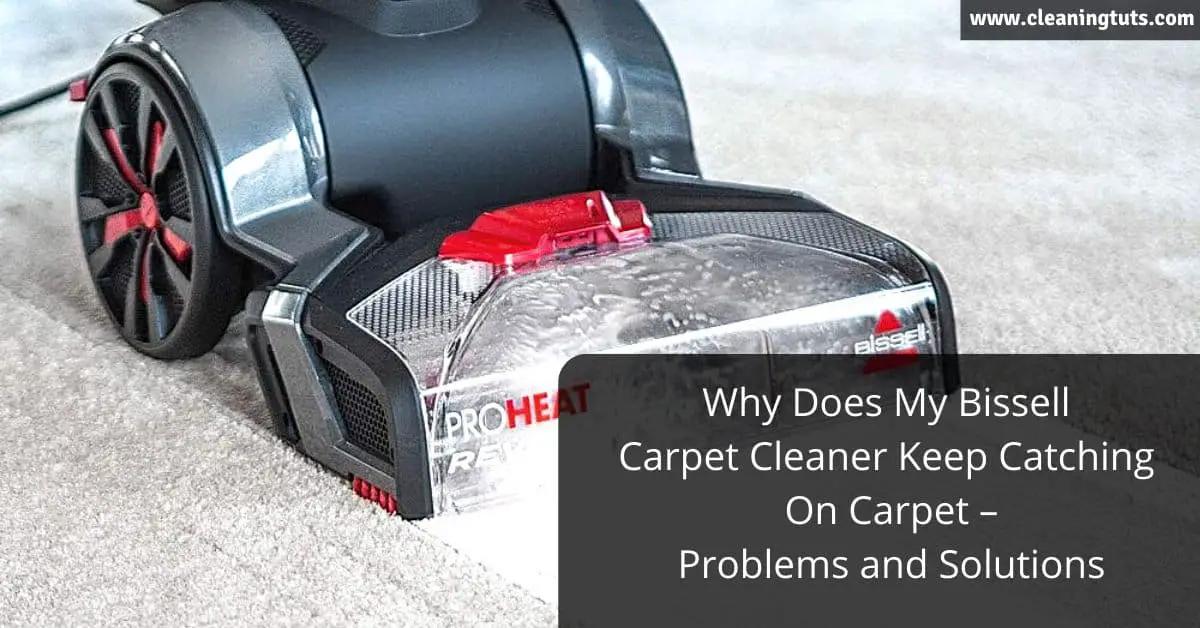
Why Does My Bissell Carpet Cleaner Keep Catching On Carpet – Problems and Solutions

Bissell carpet cleaners catch on carpets when height settings, suction levels, or brush roll function fail to match carpet pile conditions. Root causes include incorrect vacuum height set to “low” pile instead of “high,” a broken pump belt, a jammed brush roll, or incompatible cleaning solution residue leaving carpet fibers stiff and sticky. Each issue has a specific fix that restores normal machine movement.
Bissell carpet cleaners require the height dial set to “high pile” for plush carpets over 0.5 inches, and suction turned to “low” to prevent the brush rollers from catching on carpet fibers while maintaining agitation.
Common Reasons Why Bissell Carpet Cleaners Catch on Carpet
Two primary categories cause Bissell machines to snag on carpet: machine-side failures and carpet-side conditions. Machine-side failures include broken belts, jammed brush rolls, and incorrect height settings. Carpet-side conditions include ultra-plush pile over 0.75 inches, residual cleaning solution crystallization, and uneven padding.
1. Incorrect Vacuum Height Setting for Carpet Cleaning
The height dial controls how far the brush roll housing descends toward the carpet. Setting it to “low” on plush carpet causes the brush bristles to dig into fibers and stall the motor. Bissell recommends setting the height to “high pile” or the highest setting for carpets with a pile height exceeding 0.5 inches. The brush roll should hover 1–2mm above the carpet surface when height is correctly set.
Set the vacuum height dial to “high pile” when cleaning carpets over 0.5 inches. Setting it to “low” causes brush rollers to contact carpet backing, creating a snagging point that stalls the motor within 3–5 seconds.
2. Incorrect Suction Setting
High suction on thick carpet creates an airtight seal between the floor tool and carpet backing. This seal prevents forward motion and strains the motor. Set Bissell carpet cleaners to “low suction” for plush and medium-pile carpets. Reserve “high suction” for bare floors and low-pile rugs only.
High suction on plush carpet generates up to 8–10 pounds of lift force, enough to stop the machine’s forward motion entirely and cause the brush roll to jam against carpet seams.
3. Jammed Brush Roll
Hair, string, and carpet fibers wrap around the brush roll spindle and lock rotation. A jammed brush roll cannot spin, forcing the cleaner to drag across the carpet instead of agitating it. Remove the brush roll cover and clear all debris from both end caps. Apply a dry lubricant to the bearing surfaces every 3–4 uses to prevent spindle seizure.
4. Brush Roll Not Rotating Due to Belt Failure
The drive belt connecting the motor to the brush roll stretches, cracks, or snaps after 40–60 hours of use. A broken belt produces a burning rubber smell and zero brush roll rotation. Bissell replacement belts (Part 3031120 for most ProHeat models) cost under $10 and take 10 minutes to install without tools. Replace belts every 6 months for weekly cleaning users.
5. Incorrectly Seated Brush Roll
The brush roll must snap into both end brackets and lay flat in the housing channel. If one end lifts out of its socket, that side catches on carpet seams and tears the edge. After installing a new brush roll, press both ends firmly until each clicks into place before running the machine.
6. Incompatible Cleaning Solution
Cleaning solutions with pH below 4.5 or above 10.5 damage nylon carpet fibers and leave crystalline residue that stiffens the carpet face. Stiffened fibers catch in the brush roll teeth and stall rotation. Use only Bissell-certified solutions with pH between 6.0 and 9.0. Mix concentrate at a 1:16 ratio (1 part solution to 16 parts water) for residential carpets. Hot tap water between 140°F and 160°F activates cleaning agents without damaging carpet dye.
7. Ultra-Plush or High-Pile Carpet Incompatibility
Carpets with pile height above 0.75 inches create excessive surface resistance. The brush roll sinks into fibers and the suction port seals against the backing, producing a suction-lock that prevents any forward motion. Bissell rates most upright models for pile heights up to 0.75 inches. For ultra-plush carpets, use a canister-style machine with a dedicated hard-floor tool instead of the carpet attachment.
8. Wet Carpet Causing Suction Blockage
A carpet damp from prior cleaning or pet urine saturates and weighs down fibers, reducing air flow through the pile. The machine must work harder to agitate wet fibers, causing the motor to overheat. Allow carpets to dry completely—typically 6–12 hours with proper ventilation—before running the carpet cleaner. Check carpet moisture with a hygrometer; readings above 18% indicate carpet is too wet to clean safely.
How to Prevent Your Bissell Carpet Cleaner from Catching on Carpet
Prevent snagging by matching machine settings to carpet conditions, maintaining components on schedule, and selecting compatible cleaning solutions.

Match Settings to Carpet Type
Set the height dial to match pile height before every cleaning session. Keep a reference card on the machine:
| Carpet Type | Pile Height | Height Setting | Suction Setting |
|---|---|---|---|
| Low-pile Berber | Under 0.25 inches | Low | High |
| Medium-pile residential | 0.25–0.5 inches | Medium | Medium |
| High-pile plush | 0.5–0.75 inches | High pile | Low |
| Ultra-plush shag | Over 0.75 inches | Highest | Low |
Use pH-Compatible Cleaning Solutions
Only use cleaning solutions formulated for residential carpet with pH between 6.0 and 9.0. Dilute concentrate at 1:16 ratio. Add 140°F–160°F water for maximum cleaning power without dye damage. Avoid mixing homemade solutions with bleach or ammonia—both create hazardous gases and damage carpet fibers.
Maintain the Machine After Every 3–4 Uses
Clean the brush roll after every 3–4 carpet cleaning sessions. Remove hair and string wrapping around both end caps. Check belt for cracks or stretching. Replace the belt every 6 months or 40–60 hours of use. Inspect the pump belt separately—Bissell pumps typically fail after 200–300 hours of runtime.
Choose Compatible Carpet Materials
If you have ultra-plush or shag carpet over 0.75 inches, consider replacing with a medium-pile alternative or use a canister vacuum with a turbo brush attachment instead of an upright carpet cleaner. This eliminates the structural incompatibility between the machine and carpet type.
Professional Repair: When Your Bissell Carpet Cleaner Still Catches After Troubleshooting
If your Bissell cleaner still catches after correcting height settings, replacing the belt, and clearing brush roll debris, the issue may be a failed motor, cracked brush roll housing, or damaged height adjustment mechanism. Bissell-certified repair technicians diagnose these issues in a single visit. Repairs typically cost $45–$120 for motor replacement and $15–$30 for housing repair.
If repair costs exceed the machine’s replacement value—typically after 7–10 years of use—replace the unit entirely. Bissell ProHeat models range from $149 to $399 and include 2-year warranties that cover motor and belt failures.
Bissell Carpet Cleaner Reset Procedure
Reset the machine after any maintenance procedure to clear error states and recalibrate sensor readings.
- Unplug the machine from the electrical outlet and wait 30 seconds for capacitors to discharge.
- Locate the reset button on the bottom housing near the brush roll compartment. Bissell ProHeat models place the reset button 2 inches from the left wheel mount.
- Press and hold the reset button for 5–8 seconds. The machine’s indicator lights will flash twice when reset completes.
- Release the button and plug the machine back in. Run a 30-second test cycle on bare floor before cleaning carpet.
Restoring Suction Power on Bissell Carpet Cleaners
Weak suction causes the machine to push dirt rather than extract it, creating the sensation of catching or dragging. Restore suction in three steps.
- Replace or clean the pre-motor foam filter every 3–6 months. A clogged filter reduces airflow by up to 60%, dropping water lift from 45 inches to under 20 inches.
- Check the entire hose length for kinks,cracks, and internal blockages. Disconnect the hose and run a drain snake through it every 6 months to clear accumulated residue.
- Clear brush roll of tangled fibers that restrict the suction port opening. The port opening should be at least 0.75 inches in diameter with no debris visible.
For persistent suction loss above 20%, have a Bissell service center perform a motor carbon brush inspection. Worn carbon brushes reduce motor efficiency by 30–40% and require professional replacement.
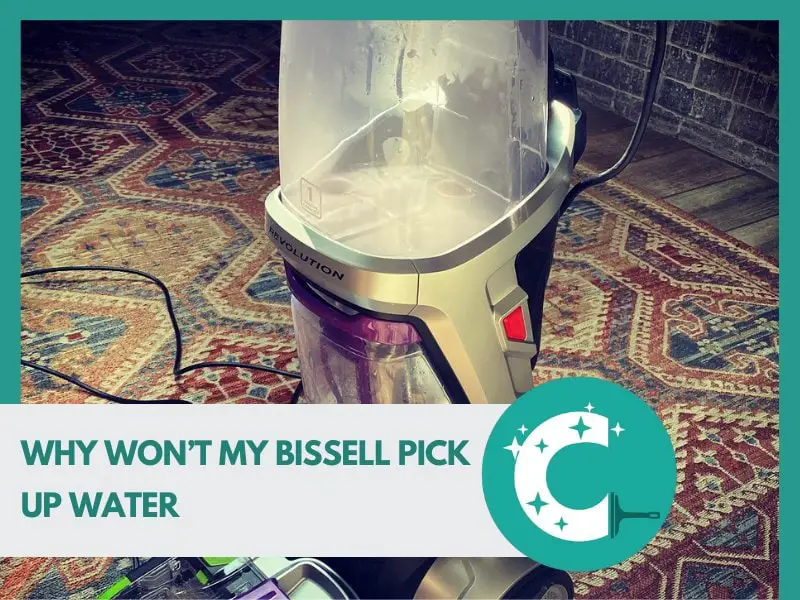
Why Bissell Carpet Cleaners Lose Water Pickup
Weak water pickup indicates a seal failure, pump problem, or clogged extraction channel. Address these issues before they cause secondary carpet damage from over-wetting.
Dirty Water Tank Seal Failure
The dirty water tank uses a silicone seal that degrades after 12–18 months of use. A failed seal allows air leakage that prevents the tank from building vacuum pressure. Replace the tank gasket (Bissell Part 1610535) or the entire tank if cracking is visible. New tanks cost $18–$25.
Pump Belt Breakage
The pump belt drives the extraction motor and fails after 200–300 hours of runtime. A broken pump belt produces no spraying action and silence when the trigger is pressed. Replace the pump belt (Bissell Part 3031100) at the same time as the drive belt if both show signs of wear.
Kinked or Clogged Extraction Hose
Disconnect the extraction hose from the back of the unit and inspect its full 6-foot length. Straighten any kinks and flush the hose with 1 cup of warm water mixed with 2 tablespoons of white vinegar. Repeat twice to dissolve residue buildup.
Incorrect Suction and Height Settings for Water Extraction
For maximum water extraction, set height to the lowest position that allows smooth movement without snagging. Set suction to “high.” Run the machine in overlapping passes and allow 6–12 hours of drying time afterward. Extract at 3–4 passes per section to remove 85–95% of injected water.
- Turn suction knob to “high” for extraction passes
- Set height dial to lowest snagging-free position
- Make 3–4 overlapping passes per carpet section
- Allow 6–12 hours drying time with fans running
Quick-Reference: Bissell Carpet Cleaner Settings by Carpet Type
Settings at a Glance
| Carpet Type | Pile Height | Height Dial | Suction | Solution Ratio |
| Low-pile Berber | Under 0.25″ | Low | High | 1:16 |
| Medium-pile residential | 0.25″–0.5″ | Medium | Medium | 1:16 |
| High-pile plush | 0.5″–0.75″ | High pile | Low | 1:16 |
| Ultra-plush/shag | Over 0.75″ | Highest | Low | 1:20 (diluted) |
Water temperature: 140°F–160°F | Safe pH range: 6.0–9.0 | Max pile rated: 0.75″ for most upright models
Frequently Asked Questions
Why Has My Carpet Gone Patchy After Cleaning?
How Do You Remove Embedded Carpet Fibers After Cleaning?
Why Is My Carpet Darker After Professional Cleaning?
Why Do Lines Appear in Carpet After Cleaning?
Why Does Carpet Look Worse After Shampooing?
How Many Carpet Cleaner Passes Remove the Most Soil?
How Often Should Homeowners Shampoo Carpets?
Why Did My Bissell Carpet Cleaner Stop Releasing Cleaning Solution?
References
- Bissell. (2024). ProHeat 2X Revolution Pet Pro Expert Cleaners — User Guide. Bissell. https://www.bissell.com
- Bissell. (2024). Carpet Cleaner Maintenance Schedule and Parts Catalog. Bissell. https://www.bissell.com
- Institute of Inspection, Cleaning and Restoration Certification (IICRC). (2021). S100 Standard and Reference Guide for Professional Carpet Cleaning. IICRC.
- NSF International. (2023). Carpet Cleaning and Maintenance — Residential Guidelines. NSF. https://www.nsf.org
The Bottom Line
Bissell carpet cleaners catch on carpet when height settings, suction levels, and brush roll condition fail to match the carpet pile. Correct the height dial to “high pile” for plush carpets, set suction to “low,” replace the drive belt every 6 months, and clear brush roll debris every 3–4 uses. Use only pH 6.0–9.0 compatible solutions diluted at 1:16 with 140°F–160°F water. If the machine still catches after following these steps, a motor failure or cracked housing requires professional repair—typically $45–$120 per service call.
Consult your specific Bissell model’s owner manual for model-specific belt part numbers, reset button locations, and maintenance schedules. Regular maintenance extends machine life to 7–10 years and maintains cleaning performance at manufacturer specifications.
For step-by-step guides on related topics, explore our Vacuum Troubleshooting Master Hub or browse the Cleaning Glossary for terminology definitions. Our Stain Removal Hub covers pet urine extraction and red dye removal for carpets.


