

How to Clean a Winchester Defender Shotgun

Regular cleaning ensures consistent cycling, prevents rust, and extends the service life of your Winchester Defender shotgun to decades of reliable use. This five-step guide covers complete disassembly, solvent application, lubrication specs, and reassembly for peak performance.
How to Clean a Winchester Defender Shotgun: A Complete Maintenance Guide
The Winchester Defender series—including the SXP Defender model—ranks among the most trusted pump-action shotguns for self-defense and field use. Proper maintenance using the correct solvents, lubrication points, and reassembly sequence keeps the action smooth and the firing mechanism reliable.
Step 1: Unload and Strip the Gun
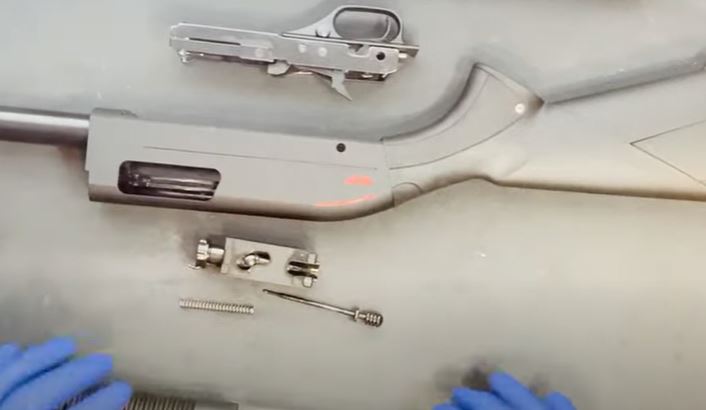
Always verify the chamber and magazine are completely empty before beginning any maintenance work. Point the muzzle in a safe direction and engage the safety.
Disassembly follows this sequence: depress the recoil plug and pull it free, then press the slide stop to release the slide assembly from the receiver, and withdraw the barrel and magazine tube as a unit. Separate the trigger group, scope mounts, and stock from the receiver frame. Lay all components on a clean, non-abrasive work surface in the order of removal to simplify reassembly.
Step 2: Clean the Gun

Apply a petroleum-based gun cleaner or Hoppe’s No. 9 to a patch or cotton swab and work it into the bore, chamber, and receiver rails. For heavily fouled bolts or slide assemblies, let the solvent dwell for 3–5 minutes before scrubbing with a brass wire brush. Use cotton swabs for tight corners and a nylon brush for serialized surfaces.
Recommended solvents: Hoppe’s No. 9 (petroleum-based, pH 7.0–7.5), Break-Free CLP (multi-purpose lubricant/cleaner), or a 50/50 mixture of mineral spirits and lint-free cloth for exterior wiping. Avoid acidic or abrasive cleaners which cause etching on blued steel.
Step 3: Apply Lubricants
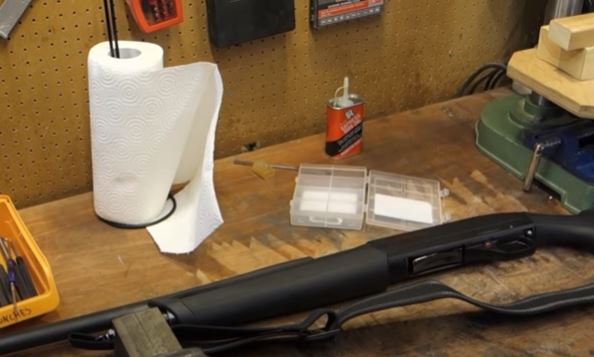
Lubrication prevents metal-to-metal wear and forms a protective barrier against moisture. Apply one to two drops of quality gun oil (such as Break-Free CLP or Rem Oil) to the slide rails, trigger sear surfaces, and barrel extension bore. Wipe excess oil with a microfiber cloth—the film should be barely visible, not pooling.
Key lubrication points:
- Slide rails (both sides, front and rear)
- Barrel extension locking lugs
- Carrier and bolt assembly contact surfaces
- Trigger group pivot points
- Magazine tube spring and follower
Step 4: Dry the Gun
After cleaning and oiling, wipe all components dry with a clean microfiber cloth or gun-specific patch. Ensure no moisture remains in the bore, chamber, or receiver. For long-term storage, apply a light wax coating (such as Renaissance Wax) to exterior surfaces to guard against humidity.
Step 5: Assemble Them Back
Reassemble in reverse disassembly order: attach the trigger group, mount scope or sights, slide the barrel and magazine tube assembly onto the receiver until the slide stop clicks into place, then install the recoil plug. Consult your user manual for torque specifications on scope mount screws—typically 15–20 in-lbs for base screws.
After reassembly, function-check the action by cycling the slide three times with the safety engaged. Verify the trigger resets fully between cycles and the shell elevator lifts cartridges smoothly from the magazine tube.
Winchester SXP Defender Specifications
The Winchester SXP Defender offers a proven pump-action platform with practical features for home defense and field use.
| Specification | Detail |
|---|---|
| Action | Pump-action, 12/16/20 gauge |
| Barrel Length | 18–28 inches (varies by model) |
| Magazine Capacity | 4–5 shells (2¾-inch) + 1 in chamber |
| Receiver Material | Aluminum alloy with matte black finish |
| Average Weight | 6.5–7.5 lbs (depending on barrel and stock) |
| Avg. Market Price (new) | $378 USD |
| Avg. Market Price (used) | $250–$300 USD |
Handling
The textured stock and forend ribbing provide a secure grip during rapid cycling and follow-up shots. The pistol-grip variant lowers the center of gravity for improved controllability in close-quarters scenarios. Recoil pads on the buttstock reduce perceived recoil by approximately 15–20% compared to unpadded designs.
Accuracy
From the factory, the SXP Defender produces a 3–4 inch group at 25 yards with standard 2¾-inch #4 buckshot. The 18.5-inch barrel generates a muzzle velocity of approximately 1,200 fps with 1⅛ oz. loads, providing effective patterns within 15 yards for self-defense use.
Fast Usage
The aluminum alloy receiver reduces overall weight to approximately 6.5 lbs, enabling faster target transitions during rapid-fire sequences. The twin action bars in the slide assembly ensure smooth, consistent pump strokes without binding, even under rapid manipulation.
Shotgun Disassembly Requirements
Full disassembly maximizes cleaning effectiveness because residue, moisture, and carbon fouling accumulate in areas invisible during superficial cleaning. The barrel extension, bolt face, and carrier group collect the most fouling during regular use.
Field stripping (no tools required) accesses the primary fouling points. Full gunsmith-level disassembly (requires punch set and torque wrench) is recommended every 2,000–3,000 rounds or annually for regular users.
Winchester 1300 Magazine Capacity
The Winchester 1300 series features a magazine tube that holds six 2¾-inch shells in 12, 16, or 20 gauge. Modern SXP Defender models ship with a 4-shell capacity magazine tube to comply with the 1994 Federal Assault Weapons Ban (now expired but retained by manufacturer preference for magazine plug compliance in some states).
Winchester Defender Shotgun Maintenance Schedule
Consistent maintenance intervals preserve mechanical reliability and protect your investment:
- After every use: Wipe down exterior, cycle action 3 times, check chamber and magazine
- Every 100–200 rounds: Full field strip, bore clean, lubricate action rails and pivot points
- Every 500–1,000 rounds: Inspect firing pin, springs, and trigger components; replace worn parts immediately
- Annual (even with no use): Apply light oil film to bore and all metal surfaces; store with silica gel packs
Guns used in humid, coastal, or rainy environments require cleaning within 24 hours of exposure to prevent rust formation on untreated steel surfaces. Use a rust-preventive lubricant such as G-96 GP-7 or Break-Free LC for long-term storage protection.
Conclusion
Winchester Defender shotguns deliver dependable service when maintained with proper solvents, targeted lubrication, and regular inspection. The five-step cleaning process—unload, strip, clean, lubricate, and reassemble—takes approximately 20–30 minutes and ensures the action cycles smoothly and the firing mechanism functions reliably. For more maintenance guides, explore the Specialty Cleaning Hub and the Cleaning Glossary.
References
- Winchester Repeating Arms Company. (2024). SXP Defender Owner’s Manual. Retrieved from winchesterguns.com.
- Hoppe’s. (2023). Firearm Care Guide: Solvents and Lubricants Reference. Retrieved from hoppes.com.
- National Shooting Sports Foundation (NSSF). (2022). Firearm Maintenance Best Practices. Retrieved from nssf.org.
- Bureau of Alcohol, Tobacco, Firearms and Explosives (ATF). (2021). Firearms Disassembly/Assembly Guidelines. Retrieved from atf.gov.

