
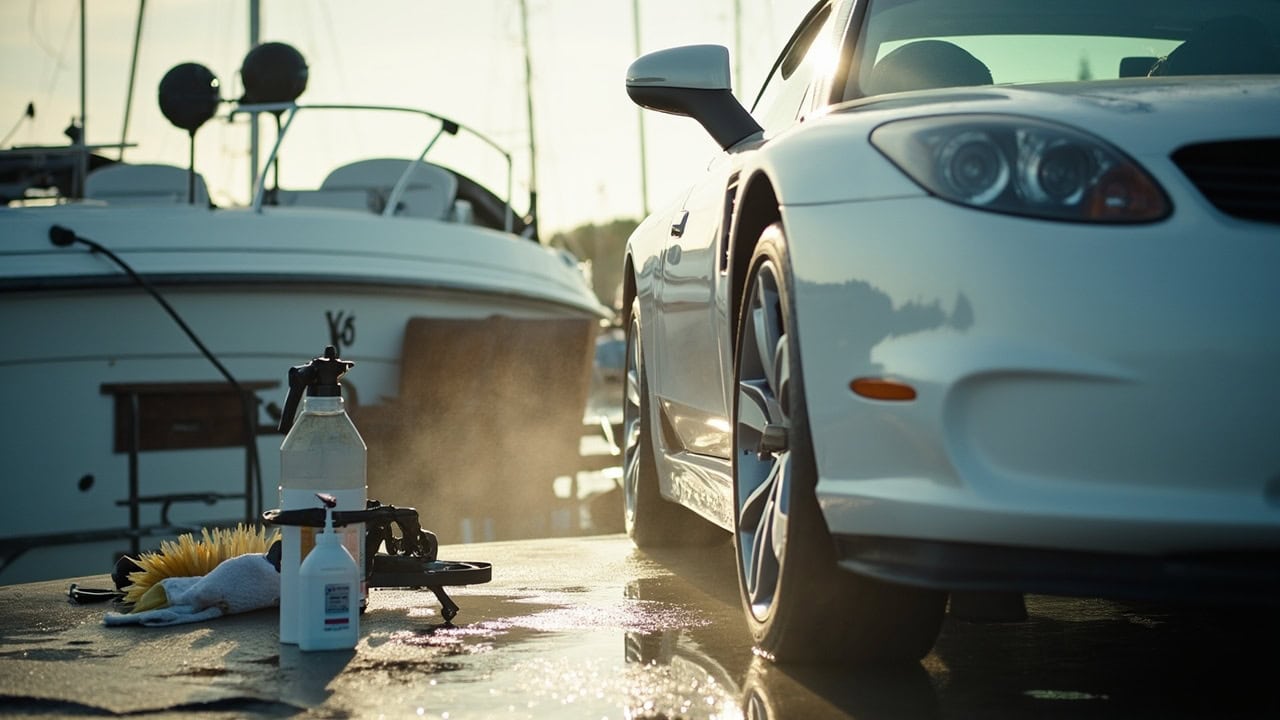
Specialty Cleaning: Cars, Boats, Outdoor Surfaces & More

This specialty cleaning guide provides comprehensive instructions for cleaning vehicles, marine vessels, and outdoor surfaces using pH-balanced cleaners, pressure washing at 1200–1800 PSI, and appropriate dwell times of 5–10 minutes for best results. Specialty cleaning differs from household cleaning because it addresses surfaces exposed to UV radiation, saltwater, road salt, and biological growth — contaminants that demand weather-resistant products, UV-protective treatments, and specialized equipment like boat brushes, RV squeegees, and surface cleaner attachments. Each spoke article linked from this hub provides detailed, surface-specific protocols for achieving professional-grade results on a single focus area.
What This Specialty Cleaning Guide Covers
This hub serves as the central resource for cleaning vehicles, marine vessels, and outdoor living spaces that fall outside traditional indoor cleaning. Specialty surfaces face unique challenges that household surfaces never encounter: prolonged UV exposure degrades protective coatings, saltwater corrodes metal hardware within days, road salt accelerates undercarriage rust, and biological growth like algae and mildew colonizes porous materials within 24–48 hours in humid conditions.
The scope of this hub covers five major cleaning categories, each supported by dedicated spoke articles with step-by-step protocols:
- Car exterior and interior detailing — paint correction, upholstery extraction, glass polishing, wheel decontamination, and engine bay cleaning
- Boat and marine vessel cleaning — hull biofouling removal, marine upholstery care, metal hardware polishing, and clear vinyl (isinglass) maintenance
- RV and camper cleaning — roof membrane care, sidewall and decal protection, awning mildew prevention, and holding tank deodorizing
- Patio and deck cleaning — wood, composite, concrete, paver, and natural stone surface restoration
- Outdoor furniture and accessories — cushions, metal frames, wicker, rattan, and umbrella fabric care
- Driveways, walkways, and fences — concrete, asphalt, gravel, paver, and fence material cleaning by type
Why Specialty Cleaning Matters
Vehicles and outdoor surfaces represent significant financial investments that require proper maintenance to preserve their value and extend their service life. A car maintained with regular professional detailing retains 15–20% more resale value compared to a comparable vehicle with neglected paint and interior, according to the International Carwash Association. Boat hulls covered in biofouling — barnacles, algae, and zebra mussels — can experience up to a 30% increase in fuel consumption due to hydrodynamic drag, as documented by the U.S. Naval Research Laboratory. Outdoor living spaces that skip seasonal cleaning develop permanent staining, structural degradation, and safety hazards like slippery algae growth on walkways.
The consequences of neglect compound rapidly on specialty surfaces:
- Vehicle paint: UV oxidation creates chalky, dull surfaces that absorb more heat, accelerating clear coat failure. Once the clear coat breaks through, repainting costs $2,000–$5,000 per panel.
- Boat hulls: Biofouling increases drag, raises fuel costs, and can cause invasive species transfer between waterways — a violation subject to EPA penalties in many jurisdictions.
- Wood decks: Black spot mold spores penetrate wood fibers within 48 hours of landing and become permanent without chemical intervention, leading to premature board replacement at $20–$35 per square foot.
- Concrete surfaces: Oil stains penetrate concrete pores within 30 seconds of contact. Without immediate degreaser treatment, these stains set permanently into the calcium silicate matrix.
- Outdoor fabrics: Mold and mildew roots grow into fabric fibers within 24 hours in humid conditions (above 60% relative humidity), causing permanent discoloration and fiber degradation.
Directory of All Spoke Articles in This Cluster
This hub connects to 26 detailed spoke articles organized into five specialized clusters. Each spoke provides surface-specific cleaning protocols, product recommendations, and step-by-step instructions for a single focus area.
Automotive Cleaning (Spokes 192–196)
- Spoke 192: How to Detail Your Car’s Exterior Like a Professional
- Spoke 193: Car Interior Deep Cleaning: Seats, Carpets, and Dashboard
- Spoke 194: How to Clean Car Wheels and Tires Without Damage
- Spoke 195: Engine Bay Cleaning: Safe Detailing Techniques
- Spoke 196: How to Remove Tree Sap and Bird Droppings from Car Paint
Marine and Boat Cleaning (Spokes 197–200)
- Spoke 197: How to Remove Algae and Barnacles from Boat Hulls
- Spoke 198: Marine Upholstery and Canvas Cleaning Guide
- Spoke 199: Boat Metal Hardware Polishing and Corrosion Prevention
- Spoke 200: How to Clean Boat Windows and Isinglass Clear Vinyl
RV and Camper Cleaning (Spokes 201–204)
- Spoke 201: RV Roof Cleaning and Sealing Complete Guide
- Spoke 202: How to Clean and Protect RV Side Walls and Decals
- Spoke 203: RV Awning Cleaning and Mildew Prevention
- Spoke 204: RV Holding Tank Cleaning and Deodorizing
Outdoor Surface Cleaning (Spokes 205–209)
- Spoke 205: Pressure Washing 101: Equipment and Techniques for Beginners
- Spoke 206: How to Clean a Wood Deck Without Damage
- Spoke 207: Concrete and Pavers Cleaning: Oil, Stains, and Weed Removal
- Spoke 208: How to Clean Composite Decking Materials
- Spoke 209: Patio Stone and Flagstone Cleaning and Sealing
Outdoor Furniture and Accessories (Spokes 210–213)
- Spoke 210: How to Clean Outdoor Cushions and Fabric Furniture
- Spoke 211: Metal Outdoor Furniture Cleaning and Rust Prevention
- Spoke 212: How to Clean Wicker and Rattan Outdoor Furniture
- Spoke 213: Outdoor Umbrella Cleaning and Fabric Care
Driveways, Walkways, and Fences (Spokes 214–217)
- Spoke 214: Driveway Cleaning: Concrete, Asphalt, and Gravel Surfaces
- Spoke 215: How to Clean Walkway Pavers and Remove Weeds
- Spoke 216: Fence and Gate Cleaning by Material Type
- Spoke 217: How to Clean Moss and Algae from Stone Paths
Getting Started: Essential Specialty Cleaning Tools
Before diving into spoke-specific articles, equip yourself with foundational tools that apply across multiple specialty cleaning categories. The right equipment determines whether you achieve professional-grade results or cause irreversible surface damage. Pressure washers, brushes, and cleaning agents each have surface-specific operating parameters — exceeding PSI limits on wood or using the wrong pH on marine gelcoat produces costly damage.
Pressure Equipment
Pressure washers are the workhorse of specialty cleaning, but selecting the correct PSI rating and accessory combination determines whether you clean a surface or destroy it. Electric models rated at 1200–2000 PSI handle most residential tasks safely, while gas-powered units at 2500–4000 PSI deliver the flow rate needed for large concrete driveways and heavy biofouling removal.
| Tool | Use Case | PSI Range | Price Range |
|---|---|---|---|
| Electric pressure washer | Decks, driveways, patios | 1200–2000 PSI | $150–$400 |
| Gas pressure washer | Large areas, heavy duty | 2500–4000 PSI | $400–$900 |
| Surface cleaner attachment | Flat concrete, decks | N/A (attachment) | $30–$100 |
| Rotating brush attachment | Boats, vehicles, siding | N/A (attachment) | $25–$80 |
Hand Tools
Specialty hand tools provide the precision that pressure washers cannot. Boar’s hair wash brushes deliver gentle agitation on clear coat paint and marine gelcoat without scratching, while detailing brushes reach crevices around emblems, vents, and hardware that mitts and sponges miss entirely.
- Boar’s hair wash brush — gentle on vehicle and boat gelcoat surfaces
- Wheel cleaning brush with long reach — accesses inner barrel of alloy wheels
- Soft-bristle scrub brush — safe for deck boards, patio stones, and outdoor furniture
- Extension poles (12–24 ft reach) — for second-story siding, RV roofs, and tall boat decks
- Microfiber wash mitts (3–4 for large vehicles) — trap contaminants rather than dragging them across paint
- Detailing brushes — small crevices, vents, emblems, and lug nut pockets
Cleaning Agents by Surface Type
Chemistry matters in specialty cleaning more than in any other cleaning category. Automotive clear coat, marine gelcoat, wood fibers, concrete pores, and outdoor fabrics each respond to specific pH ranges and surfactant types. Using the wrong cleaner on the wrong surface causes damage that ranges from cosmetic etching to structural degradation. Refer to the Cleaning Chemistry Hub for detailed explanations of how pH and surfactant chemistry interact with different materials.
| Surface Category | Primary Cleaners | Avoid |
|---|---|---|
| Automotive paint | pH-neutral car wash soap (pH 6–8), spray wax | Acidic wheel cleaners on paint, abrasive compounds |
| Marine gelcoat | Marine-grade hull cleaner, algae remover | Undiluted household bleach, wire brushes |
| Wood decks | Oxygenated bleach (OxiClean-based), wood brightener | Chlorine bleach, pressure exceeding 1200 PSI |
| Concrete | Trisodium phosphate (TSP), degreaser, lactic acid | Ammonia on sealed surfaces, acid on alkaline stone |
| Outdoor fabric | Marine fabric cleaner, enzymatic cleaner | Bleach on colored fabrics, high pressure on thin fabric |
Specialty Cleaning Safety and Environmental Considerations
Personal Protective Equipment (PPE) Requirements
Specialty cleaning involves chemicals, pressures, and working conditions that pose genuine injury risk when proper precautions are ignored. Pressure washer streams at 2000+ PSI can penetrate skin and inject water into tissue — a condition requiring emergency surgery. Acidic hull cleaners cause chemical burns on contact. Mold spores released during deck cleaning trigger respiratory reactions in sensitive individuals.
- Chemical-resistant gloves: Nitrile or neoprene rated for solvent resistance — latex degrades when exposed to petroleum-based cleaners and offers no protection against acidic hull cleaners
- Safety glasses or goggles: Mandatory when pressure washing or using acidic cleaners — ejected debris from pressure washer tips travels at 200+ mph
- Respiratory protection: N95 minimum when handling powdered cleaners; P100 respirator for mold remediation on decks and fences Non-slip footwear: Ankle-supporting boots with rubber soles when working on wet boat decks, slick patios, or algae-covered walkways
Environmental Considerations
Cleaning runoff from specialty surfaces carries detergents, oils, heavy metals, and biological contaminants into storm drainage systems that discharge directly into waterways without treatment. The EPA’s Clean Water Act prohibits discharging pollutant-containing water into navigable waters without a permit, and many municipalities extend this requirement to storm drain systems.
- Never discharge pressure washer water directly into storm drains — it contains detergents, degreased oils, and surface debris
- Collect and properly dispose of marine waste at designated pump-out stations — dumping holding tank waste overboard violates federal law
- Use phosphate-free biodegradable cleaners within 200 feet of waterways to prevent nutrient pollution and algae blooms
- Contain cleaning runoff when working on boats in or near water — use containment booms or tarps to capture chemical-laden water
- Check local regulations before pressure washing commercial properties — many jurisdictions require vacuum recovery systems and runoff containment
Seasonal Specialty Cleaning Schedule
Different surfaces require attention at different times of year based on weather exposure, usage patterns, and the biological activity cycles of mold, algae, and other growth. Following a seasonal schedule prevents the compounding damage that occurs when maintenance is deferred. For vehicle-specific carpet and floor mat cleaning, refer to the Floor Cleaning Hub for automotive carpet extraction techniques. For outdoor kitchen and grill surfaces that accompany patio areas, see the Kitchen Cleaning Hub.
Spring (March–May)
Spring cleaning for specialty surfaces focuses on reversing winter damage and preparing for peak-use season. Road salt residue on vehicle undercarriages continues corroding metal until physically removed by thorough washing. Boats emerging from winter storage accumulate condensation mold on upholstery and oxidation on hull surfaces that were shrink-wrapped without ventilation. Decks and patios collect organic debris under snow cover that feeds mold and algae colonies as temperatures rise.
- Full exterior detail on vehicles after winter road salt exposure — include undercarriage flush and clay bar treatment
- Boat hull inspection and cleaning after winter storage — check for gelcoat blistering and oxidation before launching
- Deck and patio deep cleaning before outdoor season begins — remove leaf stains and algae growth before foot traffic grinds them deeper
- Outdoor furniture removal of winter covers and spring cleaning — inspect for rust, mold, and fabric degradation before first use
Summer (June–August)
Summer brings peak usage and peak contamination. Bug splatter on vehicle front ends contains acidic proteins that etch paint within 48 hours. Tree sap hardens into a polymer-like residue that bonds to clear coat. Boats used frequently accumulate algae and scum lines at the waterline that stain gelcoat brown if left unaddressed. Outdoor furniture cushions absorb sunscreen oils, body oils, and food spills that oxidize and yellow fabric if not cleaned within a few days.
- Monthly car washing to remove bug splatter and tree sap — apply spray wax after each wash for UV protection
- Weekly boat hull rinsing if used frequently — prevents waterline scum from setting into the gelcoat
- Patio furniture cleaning every 2–3 weeks during active outdoor living season
- Driveway inspection and spot treatment after summer storms wash debris and oils across surfaces
Fall (September–November)
Fall preparation prevents winter damage. Leaves left on decks and patios through winter create dark tannin stains that penetrate wood fibers and concrete pores. Moisture trapped under leaf coverage feeds mold colonies that resume growth during spring thaws. Vehicles accumulate road salt after the first freeze, and boats need thorough cleaning before storage to prevent mold growth during months of non-use.
- Pre-winter vehicle undercarriage rinse to remove accumulated road salt and brine residue
- Boat winterization cleaning and shrink-wrap or cover installation — clean all surfaces before covering to lock in contamination
- Leaf and debris removal from decks and patios before winter — tannin stains from wet leaves become permanent on wood and stone
- Outdoor furniture storage or winter cover installation — clean cushions and frames before storing to prevent mold
Winter (December–February)
Winter specialty cleaning focuses on damage prevention rather than aesthetic maintenance. Road salt and magnesium chloride de-icers remain active on vehicle undercarriages until physically flushed, continuing to corrode brake lines, fuel lines, and frame components throughout the season. Snow removal from paver surfaces requires care — rock salt damages concrete sealers and corrods metal edging. Indoor-stored boats need quarterly inspections to catch mold growth and rodent damage before it spreads.
- Vehicle undercarriage cleaning at coin-operated bays every 2–4 weeks during active road salting season
- Indoor boat storage quarterly inspection — check for mold, mildew, and condensation damage
- Snow removal from pavers using plastic shovels — avoid rock salt on sealed concrete and natural stone
- Indoor storage and cover maintenance checks for RVs, boats, and outdoor furniture
Frequently Asked Questions
Q: What is the difference between specialty cleaning and regular household cleaning?
A: Specialty cleaning addresses surfaces exposed to environmental elements — UV radiation, precipitation, temperature extremes — and unique contaminants like road salt, saltwater, bird droppings, tree sap, and biological growth that indoor surfaces never face. Specialty cleaning requires different pH ranges (often stronger acids or alkalines for hull cleaning and concrete degreasing), higher pressure or scrubbing force than indoor cleaning allows, protective coatings applied after cleaning (wax, sealant, UV protectant), and seasonal maintenance cycles tied to weather patterns rather than weekly schedules.
Q: How often should I pressure wash my driveway and patio?
A: Most driveways and patios benefit from annual pressure washing, typically in spring before heavy summer use. High-traffic driveways or outdoor entertainment patios may need cleaning twice yearly. If you notice green algae growth covering more than 25% of the surface, slippery conditions that create fall hazards, or visible oil stains that have set into the concrete, clean the surface immediately regardless of the seasonal schedule.
Q: Can I use the same cleaning products on my car that I use on my boat?
A: Not always. Automotive car wash soaps are pH-neutral (pH 6–8) and formulated for painted surfaces with clear coat protection. Marine hull cleaners often contain stronger acids or solvents designed to remove biofouling and should never be used on automotive paint because they strip wax and damage clear coat. However, pH-neutral all-purpose cleaners rated safe for both automotive interiors and marine vinyl are available from brands like Meguiar’s and Star brite.
Q: What PSI pressure washer do I need for cleaning a two-story deck and siding?
A: For second-story decks and siding, a pressure washer rated 2000–3000 PSI with an adjustable nozzle tip providing a 25-degree to 40-degree spray spread delivers enough cleaning power while allowing safe distance operation. Use a 25-degree nozzle at 12–18 inches from the surface. Never use a 0-degree nozzle (jet stream) on wood or siding — it causes permanent damage and gouging that requires board or panel replacement.
References
- U.S. Environmental Protection Agency. (2024). National Pollutant Discharge Elimination System (NPDES). EPA.gov.
- International Carwash Association. (2023). Vehicle Maintenance and Resale Value Study. Carwash.org.
- U.S. Naval Research Laboratory. (2022). Biofouling Impact on Vessel Fuel Consumption and Hydrodynamic Drag. NRL.navy.mil.
- Occupational Safety and Health Administration. (2024). Personal Protective Equipment Standards for Cleaning Operations. OSHA.gov.
- American Concrete Institute. (2021). Guide to Concrete Surface Cleaning and Stain Removal. Concrete.org.
- Centers for Disease Control and Prevention. (2024). Mold Cleanup and Remediation Guidelines. CDC.gov.


