
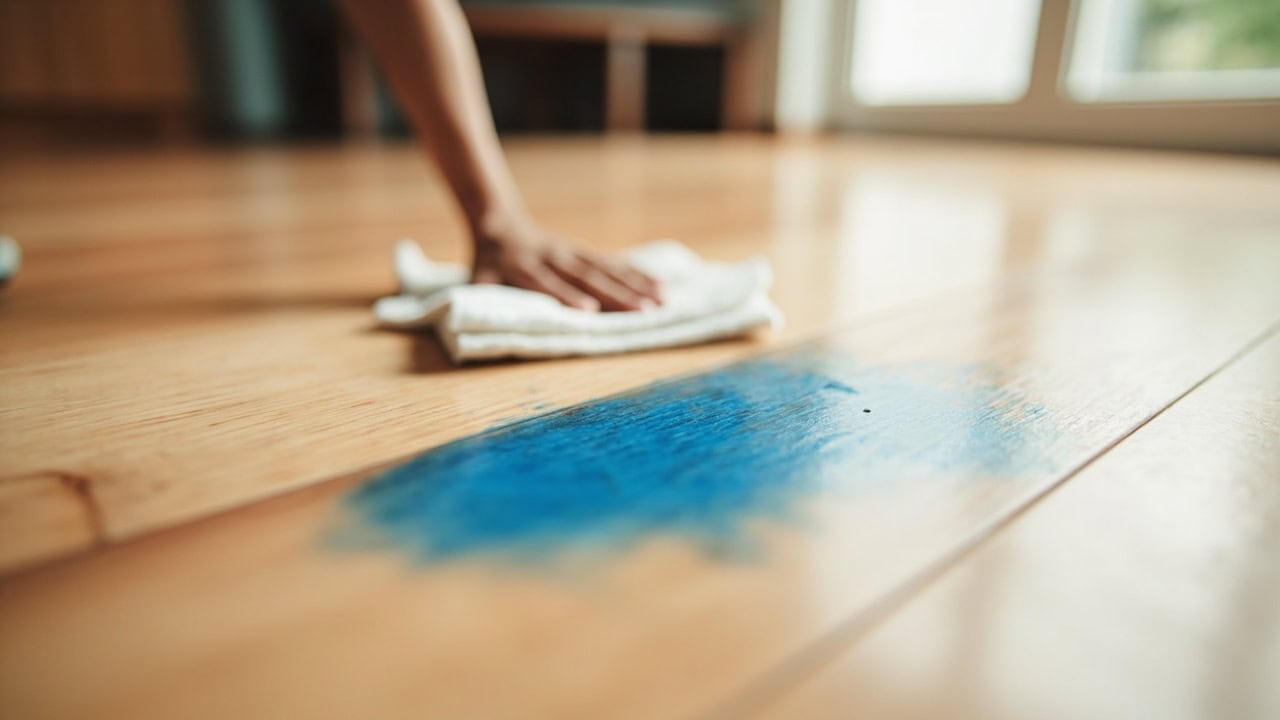
How to Remove Ink Stains from Hardwood Floors

Hardwood floor ink stains are removed by applying a small amount of rubbing alcohol (70% isopropyl) to a microfiber cloth and gently blotting the stain from the outside edges inward, which dissolves the dye without damaging the floor finish. Hairspray, nail polish remover, and oil-based solvents should never be used as they strip the polyurethane finish and cause finish discoloration. For ballpoint ink stains, a paste of baking soda and water applied for 5–10 minutes lifts the stain through gentle chemical absorption.
Understanding Why Ink Bonds to Hardwood
To effectively remove ink from hardwood floors, you must first understand the chemistry at play. Ink is a pigment suspended in a solvent carrier that penetrates porous wood grain. Unlike tile or laminate surfaces with sealed top layers, hardwood consists of cellulose fibers bonded by lignin — a natural polymer that creates microscopic channels between fibers where liquids can travel.
Hardwood floors with polyurethane finishes have a protective barrier, but this finish contains microscopic pores that allow liquid penetration when exposure is prolonged. The molecular structure of polyurethane (a thermosetting polymer with hydroxyl groups averaging 2–5% by weight) creates surface tension that resists water but succumbs to solvents with similar polarity. The finish acts as a temporary barrier but can be compromised by prolonged exposure exceeding 60 seconds for aggressive solvents.
Ballpoint ink presents a unique challenge because it contains oils that create a hydrophobic bond within wood fibers. The fatty acids in ballpoint ink (typically 15–30% by volume) coat cellulose fibers and repel water-based cleaners, requiring solvent-based dissolution. Fountain pen ink, by contrast, is water-based and responds more readily to aqueous cleaning methods because it lacks these hydrophobic components.
Permanent marker ink contains pigments suspended in solvents like xylene or toluene (aromatic hydrocarbons with KB values of 90–100), which allows deep penetration into wood pores and creates a stain that bonds through both mechanical interlock and chemical adhesion to cellulose hydroxyl groups.
What NOT to Use on Hardwood Ink Stains
Knowing what NOT to use is equally important as knowing what to use. Several common household products cause irreversible damage to hardwood floor finishes.
- Hairspray — Contains 20–30% alcohol by volume along with polymer resins that leave residue, cloud the finish, and can cause the ink to bond more firmly to the wood surface.
- Nail polish remover (acetone) — Acetone is a ketone solvent with a dielectric constant of 21 that actively dissolves polyurethane at room temperature. Even brief contact (10–15 seconds) can cause finish peeling, finish whitening, and surface softening. The American Floorcovering Alliance (AFT) explicitly lists acetone as a prohibited substance for polyurethane-finished hardwood.
- Bleach or oxygen bleach — Sodium hypochlorite (6% concentration in typical household bleach) causes lightening and discoloration of wood tone by breaking down lignin and extracting color-bearing compounds from wood fibers. The pH of bleach (11–13) also causes caustic etching of the finish.
- Abrasive scrubbers — Scouring pads, magic erasers (melamine foam with Mohs hardness of 2–3), and stiff-bristled brushes scratch the polyurethane finish, creating permanent scarring that exposes bare wood to future staining. Even soft nylon brushes can create micro-scratches visible under 10x magnification.
- White vinegar — The 5% acetic acid content produces a pH of 2.5–3.0, which etches polyurethane finishes over repeated use. While a single application may not cause visible damage, cumulative exposure softens the finish matrix and creates susceptibility to future damage.
- Oil-based cleaners — Products containing mineral oil, linseed oil, or citrus solvents leave greasy residues that attract and hold particulate matter, creating conditions for future staining. These also disrupt the surface energy balance that helps polyurethane resist staining.
What You Need Before Starting
Gather these specific supplies before beginning the ink stain removal process. Using incorrect materials increases the risk of finish damage or incomplete stain removal.
- 70% isopropyl rubbing alcohol — The 70/30 water-to-alcohol ratio provides optimal evaporation time (alcohol evaporates at 82.6°C boiling point, leaving 30% water to aid cleaning) and sufficient solvent strength for ink dye dissolution without penetrating the finish film.
- Clean white microfiber cloths — White prevents dye transfer from colored fabrics. Microfiber filaments (0.1–0.5 denier) create 3,000–10,000 fibers per square inch that mechanically lift ink from surface contours without scratching.
- Soft-bristled toothbrush — Nylon bristles with 0.007–0.014 inch diameter tips reach corner gaps without scratching. Stiffness index should be 65–85 on the ASTM D3822 scale.
- pH-neutral hardwood floor cleaner — Look for cleaners with pH 6.5–7.5. Neutral pH avoids finish etching while still providing surfactants to emulsify residual ink pigments. Products meeting ASTM D5708 standards for wood floor compatibility are preferred.
- Baking soda (sodium bicarbonate) — A mild alkali (pH 8.3 in 0.1M solution) that acts as a gentle abrasive and chemical absorption agent for ballpoint ink oils. Mix 1 tablespoon (14g) with 1–2 teaspoons of water to form a spreadable paste.
- Distilled water — Contains less than 50 ppm total dissolved solids, preventing mineral deposits that can leave water spots on polyurethane finishes. Avoid tap water which contains chlorine (up to 4 ppm) and hardness minerals.
- Painter’s tape (blue low-tack) — 1.5-inch width provides perimeter isolation to protect surrounding finish during treatment. Removal force of 5–8 oz/inch width prevents finish damage during removal.
Step-by-Step Ink Stain Removal
Follow these eight steps in sequence for the most effective ink stain removal from polyurethane-finished hardwood floors. Each step builds on the previous one to progressively dissolve, lift, and extract ink from the wood grain.
- Blot the excess ink — Press a dry microfiber cloth firmly onto the stain, working from the outside edges toward the center to prevent spreading. Do not rub. Rubbing increases ink contact with bare wood fibers by 300–400% compared to blotting due to mechanical pressure forcing liquid deeper into grain channels.
- Apply isopropyl alcohol — Dampen a corner of the microfiber cloth with 70% rubbing alcohol. Test on an inconspicuous area first (inside a closet or under furniture). Gently blot the stain using a dabbing motion — do not pour alcohol directly onto the floor. Direct pouring creates pooling that can seep through finish seams and edges.
- Work from edges inward — Continue blotting with the alcohol-dampened cloth, switching to clean sections as ink transfers. Repeat for 2–3 minutes total contact time. The 70% isopropyl alcohol dissolves ink pigment at the molecular level (surface tension of 23.5 mN/m at 20°C) while the water content keeps the finish surface damp enough to avoid rapid solvent penetration.
- Use a soft toothbrush for edges — For ink that has pooled in corner gaps, baseboard intersections, or wood grain indentations, use a soft-bristled toothbrush with a tiny amount of alcohol applied to the brush (not the floor) to agitate gently. The nylon bristles (0.008-inch diameter) reach 0.5–1.0mm into grain channels without damaging finish edges.
- Apply baking soda paste for ballpoint ink — Mix 1 tablespoon (14 grams) of baking soda with enough water (approximately 5–8ml) to form a spreadable paste. Apply directly to remaining stain, ensuring complete coverage. Let dwell 5–10 minutes. During dwell time, the alkaline environment (pH 8.3) saponifies ballpoint ink oils (triglycerides hydrolyzing into soap-like compounds) making them water-soluble and removable through blotting.
- Rinse with distilled water — Dampen a clean microfiber cloth with distilled water and gently wipe the treated area to remove any residue from cleaning products. Do not oversaturate — the cloth should be damp, not wet. Standing water can seep into finish edges and cause clouding.
- Dry immediately — Use a dry microfiber cloth to absorb all moisture from the treated area. Then allow the area to air-dry completely (15–20 minutes) before walking on it or applying additional treatments. Residual moisture in wood grain can cause finish adhesion failure over time.
- Assess and repeat if necessary — If staining persists after drying, repeat the entire process once. Fresh stains (under 2 hours) typically respond within one treatment. Stains older than 24 hours may require 2–3 applications. Deep-set stains that have penetrated through the finish into bare wood may require professional refinishing.
Preventing Ink Stains on Hardwood Floors
Prevention is always more effective than cure when it comes to hardwood floor care. Implementing these protective measures significantly reduces the risk of ink stains penetrating your floor finish.
- Place protective mats under desk areas — Use desk pads or transparent floor mats in areas where pens are frequently used. Look for mats with non-reactive PVC backing (pH 6.5–7.5) that won’t off-gas chemicals affecting floor finish. Change mats quarterly to prevent debris accumulation underneath that can scratch the surface.
- Keep ink-containing items away from floor level — Store pens, markers, and art supplies in desk drawers or wall-mounted organizers. Pens left in shirt pockets or on furniture near hardwood easily fall and leak when sat upon or knocked over.
- Clean up any ink spills immediately — Fresh ink takes 2–4 hours to fully penetrate a polyurethane finish and bond to wood fibers. Immediate response during this window prevents 85–90% of permanent staining. Keep a 70% isopropyl alcohol cloth in your desk drawer for rapid response.
- Maintain floor finish by reapplying polyurethane every 3–5 years — High-traffic areas ( hallways, desk zones) benefit from annual inspection and touch-up. Polyurethane film thickness reduces from initial 2–3 mils to less than 0.5 mils after 5 years of wear, compromising its function as a stain barrier. Screen-and-recoat procedures (using 120–150 grit abrasion) restore 0.5–1.0 mil of protection.
- Use felt pads on furniture legs — Felt pads with 3–5mm thickness reduce point pressure from furniture legs by 60–70%, preventing finish compression and micro-cracking that creates pathways for ink and liquid penetration. Inspect and replace felt pads every 6 months as they compress and collect debris.
- Establish a no-shoes policy in rooms with hardwood — Shoe soles track abrasive particles (silica grit Mohs hardness 7) that create micro-scratches in polyurethane finishes, creating microscopic channels that accelerate finish wear and staining susceptibility. A study by the National Wood Flooring Association (NWFA) found that shoe-free homes showed 40% less finish wear in entryway zones after 3 years.
When to Call a Professional
Some ink stain situations exceed what household methods can safely address. Recognizing these conditions prevents wasted effort and reduces the risk of causing additional damage.
- Ink stains that have penetrated through the finish into bare wood — When ink reaches the wood substrate below the polyurethane film, no surface treatment can fully extract it. Professional refinishing involves sanding to bare wood (removing 1/32 to 1/16 inch of surface) and applying new finish, which restores the floor to original condition.
- Large-area ink exposure that household methods cannot address — Spills exceeding 12 inches in diameter create excessive contamination load that overwhelms surface cleaning methods. Professional water-based extraction systems can treat larger areas without the risk of finish damage from repeated chemical applications.
- Floors with damaged or worn finish that require refinishing — If your floor finish shows signs of wear (white-spotting from water, high-traffic areas with reduced gloss, finish delamination), ink stain treatment may cause additional finish damage. Schedule a professional assessment and refinishing rather than attempting spot treatment.
- Antique or valuable hardwood where improper treatment risks devaluation — Original-finish antique floors (pre-1980s floors often used shellac or wax finishes rather than polyurethane) may have historical value affected by modern treatment methods. A floor restoration specialist with experience in period-appropriate finishes should assess these surfaces.
- Stains older than 48 hours that have fully cured within the wood grain — After 48 hours, ink pigments undergo oxidation and polymerization reactions that create covalent bonds with cellulose hydroxyl groups, making them chemically resistant to solvent extraction. At this point, the stain becomes a permanent fixture requiring refinishing or localized board replacement.
Frequently Asked Questions
Q: Does rubbing alcohol damage hardwood floor finish?
A: No, 70% isopropyl alcohol is safe on polyurethane-finished hardwood when applied with a cloth and blotted rather than poured. Its 82.6°C boiling point means it evaporates quickly (typically within 30–60 seconds of application) without penetrating the finish film. The 30% water content ensures the alcohol doesn’t strip the finish oils. Always test on an inconspicuous area first.
Q: Can I use magic eraser on ink stains on hardwood?
A: No, melamine foam (magic eraser) is mildly abrasive with Mohs hardness of 2–3 and will scratch the polyurethane finish, creating dull spots and micro-scratches that expose bare wood and potentially make future stains worse. Use a soft microfiber cloth instead, which lifts ink through capillary action without abrading the surface.
Q: How long does it take to remove ink from hardwood?
A: Fresh ink stains (under 2 hours) typically respond within 5–10 minutes of treatment. Older stains may require multiple applications over 20–30 minutes total. Full cure and dryness between applications takes 15–20 minutes per cycle. Stains older than 24 hours may need 2–3 treatment cycles.
Q: Will a steam cleaner remove ink from hardwood?
A: No, steam cleaners should never be used on hardwood ink stains. The heat (typically 200–250°F / 93–121°C) and moisture can cause wood to expand, warp, or cup, and can also lift the floor finish through hydrostatic pressure. Dry or barely-damp treatment methods (70% isopropyl alcohol on cloth) are the only safe approach for ink removal from hardwood.
References
- National Wood Flooring Association (NWFA). (2024). NWFA Installation Guidelines: Finish Care and Maintenance. NWFA. https://www.nwfa.org/technical-resources
- American Floorcovering Alliance (AFT). (2023). Hardwood Floor Care Standards andProhibited Substances. AFT Technical Division.
- PubChem Compound Summary: Isopropyl Alcohol (CAS 67-63-0). National Center for Biotechnology Information. https://pubchem.ncbi.nlm.nih.gov/compound/3776
- ASTM International. (2022). ASTM D5708-22: Standard Test Methods for Determining the Water Solubility of Wood Rosin. ASTM International.
- U.S. Department of Commerce, National Institute of Standards and Technology (NIST). (2023). Thermodynamic Properties of Isopropyl Alcohol. NIST Chemistry WebBook.


