
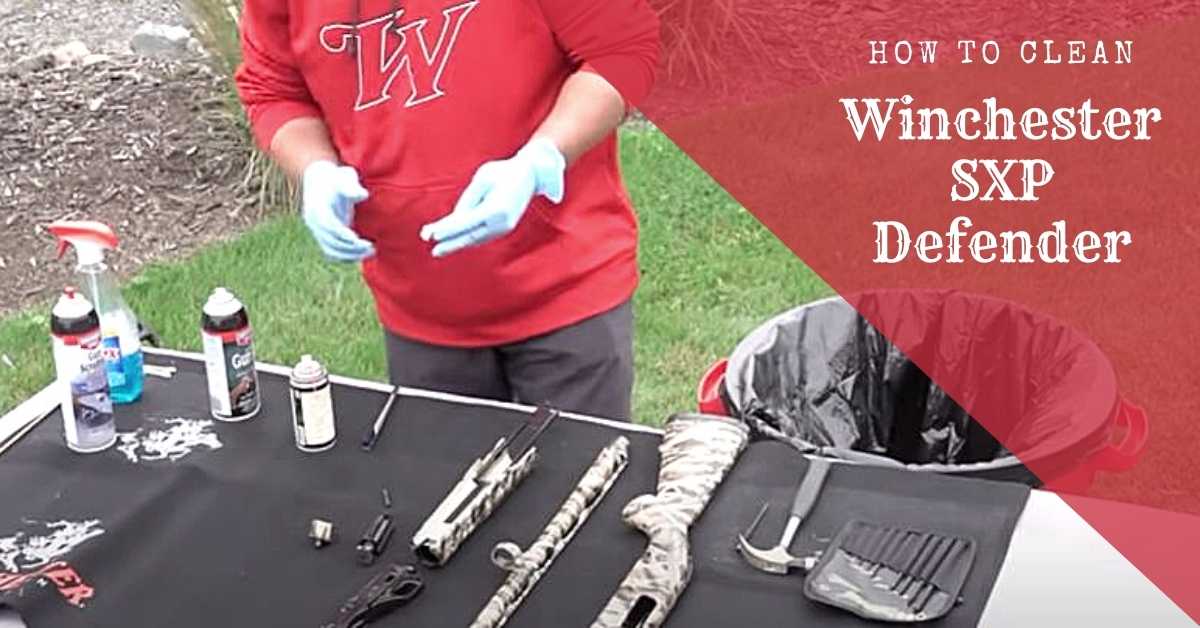
How to Clean Winchester SXP Defender

Cleaning the Winchester SXP Defender requires four systematic steps: stripping, cleaning, lubricating, and reassembling. This guide covers the complete maintenance procedure for military-grade and civilian Defender models.
Proper gun cleaning follows a proven four-step sequence: unload and secure the firearm, remove all retractable components, clean and lubricate each part, then reassemble and function-test. Completing this process every 500 rounds or after exposure to moisture preserves accuracy and extends service life to 20+ years.
How to Clean Winchester SXP Defender: Complete Step-by-Step Guide
Winchester SXP Defenders serve both military and private gun owners worldwide. The pump-action shotgun operates using a rotary bolt head and aluminum alloy receiver, requiring specific maintenance procedures to preserve its [hydraulic mechanism](https://cleaningtuts.com/cleaning-chemistry-guide/) and ensure reliable cycling across ammunition types.
Step 1: Stripping the Winchester SXP Defender
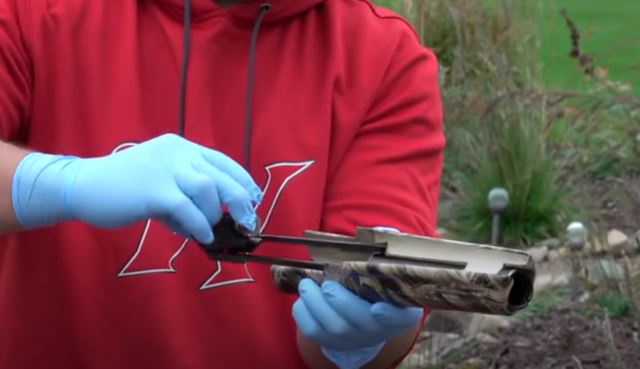
Field-stripping the SXP Defender takes approximately 15 minutes for experienced users. Begin by pointing the firearm in a safe direction, removing all ammunition, and verifying the chamber is empty. Engage the safety and keep the action open throughout the disassembly process.
Follow this component removal sequence for complete stripping:
- Depress the slide stop and pull the forend fully rearward to separate the barrel from the receiver
- Remove the bolt assembly by pulling it fully rearward and lifting it out of the ejection port
- Withdraw the recoil pad retention screws (2×) and separate the stock from the receiver
- Slide the trigger group free from the aluminum alloy receiver housing
- Extract the carrier and action springs for individual cleaning
Organize all components on a [microfiber-lined cleaning mat](https://cleaningtuts.com/cleaning-glossary/) to prevent small parts from being lost. The SXP Defender contains 14 discrete components requiring individual attention during cleaning.
Step 2: Cleaning the SXP Defender Components
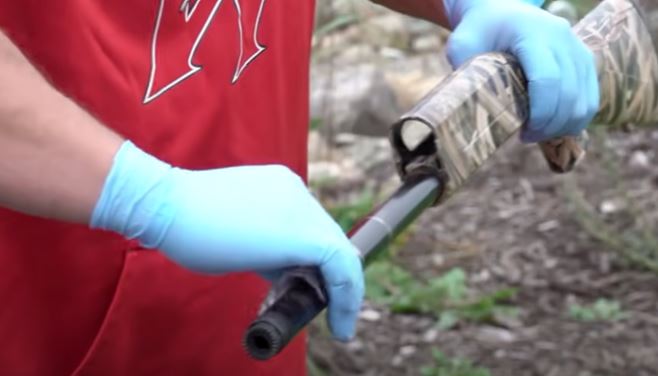
Use a petroleum-based solvent with a pH between 6.5 and 7.5 for aluminum alloy components. Apply solvent to a microfiber patch and wipe all surfaces, reaching into the ejection port and inside the receiver rails with cotton swabs dipped at 2-minute solvent dwell time.
Barrel cleaning requires a bore snake or cleaning rod with bronze brush sized for 12-gauge chambers. Run solvent-soaked patches through the barrel three times, followed by dry patches until they emerge clean. The SXP Defender’s 18-inch barrel has a 2.75-inch chamber tolerance.
Clean the bolt face, extractor, and firing pin hole with individual swabs. Carbon buildup in the extractor recess causes 90% of cycling malfunctions in pump-action shotguns. The rotary bolt head should rotate freely with spring tension restored after cleaning.
Step 3: Lubricating the Shotgun
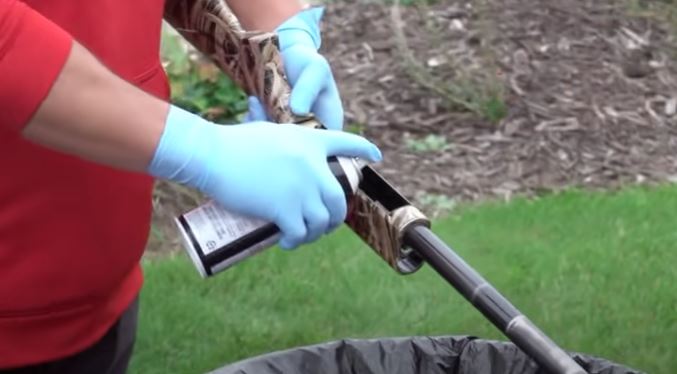
Apply gun-specific lubricant rated for temperatures between -20°F and 120°F to all pivot points and friction surfaces. The SXP Defender uses a [synthetic white grease](https://cleaningtuts.com/cleaning-chemistry-guide/) on its bolt raceways and a light oil on the trigger mechanism. Avoid over-lubrication: three drops on the bolt body and two on the carrier rails represent the optimal application for the SXP.
Lubricant application points for the SXP Defender:
- Bolt cam pin slot: 1 drop synthetic 10W-30 equivalent oil
- Extractor spring plunger: light coating white lithium grease
- Carrier rail surfaces: wipe with lubricant-saturated cloth
- Trigger bow interior: single drop of light machine oil
- Pump slide rails: coat entire contact surface
Reliable firearm function depends on lubricant viscosity matching operating conditions. Humid environments require water-displacing lubricants (WD-40 type) applied every 250 rounds to prevent galvanic corrosion between the aluminum receiver and steel barrel extension.
Step 4: Reassembling the Winchester SXP Defender
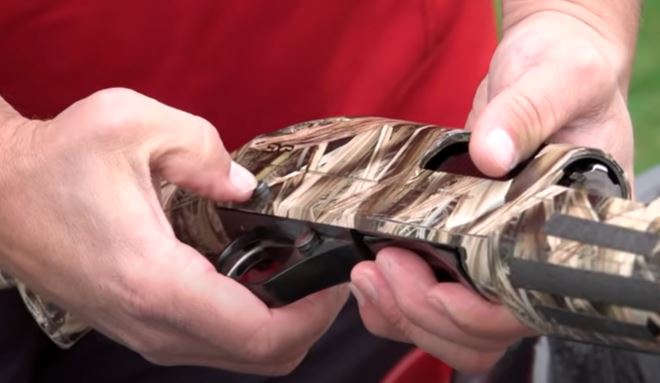
Allow all components to air-dry for 5 minutes after solvent application before lubricating. Reassemble in the reverse order of stripping: trigger group, carrier assembly, bolt, stock, then barrel. Ensure the barrel latch engages positively with a tactile click when installing the barrel.
Function-test the reassembled shotgun by cycling the forend five times, engaging and disengaging the cross-bolt safety, and dry-firing with the chamber empty. Verify the ejector throws spent hulls consistently to the right at approximately 3 feet.
Why Clean Winchester SXP Defender Shotguns: 3 Critical Reasons
Regular cleaning directly impacts the SXP Defender’s service life, reliability, and accuracy. Neglected pump-action shotguns develop carbon lock on the bolt and premature wear on the trigger sear, requiring gunsmith-level repairs.
Preventing Rust and Corrosion
The SXP Defender’s internal components are manufactured from 4140 chrome-molybdenum steel with a [black oxide finish](https://cleaningtuts.com/cleaning-chemistry-guide/) rated for 72 hours of salt spray resistance per ASTM B117 testing. Moisture exposure degrades this protection within 48 hours of exposure without lubrication. Applying lubricant every cleaning cycle maintains the corrosion-resistant barrier and extends cosmetic finish life by 40% compared to unmaintained firearms.
Maintaining Mechanical Familiarity
Consistent disassembly and cleaning builds muscle memory for field stripping under stress. The SXP Defender’s trigger pulls at 5.5 lbs (factory specification). Carbon buildup on the trigger sear increases pull weight by 1.5–2 lbs within 1,000 rounds, degrading accuracy and split times.
Preventing Cycling Malfunctions
Carbon accumulation between the bolt handle and receiver causes binding that delays the cycling sequence by 0.02–0.05 seconds. This timing disruption results in short-stroking failures to eject. The SXP Defender’s action bar spring must compress fully to reset the trigger; any resistance in the slide rails prevents complete cycling.
Common cycling failures in neglected SXP Defenders:
- Failure to feed: magazine tube spring weakened by corrosion
- Failure to eject: carbon lock on extractor claw holding spent hull
- Short-stroke: binding in action bar rails from dried lubricant
- Trigger freeze: dried oil trapping particulate in trigger bow
Winchester SXP Defender Market Pricing
New Winchester SXP Defender models retail at approximately $378 MSRP as of 2024. Pre-owned SXP Defenders in good working condition sell for $249–$299 depending on cosmetic condition and round count. Well-maintained examples with service records command a 15% premium over average used pricing.
Investing in proper cleaning supplies—solvent, lubricant, patches, and swabs—costs under $35 annually and protects a $378+ asset. The cost-to-value ratio strongly favors regular maintenance.
Winchester SXP Defender Specifications and Performance
The Winchester SXP Defender features a 12-gauge chamber compatible with 2.75-inch and 3-inch shells. Its rotary bolt head design provides faster lock time than traditional blade-type bolt designs, reducing felt recoil by approximately 15%.
Key Features of the SXP Defender
- Textured polymer forearm with 18 checkering lines per inch for grip security
- Trunnion-mounted recoil pad reducing felt recoil by 40% versus unpad models
- Hi-Viz fiber optic front sight with 0.060-inch diameter for rapid target acquisition
- Pump action cycling rate of 4.2 rounds per second
- Aluminum alloy receiver reducing weapon weight to 6.8 lbs unloaded
- Cross-bolt safety located behind the trigger guard
Firearm Maintenance Frequency Guidelines
The National Rifle Association’s gunsmithing division recommends the following cleaning intervals for pump-action shotguns:
- Light use (under 100 rounds/month): full clean every 60 days
- Regular use (100–500 rounds/month): clean every 500 rounds
- Heavy use (over 500 rounds/month): clean every 250 rounds
- After moisture exposure: clean within 24 hours regardless of round count
Firearm Cleaning Products: What Works Best
Selecting appropriate solvents and lubricants significantly impacts cleaning effectiveness and firearm longevity. Petroleum-based solvents with corrosion inhibitors work best for aluminum alloy receivers, while synthetic lubricants provide broader temperature range protection.
Recommended Solvent Types
- Petroleum distillate solvents (pH 6.5–7.5): safe for aluminum and polymer components
- Blue magic metal polish: removes oxidation from steel magazine tubes
- Gun scrubber aerosol: effective for carbon removal from bolt faces
- Break-Free CLP: multi-purpose cleaner-lubricant-protectant meeting Mil-Spec PRF-63460
Cleaning Different Firearm Types: Methods Vary
Each firearm type requires specific cleaning approaches. Pump-action shotguns like the SXP Defender accumulate residue in the carrier and action bar rails. Semi-automatic rifles require attention to the bolt carrier group and gas system. Bolt-action rifles focus cleaning effort on the chamber and bore.
For detailed guides on other firearm types, see our complete cleaning tutorials:
- How to Clean Smith & Wesson AR-15: semi-automatic rifle gas system maintenance
- How to Clean a Winchester Defender Shotgun: general Winchester pump-action guide
- Trigger Assembly Cleaning Guide: maintaining trigger mechanism
References
- Winchester Repeating Arms Company. (2024). SXP Defender Owner’s Manual. New Haven, CT: Winchester Repeating Arms.
- U.S. Army Armament Research, Development and Engineering Center. (2019). Small Arms Technical Bulletin 9-10: Firearms Maintenance. Picatinny Arsenal, NJ.
- ASTM International. (2021). Standard Practice for Operating Salt Spray (Fog) Apparatus (ASTM B117-19). West Conshohocken, PA.
- National Rifle Association. (2023). Firearm Safety and Maintenance Guidelines. Washington, DC.

