
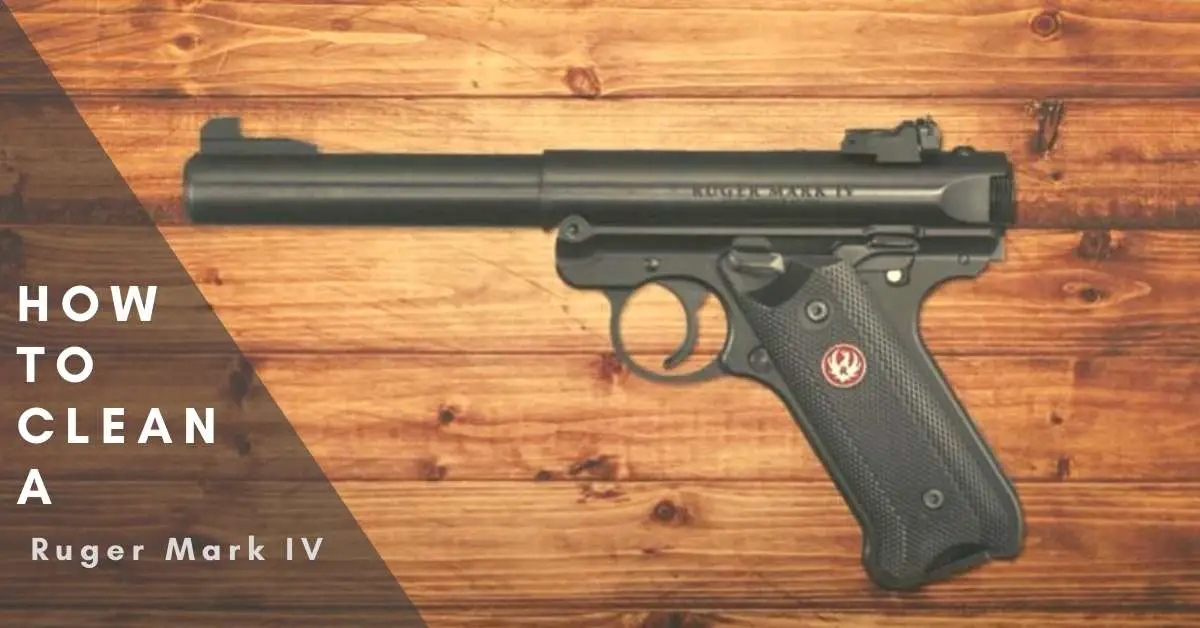
How to Clean A Ruger Mark IV

The Ruger Mark IV is a .22LR semi-automatic pistol launched in 2016 that field-strips in seconds with a single push-button takedown. This guide covers complete disassembly, solvent selection, lubrication points, and reassembly so you can restore your pistol to factory-spec condition in under 15 minutes.
When Did the Ruger Mark IV Come Out?
Sturm, Ruger & Co. launched the Mark IV in 2016, replacing the Mark III as the next generation in their iconic Mark-series .22LR pistols. The Mark IV introduced a one-button takedown system that eliminates the screwdrivers, mallets, and tools required to disassemble earlier models. Cold hammer-forged rifling and an internal cylindrical bolt deliver sub-MOA accuracy from the 4.4-inch barrel. The 10-round magazine and 1911-style grip make it a top choice for target shooting and casual plinking.
Tools and Supplies Needed
Gather these items before starting:
- Microfiber cleaning patches (2–3 patches per cleaning session)
- Bore brush sized for .22LR (0.22-inch caliber)
- Gun solvent (hoppes #9, Ballistol, or CLP at 2–5% concentration)
- Cotton swabs (3–5 swabs for crannies)
- Gun oil or lubricating oil (10W-30 or dedicated firearm lubricant)
- Clean work surface with good lighting
How to Clean a Ruger Mark IV: Step-by-Step
Follow these five steps to clean your Ruger Mark IV completely:
Step 1: Disassembly
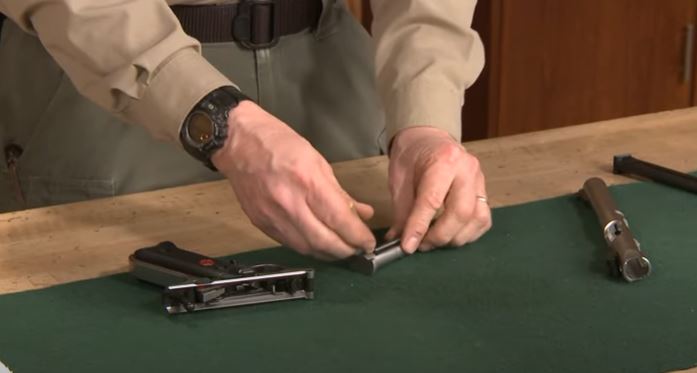
The Mark IV disassembles without tools. Point the firearm in a safe direction and verify the chamber is empty. Press the takedown button located on the rear of the receiver. Tilt the barrel-receiver assembly upward and pull it free from the grip frame. Remove the bolt and recoil spring from the receiver. The process takes 10–15 seconds once practiced.
Step 2: Apply Solvent and Wipe Components
Apply 2–3 drops of gun solvent to a microfiber patch. Wipe all carbon buildup and fouling from the bolt face, feed ramp, and receiver rails. For stubborn carbon deposits, let the solvent dwell for 60–90 seconds before wiping. Use cotton swabs to reach the small voids around the firing pin and ejector. Solvents like Hoppes #9 dissolve carbon at pH 8.5–9.0 within two minutes of contact.
Step 3: Clean the Bore
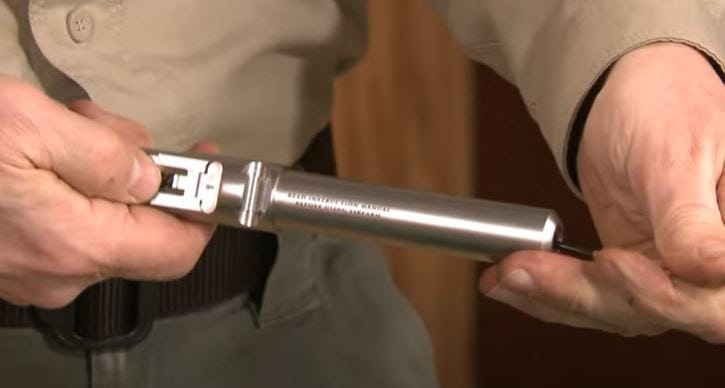
Run a .22 caliber bore brush wetted with solvent through the barrel 6–8 times in a push-pull stroke. Attach a clean patch to the cleaning rod and push it through to remove loosened carbon. Repeat with a fresh patch until it emerges clean. Residual ammunition fouling in the bore can affect accuracy at distances beyond 25 yards.
Step 4: Lubricate Moving Parts
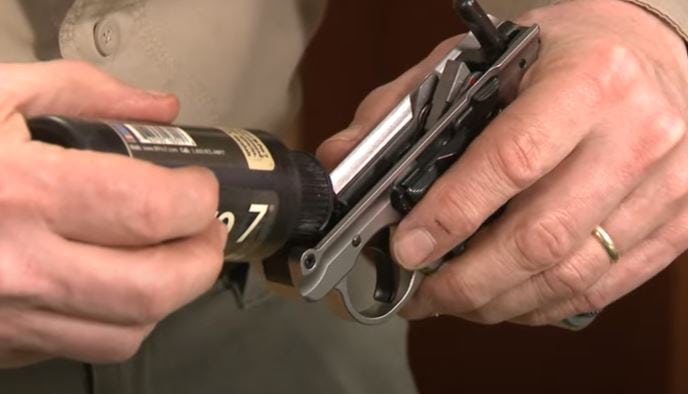
Apply one drop of gun oil to each of these points: the barrel-receiver hinge pins, the hammer pivot, the magazine release latch, and the safety lever detents. Wipe excess oil with a dry patch. The recoil spring and bolt rails require a light film only—over-lubrication causes lint accumulation and carbon bonding. Total oil volume should not exceed 5–6 drops for the entire firearm.
Step 5: Reassemble and Function Check
Reinstall the recoil spring into the bolt with the smaller end facing forward. Slide the bolt assembly back into the receiver. Tilt the barrel-receiver onto the grip frame and press down until the takedown latch clicks. Pull the trigger to test the sear engagement. Cycle the action three times to verify smooth operation before loading ammunition.
Ruger Mark III vs. Mark IV: What Changed

Both are .22LR pistols sharing the same general design lineage, but the Mark IV addresses several ergonomic and safety shortcomings of the Mark III.
| Feature | Mark III | Mark IV |
|---|---|---|
| Takedown | Requires screwdriver and mallet | Single push-button (10–15 seconds) |
| Magazine Ejection | Stalls at half-extension | Spring-assisted full ejection |
| Safety | Right-side thumb button only | Ambidextrous lever |
| Trigger Pull | 5–6 lbs with gritty feel | 4–5 lbs, cleaner break |
| Grip | Standard profile | 1911-style contour |
Disassembly
Mark III disassembly requires a flathead screwdriver to release the trigger pin and a rubber mallet to separate the receiver from the grip. Mark IV eliminates both tools—the push-button releases the barrel assembly in one motion, making field stripping practical in under 15 seconds.
Magazine Ejection
The Mark III magazine release sometimes leaves the magazine halfway ejected, forcing the shooter to pull it free by hand. The Mark IV spring-assists the ejection so the magazine drops fully clear of the well, reducing reload time by an estimated 0.5–1.0 seconds.
Safety
Mark III uses a right-side-only thumb safety button that requires the shooter to reconfigure grip for left-handed operation. Mark IV installs an ambidextrous safety lever, allowing activation without shifting hand position.
Trigger
Mark IV trigger pull measures approximately 4 lbs versus 5–6 lbs on the Mark III. The Mark IV sear design eliminates the creep and gritty resistance common in worn Mark III pistols, producing a crisper break at the ceiling of the pull weight range.
Grip
The 1911-style grip on the Mark IV places the bore axis 0.25–0.35 inches lower relative to the hand compared to the Mark III, reducing muzzle rise and allowing faster follow-up shots during target sessions.
Ruger Mark IV Magazine Capacity
Both Mark III and Mark IV accept identical 10-round magazines. Magazines are fully interchangeable between generations. The magazines feature a last-round hold-open lever that stops the bolt on the final round, requiring the shooter to depress the magazine release to drop the bolt.
How Often to Clean Your Ruger Mark IV
Clean the bore and action after every 200–500 rounds fired, or immediately after exposure to moisture, humidity above 70%, or use in sandy or dusty environments. Accumulated fouling reduces accuracy and promotes corrosion on the bore’s internal lands and grooves. A firearm stored with residual ammunition debris is more susceptible to galvanic corrosion between dissimilar metals in the receiver and barrel.
For competition shooters logging 1,000+ rounds monthly, inspect the barrel for copper fouling at the 500-round mark using a bore scope. Remove copper patches with a solvent specifically rated for copper removal (ammonia-based solvents at 5–8% concentration dissolve copper fouling within 10–15 minutes).
Conclusion
Routine maintenance extends the service life of your Ruger Mark IV beyond 50,000 rounds with proper care. The one-button takedown enables complete cleaning in under 15 minutes. Always store your firearm unloaded in a locked container, and refer to our cleaning glossary for terminology definitions. For related firearms, see our guide to cleaning the Ruger Mark III.
References
- Ruger. (2016). Mark IV Operator’s Manual. Sturm, Ruger & Co., Inc. Retrieved from ruger.com/markIV
- National Shooting Sports Foundation. (2022). Firearm Safety Guidelines. NSSF. Retrieved from nssf.org
- Sporting Arms and Ammunition Manufacturers Institute. (2021). SAAMI Technical Standards for .22 Long Rifle. SAAMI.

