
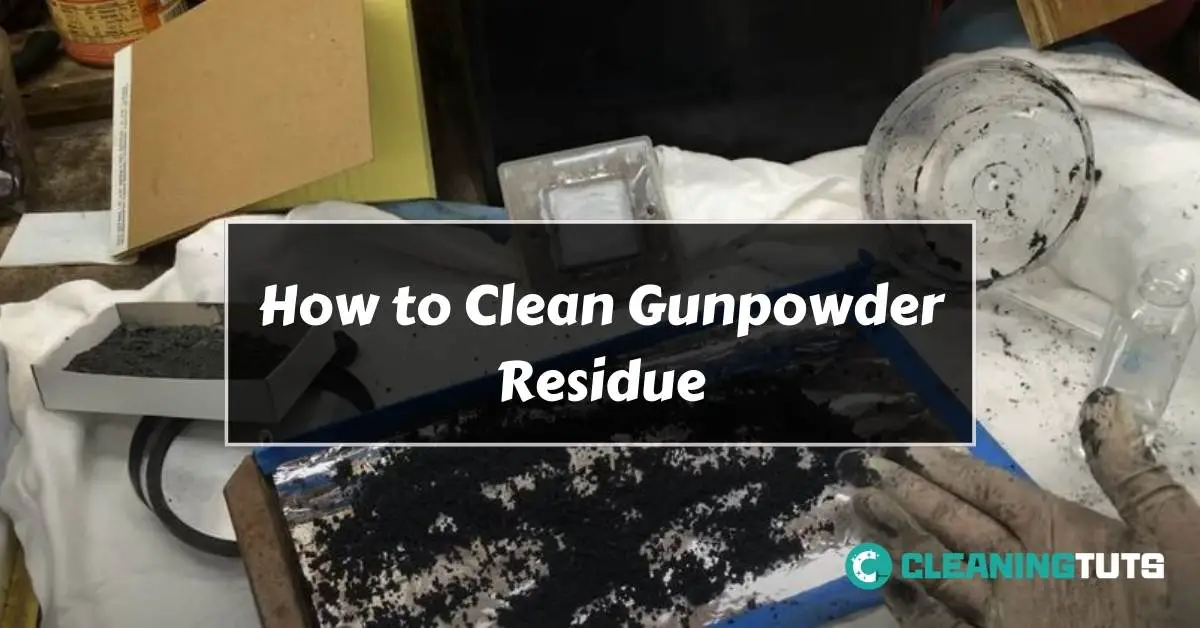
How to Clean Gunpowder Residue?

Gunpowder residue contains hazardous particles of barium, antimony, and lead that require specific cleaning agents for safe removal from skin, clothing, and gun stocks. Washing soda (sodium carbonate, pH 11.5) dissolves these compounds from fabric, while vinegar (5% acetic acid) breaks down residue on gun metal, and soap removes them from skin.
Gunshot residue (GSR) comprises small spherical particles containing barium, antimony, and lead — along with potassium, calcium, and sulfur compounds from the propellant. These compounds adhere stubbornly to skin, fabric, and metal surfaces, making standard soap-and-water washing ineffective without the proper alkaline or acidic agents.
How to Clean Gunpowder Residue: Complete Methods for Clothes, Hands, and Gun Stocks
Cleaning gunpowder residue effectively requires matching the cleaning agent to the surface. Clothes require an alkaline treatment (washing soda in warm water), skin responds to surfactant action (soap and scrubbing), and gun stocks benefit from acidic dissolution (vinegar or Windex) followed by protective polishing.
1. Clean Gunpowder Residue from Clothes
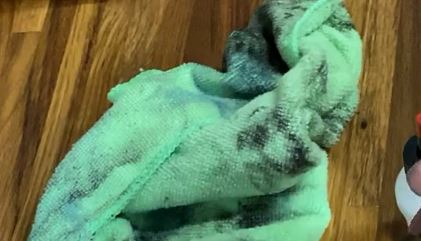
Gunpowder residue on clothing contains lead and antimony particles that penetrate fabric fibers. Standard laundering alone does not remove these hazardous compounds — washing soda (sodium carbonate) raises the pH of the wash water to approximately 11.5, chemically breaking down the residue for complete removal.
- Washing soda (sodium carbonate) — 1 to 2 tablespoons per gallon of warm water
- Clean cloth or sponge
- Warm water (100°F–120°F / 38°C–49°C)
Step 1: Mix a Washing Soda Solution
Dissolve 1 to 2 tablespoons of washing soda (sodium carbonate) in 1 gallon of warm water (100°F–120°F / 38°C–49°C). The alkaline solution (pH 11.5) neutralizes and dissolves gunpowder residue compounds including lead, barium, and antimony particles embedded in fabric fibers.
Washing soda is available at most drugstores and supermarkets. Check the packaging for an expiration date — older products lose potency. A fresh box costs under $3 and lasts through dozens of cleaning sessions.
Step 2: Apply the Solution to the Stained Area
Apply the washing soda solution directly to the affected spot on your clothing. Allow it to penetrate the fabric for 3 to 5 minutes. The alkaline solution breaks down the chemical bonds between the gunpowder residue and the fabric fibers at pH 11.5.
Step 3: Scrub and Rinse Thoroughly
Scrub the treated area with a clean cloth using firm, circular motions. Rinse the fabric with clean water to flush away dissolved residue. Launder the garment separately in a full washing machine cycle with an additional rinse to ensure all traces of lead particles are removed.
Safety note: Wash contaminated clothing separately from other laundry to prevent cross-contamination. The CDC recommends that individuals who handle firearms regularly monitor blood lead levels — the surveillance threshold is 5 micrograms per deciliter (µg/dL), and the National Institute for Occupational Safety and Health (NIOSH) identifies 10 µg/dL as the level at which hypertension risk increases.
2. Cleaning Gunpowder Residue from Hands
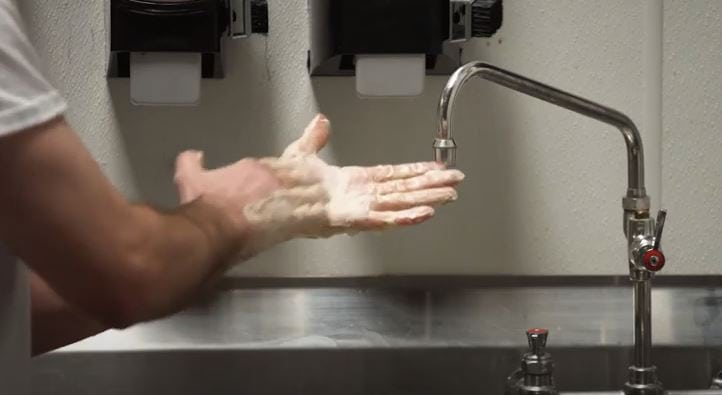
Skin naturally produces oils that provide some barrier against gunpowder residue, but microscopic particles of lead, barium, and antimony can still penetrate skin pores and be absorbed into the bloodstream. The CDC’s Adult Blood Lead Epidemiology and Surveillance (ABLES) program tracks work-related lead exposure — even low-level sustained exposure from regular shooting affects thousands of individuals annually.
Thorough handwashing with soap, warm water, and scrubbing for at least 20 seconds physically removes GSR particles from skin creases and cuticles where residue accumulates. For complete removal, use a nail brush to clean under fingernails where particles lodge.
Wash hands with soap and warm water for at least 20 seconds, scrubbing all surfaces including between fingers and under nails. The natural oils in skin help lift gunpowder residue, but mechanical scrubbing is required to fully dislodge lead and antimony particles.
The most effective prevention against gunpowder residue exposure is wearing nitrile or latex gloves during firearm handling. Gloves create a physical barrier that prevents GSR from contacting skin entirely — no residue means no absorption risk. The CDC recommends removing gloves carefully without contacting the exterior surface to prevent self-contamination.
3. Cleaning Gunpowder Residue from the Stock
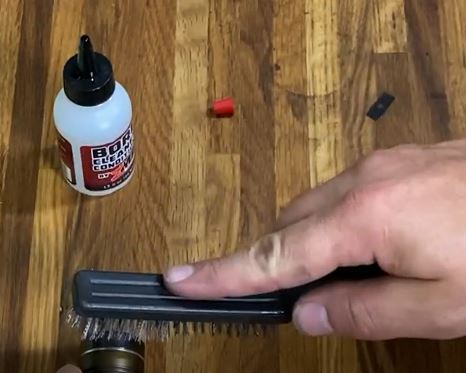
Gunpowder residue accumulates in the carved crevices, inletting channels, and metal-to-wood joints of a rifle stock. Over time, this residue causes corrosion on metal components and degrades the wood finish. White vinegar — standard household vinegar containing 5% acetic acid — dissolves calcium carbonate deposits and neutralizes alkaline gunpowder residue at pH 2–3.
After each range session, clean the gun stock before residue bakes into the wood grain. Waiting more than 24 hours allows compounds to polymerize, making removal significantly more difficult.
Step 1: Gather the Necessary Materials
- White vinegar (5% acetic acid) or Windex (ammonia-based)
- Cotton swabs
- Soft, clean cloths (2 minimum)
- Furniture polish (paste wax or lemon oil)
Step 2: Verify the Firearm Is Unloaded
Before cleaning, always verify the chamber is empty. Remove the magazine, lock the bolt back, and visually and physically inspect the chamber to confirm no ammunition is present. This step is the single most critical safety procedure in firearm maintenance.
Step 3: Clean Carved and Inletted Areas
Dip a cotton swab in white vinegar (5% acetic acid) and run it thoroughly into the crevices, inletting channels, and metal-to-wood joints of the stock. The acetic acid at pH 2–3 dissolves mineral deposits and neutralizes alkaline gunpowder residue compounds including lead oxide and barium sulfate.
Step 4: Wipe Down the Stock Surface
Moisten a clean cloth with white vinegar or Windex and wipe the entire stock surface using firm, overlapping strokes. For built-up residue, allow the vinegar to sit for 2 to 3 minutes before wiping. This dissolves the carbonized layer that forms when gunpowder residue bakes onto wood from heat exposure.
Step 5: Apply Furniture Polish for Protection
Dampen a clean cloth with a small amount of paste wax or lemon-oil furniture polish and apply it evenly across the stock surface. The polish restores moisture to the wood and creates a protective barrier against future residue buildup. Allow it to absorb for 5 minutes, then buff with a dry cloth.
Health Risks of Gunpowder Residue Exposure

Gunpowder residue exposes shooters to lead, barium, and antimony particles that accumulate in the body with repeated exposure. The CDC’s National Institute for Occupational Safety and Health (NIOSH) establishes blood lead level (BLL) thresholds for surveillance and medical intervention, including the 5 µg/dL surveillance threshold and the 30 µg/dL level at which medical removal from exposure is recommended.
Lead Exposure: The Primary Health Concern
Gunpowder residue transfers from hands and clothing to hands, faces, food, and household surfaces. Lead particles are invisible and colorless, making exposure easy to overlook. Children are especially vulnerable — lead exposure at any level impairs neurological development, and the EPA identifies no safe blood lead threshold for children under 6 years old.
According to CDC/NIOSH blood lead reference values, the adult surveillance threshold is 5 micrograms per deciliter (µg/dL). At 10 µg/dL, the National Toxicology Program concluded that increased blood pressure and hypertension risk occurs. At 30 µg/dL, the Association of Occupational and Environmental Clinics (AOEC) and state occupational health programs recommend immediate medical removal from exposure sources.
Corrosion and Firearm Performance
Gunpowder residue holds moisture against metal surfaces, accelerating corrosion on the barrel, bolt face, and trigger assembly components. Barium and antimony compounds in GSR are hygroscopic — they actively attract and retain water — making a gun cleaned immediately after shooting significantly less prone to pitting and surface corrosion than one cleaned hours or days later.
Regular cleaning of the cleaning glossary terms and specialty cleaning procedures for firearms maintains mechanical reliability. Cleaning the trigger assembly requires complete disassembly and solvent treatment — buildup in the trigger mechanism creates safety hazards and can prevent the firearm from firing reliably.
Cleaning Gunpowder Residue from Trigger Assemblies
Gunpowder residue corrodes trigger assembly components and creates safety hazards. The cleaning trigger assembly procedure requires complete disassembly, solvent soaking, and reassembly with proper lubrication. The Specialty Cleaning Hub provides step-by-step instructions for detailed firearms maintenance.
Key Specifications at a Glance
| Cleaning Agent | Active Component | Effective pH | Dilution Ratio | Application |
|---|---|---|---|---|
| Washing Soda (Sodium Carbonate) | Alkaline carbonate | pH 11.5 | 1–2 tbsp per gallon | Fabric and clothing |
| White Vinegar (5% acetic acid) | Acetic acid | pH 2–3 | Undiluted | Gun stock and metal |
| Windex (ammonia-based) | Ammonium hydroxide | pH 10–11 | Undiluted | Gun stock and metal |
| Soap and warm water | Surfactants | pH 9–10 | Standard use | Skin and hands |
Final Verdict
Gunpowder residue containing barium, antimony, and lead particles requires specific cleaning agents matched to each surface — washing soda (pH 11.5) for clothing, soap and water for skin, and vinegar (5% acetic acid) or Windex for gun stocks. The CDC’s NIOSH establishes a 5 µg/dL blood lead surveillance threshold and recommends 30 µg/dL as the medical removal level, underscoring the importance of proper decontamination after each range session.
Cleaning your firearm after every shooting session prevents corrosion, maintains mechanical reliability, and reduces lead exposure. From cleaning a Colt Defender to step-by-step instructions for how to clean a Thompson Center Black Diamond Muzzleloader, proper cleaning technique protects both your health and your firearm’s longevity.
Keep your hands, clothes, and firearms free from gunpowder residue after every range visit. Wash clothing separately, monitor blood lead levels annually if you shoot frequently, and always clean gun stocks within 24 hours of shooting to prevent baked-on residue buildup.
References
- Centers for Disease Control and Prevention (CDC), National Institute for Occupational Safety and Health (NIOSH). Blood Lead Level Reference Guidance. https://www.cdc.gov/niosh/lead/bll-reference/index.html
- Centers for Disease Control and Prevention (CDC), NIOSH. Lead in the Workplace Resources. https://www.cdc.gov/niosh/lead/
- ScienceDirect. Gunpowder and Gunshot Residue (GSR) Chemical Composition. Elsevier.

