
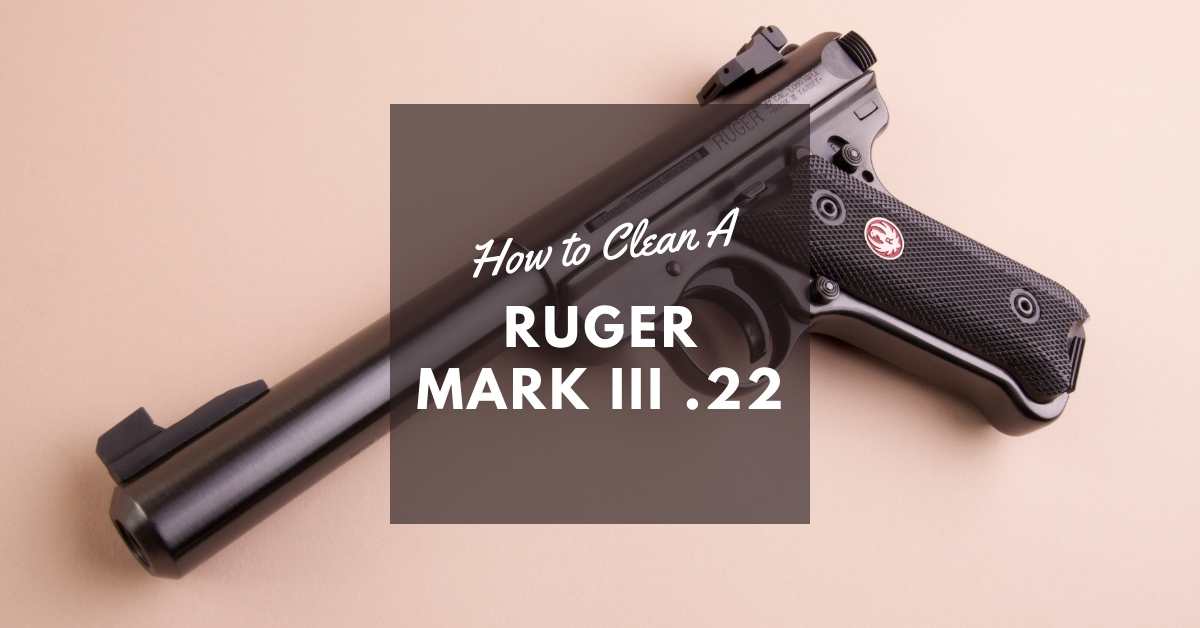
How to Clean A Ruger Mark III .22

Regular cleaning maintains accuracy and prevents malfunctions in the Ruger Mark III .22 LR pistol. Field strip the pistol, scrub the 4.75–6.88-inch barrel with a .22 caliber bore brush wetted with solvent, wipe all components clean, and apply a light coat of gun oil every 500–1,000 rounds or after every range session.
Sturm, Ruger & Co. discontinued the Mark III in 2016, replacing it with the Mark IV, but millions of Mark III pistols remain in circulation. The Mark III shares the .22 Long Rifle chambering and 1:16″ right-hand twist barrel rate of twist with its predecessors, delivering inherent accuracy in a semi-automatic platform. Over 3 million Mark II pistols (1982–2005) preceded the Mark III, and the Mark III sold strongly through its 2004–2016 production run.
Ruger Mark III Release Date and Background
Sturm, Ruger & Co. launched the Ruger Mark III in 2004, replacing the long-running Mark II (1982–2005). The Mark III introduced several refinements: a visible loaded chamber indicator, a magazine disconnect safety, an internal keyed safety lock, and a factory-drilled scope base on adjustable-sight models. The magazine release moved from the Mark II’s bottom-of-grip European-style position to a standard American-style location behind the trigger guard. Production spanned 2004–2016 across Standard, Target, Bull Barrel, Hunter, Competition, and 22/45 variants.
Field Stripping the Ruger Mark III: Step-by-Step Disassembly

Field stripping the Ruger Mark III requires no tools. Follow these three steps to break the pistol down for cleaning:
Step 1: Unload the Firearm
Remove the 9- or 10-round magazine, point the pistol in a safe direction, and pull the trigger to discharge any chambered round. Verify the chamber is empty before proceeding.
Step 2: Remove the Mainspring Assembly
Rotate the mainspring lever 90 degrees and pull the retainer pin straight out. Slide the mainspring assembly downward and off the frame, then pull the bolt carrier rearward and lift it free from the receiver.
Step 3: Separate the Barrel
Grip the barrel with your non-dominant hand, place your dominant thumb in front of the trigger guard for support, and push the barrel forward and away from the slide. The 4.75–6.88-inch barrel releases from the slide on Mark III models.
How to Deep Clean a Ruger Mark III .22: Complete Guide
After field stripping, clean the barrel, bolt, and grip mechanism with solvent, a .22 caliber bore brush, nylon brush, and clean patches. Apply a light oil coat after all surfaces are dry. Always clean from the breech (rear) end of the barrel to protect the crown.
Step 1: Clean the Barrel
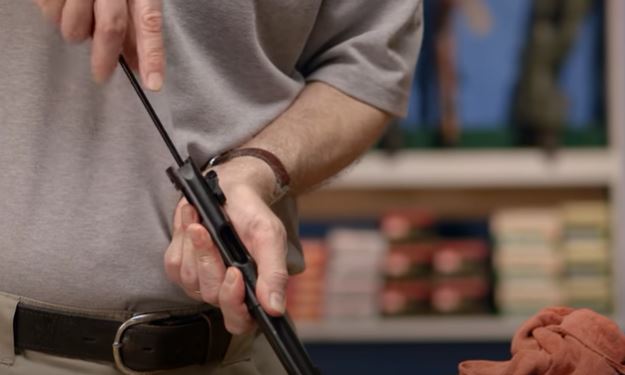
Run a solvent-wetted patch through the barrel bore from the breech end 3–5 times. Attach a .22 caliber nylon bore brush to a cleaning rod, saturate it with solvent, and push it through the bore 6–8 strokes to dissolve carbon fouling and powder residue. Follow with a dry patch to remove loosened debris. Finish with a lightly oiled patch (a single pass) to prevent corrosion.
Step 2: Clean the Grip Mechanism
Apply gun solvent to a nylon brush and scrub all internal grip components to dissolve accumulated gunpowder residue and lubricating oil breakdown products. Pay particular attention to the sear and trigger mechanism areas where residue buildup causes trigger pull degradation.
Step 3: Clean the Bolt and Bolt Carrier
Verify the cleaning rod is removed from the bolt face before scrubbing. Apply solvent to a nylon brush and clean all carbon deposits from the bolt face, firing pin channel, extractor, and the inner rails of the bolt carrier. Carbon buildup in these areas causes extraction failures and misfeeds in .22 LR pistols.
Step 4: Wipe All Components
Use a clean, dry cloth to wipe every component free of solvent and debris. Ensure no solvent residue remains before lubrication, as residual solvent dilutes oil and accelerates corrosion.
Step 5: Lubricate All Moving Parts

Apply 2–3 drops of firearm-specific oil (pH 6.5–7.5) to each of these lubrication points: the hammer sear, the mainspring assembly bearing surfaces, the barrel hood and barrel foot contact points, and the rails where the bolt carrier contacts the frame. A light wiped coat on the exterior surfaces provides corrosion resistance. Avoid over-oiling, which attracts dust and carbon in .22 LR platforms.
Ruger Mark II vs. Mark III: Key Differences at a Glance

| Feature | Mark II | Mark III |
|---|---|---|
| Production | 1982–2005 | 2004–2016 |
| Magazine Release | Drop-free, bottom of grip (European-style) | Behind trigger guard (American-style) |
| Magazine | Smooth, no cut at top | Cut at top for magazine catch |
| Grip Width | Narrower | Wider, more ergonomic |
| Bolt Ears | Straightened back | Tapered, reduced weight |
| Safety Features | Basic | Loaded chamber indicator, mag disconnect, key lock |
| Scope Base | Aftermarket required | Factory-drilled on adjustable-sight models |
Magazine Release Difference
The Mark II uses a drop-free magazine with a European-style release at the bottom of the grip. The Mark III adopted a standard American-style push-button release located behind the trigger guard, and its magazine is not drop-free—the magazine requires a firm tug to remove after the release is pressed.
Magazine Design Difference
The Mark II’s magazine is smooth the full length of the body with no cut at the top. The Mark III magazine features a machined cut at the top that engages the magazine catch, which is required to lock the magazine positively into the frame.
Grip and Ergonomics Difference
The Mark II’s grip is narrower and more compact, preferred by shooters with smaller hands. The Mark III grip is noticeably wider, providing greater surface area for a more comfortable and secure hold during extended shooting sessions.
Bolt and Chamber Difference
The Mark II features bolt ears that are straightened back at the factory. The Mark III uses a tapered bolt design that removes material from the bolt ears, reducing the bolt assembly weight by a measurable amount. The lighter bolt cycles more readily with lower-quality .22 LR ammunition.
Ruger Mark II Magazine Capacity and Specifications
The Ruger Mark II feeds from a 9- or 10-round flush-fitting box magazine, depending on the variant. The 10-round magazine provides one additional round over the Mark I’s 8-round capacity, and the magazine’s consistent chamber alignment contributes to the Mark II’s reputation for accuracy. Magazines for the Mark II and Mark III are not interchangeable due to the different magazine catch and release geometry between models.
Ruger Standard vs. Mark 1: Historical Background
Sturm, Ruger & Co. introduced the Ruger Standard in 1949 as the company’s first product, featuring a 4.75-inch light tapered barrel and fixed sights. The Mark 1 followed in 1950 as the first model-numbered variant, upgraded with a 6.875-inch heavy or tapered barrel and an adjustable rear sight with an undercut front sight blade to reduce glare. The Mark 1 established the proportions and feature set that defined the Mark series for over seven decades.
Barrel Specifications
The Ruger Standard’s 4.75-inch barrel is light and tapered, contributing to its lightweight 31–35 oz overall weight depending on the specific model variant. The Mark 1’s 6.875-inch barrel is significantly heavier and tapered, providing increased sight radius and barrel mass for improved accuracy during target shooting.
Sight Systems
The Standard model uses fixed sights that are soldered to the barrel, providing a robust zero that withstands heavy use. The Mark 1 offers either a factory-adjustable rear sight with an undercut front sight blade (designed to reduce glare during target acquisition) or an optional fixed-sight configuration on specific variants.
Magazine Release Location
The Ruger Standard’s magazine release button is located on the right side of the magazine body. Mark 1 variants display variation in magazine release placement—some specimens feature right-side releases while others position the release on the left side of the magazine well, indicating manufacturing evolution during the model’s early production run.
References
- Ruger, Sturm, Ruger & Co. (2016). Ruger Mark III Owner’s Manual. Sturm, Ruger & Co. https://ruger.com/markIIImanual/
- Wikipedia. (2024). Ruger Mark III. Wikimedia Foundation. https://en.wikipedia.org/wiki/Ruger_Mark_III
- Wikipedia. (2024). Ruger Mark II. Wikimedia Foundation. https://en.wikipedia.org/wiki/Ruger_Mark_II
- National Shooting Sports Foundation (NSSF). Firearm Safety and Maintenance Resources. https://www.nssf.org
- Sporting Arms and Ammunition Manufacturers Institute (SAAMI). SAAMI Specifications for .22 Long Rifle. https://www.saami.org

