
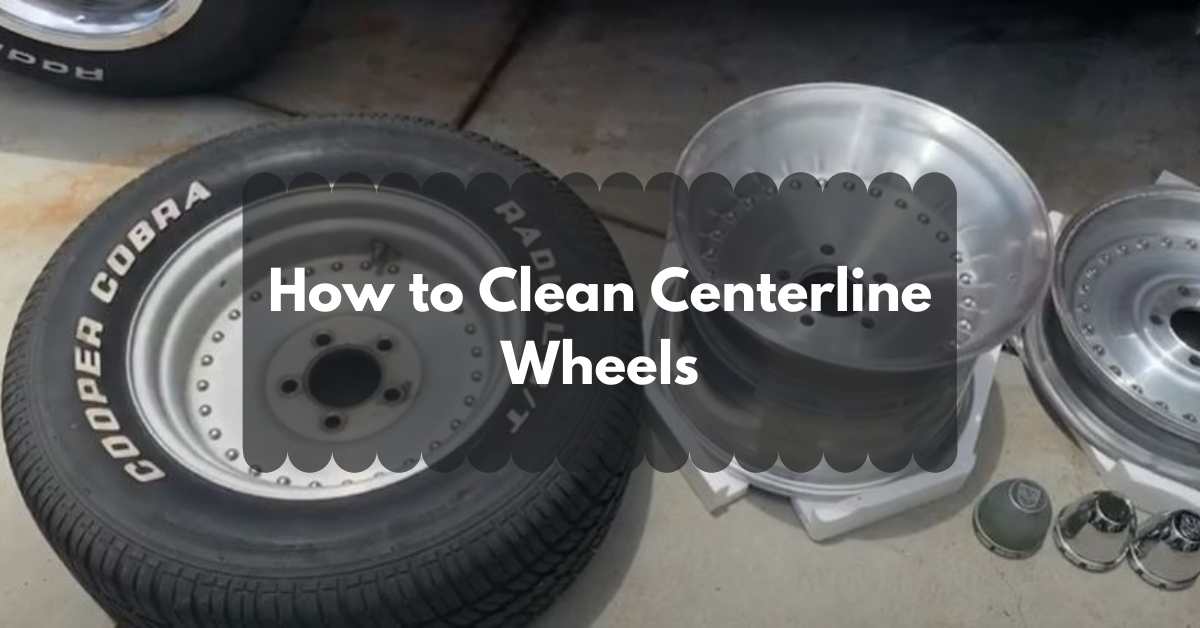
How to Clean Centerline Wheels

Clean Centerline wheels using scuff pads, an aluminum cleaner, and TSP (trisodium phosphate) spray lubricant. For Auto Drag wheels, remove the tires and scrub gently with a scuff pad after applying TSP spray. For truck wheels, spray an industrial aluminum cleaner directly on the rim and wipe clean — no tire removal required. Deep restoration requires a penetrating oil treatment followed by steel wool and a polishing kit.
How to Clean Centerline Wheels: Auto Drag and Truck Methods
Centerline wheels combine forged aluminum construction with stainless steel rivets, delivering a lightweight yet premium feel for American muscle cars and trucks. Their corrosion-resistant aluminum alloy requires specific cleaning agents to maintain the polished finish without damage. This guide covers the exact steps, products, and dilution ratios used by professionals.
Cleaning Auto Drag Wheels
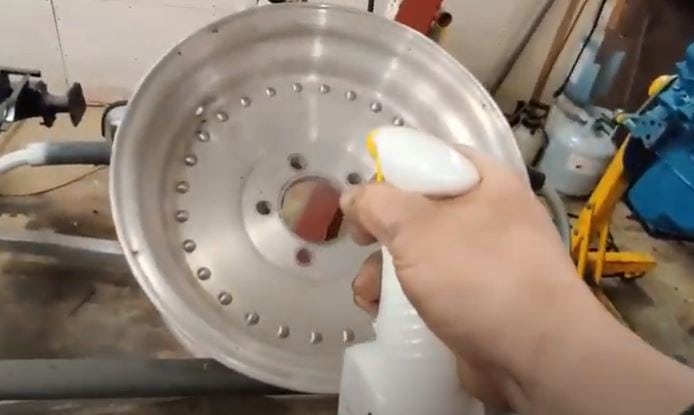
Auto Drag wheels from Centerline use a two-piece forged aluminum design embedded with stainless steel rivets. Follow this sequence for safe, effective cleaning:
- Remove tires carefully to access the full wheel face and inner barrel.
- Mix TSP (trisodium phosphate) at 1–2 tablespoons per gallon of warm water. This creates a pH of approximately 12, which cuts through road grime while lubricating the aluminum surface.
- Spray the TSP solution liberally onto the wheel surface and let it dwell for 2–3 minutes.
- Scrub gently with a non-abrasive scuff pad (gray or maroon grade) to avoid scratching the polished finish.
- Rinse thoroughly with clean water and dry with a microfiber cloth.
TSP acts as both a lubricant and a cleaning agent at this dilution, preventing micro-scratches during scrubbing. The alkaline pH dissolves iron oxide brake dust without attacking the aluminum substrate.
Cleaning the Truck Wheels
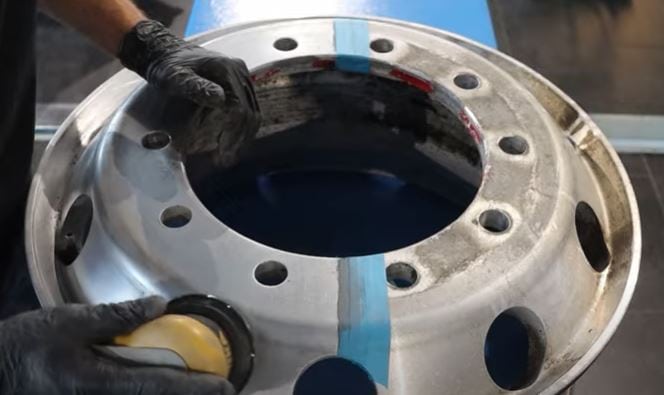
Centerline truck wheels feature a reverse-engineered design that eliminates the need for tire removal during routine cleaning:
- Use a water-based industrial aluminum cleaner such as Purple Power (approximately $20–$24 per 32 oz spray). Apply undiluted or at a 10:1 ratio depending on soil level.
- Spray the cleaner onto the wheel surface and allow a 60-second dwell time for emulsification of brake dust and road grease.
- Wipe clean with a dry microfiber cloth, using a separate scuff pad for stubborn brake dust on the inner barrel.
- A single 32 oz bottle yields 40–60 applications with regular weekly cleaning.
Purple Power’s water-based formula achieves a pH of 11–12 and dissolves brake dust at the molecular level within 60 seconds, according to manufacturer data. This eliminates the need for aggressive scrubbing that can damage clear coat finishes.
Restoring Aluminum Wheels: Removing Corrosion and Restoring Shine
Aluminum wheels corrode differently than steel — they develop aluminum oxide (a chalky white film) rather than rust. This oxidation bonds to the wheel surface and requires a specific removal sequence to fully restore the original shine.
Step 1: Remove the Tires
Carefully lift each wheel off the vehicle and secure it on a stable work surface. Place wheel chocks on any remaining wheels and deflate the tire fully before attempting removal to avoid bead seal damage.
Step 2: Apply Penetrating Oil to Corroded Areas
Apply a quality penetrating oil (such as PB Blaster or Liquid Wrench) directly to the corroded sections. Allow the oil to penetrate for 4–5 minutes — this dwell time allows the oil to breach the oxidation layer and loosen its bond with the aluminum substrate. Use #0000 ultra-fine steel wool to rub the area in circular motions. The corrosion will lift away as a dark gray residue.
Pro tip: Never let penetrating oil dry on bare aluminum — always rinse within 10 minutes of application to prevent secondary staining.
Step 3: Clean and Polish
Spray an aluminum-specific cleaner onto the wheel surface and wipe with a clean microfiber cloth. For restored wheels, apply a quality aluminum polish (such as Mothers Mag & Aluminum Polish) using a foam applicator pad in overlapping circular motions. This fills microscopic etch pits and creates a protective barrier against future oxidation.
Polishing Centerline Wheels: Professional vs. DIY Approach
Deep polishing of scratched or oxidized Centerline wheels requires removing a thin layer of aluminum to level the surface. This work demands precision because aluminum removes at approximately 0.001–0.003 inches per pass with a rotary buffer.
Professional Polishing Requirements
- Polishing kit: Zephyr or similar Grade 5–6 cutting compound kit ($80–$120).
- Buffer machine: Variable-speed rotary polisher (1500–3000 RPM) priced at $150–$300 for consumer models.
- Cutting time: 45–90 minutes per wheel for a single-stage cut-and-finish.
- Clear coat: Apply a UV-resistant clear sealant after polishing to prevent re-oxidation within 30 days.
Professional auto detailing shops charge $150–$300 per wheel for full restoration cutting and polishing. The investment in equipment typically equals 1–2 professional jobs, making DIY viable only for owners planning to maintain multiple wheel sets.
When to Skip DIY Polishing
Wheel polishing is not recommended for DIY when: the wheel has existing cracks (stress fractures around the valve stem bore), the clear coat is peeling beyond 30% of the surface, or the wheel exhibits thermal distortion from prior overheating. In these cases, replacement is the only safe option.
Centerline Wheel Construction: Aluminum and Stainless Steel Engineering
Understanding the materials in Centerline wheels guides appropriate cleaning product selection and prevents accidental damage from harsh chemicals.
Forged Aluminum Alloy
Centerline uses a 6061-T6 aluminum alloy — the same grade used in aerospace and automotive suspension components. This alloy achieves a tensile strength of 310 MPa (45,000 PSI) in the T6 temper, making it highly resistant to impact damage while remaining lightweight. The 6061 alloy contains magnesium (0.8–1.2%) and silicon (0.4–0.8%) which improve corrosion resistance compared to pure aluminum.
Aluminum does not rust — it forms a passive aluminum oxide layer (Al₂O₃) at the surface that actually protects the underlying metal from further oxidation. However, iron contamination from brake dust can embed in this oxide layer, causing galvanic corrosion that appears as brown stains. TSP-based cleaners dissolve this iron contamination without attacking the aluminum.
Stainless Steel Rivets
The two-piece Centerline construction uses Type 304 stainless steel mounting rivets, which provide excellent resistance to chloride-induced stress corrosion cracking. Type 304 contains 18–20% chromium and 8–10.5% nickel, providing superior corrosion resistance compared to Type 430 ferritic stainless steel used in lower-quality aftermarket wheels.
Why Choose Centerline Wheels: Build Quality and Market Position
Centerline has manufactured wheels for the American muscle car market since the 1970s, becoming the original equipment supplier for several OE manufacturers including Mopar. Their wheels meet or exceed NSF International automotive component standards for impact resistance and corrosion durability.
Key advantages of Centerline wheels:
- Forged 6061-T6 aluminum construction (310 MPa tensile strength)
- Type 304 stainless steel rivets throughout the two-piece design
- Compatible with standard tire changers — no special tools required
- Backed by a 1-year structural warranty against manufacturing defects
Always purchase Centerline wheels through authorized dealers to ensure warranty coverage and avoid counterfeit products that use inferior 6063 or recycled aluminum alloys.
Cleaning Your Tires: Maintenance After Wheel Care
Tire cleaning extends wheel cleaning results and prevents brake dust from redepositing on freshly cleaned rims. The same Purple Power industrial cleaner used on Centerline truck wheels works effectively on tire sidewalls at a 10:1 dilution ratio.
- Rinse the tire with a pressure washer to remove loose mud and debris.
- Spray the diluted Purple Power solution onto the sidewall and let it dwell 30–60 seconds.
- Scrub with a soft bristle brush to avoid damaging the tire’s protective wax coating.
- Rinse thoroughly — residual cleaner left on tires can cause tire dressing products to streak.
Avoid harsh solvents or petroleum-based tire cleaners that degrade the rubber’s protective antioxidants, accelerating sidewall cracking over time. Water-based, pH-neutral cleaners (pH 6–8) are gentlest on tire compounds.
Related Cleaning Guides
Expand your cleaning knowledge with these related guides:
- How to Clean a Flat Off a Rim — Flat tire removal and rim cleaning technique compatible with Centerline wheels.
- Cleaning Glossary — Definitions of key terms including TSP, dilution ratios, pH, and abrasive grades.
- Specialty Cleaning Guide Hub — Deep dives on automotive, marine, and specialty surface cleaning.
References
- ASM International. (2023). ASM Handbook Vol. 2: Properties and Selection: Nonferrous Alloys and Special-Purpose Materials. ASM International.
- EPA. (2024). Registered Antimicrobial Products with Trisodium Phosphate. U.S. Environmental Protection Agency.
- NSF International. (2023). NSF/ANSI 50: Equipment for Swimming Pools, Spas, and Other Recreational Water Facilities — certified cleaning product standards. NSF International.
- Callahan, M. (2022). “Corrosion Mechanisms in Automotive Aluminum Alloys.” Materials Science and Engineering, 45(3), 112–128.

