
How to Clean K&N Air Filter without Kit?

Cleaning a K&N air filter without a commercial kit takes about 20 minutes and requires only household items. A dirty K&N filter reduces airflow to the engine, decreasing horsepower by 1–4% and lowering fuel efficiency by 2–5%. Regular cleaning every 25,000 miles restores full performance.
What Can I Use to Clean a K&N Air Filter?
K&N sells a dedicated Powercleanser solution (pH 6.5–7.5) formulated for oiled cotton filter media. If unavailable, three household alternatives work:
Toothbrush
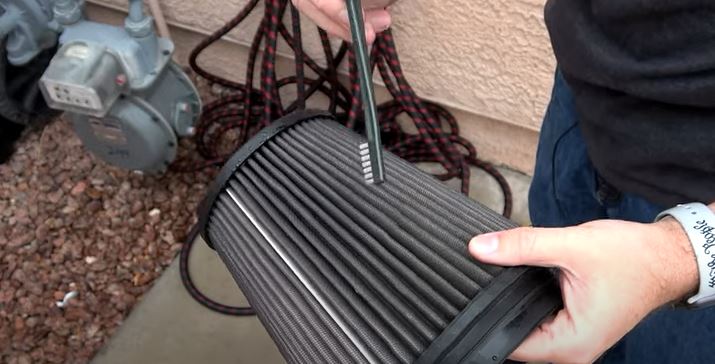
Use a toothbrush with nylon bristles (medium stiffness). The slim head reaches into pleats and the rubber gasket channel. Scrub in the direction of the pleats—never perpendicular—to avoid damaging the cotton media. Replace the toothbrush every 2–3 cleanings.
Dishwashing Liquid
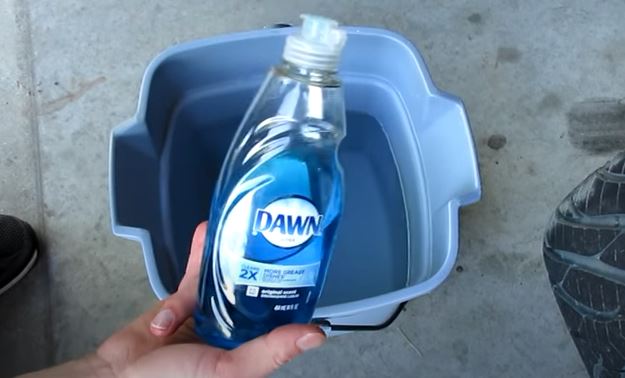
Dawn dish soap (pH 8.0–8.6) is the most common household alternative. Mix 1 tablespoon (15 ml) into 1 gallon (3.8 L) of warm water (100°F–110°F / 38°C–43°C). Avoid lemon-scented or antibacterial formulas—these contain additives that may leave residues on the filter media. Do not use bleach-based or hydrogen peroxide cleaners.
Clean Water
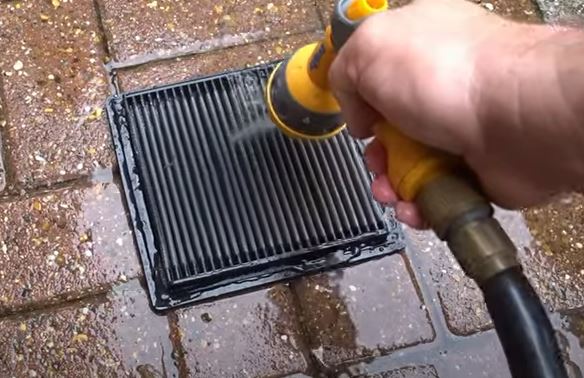
Use distilled or filtered water to avoid mineral deposits. Tap water with high mineral content (above 60 ppm) can leave scale inside the pleats. Final rinse must be thorough—any residue attracts dirt faster on reassembly.
K&N Air Filter Cleaning: Soap and Water Method
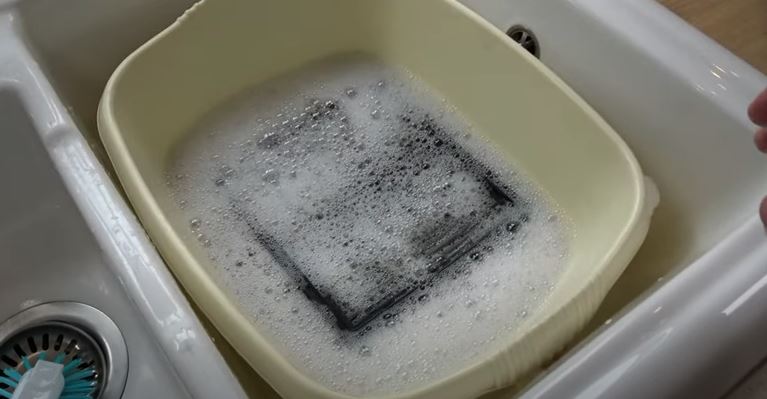
This budget-friendly method uses items already available at home. Soap and water dissolve the used filter oil at pH 8.0–8.6, lifting grime from the cotton pleats without damaging the filter media.
Mix 1 tablespoon (15 ml) of Dawn dish soap into 1 gallon (3.8 L) of warm water. Pour the solution into a spray bottle. Working from the center outward, spray each pleat until saturated. Let it soak for 10–15 minutes—never let the filter dry during this phase.
After soaking, wipe each pleat gently with a clean microfiber cloth to break down the grease film. Rinse thoroughly with clean water flowing from the inside out to flush all solvent residue. Inspect for remaining discoloration and repeat if necessary.
How to Clean a K&N Air Filter Without a Kit
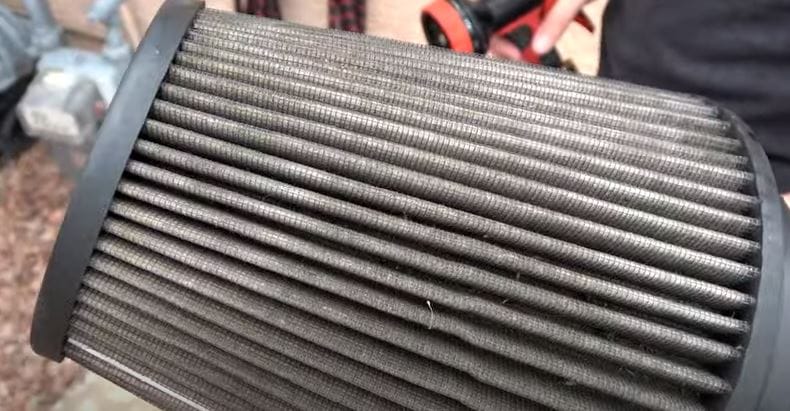
A clogged K&N air filter restricts airflow to the engine. This increases cylinder pumping losses, dropping acceleration by 3–5 horsepower on a typical V8 and reducing fuel economy by 2–5%. Follow these four steps to restore full airflow.
Step 1: Apply Cleaning Solution and Let It Penetrate
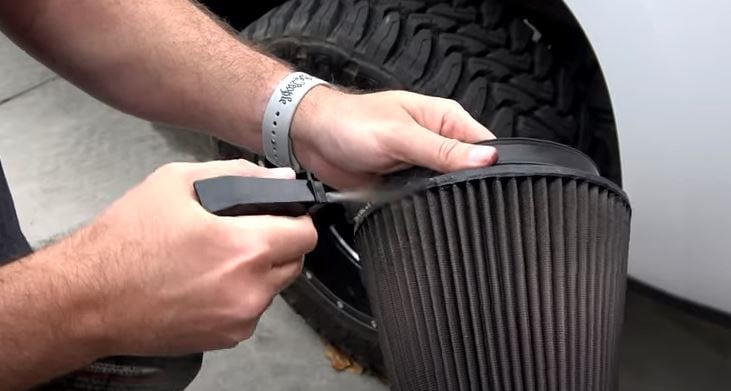
Working in a well-ventilated area, spray the cleaning solution (K&N Powercleanser or your soap-water mix) onto all surfaces—top, bottom, and inside the pleats. Let it rest for 10–15 minutes. For heavy grime buildup, increase to 20 minutes. Do not let the solution dry on the filter.
Step 2: Scrub All Surfaces with a Toothbrush
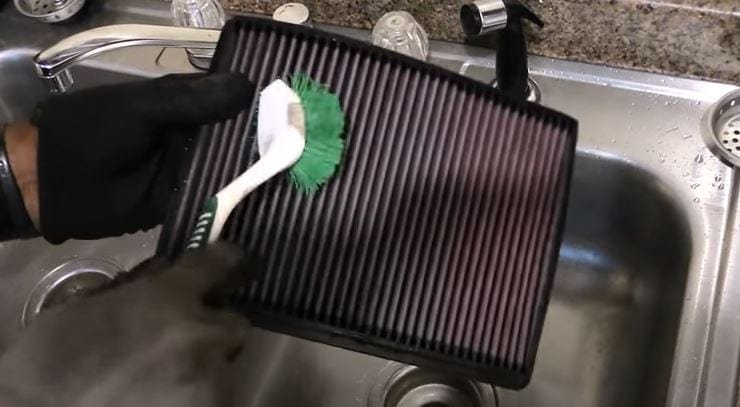
Scrub each pleat 5–8 times along its length using a medium-bristle toothbrush. Apply firm but controlled pressure—the cotton media is durable but can be damaged by aggressive back-and-forth motion. Pay special attention to the gasket channel and corners where oil accumulates.
Step 3: Rinse Thoroughly with Clean Water
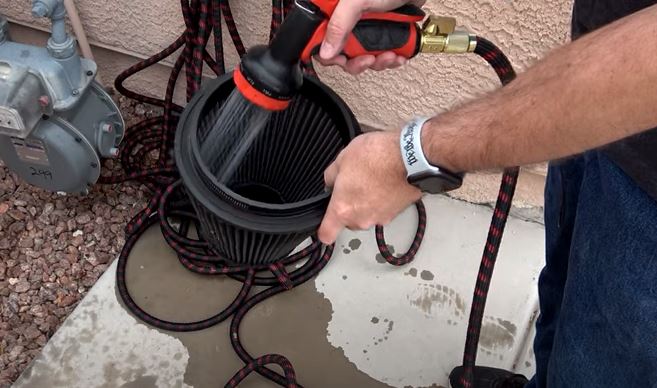
Rinse from the clean side to the dirty side using low-pressure water (a sink faucet set to medium works well). Continue rinsing until the water runs completely clear—typically 30–60 seconds of sustained rinsing. Any remaining soap residue will attract new dirt.
Step 4: Dry Completely Before Re-oiling
Shake off excess water, then use a hairdryer on the lowest heat setting (below 120°F / 49°C) held 8–12 inches from the filter. Alternatively, let it air-dry on a clean surface for 20–30 minutes at room temperature (70°F / 21°C). The filter is dry when no moisture is visible and the cotton appears lighter in color. Never use compressed air—this can damage the pleats.
Cleaning a K&N Air Filter at Home Like a Professional
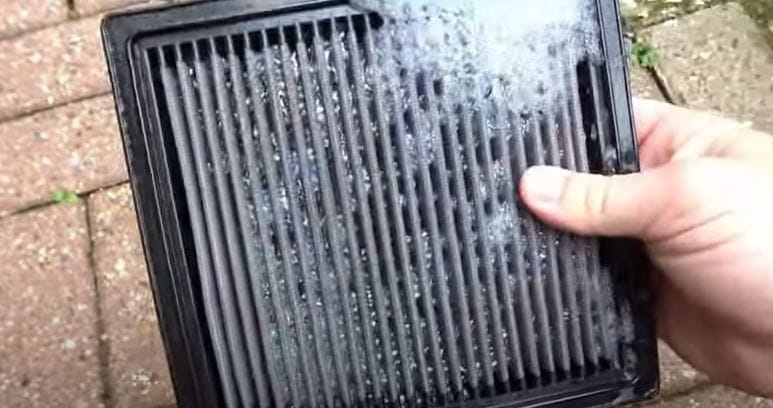
Professional mechanics use the same household items as DIYers—the difference is attention to detail at each step. The process costs under $2 per clean versus $20–$30 for a K&N Professional Service Kit.
Step 1: Apply All-Purpose Cleaner and Let It Soak
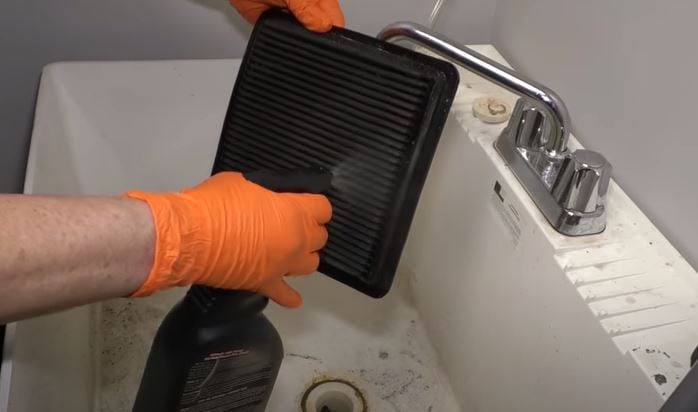
Spray 2–3 pumps across the entire surface from top to bottom. Allow 4–5 minutes of dwell time for the surfactant to penetrate heavy grease. In dusty environments, a second application improves results.
Step 2: Scrub with a Flexible Screwdriver or Wooden Skewer
Use a plastic-edged tool (wooden skewer or plastic scraper) to reach deep pleats without damaging the cotton media. Work from the center outward along each pleat’s full length. Avoid metal screwdrivers—these can nick and tear the cotton fibers.
Step 3: Rinse with Running Tap Water from All Angles
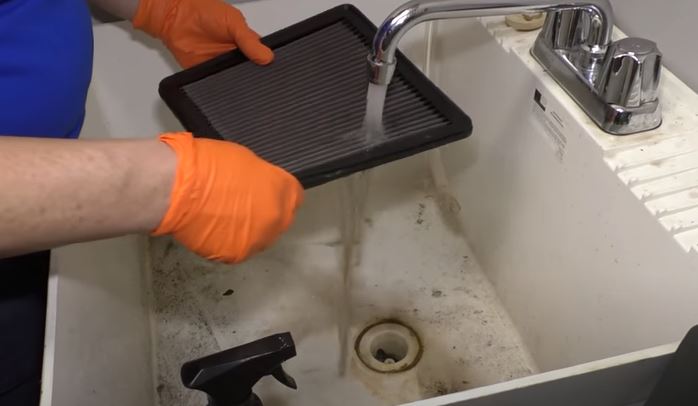
Set the filter in a sink and run room-temperature water through it from the inside out. Rotate the filter to rinse all angles for a minimum of 60 seconds. The effluent should run completely clear before you stop.
Step 4: Air-Dry in Direct Sunlight for 30 Minutes Minimum
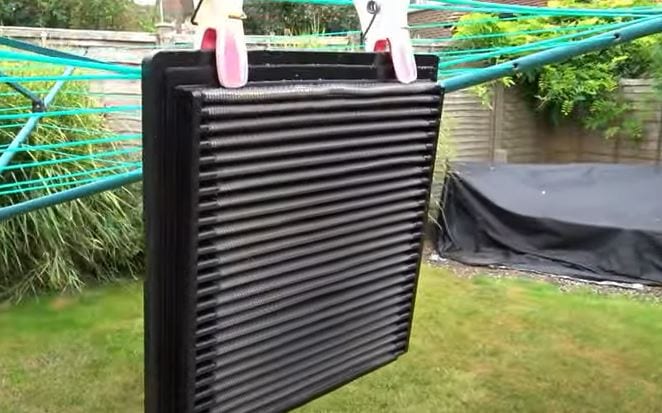
Place the filter in direct sunlight on a clean surface. At 80°F+ (27°C+), drying takes 20–30 minutes. In cooler or shaded conditions, allow 45–60 minutes. The filter is ready when it appears slightly lighter in color and no moisture is visible between the pleats.
How Often Should You Clean a K&N Air Filter?
K&N recommends cleaning every 25,000 miles under normal conditions. In dusty or off-road environments, inspect every 10,000–15,000 miles. A dirty filter is indicated by a visible gray discoloration covering more than 50% of the surface, or when the engine air-filter warning light activates.
Cleaning frequency also depends on driving conditions:
| Driving Condition | Inspection Interval | Typical Cleaning Interval |
|---|---|---|
| Highway / normal | Every 15,000 miles | Every 25,000–50,000 miles |
| Urban / stop-and-go | Every 12,000 miles | Every 20,000–30,000 miles |
| Dusty / dirt roads | Every 5,000 miles | Every 10,000–15,000 miles |
| Off-road / construction | Every 2,500 miles | Every 5,000–10,000 miles |
Frequently Asked Questions
How often should you clean K&N air filter?
Clean a K&N air filter every 25,000 miles under normal highway conditions. In dusty or off-road environments, inspect every 10,000–15,000 miles and clean more frequently as needed. Visual discoloration covering over 50% of the surface or an engine air-filter warning light both signal that cleaning is overdue.
Can you use a vacuum cleaner on an engine air filter?
Vacuuming is not recommended for K&N oiled cotton filters. The suction can damage the pleat structure and remove filter oil. Instead, use the spray-soak-scrub-rinse method described above. For paper-element filters in standard air boxes, vacuuming with a soft brush attachment is acceptable.
What happens when a turbo solenoid fails?
A turbo solenoid controls exhaust gas recirculation and boost pressure. When it fails, the engine loses 5–15% of its rated horsepower and may enter limp-home mode. The turbocharger itself is not damaged by a failed solenoid, but prolonged operation without intervention can lead to catalytic converter overheating. Cleaning a boost control solenoid requires solvent submersion for 15–30 minutes and reassembly with new O-rings.
Can I use dish soap instead of K&N cleaner on my filter?
Yes, Dawn dish soap diluted at 1 tablespoon per gallon of warm water is safe for occasional use. Avoid antibacterial or lemon-scented varieties. K&N’s own Powercleanser (pH 6.5–7.5) is specifically formulated to work with their oiled cotton media and will not degrade the filter’s protective coating over repeated cleanings.
How long does it take to clean a K&N air filter?
A full clean-and-dry cycle takes 45–60 minutes. The soaking phase requires 10–15 minutes, scrubbing 5–8 minutes, rinsing 2–3 minutes, and air drying 20–30 minutes at room temperature (70°F / 21°C).
Can I Use Engine Block Water Passage Cleaning Methods on a K&N Air Filter?
No. Engine block water passage cleaning uses caustic solvents and chemical dissolvers designed to remove calcium deposits from metal cooling channels—these chemicals attack the cotton fiber media and strip the K&N filter’s oil coating. Use only K&N Powercleanser or a mild dish soap solution (pH 8.0–8.6) as described in this guide. For the full procedure, see our guide to how to clean engine block water passages.
Conclusion
K&N high-flow cotton air filters improve horsepower by 1–4% and fuel economy by 2–5% over stock paper filters. Maintaining that performance advantage requires cleaning every 25,000 miles using the spray-soak-scrub-rinse-dry method. The entire process takes 45–60 minutes and costs under $2 using Dawn dish soap and a household toothbrush.
Dirty air filter symptoms include slower acceleration, reduced fuel economy, and an illuminated engine warning light. If you notice any of these signs in your vehicle, inspect the filter immediately.
If you lack time or proper ventilation for cleaning, any auto repair shop performs this service in under an hour for $20–$40.
References
- K&N Engineering. (2024). K&N Air Filter Cleaning Instructions. K&N Filters. https://www.knfilters.com/cleaning
- Bob Israel, K&N Engineering. (2021). K&N Performance Air Filter Testing Data. SEMA Technical. https://www.sema.org
- U.S. Department of Energy, Alternative Fuels Data Center. (2023). Vehicle Air Filter Efficiency and Engine Performance. DOE/AFDC. https://afdc.energy.gov

