
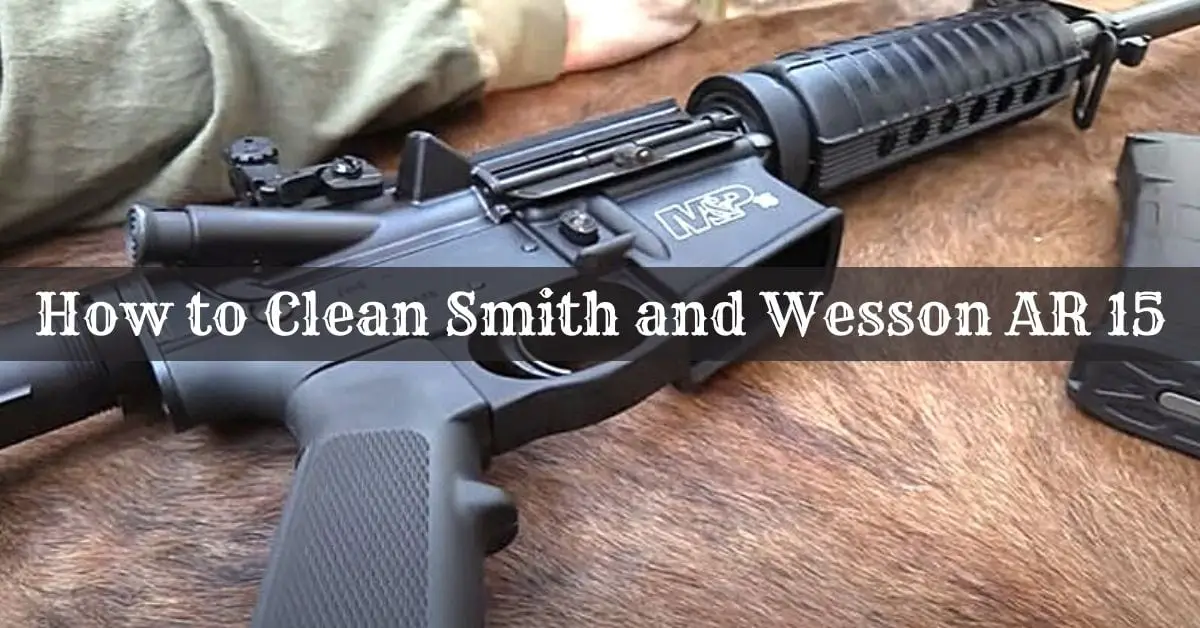
How to Clean Smith and Wesson AR 15

Cleaning a Smith & Wesson AR-15 rifle requires four systematic steps: stripping, cleaning, lubricating, and reassembling. With proper tools—including gun oil, patches, a scrub brush, and a carbon cleaner—this maintenance task takes approximately 30–45 minutes and significantly extends the rifle’s service life.
Smith and Wesson退出AR-15生产后,其M&P 15已成为执法和民用市场的主力型号。清洁过程虽然对新手有一定挑战,但通过本指南可以掌握所有必要的维护技能。
This guide covers the complete Smith & Wesson AR-15 cleaning procedure, including specifications for the 5.56mm NATO caliber and M&P 15 comparison details.
Tools Required for Cleaning Your Smith & Wesson AR-15
Before beginning, gather these essential tools:
- Gun-specific carbon cleaner (designed for polymer-safe formulations)
- Gun oil with viscosity rated at 10W-30 for operating temperatures between 32°F–120°F
- Patch holders and cotton patches (minimum 20 patches recommended)
- Bore brush sized for 5.56mm NATO/.223 Remington
- Scrub brush with nylon bristles
- Microfiber cloths for drying
- Snap caps for safe chamber inspection
Step-by-Step Smith & Wesson AR-15 Cleaning Process
Follow this systematic four-part process to clean your AR-15 rifle thoroughly and safely.
Step 1: Strip the Gun Completely
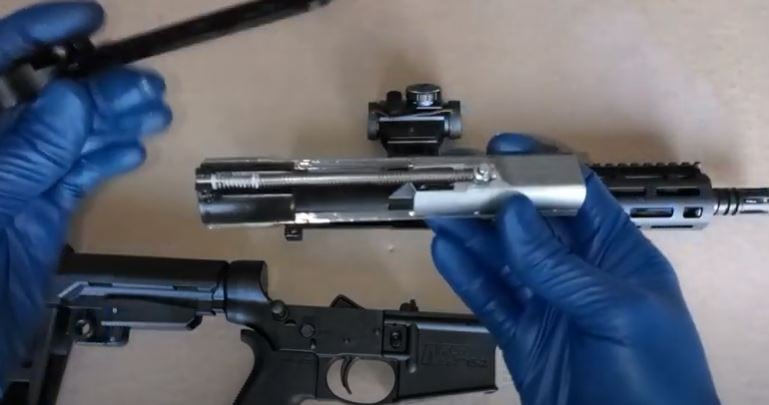
Disassemble all removable components on a flat, non-conductive surface. Begin with the two pins on the lower receiver: the takedown pin and the pivot pin. Remove the charging handle and bolt carrier group (BCG) by pulling the charging handle fully to the rear.
Separate the BCG into these components:
- Bolt carrier
- Bolt
- Camber
- Gas key
- Firing pin
- Extractor and ejector
Lay all components in sequential order to simplify reassembly. Consult your user manual for model-specific pin locations.
Step 2: Clean All Components Thoroughly
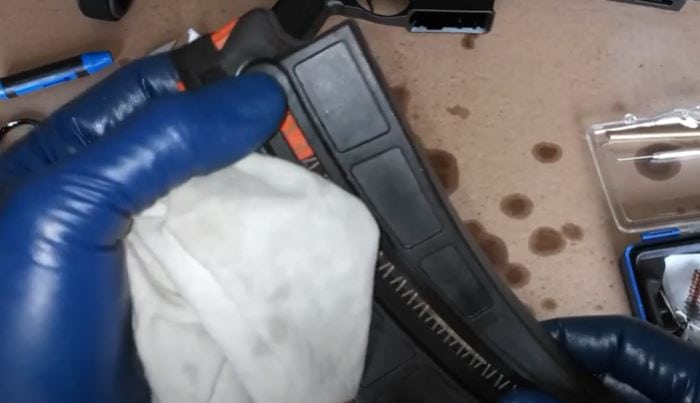
Clean components in this order: barrel and receiver first, then the BCG, then small parts. For the barrel, run a bore brush wetted with carbon cleaner through the chamber at least 8–10 strokes, followed by patches until they emerge clean.
The bolt face and firing pin hole accumulate carbon fouling after approximately 200–300 rounds. Soak these parts in carbon remover for 10–15 minutes before scrubbing. Pay special attention to the extractor groove, where carbon buildup causes failure-to-feed malfunctions.
Clean the chamber with a chamber brush sized for 5.56mm NATO. Inspect the barrel bore with a flashlight—light reflections indicate remaining fouling.
Step 3: Lubricate All Moving Parts
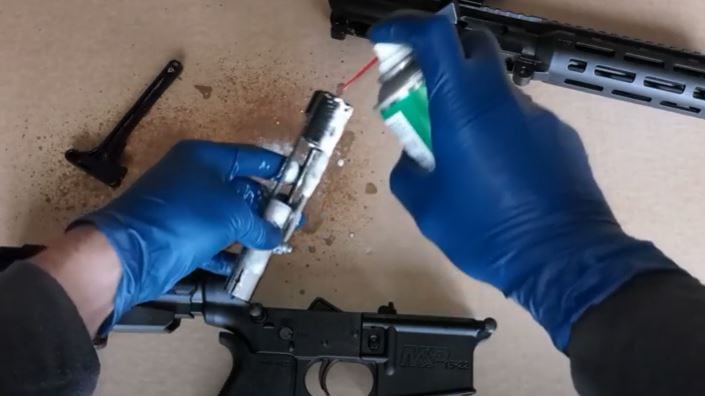
Proper lubrication prevents friction wear and corrosion. Apply 2–3 drops of gun oil to these key locations:
- Charging handle rails
- Bolt carrier cam pin channel
- Extractor spring and pivot
- Pivot pin and takedown pin holes
- Trigger group pins
Critical: Wipe excess oil from the bore before reassembly. Oil in the bore causes dangerous pressure buildup. The barrel should be dry-patched after cleaning, with oil applied only to external surfaces and moving parts.
For storage, apply a heavier protective coat (rust preventive) to all metal surfaces if the rifle will sit unused for more than 30 days.
Step 4: Reassemble the Rifle
Reassemble in reverse order of stripping. Ensure all pins are fully seated and springs are properly positioned. Verify the:
- Charging handle clicks forward when released
- Bolt fully seats in the barrel extension
- Trigger resets fully after each pull
- Safety selector moves smoothly between positions
Smith & Wesson AR-15 vs. M&P 15: Key Differences
The M&P 15 (Military & Police 15) represents Smith & Wesson’s enhanced AR-15 platform with several significant upgrades. The original AR-15 model from Smith & Wesson has been discontinued, but understanding these differences helps buyers choose between new and legacy inventory.
| Specification | AR-15 | M&P 15 |
|---|---|---|
| Twist Rate | 1:7 inches | 1:9 inches |
| Rear Sight Material | Polymer | Metal Alloy |
| Customization | Limited to minor parts | Full customization (barrel to scope) |
| Introduced | Pre-2006 | 2006 |
Twist Rate Performance
The M&P 15’s 1:9 inch twist rate stabilizes bullets weighing 55–77 grains effectively. The AR-15’s faster 1:7 inch twist rate handles heavier bullets up to 90 grains but may over-stabilize lighter projectiles. For general shooting with 55-grain ammunition, the 1:9 twist provides optimal accuracy.
Price Comparison
The AR-15 typically sells for $600–$900, while the M&P 15 commands $750–$1,100. The price difference reflects the M&P’s enhanced features, including a chrome-lined bore, improved trigger, and full customization capability.
Smith & Wesson M&P 15 Sport II Specifications
The M&P 15 Sport II remains one of the most popular AR-15 pattern rifles. Key specifications include:
- 5.56mm NATO / .223 Remington caliber
- 16-inch barrel with 1:9 twist rate
- 6-position adjustable stock
- 30-round PMAG compatibility
- 6.5-pound trigger pull
- 1.5-inch grouping at 100 yards with factory ammunition
The 1.5-inch grouping at 100 yards demonstrates sub-MOA (Minute of Angle) accuracy—a benchmark for competition-grade performance.
AR-15 Maintenance Schedule
Regular maintenance intervals depend on round count and usage conditions:
- Visual inspection: After every range session
- Basic cleaning: Every 200–300 rounds
- Full deep clean: Every 500–1,000 rounds
- Professional armorer service: Every 5,000+ rounds
In dusty or humid environments, halve these intervals. Salt air exposure particularly accelerates corrosion—clean within 24 hours of exposure.
Conclusion
Smith & Wesson’s transition from the AR-15 to the M&P 15 platform reflects engineering refinements for law enforcement and civilian markets. Regular cleaning using proper tools and techniques extends service life to 10,000+ rounds with reliable function.
For related cleaning guides, see our Cleaning Glossary or explore the Specialty Cleaning Hub for firearm maintenance articles.
References
- Smith & Wesson. (2024). M&P 15 Product Specifications. Smith & Wesson.
- U.S. Army Armament Research, Development and Engineering Center. (2022). AR-15/M4 Technical Reference Guide. U.S. Bureau of Alcohol, Tobacco, Firearms and Explosives.

