
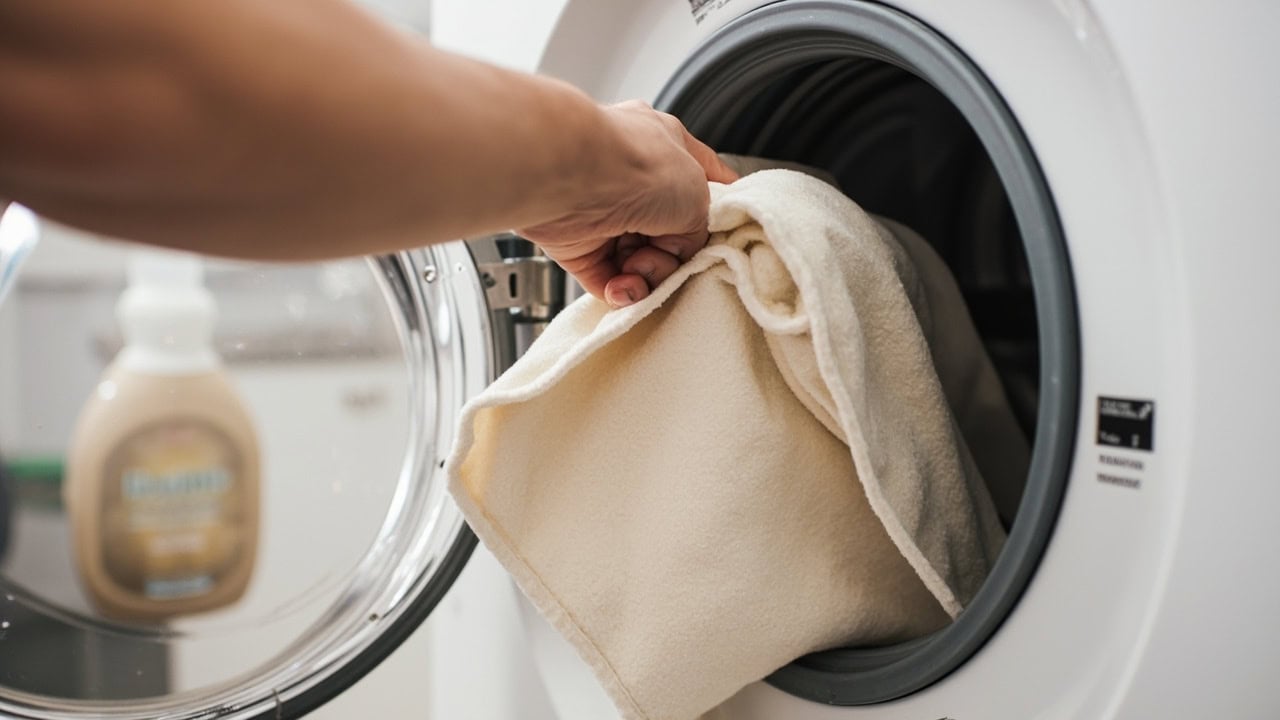
How to Wash Microfiber Couch Covers

Microfiber couch covers must be washed on a gentle or delicate cycle with cold water (30°C/85°F maximum) and a small amount of pH-neutral liquid detergent to preserve the tight weave structure that makes microfiber stain-resistant and durable. The synthetic fibers in microfiber upholstery — typically an 80/20 polyester-to-polyamide blend with fibers finer than 1 denier — are sensitive to heat, harsh chemicals, and mechanical abrasion, so every step of the washing process must protect that delicate structure.
What You Need Before You Start
Gathering the right supplies before you begin prevents mid-wash improvisation that can damage your covers. Microfiber upholstery requires pH-neutral cleaning agents because the synthetic fibers degrade when exposed to highly alkaline or acidic solutions. The polyester component of the blend resists most water-based stains on its own, but the polyamide portion — which gives microfiber its absorbency and softness — is vulnerable to chemical damage from conventional laundry additives.
- pH-neutral liquid detergent — 2–3 tablespoons per load. Avoid powdered detergents, which may not dissolve fully and leave abrasive residue trapped in the fine weave.
- Cold water — 30°C/85°F or cooler. Microfiber’s polyester fibers begin to deform at temperatures above 40°C/104°F.
- Gentle or delicate wash cycle — reduces mechanical agitation that causes pilling and fiber breakage.
- White vinegar (optional) — 1/2 cup for the rinse cycle. Acts as a natural fabric softener without coating fibers the way commercial fabric softener products do.
- Large-capacity washing machine — front-loading machines are ideal because they lack a central agitator that can twist and wring covers during the wash.
- Clean, flat drying surface or clothesline — for air drying away from direct sunlight.
For more guidance on selecting the right detergent and wash settings for different fabric types, see our comprehensive laundry care guide.
Step-by-Step Washing Process
Follow each step in order. Skipping the care-label check or overloading the machine accounts for the majority of preventable microfiber damage reported by upholstery manufacturers. These steps apply to zippered, removable microfiber couch covers — do not attempt to machine-wash attached upholstery.
- Remove the couch covers from all cushions, backrests, and armrests. Unzip each cover fully and slide it off the cushion insert. If a zipper sticks, do not force it — use a graphite pencil to lubricate the teeth rather than pulling harder and risking a tear.
- Check care labels for manufacturer-specific restrictions. Some microfiber blends carry a “W” code (water-based cleaning only), others an “S” code (solvent-based only), and some a “WS” code (either method). Machine washing is only appropriate for W- or WS-coded fabrics.
- Pretreat stains by applying a small amount of undiluted pH-neutral detergent directly to the affected area. Gently work it into the fabric with your fingertips — never scrub with a brush at this stage. Allow a dwell time of 30 seconds so the surfactant can break down the stain molecules before rinsing. For stubborn or oil-based stains, see our guide on removing stains from upholstery.
- Load covers individually into the washing machine. Do not overload the drum — each cover needs space to move freely. Overcrowding creates friction between fabric surfaces, which pills microfiber and damages the nap.
- Select gentle/delicate cycle with a cold water temperature setting (30°C/85°F or cooler). The gentle cycle reduces spin speeds and shortens agitation time, both of which protect the fiber structure.
- Add 2–3 tablespoons of pH-neutral liquid detergent to the dispenser or directly into the drum. Using more detergent does not clean better — excess surfactant residue clings to microfiber’s fine filaments and stiffens the fabric after drying. A proper dilution ratio matters more with microfiber than with coarser fabrics.
- Start the wash cycle and allow it to complete fully. Do not open the machine mid-cycle or add additional detergent once the wash has begun.
- Optional: Add 1/2 cup white vinegar during the rinse cycle to soften the fabric naturally. White vinegar contains approximately 5% acetic acid (pH 2.5), which dissolves residual detergent and mineral deposits without leaving a coating on the fibers — unlike commercial fabric softeners that deposit silicone or lanolin films.
Microfiber-Specific Considerations
Microfiber behaves differently from natural-fiber upholstery fabrics. Understanding these differences prevents irreversible damage that no amount of post-wash treatment can fix. The same principles that apply to washing microfiber towels apply here — the ultra-fine filaments that make microfiber so effective at repelling stains also make it vulnerable to certain laundry chemicals and mechanical stresses.
- Never use bleach — chlorine bleach oxidizes and breaks down the synthetic polymer chains in polyester and polyamide fibers. Even color-safe bleach alternatives can cause discoloration on dyed microfiber. The chemical reaction weakens the fiber structure, causing it to become brittle and lose elasticity.
- Never wash in hot water — temperatures above 40°C/104°F cause the polyester fibers to contract and the polyamide component to deform. This irreversible shrinkage changes the cover’s dimensions so it may no longer fit the cushion properly. At 60°C/140°F and above, the fibers can begin to fuse together.
- Avoid fabric softener — liquid softeners and dryer sheets deposit a waxy silicone coating on each microfilament. This coating fills the microscopic gaps between fibers that give microfiber its stain-repellent and moisture-wicking properties, effectively neutralizing the fabric’s performance advantages.
- Do not wring or twist — microfiber holds significantly more water per unit weight than cotton because of its enormous surface-area-to-volume ratio. Wringing stretches and permanently distorts the weave. Gently squeeze excess water out instead.
- Never tumble dry on high heat — synthetic microfibers soften at approximately 120°C/250°F and can melt at temperatures above 140°C/285°F. Even on medium settings, prolonged tumble-drying causes the fibers to mat and lose their loft. Use air-dry or the lowest heat setting only.
Drying and Finishing Microfiber Couch Covers
The drying phase is where most microfiber damage occurs. Microfiber dries faster than cotton because its ultra-fine filaments have a larger total surface area for evaporation, but the same fine structure makes it extremely sensitive to heat and mechanical stress during the drying process.
- Remove covers promptly from the washing machine immediately after the cycle ends. Leaving wet microfiber balled up in the drum causes deep wrinkles and creates an environment where mildew can develop within hours.
- Gently squeeze excess water from each cover without wringing or twisting. Press the fabric between your hands or against the side of a utility sink to push water out. Microfiber releases water more easily than heavy cotton, so this step takes less effort than you might expect.
- Lay flat to air dry on a clean, dry surface, or hang each cover on a clothesline in a shaded, well-ventilated area. Direct sunlight causes UV fading on dyed microfiber, especially darker colors. Avoid hanging by a single corner, which stretches the fabric unevenly — instead, drape the cover over the line so the weight distributes evenly.
- If using a dryer: set it to the lowest heat setting or air-fluff cycle only. Remove the covers while they are still slightly damp — over-drying makes microfiber stiff and prone to static cling.
- Do not over-dry. Microfiber can feel stiff and papery when dried past its optimal moisture level. If covers come out stiff, lightly mist them with water and knead the fabric with your hands to restore flexibility.
- Reattach covers to cushions when they are slightly damp — not wet, not fully dry. The residual moisture gives the fabric enough stretch to ease back over the cushion without straining the seams or zippers.
Common Mistakes When Washing Microfiber Couch Covers
These are the six most frequent errors that ruin microfiber couch covers. Each one causes a specific type of damage that reduces the fabric’s lifespan, appearance, or stain-repelling performance. Avoiding them requires no extra time — only awareness of what not to do.
| Mistake | Why It Damages Microfiber |
|---|---|
| Using hot water | Causes fiber shrinkage and deformation — polyester contracts at temperatures above 40°C/104°F |
| Adding bleach or harsh chemicals | Oxidizes and degrades synthetic polymer chains, causing fading, brittleness, and loss of elasticity |
| Overloading the washing machine | Creates excessive friction between fabric surfaces that pills the fibers and flattens the nap |
| High-heat tumble drying | Melts or warps microfibers at temperatures above 120°C/250°F, permanently marring the texture |
| Using fabric softener | Coats each microfilament with silicone, clogging the gaps that give microfiber its stain-resistance |
| Wringing or twisting | Stretches and permanently misshapes the fine weave, making covers difficult to refit |
How to Restore Microfiber’s Softness After Washing
If your microfiber couch covers come out of the wash feeling stiff or rough, the cause is almost always detergent residue trapped in the dense fiber matrix. Microfiber’s ultra-fine filaments have an enormous combined surface area — a single square inch contains millions of individual fibers — and surfactant molecules cling to these surfaces more stubbornly than they do to coarser fabrics. Restoring softness requires removing that residue and refluffing the nap.
- Rinse thoroughly — run an additional rinse cycle with no detergent to flush out any remaining soap. Stiffness after drying is the primary indicator that residue is still present.
- Add 1/2 cup white vinegar to the final rinse — the mild acetic acid solution (pH 2.5) dissolves both detergent residue and hard-water mineral deposits that contribute to stiffness. The vinegar scent dissipates completely as the fabric dries.
- Shake out covers immediately after removing them from the dryer or while still damp on the line. A vigorous shake separates matted fibers and restores loft.
- Use a soft-bristle brush to gently stroke the fabric’s surface in one direction. This lifts the nap and realigns the fibers, restoring the suede-like texture that gives microfiber its characteristic hand feel. Brush only when the fabric is dry or nearly dry.
- Store covers flat or loosely rolled — never compress them in tight storage bags. Compression mats the fibers and requires another full wash-and-brush cycle to correct.
How Often to Wash Microfiber Couch Covers
Washing frequency depends on how heavily the couch is used and whether the household includes children, pets, or allergy sufferers. Over-washing shortens the lifespan of any upholstery fabric, but under-washing allows body oils, dust mites, and allergens to accumulate in the fiber matrix. The following schedule balances cleanliness with fabric preservation.
- Light use (formal living room, guest room): Wash every 2–3 months. Vacuum weekly with a soft-bristle attachment to remove surface dust between washes.
- Moderate use (daily family room seating): Wash every 4–6 weeks. Spot-clean spills immediately to extend the interval between full washes.
- Heavy use or homes with pets: Wash every 2–3 weeks. Pet dander, oils, and fur penetrate deep into the microfiber matrix and require more frequent full extraction.
- Spot clean as needed between full washes. Address spills within minutes to prevent them from setting into the polyamide fibers, which are more absorbent than the polyester component.
For detailed stain treatment techniques that work on upholstery fabrics, refer to our stain removal guide.
Preventing Damage Between Washes
Preventive care extends the time between washes and prolongs the fabric’s stain-resistant properties. These four habits keep microfiber looking and performing its best with minimal effort.
- Vacuum weekly with a soft-bristle upholstery attachment. This removes dust, pet hair, and dry soil before they work their way into the fiber matrix where they become harder to extract.
- Blot — don’t rub — liquid spills immediately with a clean, dry microfiber cloth. Rubbing pushes the liquid deeper into the upholstery and damages the nap. Press down firmly and lift straight up.
- Apply a fabric protector spray formulated specifically for microfiber every 6 months. These sprays deposit a fluoropolymer-based barrier on the fiber surface that causes liquids to bead up rather than soak in, without clogging the fiber gaps the way fabric softener does.
- Keep covers away from direct sunlight when possible. UV radiation breaks down the dye molecules in synthetic fibers, causing gradual fading — especially on darker-colored microfiber. Position the couch away from south- and west-facing windows, or use UV-blocking window treatments.
Frequently Asked Questions
Q: Can I machine wash microfiber couch covers?
A: Yes, microfiber couch covers can be machine washed on a gentle cycle using cold water and pH-neutral detergent. Avoid bleach, fabric softener, and high heat, as these damage the synthetic microfibers and reduce the fabric’s lifespan and stain resistance.
Q: What temperature is safe for washing microfiber couch covers?
A: Wash microfiber couch covers in cold water at 30°C/85°F or cooler. Water temperatures above 40°C/104°F cause microfiber to shrink and lose its signature soft texture and stain-resistant properties.
Q: Can I put microfiber couch covers in the dryer?
A: Only use the lowest heat or air-fluff setting on your dryer. High heat melts synthetic microfibers and causes permanent damage. Air drying flat or line drying in shade is the safest option to preserve the fabric’s integrity.
Q: How do I remove stains from microfiber couch covers without washing the whole cover?
A: Mix a small amount of pH-neutral detergent with cool water, apply directly to the stained area, and gently blot with a clean cloth. Allow it to sit for 30 seconds, then blot with a damp cloth to rinse. For oil-based stains, use a dry cleaning solvent applied to a cloth first.
References
- American Cleaning Institute. (2023). Understanding Labels and Care Instructions. Cleaning Institute.
- International Association for Soaps, Detergents and Maintenance Products (A.I.S.E.). (2022). Laundry Care Best Practices. A.I.S.E.
- National Textile Center. (2021). Microfiber Performance and Care Research. NTC Research.
- U.S. Consumer Product Safety Commission. (2023). Upholstered Furniture Safety and Care Guidelines. CPSC.
- American Society for Testing and Materials. (2022). ASTM D5489 — Standard Guide for Care Symbols. ASTM International.


