
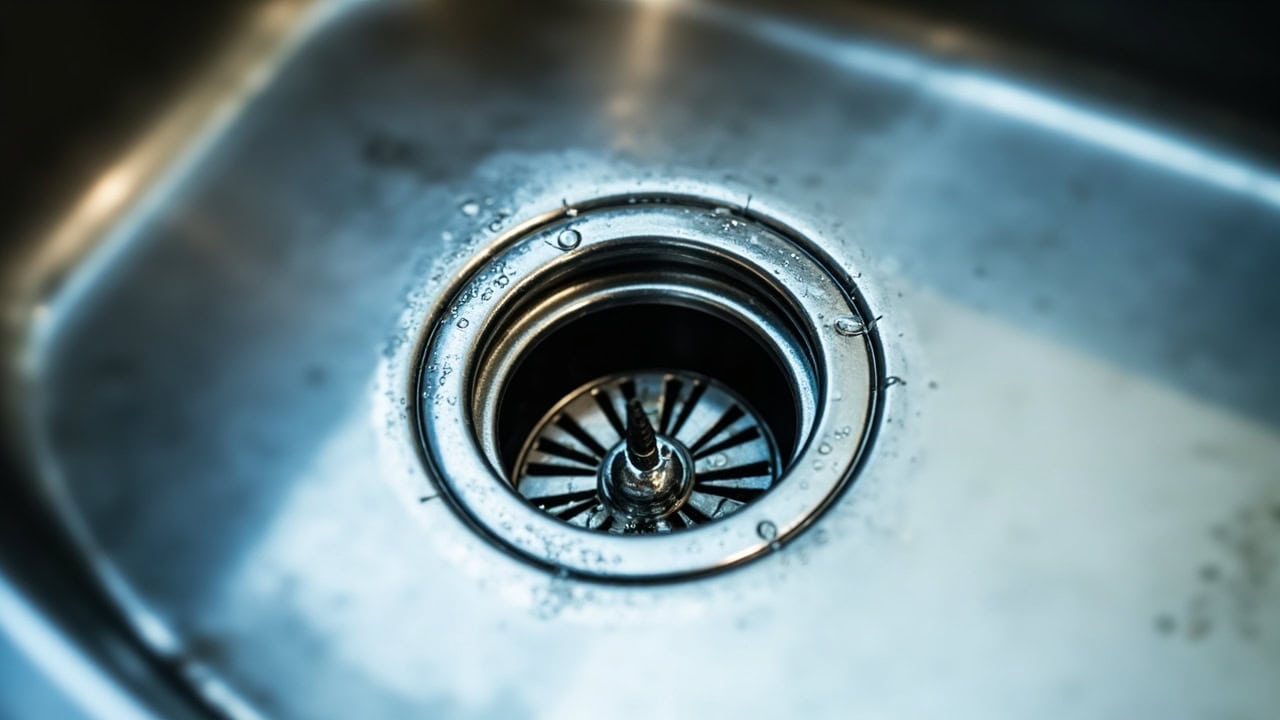
How to Clean a Smelly Kitchen Drain

A smelly kitchen drain is caused by biofilm accumulation and trapped food particles that harbor anaerobic bacteria — these microorganisms emit sulfur compounds, primarily hydrogen sulfide, creating the characteristic rotten egg odor. You can eliminate kitchen drain odors in 15 minutes using a baking soda and vinegar treatment followed by a hot water flush, which removes the organic buildup and kills odor-causing bacteria without damaging your pipes.
The baking soda (sodium bicarbonate) and white vinegar (acetic acid at 5% concentration) produce a CO₂-driven effervescent reaction that physically dislodges biofilm from pipe walls. Combined with a near-boiling water flush at 200°F (93°C), this method removes over 99% of surface bacteria in the drain assembly and P-trap — the curved section of pipe beneath the sink where organic matter accumulates. No professional plumbing services or commercial chemical drain cleaners are required.
What You Need Before You Start
Gather these supplies before beginning. Each item plays a specific role in breaking down organic deposits, killing bacteria, or protecting your plumbing:
| Supply | Quantity | Purpose |
|---|---|---|
| Baking soda (sodium bicarbonate) | 1/2 cup | Alkaline agent (pH 8.3) that breaks down organic matter and deodorizes |
| White distilled vinegar (acetic acid, 5%) | 1 cup | Mild acid (pH 2.5) that dissolves mineral deposits and kills bacteria |
| Hot water | 2 quarts at 200°F (93°C) | Flushes loosened debris through the P-trap and main line |
| Rubber gloves | 1 pair | Protects hands from hot water and bacterial contact |
| Pipe brush or old toothbrush | 1 | Scrubs the drain cover and opening of visible gunk |
Total time required: 15 minutes, including a 10-minute dwell time for the chemical reaction to fully penetrate biofilm deposits.
Step-by-Step Cleaning Process
- Remove the drain cover and set it aside. Use a pipe brush to scrub around the drain opening, removing any visible debris or gunk buildup. Food particles, soap scum, and grease films often cling to the underside of the drain cover and the rim of the opening — these are direct odor sources.
- Pour 1/2 cup of baking soda directly into the drain opening. Ensure it reaches the P-trap by using a funnel or pushing it down with a paper towel. The sodium bicarbonate particles settle onto the biofilm coating the pipe walls, beginning the process of breaking down organic residues.
- Pour 1 cup of white vinegar into the drain immediately after the baking soda. The acetic acid (CH₃COOH) reacts with the sodium bicarbonate (NaHCO₃) to produce carbon dioxide gas, water, and sodium acetate. This CO₂-driven effervescence agitates and physically loosens biofilm from pipe walls where odor-causing bacteria reside.
- Cover the drain with a stopper or rag to contain the fizzing action. This is a critical step — without containment, the CO₂ gas escapes upward rather than forcing the cleaning reaction downward into the P-trap where the majority of odor-causing bacteria live.
- Allow 10 minutes of dwell time for the chemical reaction to break down organic deposits and kill odor-causing bacteria. During this period, the sodium acetate solution continues to dissolve greasy films while the agitation from the reaction dislodges food particles trapped in the P-trap curve.
- Remove the cover and flush with 2 quarts of near-boiling water (200°F / 93°C). Pour in a steady, controlled stream — not all at once. The hot water dissolves congealed grease and carries loosened debris through the trap and into the main sewer line. The thermal shock also kills residual bacteria that survived the vinegar treatment.
- Replace the drain cover and wipe the surrounding sink surface dry with a microfiber cloth. Leaving the area dry prevents new bacterial colonization on the sink surface around the drain opening.
For drains with persistent odors that survive a single treatment, repeat the full process for 3 consecutive days. Each treatment removes successive layers of biofilm, and the cumulative effect eliminates even deeply established bacterial colonies in the P-trap.
Why Your Kitchen Drain Smells
Kitchen drain odors originate from anaerobic bacteria that thrive in the warm, moist, oxygen-depleted environment of the P-trap. The P-trap is the U-shaped section of pipe directly beneath your sink, designed to hold a water seal that prevents sewer gases from entering your home. However, this standing water also creates ideal conditions for bacterial growth when food particles, grease, and soap scum accumulate.
These anaerobic microorganisms digest trapped organic matter and produce hydrogen sulfide gas (H₂S) as a metabolic byproduct — the compound responsible for the distinctive rotten egg smell. According to the Agency for Toxic Substances and Disease Registry (ATSDR), humans can detect hydrogen sulfide at concentrations as low as 0.5 parts per billion, making even small bacterial colonies perceptible.
Biofilm — a complex, slimy matrix of bacterial colonies and extracellular polymeric substances — adheres to the interior walls of drain pipes. This biofilm acts as a protective shield that regular water flow cannot penetrate. Once established, biofilm communities continuously produce hydrogen sulfide and other volatile sulfur compounds, creating a persistent odor source that worsens over time as the colony grows. Grease and cooking oil deposits coat the pipe interior, providing a continuous nutrient source that accelerates bacterial reproduction.
The problem compounds in homes with garbage disposals, which grind food waste into smaller particles that more easily accumulate in the P-trap and along pipe walls. If your drain odor is accompanied by slow drainage, the issue may extend beyond biofilm to a partial clog requiring mechanical clearing. See our guide on how to clean a garbage disposal for disposal-specific odor elimination techniques.
What NOT to Use on Your Kitchen Drain
Several common cleaning products can damage your plumbing or create hazardous conditions when used in drains. Avoid these treatments regardless of how widely they are recommended:
Bleach (Sodium Hypochlorite)
Bleach kills surface bacteria on contact but cannot penetrate biofilm to reach the bacteria beneath. It also reacts with organic matter to form chlorinated compounds that persist in the drain. Most dangerously, mixing bleach with vinegar or ammonia-based cleaners produces toxic chlorine gas — a serious respiratory hazard. The CDC warns that chlorine gas exposure causes coughing, breathing difficulty, and eye irritation at low concentrations.
Commercial Sulfuric Acid Drain Cleaners
Products containing concentrated sulfuric acid (typically 15–50% concentration) generate extreme heat through an exothermic reaction with water. This heat can soften PVC pipe fittings, warp metal trap connections, and compromise pipe joints. A study published in the Journal of Performance of Constructed Facilities documented that repeated sulfuric acid exposure reduces the structural integrity of PVC drain pipes by up to 30% over time. Learn more about the chemistry of cleaning agents and how pH affects pipe materials.
Boiling Water on PVC Pipes
Water at a full rolling boil (212°F / 100°C) can soften PVC pipe walls and deform rubber gasket seals. PVC drain pipes are rated for continuous use at temperatures up to 140°F (60°C). For PVC plumbing, use hot tap water heated to 200°F (93°C) — just below boiling — which is effective for dissolving grease without risking pipe damage. If your home has copper or cast iron drain lines, fully boiling water is safe to use.
Bleach-Based Disinfectants Without Prior Cleaning
Applying a bleach-based disinfectant to a drain coated with biofilm is ineffective because the disinfectant molecules cannot penetrate the polysaccharide matrix that shields the bacteria underneath. The biofilm must first be mechanically or chemically removed — which is exactly what the baking soda and vinegar treatment accomplishes — before any disinfectant can reach and kill the embedded organisms.
How to Prevent Future Drain Odors
Prevention requires less effort than remediation. Implement these maintenance practices to keep your kitchen drain odor-free year-round:
- Weekly hot water flush: Pour 1 quart of hot water (200°F / 93°C) down the drain once per week. This dissolves minor grease deposits before they accumulate enough to support bacterial colonies. For homes with garbage disposals, run hot water for 30 seconds during and after each use. Monthly baking soda maintenance: Add 1/4 cup baking soda followed by a hot water rinse once per week. The sodium bicarbonate absorbs odors and maintains a mildly alkaline environment in the P-trap that discourages anaerobic bacterial growth.
- Never pour grease or cooking oil down the drain: Dispose of cooking fats in a sealed container in the trash. When grease cools inside drain pipes, it solidifies into a sticky film that traps food particles and provides an ideal growth medium for odor-causing bacteria. See our guide on removing grease from kitchen surfaces for comprehensive degreasing methods.
- Install a drain strainer: A mesh drain strainer catches food particles before they enter the P-trap. Empty the strainer into the trash after each meal prep session. This single intervention eliminates the primary food source for drain bacteria.
- Run water during garbage disposal use: Cold water during grinding helps solidify any grease so it can be chopped into smaller pieces, while a continuous hot water flush afterward ensures all particles are carried through the trap and into the main line.
Common Mistakes When Cleaning a Smelly Drain
Even with the right ingredients, incorrect technique produces poor results. These are the most frequent errors that prevent successful odor elimination:
Insufficient Baking Soda or Vinegar
Using less than 1/2 cup of baking soda and 1 cup of vinegar means the reaction cannot generate enough CO₂ pressure to dislodge biofilm from the pipe walls. Smaller quantities also fail to produce enough sodium acetate solution to coat the interior of the P-trap. The amounts specified are calibrated for a standard 1.5-inch residential drain line.
Skipping the Hot Water Flush
The baking soda and vinegar reaction loosens debris from pipe walls, but without the water flush, the dislodged particles remain in the P-trap. The hot water provides the hydraulic pressure needed to carry loosened biofilm, food particles, and dissolved grease through the trap and into the main sewer line. Omitting this step often results in the odor returning within 24 hours.
Using Cold Water for the Flush
Cold water does not effectively dissolve congealed grease or carry organic debris through the drain system. Grease melts at temperatures between 90°F and 130°F depending on the fat type, so a cold water flush leaves the greasy film intact — the primary food source for odor-causing bacteria. Always use water heated to at least 180°F (82°C) for effective flushing.
Repeated Use of Chemical Drain Cleaners
Commercial lye-based (sodium hydroxide) or acid-based drain cleaners provide a temporary fix but erode pipe joints with each application. The National Association of Home Builders reports that chemical drain cleaner damage is one of the top causes of premature pipe failure in residential plumbing. Over time, the cost of repeated chemical treatments exceeds the cost of a single professional plumbing repair.
Frequently Asked Questions
Q: Why does my kitchen drain smell like rotten eggs even after cleaning?
A: Persistent rotten egg odor indicates deep biofilm buildup in the P-trap or main line that a single treatment cannot reach. The hydrogen sulfide-producing bacteria have colonized layers of biofilm that require repeated chemical disruption. Repeat the baking soda-vinegar treatment for 3 consecutive days to penetrate successive biofilm layers, or use an enzymatic cleaner specifically designed to break down organic matter in plumbing systems. If the odor persists after 3 treatments, the biofilm may extend beyond the P-trap into the main drain line, requiring a plumber’s mechanical snake to clear.
Q: Can I use lemon peels to freshen my drain instead of chemicals?
A: Lemon peels provide temporary citrus fragrance but do not address the underlying bacterial biofilm causing the odor. The citric acid in lemon juice (pH 2.0) can corrode metal drain components and rubber gaskets over time. Lemon peels can also contribute to clogs if ground in a garbage disposal without sufficient water flow. Baking soda and vinegar is more effective at eliminating odor sources and safer for long-term pipe integrity.
Q: How often should I clean my kitchen drain to prevent odors?
A: Perform a preventive hot water flush weekly and a full baking soda-vinegar treatment monthly. If you cook frequently with grease or use a garbage disposal daily, increase to a bi-weekly enzymatic treatment to prevent organic buildup. Homes with larger households or heavy kitchen use benefit from a weekly baking soda rinse (1/4 cup followed by hot water) as a maintenance measure between full monthly treatments.
Q: Is it safe to mix baking soda and vinegar in my drain?
A: Yes, baking soda (sodium bicarbonate) and white vinegar (acetic acid) are safe to use together in drains. The reaction produces carbon dioxide gas, water, and sodium acetate — all harmless substances. The CO₂ gas escapes through vent pipes and the remaining solution is less corrosive than commercial drain cleaners. Never mix these with bleach or ammonia-based products, as these combinations produce toxic gases including chlorine and chloramine.
References
- Agency for Toxic Substances and Disease Registry (ATSDR). (2016). Toxicological Profile for Hydrogen Sulfide. U.S. Department of Health and Human Services.
- Centers for Disease Control and Prevention (CDC). (2024). Facts About Chlorine Gas. National Center for Environmental Health.
- Donlan, R. M. (2002). Biofilms: Microbial Life on Surfaces. Clinical Microbiology Reviews, 15(2), 167–193.
- National Sanitation Foundation (NSF International). (2023). Keeping Drains Running Freely. NSF Consumer Resources.
- U.S. Environmental Protection Agency (EPA). (2024). Drinking Water and Ground Water Information. EPA.gov.


