
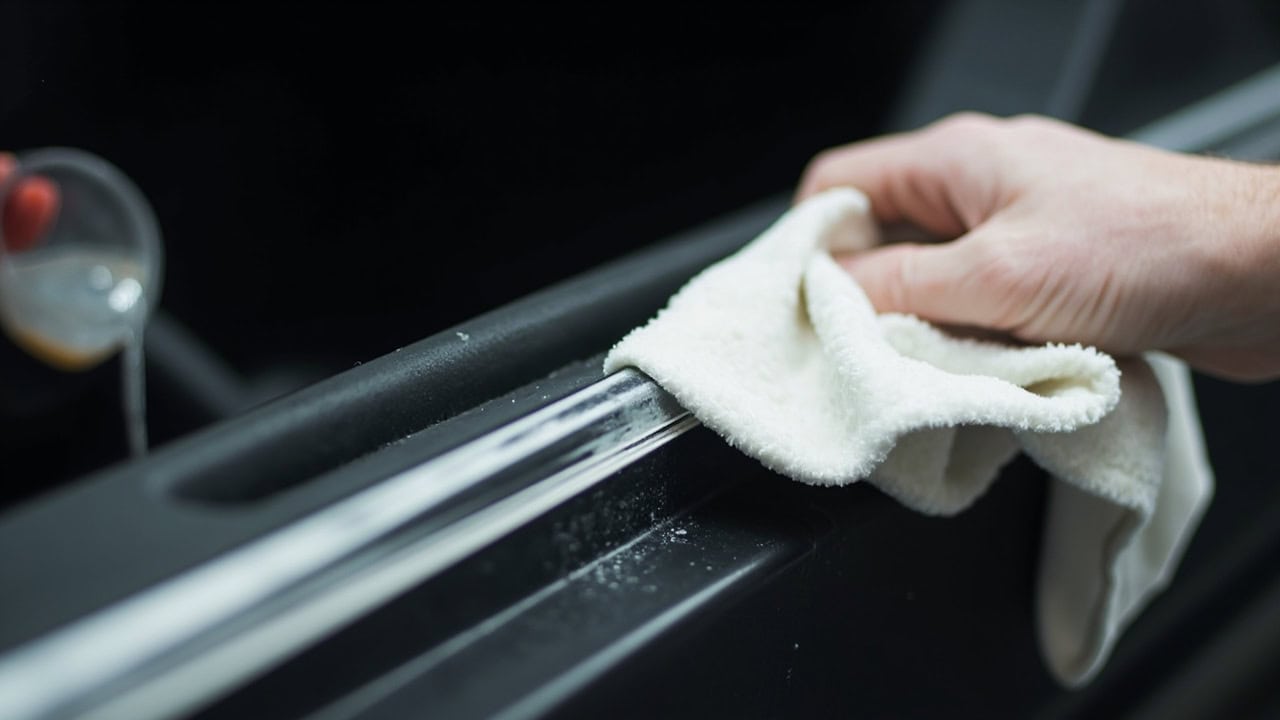
How to Remove Car Wax from Trim

Car wax can be removed from trim using isopropyl alcohol (IPA) at 50% concentration or higher, applied with a microfiber cloth and allowed 30 seconds of dwell time to dissolve the wax before wiping. Isopropyl alcohol (C₃H₈O) is a polar organic solvent with a boiling point of 82.6 °C that breaks the hydrocarbon ester bonds in both carnauba and synthetic waxes without swelling, discoloring, or degrading plastic, rubber, or vinyl trim surfaces. For stubborn residue, a dedicated citrus-based wax remover or a second IPA application removes remaining buildup completely.
Why Wax Builds Up on Car Trim
Car wax migrates from painted surfaces onto adjacent trim during application and curing. When you apply liquid or paste wax to body panels near trim pieces, excess product spreads onto unprotected plastic, rubber, and vinyl surfaces before it fully sets. This is especially common around door seals, window moldings, bumper trim, and cowl grilles where painted panels meet trim directly.
Trim materials have porous, textured surfaces that physically trap wax particles more readily than smooth clear-coated paint. Plastic and rubber trim contain microscopic surface irregularities that hold onto wax residues, making the contamination visible as a white or chalky haze that intensifies over time. Unlike paint, trim does not have a clear coat barrier, so wax bonds directly to the raw material surface.
Overapplication of spray wax or liquid wax compounds the problem. Spray waxes produce a fine mist that drifts onto nearby trim, while liquid waxes can run or drip during application. Temperature fluctuations worsen the issue — heat softens wax, allowing it to flow into trim crevices, and cooling causes it to harden in place, locking the residue into the trim texture.
What NOT to Use on Car Trim
Using the wrong solvent on car trim causes permanent damage that no amount of subsequent treatment can reverse. Petroleum-based solvents such as gasoline, kerosene, and naphtha penetrate rubber and plastic polymers, causing them to swell, soften, and eventually crack. Once petroleum solvents migrate into the trim matrix, they leach out plasticizers and UV inhibitors, accelerating weathering and fading.
Acetone and nail polish remover dissolve the surface layer of many plastics and degrade rubber seals at the molecular level. Abrasive scrub pads, steel wool, and stiff brushes scratch the trim surface, creating micro-abrasions that trap dirt and wax more easily in the future. Bleach and ammonia-based cleaners cause chemical discoloration — particularly on black and dark gray trim — and degrade the polymer structure over repeated exposure.
Hot water alone melts wax but does not dissolve it. The melted wax simply flows to another area of the trim or redeposits on adjacent surfaces, spreading the contamination rather than removing it. This approach also risks heat-distorting thin rubber trim pieces that are not designed to withstand temperatures above 60 °C (140 °F).
What Dissolves Car Wax: The Chemistry
Car wax — whether carnauba-based or synthetic — consists of long-chain hydrocarbon esters, fatty acids, and polymer resins. Isopropyl alcohol dissolves these compounds through polar hydrogen bonding and van der Waals interactions. IPA’s hydroxyl group (–OH) disrupts the weak intermolecular forces holding wax molecules together, while its non-polar methyl groups interact with the hydrocarbon chains in the wax. At concentrations of 50% or higher, IPA has sufficient solvent power to dissolve carnauba wax esters and synthetic polymer sealants without attacking the substrate material.
Mineral spirits dissolve wax effectively but leave an oily residue on trim and can damage factory-applied trim coatings and dyes. Dedicated trim wax removers use solvent blends based on D-limonene (citrus terpene) that cut through wax while being formulated to leave trim unharmed. White distilled vinegar (5% acetic acid, pH 2.5) has limited effectiveness on wax because acetic acid targets mineral deposits rather than hydrocarbon esters, but it can soften some synthetic wax residues with extended dwell times of 5–10 minutes.
| Solvent | Effectiveness | Trim Safety | Ease of Use |
|---|---|---|---|
| Isopropyl alcohol 50%+ | High | Excellent | Easy |
| Mineral spirits | Very High | Moderate | Moderate |
| Citrus-based wax remover | High | Excellent | Easy |
| Vinegar (5% acetic acid) | Low | Good | Moderate |
Step-by-Step: Removing Wax from Trim
- Gather supplies — Collect 50% or higher isopropyl alcohol, clean microfiber cloths, a soft-bristled detailing brush, and a trim-safe wax remover product for stubborn areas.
- Test on small area — Apply the isopropyl alcohol solution to an inconspicuous section of trim first. Wait 30 seconds and wipe clean to confirm no discoloration or surface damage occurs before treating the full area.
- Apply solution — Spray or dab isopropyl alcohol directly onto the waxed trim area, ensuring complete coverage of all hazy or chalky residue.
- Allow dwell time — Let the isopropyl alcohol sit for 30 seconds to dissolve the wax bonds. Do not let it dry completely — the solvent must remain wet to break down the wax effectively.
- Agitate gently — Use a soft-bristled brush to loosen wax from textured surfaces and crevices. Brush in light, circular motions to lift dissolved wax from the trim pores without scratching the material.
- Wipe clean — Fold a microfiber cloth into quarters and wipe away the dissolved wax in a single direction. Avoid back-and-forth wiping, which can redeposit wax onto the trim surface.
- Repeat if necessary — Stubborn wax buildup may require 2–3 applications of isopropyl alcohol. Reapply and repeat the dwell-and-wipe process until the trim appears uniform in color with no white haze remaining.
- Buff dry — Use a clean, dry microfiber cloth to buff the trim and remove any remaining solvent residue. Inspect the surface from multiple angles under direct light to confirm all wax has been removed.
How to Prevent Future Wax Buildup on Trim
Preventing wax from reaching trim in the first place saves significant effort compared to removing cured residue. The most effective prevention method is applying painter’s tape or dedicated trim masking tape to all exposed trim pieces before waxing painted surfaces. Automotive-grade masking tape (1/2-inch to 3/4-inch width) adheres securely to rubber and plastic without leaving adhesive residue and removes cleanly after the wax application is complete.
- Apply painter’s tape or trim tape to protect trim before waxing painted surfaces
- Use paste wax instead of liquid spray wax near trim areas — paste wax has a firmer consistency that stays where you apply it
- Allow wax to fully cure before driving (typically 4–8 hours depending on the product and ambient temperature)
- Apply a trim protectant after cleaning to create a hydrophobic barrier that resists future wax adhesion
- Wipe trim surfaces with a damp microfiber cloth immediately after each wax application to catch any residue before it cures
Trim protectant products containing UV-blocking polymers serve a dual purpose: they restore faded trim to its original color and create a slick surface that prevents wax from bonding. Apply trim protectant every 6–8 weeks for ongoing protection. This maintenance schedule aligns with general specialty cleaning practices that keep automotive surfaces protected against environmental contaminants.
Understanding Car Wax Types and Their Impact on Trim
Not all car waxes behave the same way on trim. Carnauba wax is a natural plant-based wax (Copernicia prunifera) composed primarily of esters of fatty acids and fatty alcohols. Its firm consistency means it migrates less readily onto trim, but when it does land on trim, its high melting point (82–86 °C) makes it relatively resistant to removal by warm water alone. Synthetic sealant products use polymer resins that bond chemically to surfaces and flow easily onto adjacent trim during application.
Spray waxes are the most problematic for trim contamination. Their thin liquid formulation produces overspray that drifts onto trim surfaces, and their low viscosity allows them to penetrate deep into textured trim pores. Ceramic coatings present a different challenge — while they rarely migrate onto trim due to their semi-solid gel consistency, any ceramic residue that does contact trim forms an extremely durable bond that resists IPA removal and may require a dedicated ceramic coating remover.
| Wax Type | Wax Consistency | Migration Risk | Removal Difficulty |
|---|---|---|---|
| Carnauba paste | Firm | Low | Moderate |
| Synthetic sealant | Liquid | High | Easy |
| Spray wax | Thin liquid | Very High | Easy |
| Ceramic coating | Semi-solid | Low | Difficult |
Understanding which wax type caused the contamination helps you choose the right removal approach. Carnauba and spray wax residues respond well to a single IPA application. Synthetic sealants may require a second pass with a citrus-based remover. Ceramic coating residue on trim typically demands a dedicated ceramic remover or professional-grade isopropyl alcohol at 91% concentration with extended dwell time of 60–90 seconds.
For related automotive cleaning tasks, the same solvent principles apply when you need to remove tree sap from car paint — organic contaminants on vehicle surfaces respond to similar solvent-based approaches. Rubber trim care also shares cleaning principles with cleaning rubber car floor mats, where gentle solvents and microfiber application protect the material while removing stubborn residues.
Frequently Asked Questions
Q: Will isopropyl alcohol damage my car’s rubber seals?
A: No, isopropyl alcohol at 50% concentration or higher is safe for rubber and plastic trim. It evaporates quickly without leaving residue and does not cause the swelling or degradation that petroleum-based solvents do. IPA is a polar solvent that interacts with hydrocarbon esters in wax but does not attack the cross-linked polymer chains in automotive rubber and plastic materials.
Q: Can I use a clay bar to remove wax from trim?
A: Yes, a clay bar can remove wax from smooth plastic trim surfaces, but it may scratch textured or rubber trim. For textured trim, use isopropyl alcohol or a dedicated wax remover instead. Clay bars work best on flat, non-porous surfaces where the clay can shear off wax residue through mechanical friction.
Q: How often should I remove wax from trim?
A: Remove wax buildup whenever you notice a hazy white film on the trim or before applying new protectant. For most vehicles, this occurs 2–4 times per year depending on wax application frequency. Vehicles waxed monthly may require trim cleaning every 2–3 months to prevent cumulative residue buildup.
Q: Does ceramic coating on paint affect wax removal from trim?
A: Ceramic coatings reduce wax adhesion to painted surfaces, which decreases migration to trim. However, any wax that does land on trim from ceramic-coated vehicles removes just as easily with isopropyl alcohol. The ceramic coating on paint does not change the chemical interaction between IPA and wax on trim surfaces.
References
- National Center for Biotechnology Information. (2024). Isopropyl Alcohol Compound Summary. PubChem, U.S. National Library of Medicine.
- International Agency for Research on Cancer. (1999). Isopropyl Alcohol Re-evaluation. IARC Monographs on the Evaluation of Carcinogenic Risks to Humans, Vol. 71.
- Kirk, R.E. & Othmer, D.F. (2000). Encyclopedia of Chemical Technology. Wiley-Interscience, 4th Edition.
- Society of Automotive Engineers. (2019). Automotive Exterior Trim Material Standards. SAE International.


