
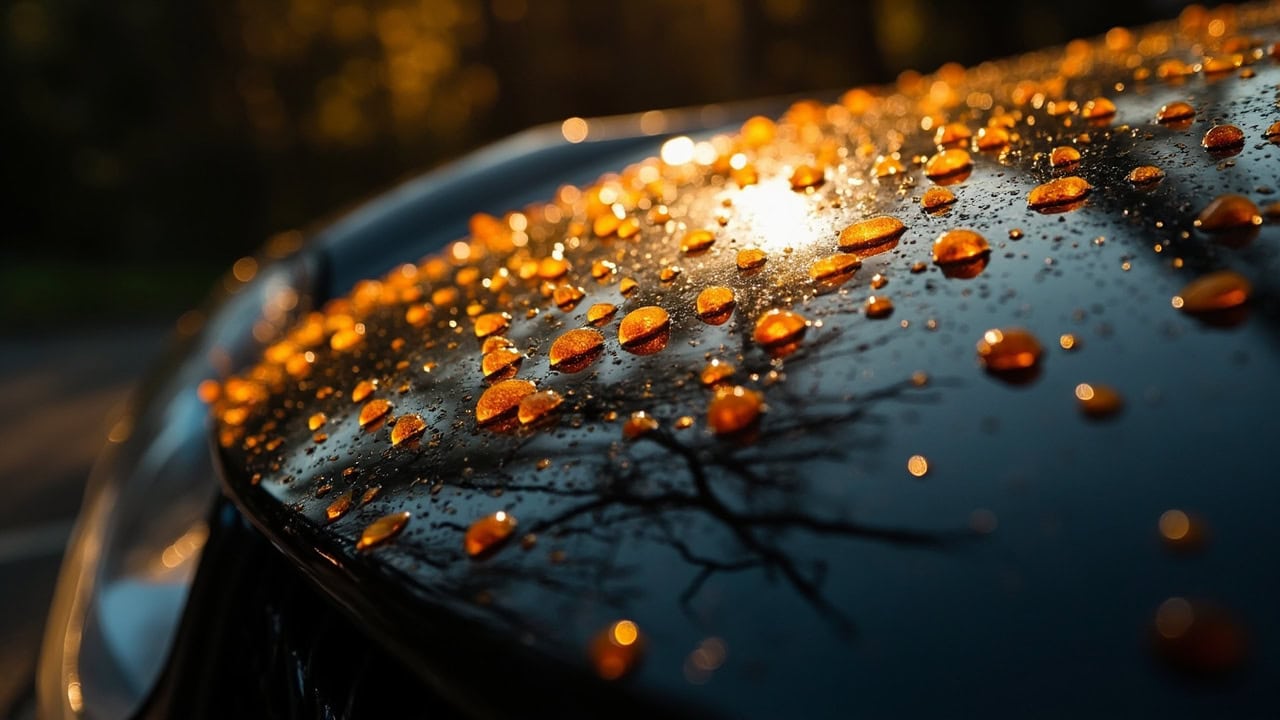
How to Remove Tree Sap from Car Paint

How to Remove Tree Sap from Car Paint
Tree sap must be removed from car paint using a dedicated sap remover product or 70% isopropyl alcohol applied directly to the contamination — abrasive methods like scraping or scrubbing cause permanent clear coat damage and oxidation spots that require professional polishing to correct. The longer tree sap remains on car paint, the more cross-linked and solvent-resistant the polymer becomes, making immediate treatment critical for successful removal without damage.
Automotive clear coat — typically a two-component acrylic polyurethane enamel approximately 25–50 μm thick — provides the glossy, protective outermost layer on modern vehicles. Tree sap contains phloem sugars (primarily sucrose), terpenes, and phenolic compounds that undergo oxidative polymerization within 24–48 hours of exposure, forming a hardened, amber-colored resin that bonds electrostatically to this clear coat surface at a molecular level.
What Removes Tree Sap from Car Paint
Dedicated tree sap removers rated 8–10 on the pH scale (alkaline-based formulations) are the most effective primary solution for dissolving polymerized sap resin. These commercial products contain active solvents such as d-limonene (a citrus-derived terpene with a Kauri-butanol value of approximately 67) and naphtha (a petroleum distillate with a solubility parameter of 8.1 cal½/cm³/²) that break the cross-linked molecular bonds in hardened sap.
Seventy-percent isopropyl alcohol (C₃H₈O, molecular weight 60.10 g/mol) dissolves the polymerized sap resin within 30–60 seconds of contact by disrupting the hydrogen bonding network within the sap matrix. The 70% concentration is preferable to 91% or 99% formulations because the 30% water content slows evaporation, allowing sufficient dwell time for the solvent to penetrate and dissolve the resin.
Bug and tar remover products containing naphtha or d-limonene function as effective secondary alternatives when a dedicated sap remover is unavailable. These products work on the same dissolution principle — their non-polar solvent components penetrate the sap resin and break molecular bonds. A fine-grade automotive clay bar rated for painted surfaces can physically lift fresh sap (less than 24 hours old) when combined with a dedicated clay lubricant spray. The clay’s fine abrasive particles — typically aluminum silicate or silica with a mesh grade of 200–400 — shear the sap from the clear coat without marring the underlying finish.
Plain water and general car wash soap are ineffective once sap has hardened into its resin form. Car wash soaps have a pH between 6.5 and 7.5 and lack the solvent strength to dissolve the cross-linked terpene and phenolic polymer chains. Only mechanical removal or chemical dissolution can break the bond between polymerized sap and clear coat.
Why Tree Sap Bonds to Car Paint
Fresh tree sap contains water-soluble sugars (sucrose, fructose, and glucose), polysaccharides, amino acids, and mineral ions that initially adhere to car paint through simple surface tension and van der Waals forces. Phloem sap typically contains 10–30% dissolved sugars by weight, giving it a viscous, sticky consistency that readily coats any surface it contacts.
Within hours of landing on a painted surface, the water content in fresh sap begins evaporating and the remaining organic compounds undergo oxidative polymerization — an autoxidation process driven by atmospheric oxygen. The terpenes and phenolic compounds in sap form peroxide intermediates that cross-link into a hard, amber-colored resin. This polymerized resin is chemically similar to natural amber and shares its resistance to water-based cleaning methods.
Automotive clear coat has a surface energy of approximately 30–35 mN/m (millinewtons per meter), which creates strong electrostatic attraction to the polar hydroxyl and carboxyl groups present in tree sap compounds. This surface energy range — characteristic of cured polyurethane coatings — means the clear coat surface has moderate polarity that readily accepts polar organic contaminants. The hardened resin forms a mechanical bond with the clear coat at a molecular level by penetrating the microscopic pores and surface irregularities in the paint.
Temperature cycles between day and night drive the sap deeper into these microscopic clear coat pores through repeated thermal expansion and contraction. During warm daytime hours (above 25°C / 77°F), the sap softens and flows into surface imperfections. During cool nighttime hours, it contracts and hardens, locking itself into the paint’s microstructure. Each thermal cycle makes the bond progressively stronger and more resistant to chemical removal.
What NOT to Use on Car Paint
Razor blades, putty knives, or any metal scraping tools cause immediate and irreversible damage to automotive clear coat. The clear coat layer on most modern vehicles measures only 25–50 μm (0.001–0.002 inches) in total thickness — less than the diameter of a human hair. Even light pressure from a metal edge removes a measurable portion of this protective layer, creating visible scratches that appear as white lines under sunlight.
Acetone (CH₃COCH₃) and nail polish remover dissolve automotive clear coat on contact. Acetone has a solubility parameter of approximately 9.9 cal½/cm³/², which closely matches the solubility parameter of polyurethane clear coat. This similarity means acetone doesn’t just remove sap — it actively softens and dissolves the clear coat itself, causing irreversible clouding, hazing, and loss of gloss that can only be corrected by wet sanding and repainting.
Abrasive scrub pads, coarse polishing compounds, and scouring sponges remove the protective clear coat layer entirely rather than just the sap. Power washers at close range (within 6 inches) operate at pressures exceeding 1,500 PSI and force sap particles deeper into the paint’s microtexture while simultaneously risking water intrusion behind trim and seals. Bleach (sodium hypochlorite) and high-concentration hydrogen peroxide bleach the paint pigment and degrade the underlying primer layer through oxidative damage to the polymer matrix.
Step-by-Step Tree Sap Removal
The following nine-step procedure removes tree sap from car paint safely and completely without risking clear coat damage. Each step builds on the previous one — do not skip steps or alter the sequence.
- Wash the affected area with pH-neutral car wash soap (pH 6.5–7.5) to remove loose dirt, dust, and debris that would act as abrasives during sap removal. Rinse thoroughly with clean water and dry with a microfiber towel. Working on a clean surface prevents fine scratches caused by grit trapped between the cleaning cloth and the paint.
- Apply sap remover directly to a clean microfiber cloth — never apply the product directly to the paint surface. Direct application risks overspray onto plastic trim, rubber window seals, and vinyl decals that can be stained or degraded by petroleum-based solvents. Saturate a 4×4 inch section of the microfiber with enough product to keep the cloth damp for the full dwell time.
- Let the product dwell for 30–60 seconds. Do not let the product fully dry on the paint surface — if evaporation occurs before the dwell time completes (common on warm days above 30°C / 86°F), reapply immediately. The dwell time allows the solvent to penetrate the sap resin and break the molecular cross-links that bond it to the clear coat.
- Gently agitate with a second clean microfiber cloth using straight-line motions only. Never use circular scrubbing motions — circular pressure embeds loosened sap particles back into the clear coat’s microtexture and creates swirl marks visible under direct light. Apply only light hand pressure; the chemical dissolution does the work, not mechanical force.
- For stubborn sap spots that resist the first treatment, apply a second application of sap remover and allow a full 60 seconds of dwell time before wiping. Sap that has been on the paint for more than 48 hours typically requires two to three treatment cycles as the deeper cross-linked layers require extended solvent contact to fully dissolve.
- Rinse the area with clean water to remove any residual solvent, dissolved sap material, and chemical byproducts from the paint surface. Use a low-pressure stream from a garden hose rather than a pressure washer nozzle. Residual solvent left on the paint can degrade existing wax or sealant layers.
- Wash the entire panel with pH-neutral car wash soap to restore uniform cleanliness across the painted surface. This step removes any solvent residue that the water rinse may have missed and ensures no sticky sap residue remains to attract new contamination.
- Inspect under direct sunlight to confirm all sap residue has been removed. Sunlight angled at 30–45 degrees to the paint surface reveals residual etching, film, or shadowing that is invisible under shade or artificial light. Run a clean, dry microfiber cloth lightly over the treated area — any remaining tackiness indicates incomplete removal requiring additional treatment.
- Apply a carnauba wax or synthetic paint sealant layer to restore the protective barrier on the cleaned area. The sap removal process strips existing wax and sealant from the treated zone, leaving the clear coat exposed to UV radiation and future contamination. Apply the wax or sealant according to the manufacturer’s instructions and buff to a uniform gloss.
Preventing Future Tree Sap Buildup
Parking beneath carports or in enclosed garages when possible eliminates approximately 95% of tree sap exposure events by physically blocking the sap’s airborne descent path. When covered parking is unavailable, avoid parking directly beneath known sap-producing tree species including pine (Pinus), maple (Acer), birch (Betula), and elm (Ulmus) — these species produce the highest volumes of sugary phloem sap during spring and early summer growing seasons.
Applying a ceramic coating or graphene-based paint sealant creates a slicker, lower-energy surface that resists sap adhesion. Ceramic coatings based on silicon dioxide (SiO₂) reduce the paint’s surface energy below 20 mN/m — significantly lower than the 30–35 mN/m of untreated clear coat — which weakens the electrostatic attraction between sap polymers and the paint surface. A quality ceramic coating applied by a professional detailer provides 2–5 years of sap resistance with proper maintenance.
A quality carnauba or synthetic paste wax applied every 8–12 weeks creates a sacrificial barrier layer approximately 1–2 μm thick over the clear coat. Tree sap bonds to this wax layer rather than the clear coat itself, making removal significantly easier because the sap-wax bond is far weaker than the sap-clear coat bond. When sap sticks to wax, it often comes off with a standard car wash rather than requiring dedicated chemical solvents.
Wash the car within 24–48 hours of any tree sap exposure to prevent the polymerization reaction from completing. Fresh sap that has not yet cross-linked into hardened resin can often be removed with standard car wash soap and a microfiber wash mitt. Keep a dedicated sap remover wipe or a small bottle of 70% isopropyl alcohol in the trunk for immediate spot treatment while away from home — treating sap within the first few hours of exposure can prevent the need for multi-step chemical removal entirely.
Common Mistakes When Removing Sap from Car Paint
Rushing the dwell time and scrubbing too soon is the single most common mistake. Without adequate chemical dissolution time, the sap simply smears across the paint surface, spreading the contamination to a larger area and increasing the risk of clear coat scratching. Always allow the full 30–60 second dwell time before attempting to wipe.
Using paper towels or shop towels in place of microfiber causes fine scratching that appears as swirl marks under sunlight. Paper towels are manufactured from wood pulp fibers with a Mohs hardness of approximately 2.5 — harder than cured clear coat, which has a pencil hardness rating of H to 2H on the standard graphite scale. These wood fibers act as a fine abrasive against the paint surface, creating thousands of microscopic scratches with each wipe.
Applying sap removal products to hot paint surfaces — such as a car that has been sitting in direct sunlight — causes rapid solvent evaporation that prevents proper chemical interaction with the sap. Isopropyl alcohol at 70% concentration has a flash point of approximately 25°C (77°F) and evaporates nearly instantaneously from a surface heated above 50°C (122°F). Always move the vehicle to shade and allow the paint to cool to ambient temperature before beginning sap removal.
Skipping the post-removal wash leaves solvent residue on the paint surface that can strip existing wax or sealant layers from surrounding areas. Neglecting to re-wax the cleaned area leaves the spot vulnerable to future contamination, UV damage, and oxidation. The cleaned area has no protective barrier after sap removal, making it more susceptible to the next sap event than the surrounding waxed paint.
For more automotive exterior cleaning guidance, see our specialty cleaning guide and our article on how to clean your car exterior. For related automotive surface maintenance involving chemical cleaning agents, visit our guide on how to clean car tires and rims. Additional techniques for surface stain removal can be found in our floor cleaning guide.
Frequently Asked Questions
Q: Does tree sap damage car paint if left untreated?
A: Yes — untreated tree sap polymerizes into a hardened resin within 24–48 hours that bonds electrostatically to clear coat and creates etching spots visible under direct sunlight. Left for weeks, the sap’s natural acids can cause permanent pitting and oxidation requiring professional compounding to correct.
Q: Can I use rubbing alcohol to remove tree sap from my car?
A: Yes — 70% isopropyl alcohol is an effective sap dissolving agent when applied to a microfiber cloth and allowed to dwell for 30–60 seconds before gentle wiping. Avoid using higher concentrations above 90% as they evaporate too quickly and may affect some sealants or waxes.
Q: Will a clay bar remove tree sap without scratching?
A: Yes — a fine-grade automotive clay bar combined with proper clay lubricant spray safely lifts fresh sap from paint surfaces when rubbed in straight-line motions. However, clay bars cannot remove fully polymerized sap older than 48 hours; chemical dissolution is required first.
Q: How do I remove old tree sap that has been on my car for weeks?
A: Old polymerized sap requires a dedicated commercial sap remover applied in two sequential treatments with 60-second dwell times, followed by a fine-grade clay bar pass to lift any remaining residue. If etching has occurred, a dual-action polisher with a finishing compound at 1500–2000 RPM may be necessary to restore clarity.
References
- Taiz, L., & Zeiger, E. (2010). Plant Physiology, 5th Edition: Chapter 10 — Translocation in the Phloem. Sinauer Associates / Oxford University Press.
- Wikipedia Contributors. (2025). Plant Sap. Wikimedia Foundation.
- Wikipedia Contributors. (2025). Automotive Paint. Wikimedia Foundation.
- National Center for Biotechnology Information. (2025). Isopropyl Alcohol — PubChem Compound Summary (CID 3776). U.S. National Library of Medicine.
- Wicks, Z. W., Jones, F. N., Pappas, S. P., & Wicks, D. A. (2007). Organic Coatings: Science and Technology, 3rd Edition. Wiley-Interscience.


