
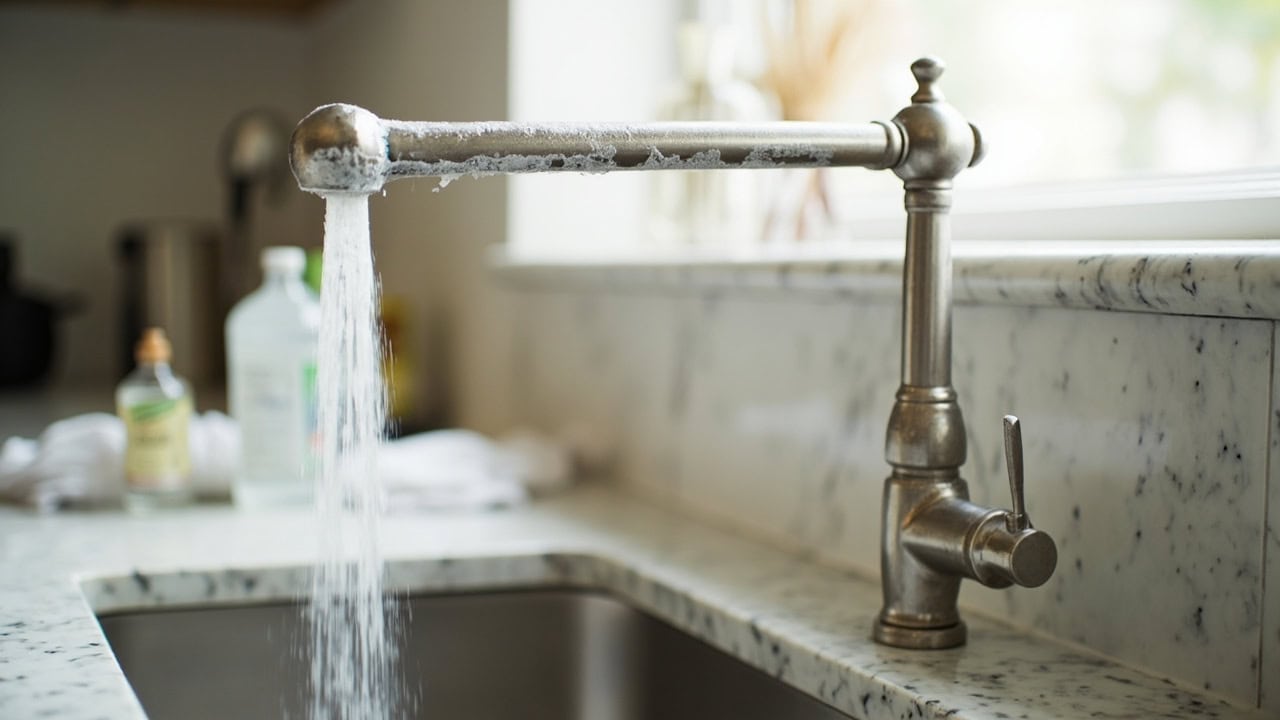
How to Remove Hard Water Deposits from Kitchen Faucet

Hard water deposits on a kitchen faucet are removed most effectively by applying undiluted white vinegar (5–8% acetic acid concentration) directly to the affected areas and allowing 15–30 minutes of dwell time before scrubbing gently with a soft cloth and rinsing with warm water. The acetic acid in vinegar, which registers at approximately pH 2.5, dissolves the calcium carbonate and magnesium carbonate minerals that constitute hard water deposits by converting them into soluble compounds that rinse away. According to the United States Geological Survey (USGS), approximately 85% of U.S. households have hard water containing elevated levels of dissolved calcium and magnesium, making mineral buildup on kitchen faucets one of the most widespread household cleaning challenges.
What Causes Hard Water Deposits on Kitchen Faucets
Hard water contains dissolved minerals — primarily calcium carbonate (CaCO₃) and magnesium carbonate (MgCO₃) — that remain on surfaces when water evaporates. The USGS classifies water hardness by concentration of calcium carbonate measured in milligrams per liter (mg/L): soft water contains 0–60 mg/L, moderately hard water contains 61–120 mg/L, hard water contains 121–180 mg/L, and very hard water exceeds 180 mg/L as CaCO₃. Homes supplied with hard or very hard water develop visible mineral deposits on plumbing fixtures far more rapidly than those with soft water.
On kitchen faucets, mineral buildup accumulates most heavily around aerators, handle bases, spray heads, and neck connections — any location where water pools or drips and then evaporates, leaving its dissolved mineral content behind. These hard water deposits first appear as a white or off-white chalky residue. As deposits age and accumulate additional mineral layers, they darken to a yellowish or brownish stain that becomes progressively more difficult to remove.
Kitchen faucets are particularly susceptible to hard water buildup due to their frequent daily use and constant water exposure. A typical household kitchen faucet is activated 50–100 times per day, each cycle leaving a thin mineral film that compounds over weeks and months. Beyond cosmetic damage, prolonged mineral exposure can cause dezincification in brass faucet components — a corrosion process where zinc selectively leaches from the brass alloy under certain water chemistry conditions, leaving behind a weak, porous copper-rich structure that compromises the faucet’s structural integrity. According to corrosion science reference data, conditions that favor dezincification include slightly acidic or alkaline water, low-flow conditions, elevated temperatures, and the presence of permeable surface deposits — exactly the environment that hard water creates inside faucet valves and fittings.
What You Need to Remove Hard Water Deposits
Gathering the right supplies before you start ensures an efficient cleaning process without pausing mid-task. The primary cleaning agent is distilled white vinegar at 5–8% acetic acid concentration — standard grocery store white vinegar works perfectly. For stubborn deposits that resist vinegar alone, baking soda provides a gentle abrasive when mixed into a paste with vinegar, creating a fizzing reaction that helps lift mineral deposits mechanically while the acid dissolves them chemically.
- Primary cleaning agent: Distilled white vinegar (5–8% acetic acid concentration, pH approximately 2.5)
- For stubborn deposits: Baking soda to create a gentle abrasive paste
- Tools: Soft microfiber cloths, old toothbrush or soft-bristled brush, dental pick for aerator cleaning
- Safety: Rubber gloves to protect hands from prolonged vinegar contact
- Optional: Commercial lime-scale remover specifically formulated for kitchen fixtures
- Rinse supplies: Warm running water, clean soft towel for drying
Step-by-Step: Remove Hard Water Deposits from Your Kitchen Faucet
Step 1: Prepare the Vinegar Solution
Pour undiluted distilled white vinegar into a small bowl or container. For regular maintenance cleaning on light deposits, you may dilute vinegar with water at a 1:1 ratio, but undiluted vinegar at full 5–8% acetic acid strength works best for established mineral buildup. Warm the vinegar slightly by microwaving it for 30 seconds if desired — warm vinegar (approximately 50°C) penetrates and dissolves calcium carbonate deposits more effectively than room-temperature vinegar because the dissolution reaction of CaCO₃ in acetic acid proceeds faster at elevated temperatures.
Step 2: Apply Vinegar to Deposits
Soak a clean microfiber cloth in the undiluted white vinegar and apply it directly to all areas of the faucet with visible hard water deposits. Ensure complete coverage of the aerator, handle base, neck connection, and any areas where water drips or pools after use. For stubborn deposits around joints, crevices, and the base of the faucet where it meets the sink, wrap vinegar-soaked paper towels around these areas and secure them with a rubber band to maintain contact.
Step 3: Allow Dwell Time
Let the vinegar sit on the deposits for 15–30 minutes without wiping or disturbing the treatment area. This dwell time is critical — the acetic acid needs sustained contact to break down the crystalline structure of calcium carbonate. The chemical reaction converts insoluble CaCO₃ into soluble calcium acetate, water, and carbon dioxide gas (visible as tiny bubbles on the deposit surface). Do not allow the vinegar to evaporate completely during this period; reapply fresh vinegar if the cloth dries out, particularly in warm or well-ventilated kitchens.
Step 4: Scrub Gently
After the dwell period, use a soft toothbrush or soft-bristled brush to scrub away the loosened deposits. Apply gentle pressure in circular motions, working from the outside edges of each deposit area toward the center. For textured or brushed faucet finishes — such as brushed nickel or stainless steel — scrub in the direction of the existing grain or finish pattern to avoid creating visible cross-scratches. Never use steel wool, abrasive scouring pads, or harsh scrubbers on any faucet finish, as these will permanently scratch chrome plating, nickel coatings, and stainless steel surfaces, creating microscopic grooves that trap minerals and make future cleaning more difficult.
For deposits that remain after the first vinegar treatment, make a paste by mixing baking soda with just enough vinegar to form a thick consistency. Apply this paste directly to the remaining deposits and let it sit for 10 minutes before scrubbing gently. The baking soda acts as a mild abrasive (Mohs hardness of approximately 2.5) that is softer than most faucet finishes, allowing it to lift deposits without scratching chrome, nickel, or stainless steel.
Step 5: Clean the Aerator
Remove the aerator from the faucet tip by unscrewing it counterclockwise — most aerators can be removed by hand, but a pair of pliers wrapped in a cloth may be needed if mineral buildup has seized the threads. Soak the disassembled aerator in a small container of undiluted white vinegar for 30–60 minutes. Use a dental pick or small brush to carefully remove any remaining mineral deposits from the tiny aerator screen holes. Rinse the aerator thoroughly with warm water, reassemble any internal components, and reinstall it by hand-tightening firmly clockwise. A clogged aerator restricts water flow and alters the spray pattern, so this step restores both function and appearance to your faucet.
Step 6: Rinse and Dry
Rinse all treated areas of the faucet thoroughly with warm running water to remove all vinegar residue and dissolved mineral particles. Vinegar left on the faucet surface can cause new spotting as it dries and may affect certain delicate finishes over extended contact. Dry the faucet completely with a clean, soft microfiber towel to prevent new water spots from forming immediately — remember that the minerals in your tap water are what caused the deposits in the first place, so leaving the faucet wet after cleaning partially restarts the accumulation cycle. Buff the faucet to a shine using a dry portion of the microfiber cloth for a spot-free finish.
How to Prevent Future Hard Water Buildup on Your Faucet
Preventing hard water deposits requires less effort than removing established buildup. The single most effective habit is wiping the faucet dry with a microfiber cloth after each use — this removes water before it can evaporate and leave mineral residue. For households in areas with hard or very hard water (above 120 mg/L CaCO₃), consider these additional preventive measures to keep your kitchen fixtures deposit-free.
- Wipe the faucet dry with a microfiber cloth after each use to prevent mineral deposits from forming as water evaporates
- Install a water softener or under-sink point-of-use water filter to reduce calcium and magnesium content at the source — this addresses the root cause rather than the symptom
- Perform weekly maintenance by wiping the entire faucet with a vinegar-dampened cloth, which dissolves thin mineral films before they accumulate into visible deposits
- Replace worn washers and valve seats in the faucet mechanism if dripping occurs — constant dripping accelerates mineral buildup by continuously depositing water on the faucet body and sink surface
- Apply a thin coat of automotive wax or a pH-neutral faucet protectant to create a hydrophobic barrier that causes water to bead and roll off rather than drying in place
Common Mistakes When Removing Hard Water Deposits
Even with the right cleaning agents, using incorrect tools or techniques can damage your faucet finish or make the problem worse. Avoid these common errors that homeowners frequently make when tackling hard water deposits on kitchen faucets and stainless steel sink surfaces.
Using Abrasive Tools
Steel wool, abrasive scouring pads, and rough scrubbers permanently scratch faucet finishes — particularly chrome plating, which is typically only 0.5–2 microns thick. These scratches create microscopic grooves that trap mineral deposits and accelerate future buildup, making each subsequent cleaning more difficult. Scratched chrome also exposes the underlying brass or zinc alloy to moisture, which can lead to pitting corrosion and eventual finish failure.
Using Bleach or Ammonia-Based Cleaners
Chlorine bleach and ammonia-based cleaners do not dissolve calcium carbonate or magnesium carbonate mineral deposits effectively — they are designed for organic stains and disinfection, not mineral removal. Worse, these chemicals can damage faucet finishes, particularly chrome and nickel plating, and may cause discoloration on specialty finishes like oil-rubbed bronze. Mixing bleach with acid-based cleaners (including vinegar) produces toxic chlorine gas — always use vinegar alone for mineral deposit removal.
Not Rinsing Thoroughly
Vinegar residue left on the faucet after cleaning can cause new spotting as it dries. The acetic acid residue also creates a slightly acidic surface film that may affect certain faucet finishes — particularly living finishes like unlacquered brass — over extended contact periods. Always rinse with generous amounts of warm water after any vinegar-based cleaning treatment.
Using CLR on Colored or Specialty Finishes
Commercial lime-scale removers containing hydrochloric acid (such as CLR, which contains lactic acid, glycolic acid, and hydrochloric acid) are highly effective at dissolving mineral deposits but can discolor or damage certain faucet finishes — particularly oil-rubbed bronze, brushed nickel with a clear coat, and colored enamel finishes. Always test any commercial cleaner on an inconspicuous area first and limit contact time to the manufacturer’s recommended duration.
Ignoring the Aerator
Deposits inside the aerator and faucet head reduce water flow and pressure even when the exterior of the faucet appears clean. A partially blocked aerator can reduce flow rate by 30–50%, forcing you to run the faucet longer to fill pots and containers — which in turn deposits more minerals on surrounding surfaces. Always include aerator cleaning as part of your hard water deposit removal routine.
Frequently Asked Questions
Q: Does vinegar damage kitchen faucet finishes?
A: White vinegar at 5–8% acetic acid concentration is safe for most kitchen faucet finishes including chrome, stainless steel, and nickel when used as directed with a maximum contact time of 30 minutes. Avoid leaving vinegar on the faucet for extended periods, and always rinse thoroughly with warm water after cleaning. Test any cleaning solution on an inconspicuous area first on custom, vintage, unlacquered brass, or oil-rubbed bronze finishes.
Q: How often should I remove hard water deposits from my kitchen faucet?
A: For faucets in hard water areas (above 120 mg/L calcium carbonate), remove visible deposits every 2–4 weeks with a vinegar treatment to prevent buildup from becoming severe. Weekly wiping with a vinegar-dampened cloth prevents deposits from accumulating to the point where soaking is required. Homes with very hard water (above 180 mg/L) may need treatment as frequently as every 1–2 weeks.
Q: Can I use lemon juice instead of vinegar to remove hard water deposits?
A: Lemon juice contains citric acid at approximately 5–8% concentration and can dissolve hard water deposits, but vinegar’s acetic acid is generally more effective at breaking down calcium carbonate minerals due to its stronger chelating action on calcium ions. Lemon juice works well for light deposits and leaves a pleasant citrus scent, but it typically requires more scrubbing effort and potentially multiple applications for stubborn mineral buildup.
Q: Why does my kitchen faucet keep getting hard water deposits even after cleaning?
A: Persistent hard water deposits indicate ongoing elevated mineral content in your water supply. According to USGS data, approximately 85% of U.S. homes have at least moderately hard water. The most effective long-term solution is installing a water softener or under-sink water filter specifically designed to reduce calcium and magnesium concentrations. Until a water treatment system is installed, frequent maintenance cleaning and wiping the faucet dry after each use will minimize accumulation.
References
- United States Geological Survey (USGS). (2018). Hardness of Water. USGS Water Science School.
- Brady, G.S. & Clauser, H.R. (1991). Materials Handbook, 13th Edition. McGraw-Hill Education. Reference data for dezincification of brass alloys.
- Corrosionpedia. (2024). Dezincification: Definition, Mechanism, and Prevention. Corrosionpedia.
- National Center for Biotechnology Information (NCBI). PubChem Compound Summary for Acetic Acid (CID 176). Acetic Acid. PubChem.


