
Surfactants Explained: How Dish Soap Cleans Grease

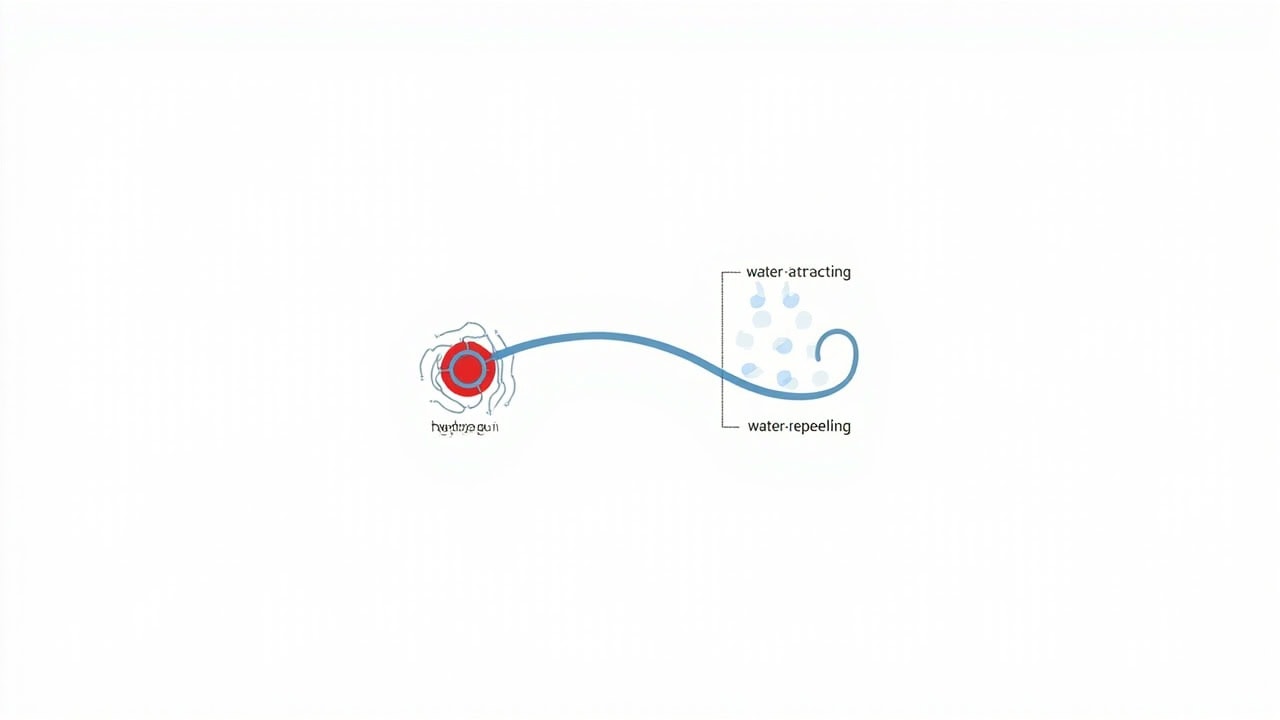
Surfactants are molecules with a hydrophilic water-attracting head and a hydrophobic water-repelling tail that work together to break down grease — in dish soap, they form micelles that encapsulate oily particles and suspend them in wash water. This dual nature allows surfactants to bridge the gap between water and oil-based soils that would otherwise repel each other. The cleaning effectiveness of dish soap depends directly on surfactant concentration, water temperature, and the specific grease load being tackled.
What Are Surfactants? The Dual-Nature Molecule
Surfactants — short for surface-active agents — are organic compounds engineered with a split personality at the molecular level. One end of each surfactant molecule is hydrophilic, meaning it is strongly attracted to water, while the opposite end is hydrophobic, meaning it actively repels water and instead binds to oils and fats. This amphiphilic structure is the single characteristic that gives surfactants their remarkable cleaning power, and it is the reason dish soap can dissolve grease that plain water cannot touch.
The hydrophilic head is typically a polar or ionic group — often a sulfate, carboxylate, or glucose derivative — while the hydrophobic tail is a long hydrocarbon chain usually derived from petroleum or plant-based fatty acids. When these molecules dissolve in water, they orient themselves so that the heads remain in contact with water molecules and the tails point away from the aqueous phase, positioning themselves at the boundary between water and any oily surface.
Common surfactants found in household dish soap include sodium lauryl sulfate (SLS), an anionic surfactant with the chemical formula C₁₂H₂₅SO₄Na; sodium laureth sulfate (SLES), a closely related compound with an ethoxylation group that makes it gentler on skin; and alkyl polyglucosides, a class of nonionic surfactants derived from coconut or palm oil and glucose. Natural alternatives include saponins extracted from soapwort root and yucca plants, which indigenous cultures have used for cleaning for centuries.
The concentration and blend of these surfactants determine a dish soap’s overall cleaning performance. Most commercial dish soaps contain a mixture of two or more surfactant types, combining anionic surfactants for strong grease cutting with nonionic surfactants for better performance in hard water. For a broader understanding of how chemical properties affect cleaning, see our Cleaning Chemistry Hub.
The Chemistry: How Surfactants Break Down Grease
Grease and cooking oils are non-polar, hydrophobic substances that naturally repel water. When you run water over a greasy plate, the water beads up and rolls off without dissolving the oily film because water molecules are polar — they cannot penetrate the non-polar grease layer. This is the fundamental barrier that surfactants are designed to overcome.
When dish soap is added to water, surfactant molecules migrate to the water-grease interface. Each molecule orients itself so that its hydrophobic tail embeds into the grease droplet while its hydrophilic head remains in the water phase. As more surfactant molecules accumulate at this boundary, they begin to surround the grease droplet entirely, forming a spherical structure known as a micelle — a grease particle encapsulated within a water-soluble shell of surfactant heads pointing outward.
Micelle formation begins at a specific concentration threshold called the critical micelle concentration (CMC). Below the CMC, surfactant molecules act individually and cleaning power is limited. Once the CMC is reached — typically 0.01 to 0.1 percent concentration for common dish soap surfactants — micelles form spontaneously and cleaning effectiveness increases dramatically. For sodium lauryl sulfate, the CMC in pure water at 25°C (77°F) is approximately 8.2 millimolar, or roughly 0.24 percent by weight.
As you scrub and agitate the dish surface, mechanical action helps surfactants penetrate further into the grease layer, continuously forming new micelles that break the grease into smaller and smaller droplets. These micelles remain suspended in the wash water rather than redepositing on the dishes, because the hydrophilic outer shell creates a stable colloidal dispersion. When you rinse with clean water, the suspended micelles — and the grease trapped inside them — are carried away down the drain.
This micellar encapsulation mechanism is distinct from the enzymatic breakdown approach covered in our article on how enzymatic cleaners work. Surfactants physically remove grease without chemically altering it, whereas enzymes catalyze the breakdown of specific molecular bonds in fats, proteins, and carbohydrates. The two mechanisms can complement each other when combined in a single cleaning formulation.
What Surfactants Work On — Grease, Oils, and Food Residues
Surfactants in dish soap are effective against a broad range of common kitchen soils. Their primary targets are fats and oils — animal fats such as bacon grease and lard residues, vegetable oils including olive oil and canola oil, and butter and margarine residues left on cookware and plates. These non-polar substances are exactly the type of soil that surfactant micelles are designed to encapsulate and remove.
Beyond pure fats and oils, surfactants also handle protein-rich food residues that combine with grease, such as egg, melted cheese, and milk films on glassware. While surfactants do not break peptide bonds in proteins the way enzymatic cleaners do, they can emulsify the oily component of these mixed soils and loosen the protein matrix enough for mechanical action to remove it. Food particulates baked onto dishes alongside oily sauces — such as lasagna residue or stir-fry remnants — respond well to surfactant-based cleaning when combined with warm water and a scrubbing pad.
Some food dyes that are bound to oily carriers can also be removed by surfactant action, since the micelle encapsulation process carries away both the oil and the pigment dissolved within it. Turmeric-based curry stains, for example, contain curcumin molecules that are lipophilic and respond to surfactant-based degreasing.
Water temperature plays a significant role in surfactant performance. Warmer water — specifically in the range of 100 to 120°F (38 to 49°C) — reduces the viscosity of fats and oils, making them more fluid and easier for surfactant molecules to penetrate. At refrigerator temperatures, bacon fat is a semi-solid mass that resists emulsification; at 110°F, the same fat becomes a thin liquid that surfactants can break apart readily. This thermal effect is one reason why warm dishwater cleans noticeably better than cold for greasy loads.
Soil load also affects how well surfactants perform. Heavily soiled items — a roasting pan coated with baked-on fat, for instance — may require a pre-rinse to remove excess bulk soil, a direct application of concentrated dish soap, and several minutes of dwell time before scrubbing. Lighter loads, such as everyday plates and glasses, clean effectively with standard dilution ratios and minimal agitation. For more on how chemical properties influence these outcomes, see our guide to pH in cleaning.
What Surfactants Do NOT Work On — Limitations and Counterindications
Surfactants are powerful cleaning agents, but they have clear boundaries. Hard water minerals — primarily calcium and magnesium ions — can react with anionic surfactants to form insoluble precipitates, reducing the effective surfactant concentration and leaving a filmy residue on dishes. In areas with water hardness above 7 grains per gallon (approximately 120 parts per million calcium carbonate), dish soap performance drops noticeably unless a water softener or builder is added to the formulation.
Starchy residues from potatoes, pasta, and rice present a different challenge. Surfactants have minimal chemical interaction with carbohydrates because starch molecules are polar and water-soluble — they do not have the non-polar character that surfactant tails seek out. Starchy films on pots and pans are better removed by soaking in hot water to dissolve the gelatinized starch, followed by mechanical scrubbing, rather than relying on surfactant action alone.
Burnt-on carbon deposits — the blackened, charred layer on the bottom of a neglected frying pan — require mechanical abrasion or specialized cleaners rather than surfactant chemistry. Carbon is elemental and inert; it does not respond to the emulsification process that works on organic fats and oils. Similarly, heavy grease buildup in kitchen drains is often beyond the reach of dilute dish soap solutions and may require enzymatic drain treatments or caustic soda-based drain cleaners that generate heat to melt and saponify the accumulated fat.
Mineral stains such as rust (iron oxide) and limescale (calcium carbonate) require acid-based cleaners or chelating agents, not surfactants. These inorganic deposits do not have the hydrophobic molecular structure that surfactant tails can bind to. For kitchen-specific mineral stain guidance, see our Kitchen Cleaning Hub.
The most critical safety limitation involves mixing dish soap with bleach. Many dish soaps contain ammonia-based compounds, fragrances, or nitrogen-containing surfactants. When these ingredients contact sodium hypochlorite (the active agent in household bleach), the reaction produces chloramine gas — a toxic respiratory irritant that causes coughing, chest tightness, watery eyes, and at elevated concentrations can lead to pulmonary edema. Never combine dish soap with bleach or use them sequentially on the same surface without a thorough rinse in between.
Safety Considerations When Using Dish Soap
Most commercially available dish soaps are formulated for safe, routine skin contact during hand washing. The surfactant concentrations in typical consumer products range from 10 to 30 percent in the concentrate, which is then diluted substantially during use. However, prolonged or repeated exposure — such as washing dishes multiple times a day without gloves — can strip natural oils from the skin, leading to dryness, irritation, and contact dermatitis over time. Wearing rubber gloves during extended dishwashing sessions is a straightforward preventive measure.
Ventilation is important when cleaning in enclosed spaces, particularly when using concentrated dish soap for heavy-duty degreasing tasks such as cleaning a greasy range hood or oven interior. While dish soap vapors themselves are not hazardous, the grease particles aerosolized during aggressive scrubbing can be irritating to the respiratory tract. Open a window or run the kitchen exhaust fan when tackling large degreasing projects.
If dish soap contacts the eyes, flush immediately with clean, lukewarm water for at least 15 minutes. Surfactant irritation to the eye’s mucous membranes can cause stinging, redness, and temporary blurred vision. If irritation persists after flushing, seek medical attention. Spilled concentrated dish soap on floors creates a significant slip hazard — clean spills immediately with water and dry the surface thoroughly.
Keep dish soap out of reach of children. Even mild surfactant formulations can cause nausea, vomiting, and stomach upset if ingested. The American Association of Poison Control Centers reports that household cleaning products, including dish soaps, are among the most common substances involved in pediatric exposure calls. Store products in their original containers with intact labels and child-resistant closures where available.
Dilution Ratios and Application Methods for Optimal Cleaning
The standard dilution for everyday dishwashing is 1 to 2 drops of dish soap per gallon of warm water, producing a concentration of approximately 0.02 to 0.05 percent surfactant — well above the critical micelle concentration for most dish soap formulations. This dilution provides sufficient micelle density to handle typical meal residue on plates, glasses, and cutlery without excessive foaming or waste.
For heavily soiled items — roasting pans with baked-on grease, pots with stubborn sauce residue — apply a small amount of full-strength dish soap directly to the soiled surface and let it sit for 2 to 5 minutes before scrubbing. This dwell time allows surfactant molecules to penetrate and begin emulsifying the grease before mechanical action is applied. For extremely stubborn deposits, fill the pan with hot water, add a tablespoon of dish soap, and soak for 15 to 30 minutes.
Water temperature should be maintained between 100 and 120°F (38 to 49°C) for optimal surfactant performance. This range is hot enough to lower grease viscosity without risking thermal degradation of the surfactant molecules themselves — water temperatures above 140°F (60°C) can begin to denature certain surfactant blends, particularly those containing protein-derived additives or enzymatic components. Use a thermometer or test the water with your wrist; it should feel warm but not scalding.
Mechanical action — scrubbing, brushing, and agitation — significantly enhances surfactant performance by continuously exposing fresh grease surfaces to surfactant molecules. Without agitation, surfactants can only act on the outermost layer of a grease deposit. A dish brush, sponge with scrubbing side, or steel wool pad for tough jobs renews the water-soil interface and accelerates micelle formation with each stroke.
For degreasing applications beyond dishwashing — cleaning greasy kitchen walls, range hood filters, or outdoor grill surfaces — increase the concentration to 1 to 2 percent surfactant. This roughly equates to 1 tablespoon of dish soap per quart of warm water. Soft water improves surfactant efficiency by eliminating the calcium and magnesium ions that interfere with anionic surfactants. In hard water areas, either install a water softener or increase the soap volume by approximately 50 percent to compensate for the surfactant lost to mineral precipitation.
The following table summarizes the recommended dilution ratios for common dish soap cleaning tasks:
| Application | Dish Soap Amount | Water Volume | Approximate Concentration |
|---|---|---|---|
| Standard dishwashing | 1–2 drops | 1 gallon | 0.02–0.05% |
| Heavy soil pre-treat | Full strength (direct) | N/A (apply directly) | 10–30% |
| Soaking baked-on food | 1 tablespoon | 1 quart | ~1–2% |
| Kitchen degreasing | 1 tablespoon | 1 quart | ~1–2% |
| General surface cleaning | 1 teaspoon | 1 quart | ~0.2–0.5% |
Frequently Asked Questions
Q: What is the active ingredient in dish soap that cleans grease?
A: The active cleaning agents in dish soap are surfactants — specifically a blend of anionic and nonionic surfactants like sodium lauryl sulfate and alkyl polyglucosides. These molecules have hydrophilic heads that bind water and hydrophobic tails that bind oils, allowing them to surround and lift grease particles away from surfaces into the wash water.
Q: Why does warm water clean greasy dishes better than cold water?
A: Warm water (100–120°F / 38–49°C) reduces the viscosity of grease, making it more fluid and easier for surfactant molecules to penetrate and break apart oily deposits. Cold water keeps grease solid and viscous, requiring significantly more surfactant and mechanical scrubbing to achieve the same cleaning result.
Q: Can you use dish soap as a general household cleaner on all surfaces?
A: Dish soap works well on most washable hard surfaces including countertops, stovetops, and appliance exteriors. However, it should not be used on unsealed wood, antique furniture, natural stone countertops like marble or granite that require pH-specific cleaners, or surfaces that contact food directly unless rinsed thoroughly afterward. Always test on an inconspicuous area first.
Q: Why should you never mix dish soap with bleach?
A: Mixing dish soap with bleach can release chloramine gas, a toxic respiratory irritant that causes coughing, chest tightness, and watery eyes. In high concentrations, chloramine exposure can lead to pulmonary edema. This reaction also reduces the cleaning and disinfecting effectiveness of both products. Always rinse surfaces thoroughly between using different cleaning products.
References
- Rosen, M. J., & Kunjappu, J. T. (2012). Surfactants and Interfacial Phenomena. John Wiley & Sons.
- National Center for Biotechnology Information. (2024). Sodium Dodecyl Sulfate Compound Summary. PubChem.
- Agency for Toxic Substances and Disease Registry. (2023). Toxicological Profile for 2-Butoxyethanol and 2-Butoxyethanol Acetate. U.S. Department of Health and Human Services.
- U.S. Environmental Protection Agency. (2024). Safer Choice Standard for Surfactants. EPA.
- Holmberg, K., Jönsson, B., Kronberg, B., & Lindman, B. (2002). Surfactants and Polymers in Aqueous Solution. John Wiley & Sons.
- American Association of Poison Control Centers. (2023). Annual Report: Pediatric Exposure Data. AAPCC.


