
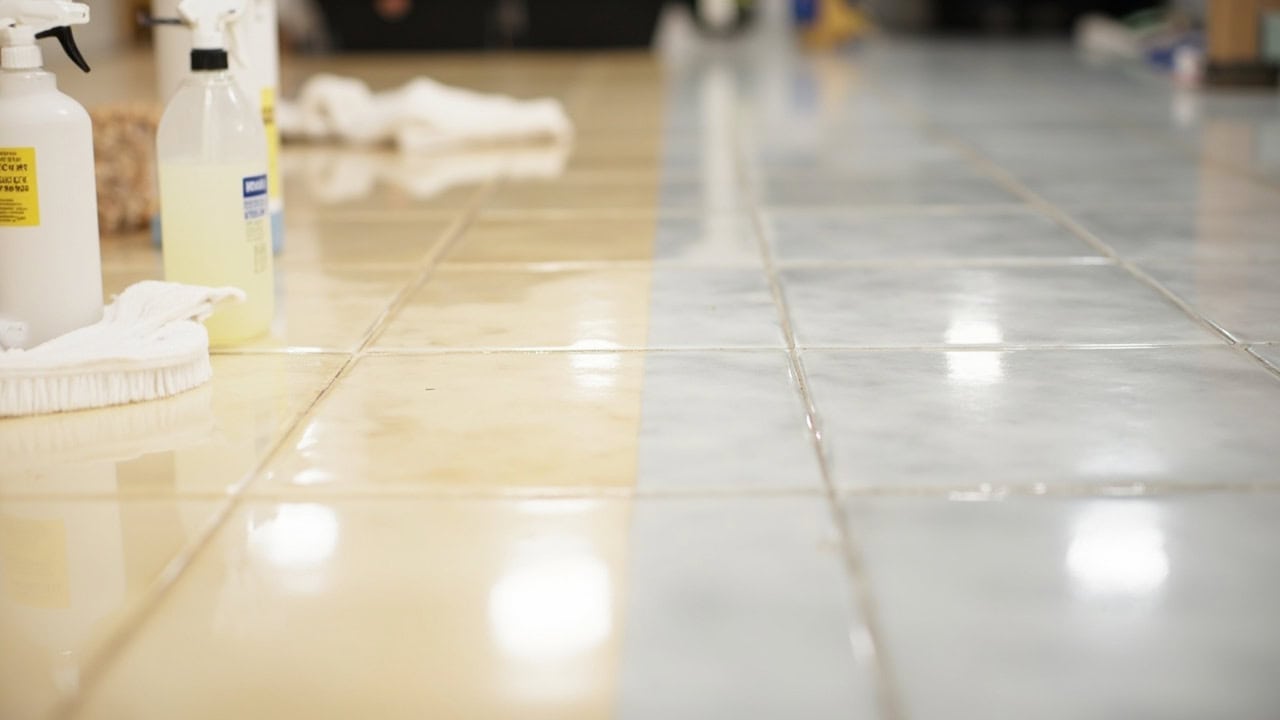
How to Remove Grout Haze from Tile Floors

Grout haze is removed from tile floors by applying a mild acidic solution—such as undiluted white vinegar or a commercial grout haze remover—directly to the affected area, allowing 2–5 minutes of dwell time, scrubbing with a soft-bristle brush, and rinsing thoroughly with clean water. The acid dissolves calcium carbonate compounds in dried grout residue through a neutralization reaction that breaks the bond between the haze and the tile surface. Never use harsh acids like hydrochloric acid on natural stone tiles, as they cause permanent etching damage.
What Is Grout Haze and Why Does It Form?
Grout haze is a thin film of dried grout residue left on tile surfaces after installation. It forms when excess grout is not fully cleaned before it cures, typically within 24–72 hours of application. The haze is composed primarily of calcium carbonate and cement compounds that bond to tile surfaces through a micro-mechanical adhesion process.
Grout haze is most pronounced on polished, glossy, or non-porous tiles where the film is visually apparent as a dull, whitish coating. On natural stone tiles such as marble or travertine, the haze can be particularly noticeable because it mutes the stone’s natural shine. The critical removal window is within the first week after installation—beyond 7–14 days, the grout fully crystallizes and the haze becomes permanent, requiring professional intervention or, in severe cases, tile replacement.
What Removes Grout Haze from Tile Floors?
White vinegar undiluted (5% acetic acid, pH 2.4–2.5) is the primary DIY solution for light grout haze on ceramic and porcelain tiles. The acetic acid neutralizes calcium carbonate through an acid-base reaction, converting the hard mineral residue into water-soluble compounds that can be wiped away. For light haze, a single application with 2–5 minutes of dwell time is typically sufficient.
Heavy or older haze requires commercial grout haze removers formulated with 2–5% phosphoric acid or sulfamic acid. These products operate in the pH 1.0–4.0 range and are significantly more effective at dissolving baked-on calcium carbonate deposits. Phosphoric acid is preferred because it forms a protective iron phosphate coating on steel surfaces, reducing corrosion risk, while sulfamic acid offers excellent descaling performance without emitting strong fumes.
| Product Type | Acid Concentration | pH Range | Best Use Case |
|---|---|---|---|
| White vinegar (5% acetic acid) | 5% acetic acid | 2.4–2.5 | Light haze, ceramic and porcelain tiles |
| Commercial grout haze remover | 2–5% phosphoric or sulfamic acid | 1.0–4.0 | Heavy haze, cured grout residue |
| Phosphoric acid-based cleaner | 5–10% | 1.0–2.0 | Stubborn haze on porcelain and stone |
Application requires a spray bottle for even distribution, a soft-bristle scrub brush or white scrub pad (never steel wool), microfiber mop for rinsing, and two clean water buckets—one for the dissolved residue and one for fresh rinse water. Always test any acid-based cleaner on an inconspicuous tile before full application, particularly on natural stone surfaces which are vulnerable to acid etching.
Why Grout Haze Bonds to Tile Surfaces
Fresh grout contains water and fine cement particles that fill the microscopic pores and surface roughness of adjacent tiles during installation. As grout cures through a hydration reaction—where cement compounds react with water to form calcium silicate hydrate (C-S-H) crystals—the interlocking crystals bond mechanically with the micro-roughness of the tile surface.
On non-porous tiles such as glazed ceramic or polished porcelain, the grout residue dries as a continuous thin film rather than penetrating into the tile body. This film is primarily held by physical (micro-mechanical) adhesion rather than a chemical bond, which is why acid-based dissolution is so effective—the acid breaks the calcium carbonate down into soluble compounds that can be rinsed away.
The critical factor is timing. During the first 24–72 hours after grouting, the cement hydration reaction is still incomplete and the bond is relatively weak. Removing haze during this window using a mild acid like vinegar disrupts the nascent crystal structure before it fully develops. After 7–14 days, the hydration reaction reaches ~90% completion, and the haze becomes permanently integrated with the tile surface through the crystalline cement matrix.
What NOT to Use on Tile Floors
Hydrochloric acid (also called muriatic acid) is too strong for tile cleaning and permanently etches natural stone such as marble, granite, and travertine. While it dissolves calcium carbonate rapidly, the aggressive pH (below 1.0) destroys the polish and surface integrity of stone tiles beyond recovery. Reserve hydrochloric acid for heavy-duty masonry restoration on exterior surfaces only.
Steel wool, metal brushes, and coarse abrasive powders scratch ceramic, porcelain, and especially natural stone surfaces. Even on durable porcelain tiles, metal scratches create microscopic grooves that collect dirt and moisture, leading to premature degradation. A soft-bristle brush or white nylon scrub pad provides sufficient mechanical action without damaging surfaces.
Bleach and ammonia do not dissolve calcium carbonate—the primary mineral in grout haze. These chemicals may bleach the visual appearance of the haze, making it appear less noticeable, but they leave the underlying calcium carbonate intact. Using bleach on grout can also produce harmful chloramine gas when combined with other cleaning agents.
Excess water during cleaning can re-wet grout lines and cause efflorescence—the deposition of white mineral salts (primarily calcium carbonate) on the tile surface as water evaporates. This creates a new haze problem distinct from the original grout residue and requires a different treatment approach. Use minimal water and dry the surface thoroughly after each rinse.
Step-by-Step Grout Haze Removal Process
- Prepare the area — Remove loose debris and dry-sweep or vacuum the tile floor thoroughly to eliminate any sand, dust, or construction particles that could scratch the surface during scrubbing.
- Test the cleaner — Apply a small amount of vinegar or commercial grout remover to an inconspicuous tile in a corner or closet; wait 2 minutes, scrub gently, and rinse. Inspect for etching, dulling, or discoloration before proceeding.
- Apply the acid solution — Spray undiluted white vinegar (5% acetic acid) or commercial grout haze remover generously over a 3×3 foot section. Do not apply to the entire floor at once—the acid solution must not be allowed to evaporate completely before rinsing.
- Allow dwell time — Let the solution sit for 2–5 minutes without drying. The acid requires contact time to dissolve calcium carbonate compounds. If the area begins to dry, mist lightly with additional solution.
- Scrub gently — Use a soft-bristle brush or white scrub pad in circular motions across the hazy areas. Apply moderate pressure—the goal is to agitate dissolved residue, not to abrade the tile surface.
- Rinse thoroughly — Mop up the dissolved residue with a clean, wrung microfiber mop or clean towels. Rinse the mop frequently in a bucket of clean water. Residue left behind can re-deposit as a new haze layer.
- Dry and inspect — Use a clean, dry microfiber mop or absorbent towels to dry the tile surface. Check for any remaining dull areas or haze bands, particularly in grout joints and tile corners.
- Repeat if necessary — For stubborn haze that persists after the first application, repeat the process. Old or heavy haze may require a commercial grout haze remover with higher acid concentration (5–10% phosphoric acid).
- Final rinse — Perform one last clean water rinse over the entire floor to remove any lingering acid residue. This prevents future efflorescence and protects the grout from acid degradation over time.
Work in small 3×3 foot sections to prevent the acid solution from drying before you can scrub and rinse. Maintain adequate ventilation throughout the process—while vinegar is mild, commercial acid-based removers emit fumes that require good air circulation. Wear chemical-resistant gloves if using commercial products, and never mix acid-based cleaners with bleach or ammonia.
How to Prevent Grout Haze on Future Tile Installations
Prevention begins during installation. Remove excess grout with a damp sponge as you work—do not allow grout to build up or dry in thick layers on the tile surface. The damp sponge method keeps grout residues in a soluble state that wipes away cleanly before the hydration reaction progresses.
Perform a final wash with fresh water and a clean sponge within 24–72 hours of grouting, once the grout has set sufficiently to resist smearing. This final wash removes any remaining laitance (the weak, milky layer of cement and sand that rises to the surface) before it can bond permanently to the tile face.
For porous natural stone tiles such as marble, travertine, or limestone, apply a pre-grout sealer or grout release product before installation. These products create a temporary barrier that prevents grout from adhering to the stone surface, making post-installation cleanup significantly easier. Test the grout release on a sample tile first to confirm it does not affect the stone’s color or finish.
After grout fully cures—typically 72 hours for most cement-based grouts—apply a penetrating grout sealer to the grout lines. Sealed grout repels water and stains, simplifies routine cleaning, and prevents future efflorescence by blocking water penetration into the grout body. Reapply grout sealer annually or as recommended by the manufacturer for high-traffic wet areas like bathrooms and entryways.
Common Mistakes When Removing Grout Haze
Waiting too long is the most frequent cause of permanent grout haze. Once the cement hydration reaction completes beyond 7–14 days after installation, the calcium carbonate compounds become fully integrated into a crystalline matrix that mild acids can no longer penetrate effectively. The window for easy removal closes quickly—address haze within the first week for best results.
Using the wrong acid type—specifically muriatic or hydrochloric acid—damages stone tiles permanently. These strong acids etch marble, travertine, and limestone by dissolving the calcium carbonate in the stone itself, creating dull spots and surface pitting that cannot be polished out without professional stone restoration.
Scrubbing too aggressively with steel wool, metal brushes, or coarse pads damages grout lines (causing chipping and recession) and scratches polished or glazed tile surfaces. Use soft-bristle brushes or white nylon pads only. Let the acid do the work—the chemical dissolution is far more effective than mechanical force.
Not rinsing adequately leaves cleaning product residue on the tile surface, which itself creates a visible film. Change rinse water frequently and perform at least two clean-water passes over each section. Residue left behind can also attract and trap dirt, causing the haze to reappear quickly.
Working on too large an area causes the acid solution to dry before you can scrub and rinse. This is especially problematic in warm climates, low-humidity environments, or when working near heating vents and direct sunlight. Keep sections small (3×3 feet maximum) and work systematically across the floor.
Drying and Finishing Tile Floors After Haze Removal
After the final rinse, use a clean, dry microfiber mop to absorb excess water from tile surfaces. Microfiber’s high absorbency (up to 20 times its weight in water) draws moisture from both the tile face and grout joints more effectively than traditional cotton mops or towels.
Buff polished tiles with a soft, dry cloth once the surface has dried to a damp state—this restores the mirror-like reflection by removing any remaining water spots or mild residue. Work in circular motions and switch to a fresh cloth section frequently.
Ensure grout lines are fully dry before applying any grout sealer product. Applying sealer to damp grout traps moisture beneath the sealant, leading to premature failure, peeling, and potential efflorescence beneath the sealer layer. In most conditions, 24–48 hours of drying time after cleaning is sufficient before sealing.
Open windows or use fans to improve ventilation and accelerate drying. Maintain room temperature above 50°F (10°C) for proper grout cure and sealer adhesion. Restrict foot traffic on freshly cleaned and sealed tiles for a minimum of 24 hours—full cure for grout sealer can take up to 72 hours before the surface tolerates heavy use.
Frequently Asked Questions
Q: Will vinegar damage my tile floors when removing grout haze?
A: White vinegar (5% acetic acid) is safe for ceramic and porcelain tiles but may dull the finish on natural stone like marble or travertine. Always test on an inconspicuous area first and rinse thoroughly after use.
Q: Can I remove grout haze that has been there for months?
A: Yes, but it requires a stronger commercial grout haze remover with phosphoric acid or sulfamic acid. Light haze may respond to repeated vinegar applications. Very old, baked-on haze on porous tiles may require professional cleaning or replacement.
Q: Why does my grout still look hazy after cleaning?
A: Persistent haze may indicate efflorescence (mineral deposits rising from within the grout), leftover cleaning residue, or etching on the tile surface itself. If rinsing and re-cleaning does not resolve it, the haze may be permanent and require professional restoration.
Q: Should I seal my grout after removing haze?
A: Yes, applying a grout sealer 72 hours after complete curing helps prevent future haze buildup, staining, and water penetration. It also makes routine cleaning easier and extends the life of your grout lines.
References
- Portland Cement Association. (n.d.). Grout and Tile Installation Standards. https://www.cement.org
- National Tile Contractors Association. (n.d.). Ceramic Tile Standards and Installation Guidelines. https://www.ntca.org
- ASTM International. (n.d.). Standard Specification for Grout for Masonry (ASTM C476). https://www.astm.org


