
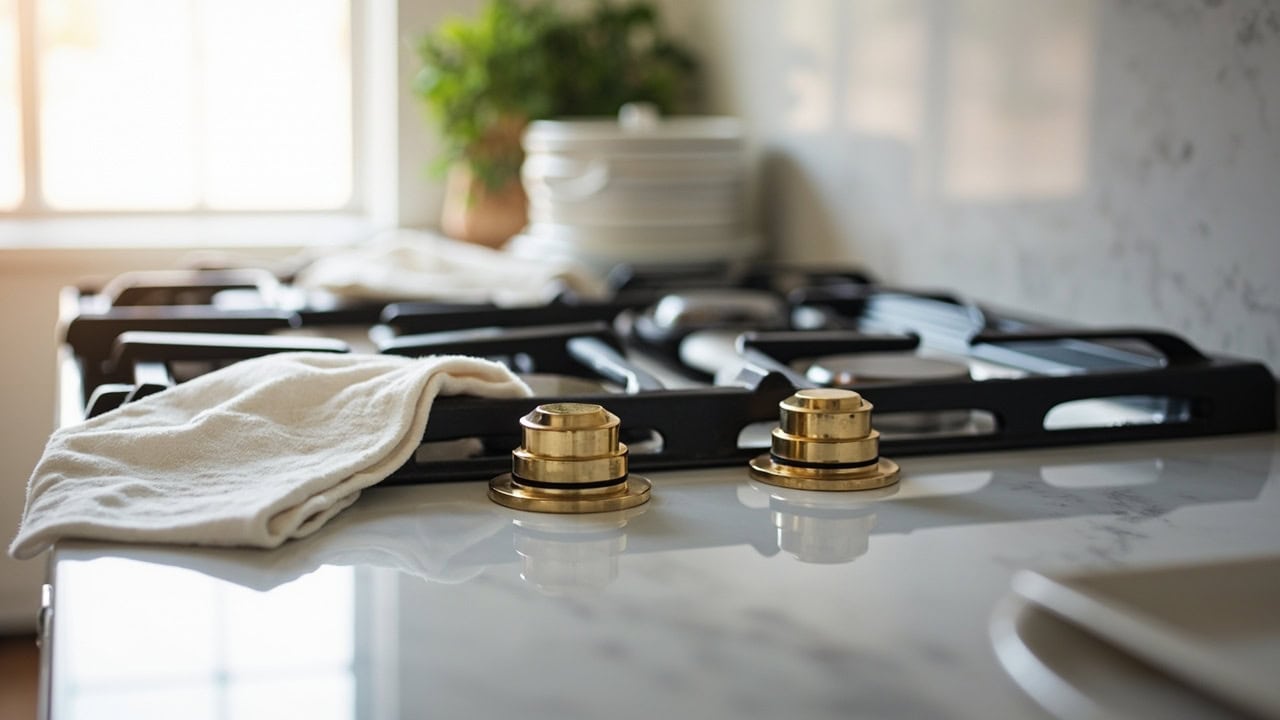
How to Clean a Gas Stove: Complete Guide

A gas stove must be cleaned every one to two weeks by removing burner grates and caps, applying a baking soda paste at a 3:1 ratio to loosened debris, scrubbing with a soft nylon brush, and wiping surfaces with a pH-neutral degreaser diluted at 1:10. Acid-based cleaners cause enamel etching on porcelain surfaces, and bleach-based products degrade rubber gas seals — making proper product selection critical for safe, effective gas stove maintenance.
The stovetop surface should be wiped daily with a damp microfiber cloth to prevent grease polymerization, a chemical process where airborne grease particles bond permanently to enamel and metal surfaces at temperatures above 150°C (302°F) during cooking. Once grease polymerizes, it forms a tough, amber-colored film that standard dish soap cannot dissolve and that requires alkaline cleaning agents to break down. All removable components — burner grates, caps, and control knobs — should be soaked weekly in hot soapy water for 10 to 15 minutes to dissolve accumulated grease before scrubbing.
What You Need Before You Start
Gathering the right supplies before you begin prevents mid-clean trips to the cabinet and ensures you never reach for a damaging product in a rush. Gas stove surfaces — particularly porcelain enamel and stainless steel — are vulnerable to scratches and chemical damage from the wrong tools or cleaners. Each item below serves a specific purpose in the eight-step cleaning process.
- Soft nylon scrub brush or old toothbrush — for crevices around burner bases and between grate bars where grease accumulates
- Baking soda — the primary cleaning agent; its mild alkalinity (pH 8.3) dissolves acidic grease deposits without damaging enamel or metal surfaces
- Distilled white vinegar — a grease-cutting rinse and descaler when diluted to a 1:10 ratio with water; never apply at full strength to enamel
- Dish soap — a pH-neutral, grease-cutting formula with surfactant action that breaks down cooking oil residues in the soaking bath
- Microfiber cloths (2–3) — one for applying cleaner, one for rinsing, and one for drying; microfiber lifts grease rather than spreading it across the surface
- Small bowl or container — for soaking removable parts in hot soapy water at approximately 1 tablespoon dish soap per gallon
- Rubber gloves — to protect hands from grease, residual cleaning agents, and hot water during the soak
- Paper towels or old newspaper — for protecting the countertop area around the stovetop from runoff during cleaning
Understanding the chemistry behind these supplies helps you use them effectively. Baking soda’s mild alkalinity reacts with acidic cooking residues to break them down at the molecular level — the Cleaning Chemistry Hub explains this reaction and other cleaning science fundamentals in detail. Dish soap contains surfactants that lower the surface tension of water, allowing it to penetrate and lift grease films that water alone cannot dissolve.
Step-by-Step Gas Stove Cleaning Process
This eight-step procedure takes approximately 15 minutes for a standard four-burner gas stove. The process is designed to clean every component safely while protecting enamel finishes, rubber seals, and gas delivery parts. Each step builds on the previous one, so follow the sequence in order for the best results.
- Turn off all gas burners and allow the stovetop to cool completely. Never clean a warm or hot surface — residue bakes onto the enamel when heated, and cleaning agents lose their effectiveness above 40°C (104°F). Wait at least 30 minutes after cooking before starting the cleaning process to ensure the surface is safe to touch and the cleaning products will work as intended.
- Remove all removable components. Lift off the burner grates, burner caps, and knobs from each burner. Place them in a large bowl or sink filled with hot soapy water at a ratio of 1 tablespoon dish soap per gallon of water. Let them soak for 10 to 15 minutes — this dwell time allows the surfactants to penetrate and loosen polymerized grease that has bonded to the metal surfaces, making it far easier to remove in the scrubbing step.
- Wipe down the stovetop surface. Use a damp microfiber cloth to remove loose debris, crumbs, and surface grease. For stuck-on residue, apply a paste of baking soda and water at a 3:1 ratio (three parts baking soda to one part water) directly to the affected areas. Let the paste sit for 5 to 10 minutes to penetrate the polymerized grease layer — the alkaline baking soda reacts with acidic cooking residues to break the bond between the grease and the enamel surface.
- Scrub the stovetop surface. Using a soft nylon brush or non-abrasive scrubbing pad, work in circular motions to lift the loosened debris. For stubborn spots that resist the first pass, apply additional baking soda paste and let it penetrate for another 5 minutes before scrubbing again. Avoid steel wool, abrasive scouring pads, or stiff brushes — these scratch enamel surfaces and create microscopic grooves where future grime accumulates more rapidly, accelerating the cycle of buildup.
- Clean the burner ports and igniter. Dampen a cotton swab with diluted vinegar (1:10 ratio) and gently clean the gas ports on each burner head to ensure no debris blocks gas flow. Use a dry cotton swab to clean the spark igniter electrode tip — never insert metal objects such as pins or paperclips near the igniter, as they can damage the fragile ceramic insulation that prevents electrical shorts. For a detailed walkthrough of burner component cleaning, see our guide on how to clean stovetop burners.
- Rinse and wipe the surface. Dampen a clean microfiber cloth with fresh water and wipe all cleaning residue from the stovetop. Baking soda leaves a white film if not fully rinsed, so make two passes with the damp cloth to ensure complete removal. Follow immediately with a dry microfiber cloth to prevent water spots or mineral filming on the enamel surface.
- Clean the removed components. After the 10 to 15 minute soak, scrub the burner grates and caps with a soft nylon brush to remove all remaining residue. Pay particular attention to the underside of the grates where grease pools and carbonizes during cooking. Rinse thoroughly under running water to remove all soap residue, then dry each component completely with a microfiber cloth before reassembly — moisture on gas connections is a safety hazard that can cause corrosion and irregular flame patterns.
- Reassemble and test. Place all burner grates, caps, and knobs back in their correct positions, ensuring each cap sits flush against its burner base. Turn on each burner individually and observe the flame — a clean, properly functioning burner produces a steady blue flame with a well-defined inner cone. A yellow or orange flame indicates a blocked gas port that requires additional cleaning.
Gas Stove-Specific Considerations
What to Avoid When Cleaning a Gas Stove
Never submerge gas valves, igniter tips, or burner bases in water. These components contain precision-machined brass fittings and rubber O-rings that maintain gas-tight seals throughout the delivery system. Water intrusion causes corrosion of internal gas components and dezincification of brass fittings — a process where zinc selectively leaches out of the copper-zinc alloy, leaving a weak, porous copper structure that can develop gas leaks over time. If water does contact these components accidentally, dry them thoroughly with a microfiber cloth and allow 30 minutes of air-drying before operating the stove.
Which Products Damage Gas Stoves
Bleach-based cleaners degrade the rubber O-rings and silicone seals used in gas valve assemblies, compromising the gas-tight seal that prevents leaks. Ammonia-based cleaners discolor stainless steel surfaces, leaving a permanent yellowish tint that cannot be polished out. Acidic cleaners — including undiluted lemon juice and full-strength vinegar at pH 2.5 — cause irreversible enamel etching on porcelain surfaces, creating a rough, dull appearance that acts as a magnet for future grease buildup. Always use a pH-neutral degreaser or the baking soda paste method described in the steps above for routine cleaning.
Cleaning Frequency
A daily wipe-down with a damp microfiber cloth removes surface grime before it bonds to the enamel, taking less than two minutes and dramatically reducing the effort needed for weekly deep cleans. A weekly deep clean of all removable components prevents grease polymerization from progressing beyond the point where simple soaking can remove it. A monthly inspection of burner ports catches blockages before they affect flame quality or create uneven heating — a critical maintenance step covered alongside other kitchen appliance care in our kitchen cleaning guide.
Drying and Finishing the Stovetop
After the final wipe-down, allow the stovetop surface to air-dry for 2 to 3 minutes. This brief air-drying period ensures all moisture evaporates from the enamel surface, burner seams, and the recessed areas around each burner base where water naturally pools. Standing water in these crevices can seep into the burner assembly over time and cause corrosion of internal gas components that are not designed to get wet.
Buff the stovetop with a dry microfiber cloth using circular motions to achieve a streak-free shine on stainless steel or smooth enamel surfaces. For stainless steel stovetops, buff along the grain direction — typically front to back — to maintain the uniform brushed appearance that gives the appliance its finished look. Our guide on how to clean a stainless steel refrigerator covers additional stainless steel polishing techniques that apply directly to stovetop surfaces.
Ensure all burner components are completely dry before reinstalling. Any residual moisture on the burner caps, grates, or valve connections can cause irregular flame patterns, delayed ignition, or damage to the flame detection sensor on sealed burner systems. If any component feels even slightly damp, wipe it again with a dry cloth and allow it to air-dry for an additional 5 minutes before placing it back on the stove.
For ongoing protection, apply a thin layer of stainless steel polish (for stainless steel surfaces) or a food-safe enamel protectant to the clean stovetop. These products create a hydrophobic barrier that makes future grease less likely to bond to the surface, reducing the effort required for subsequent cleanings. Apply the protectant with a clean microfiber cloth, following the grain on stainless steel, and buff to an even sheen.
Common Mistakes When Cleaning a Gas Stove
Using abrasive tools. Steel wool, scouring pads, or stiff-bristled brushes scratch the enamel coating on burner grates and the smooth surface of the stovetop. These scratches create microscopic grooves where grease and food particles accumulate more quickly, making each subsequent cleaning harder and shortening the life of the enamel finish. Always use soft nylon brushes and non-abrasive pads specifically designed for delicate cooktop surfaces.
Cleaning before the stovetop has cooled. Applying cleaning agents to a warm surface causes grease to bake on rather than lift off, converting removable surface grease into polymerized residue that bonds permanently to the enamel. The heat also causes cleaning product fumes — particularly from ammonia- or bleach-based cleaners — to vaporize and become airborne, creating unnecessary respiratory exposure. Wait a full 30 minutes after cooking to ensure the surface has dropped below 40°C (104°F) before starting any cleaning.
Overlooking burner ports. Clogged gas ports are the most common cause of uneven flames, yellow flame tips, and potentially dangerous incomplete combustion that produces carbon monoxide. Food debris, cleaning residue, and grease can block the small gas delivery holes on each burner head. Clean burner ports monthly using a straightened paperclip or a sewing needle — never a toothpick, which can break off and lodge inside the port. For a comprehensive burner maintenance procedure, refer to our stovetop burner cleaning guide.
Reassembling wet components. Water trapped on gas connections causes corrosion of the brass fittings and steel components within the burner assembly. On sealed burner systems, moisture can also interfere with the flame detection sensor, causing the safety shut-off to trigger unexpectedly during normal cooking. Every component must be bone-dry before reassembly — when in doubt, air-dry for an additional 5 minutes rather than risk trapping moisture inside the gas delivery path.
Using the wrong cleaner concentration. Full-strength vinegar (5% acetic acid, pH 2.5) damages enamel finishes through acid etching, while undiluted bleach degrades the rubber O-rings that maintain gas-tight seals in the valve assembly. Always dilute acid-based cleaners at a minimum dilution ratio of 1:10 (one part cleaner to ten parts water) to stay within the safe pH range for all gas stove surfaces. The Cleaning Chemistry Hub explains the science behind these dilution guidelines and how pH affects different surface materials.
Frequently Asked Questions
Q: Can I use vinegar to clean my gas stovetop?
A: Diluted vinegar at a 1:10 ratio (one part vinegar to ten parts water) is safe for gas stovetops and effective for cutting grease on stainless steel surfaces. However, full-strength vinegar should never be applied to enamel or porcelain surfaces — the 5% acetic acid content at pH 2.5 causes irreversible pitting and etching that permanently damages the finish. For routine cleaning, the baking soda paste method described in the steps above is a safer alternative that works on all surface types without risk of acid damage.
Q: How often should I deep clean my gas stove?
A: A thorough deep clean of all removable components should be done weekly for households that cook daily, or every two weeks for light use. This frequency prevents grease polymerization — a chemical process where airborne grease particles bond permanently to enamel and metal surfaces at temperatures above 150°C (302°F) during cooking. Once grease polymerizes into a hardened film, it cannot be removed with standard dish soap and requires alkaline cleaning agents or professional-grade degreasers to break down.
Q: Is it safe to wash gas stove burner grates in the dishwasher?
A: Porcelain enamel burner grates can technically be washed in the dishwasher, but hand washing with warm soapy water preserves the enamel finish significantly longer. Repeated dishwasher cycles cause chipping and crazing as the grates rattle against plates and utensils during the wash cycle, and the high-heat drying stage can stress the enamel coating over time. Cast iron grates or bare metal grates should never go in the dishwasher — the high-moisture, high-heat environment accelerates rusting on uncoated metal surfaces, and the resulting rust can transfer onto the stovetop during use.
Q: Why is my gas stove burner producing a yellow flame after cleaning?
A: A yellow flame indicates a blocked or partially clogged gas port — it means the burner is not receiving the correct air-to-gas mixture needed for complete combustion. Debris, cleaning residue, or moisture trapped in the burner opening disrupts this ratio, causing the flame to burn cooler and produce soot. To fix it, clean the affected burner ports with a straightened paperclip or sewing needle, ensure the burner head is completely dry, and test again. If the yellow flame persists after clearing all visible ports, contact a qualified gas appliance technician to inspect the gas pressure regulator and air shutter adjustment on the affected burner.
References
- Choe E, Min DB. (2007). Chemistry of deep-fat frying oils. Journal of Food Science. 72(5):R77-86.
- U.S. Environmental Protection Agency. (2024). Safer Choice Standard for Cleaning Products. EPA.gov.
- ASTM International. (2023). Standard Specification for Vitreous Enamel Finishes on Steel. ASTM C285.


