
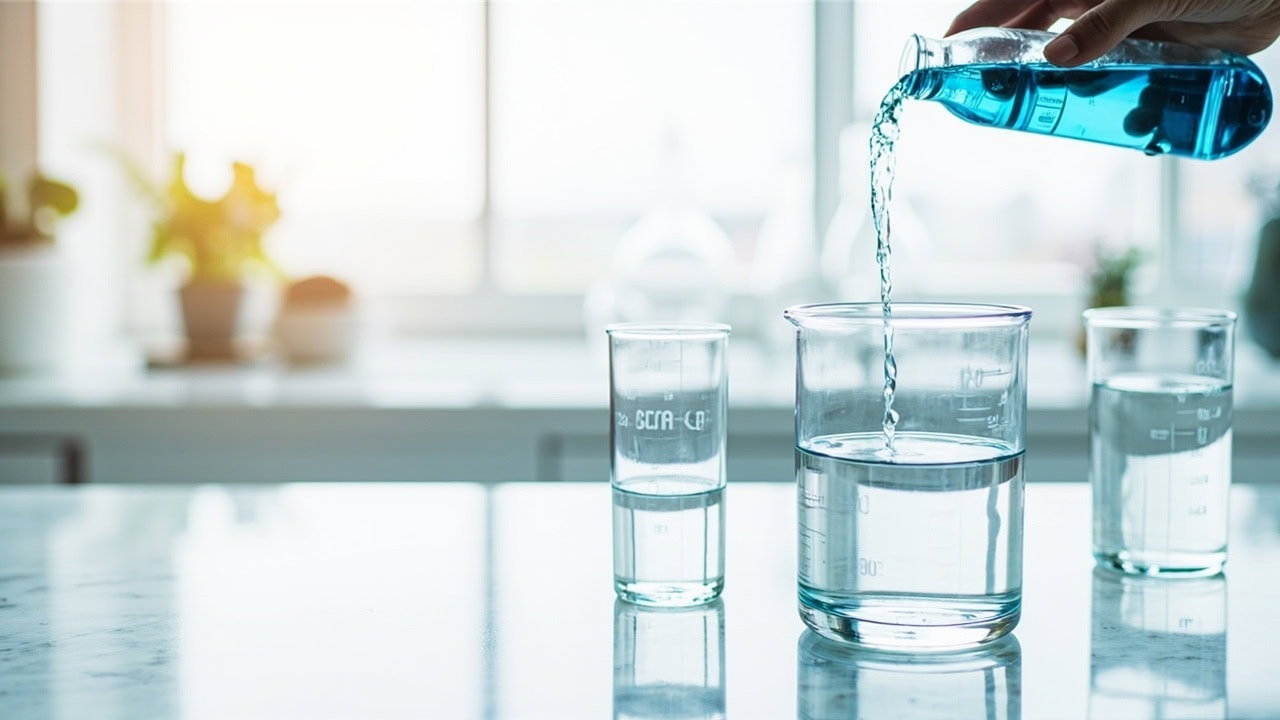
How to Dilute Cleaning Products Correctly

Diluting cleaning products correctly requires following the manufacturer’s recommended ratio — typically 1:10 to 1:20 for general-purpose cleaners — and always adding the concentrate to water, never the reverse, to prevent chemical splatter and ensure proper mixing. A 1:10 dilution ratio means 1 part cleaning concentrate combined with 10 parts water, producing an 11-part total solution. Using the wrong concentration wastes product, damages surfaces, or leaves behind residue that attracts more dirt.
Every cleaning product label specifies a target dilution range that balances cleaning efficacy against surface safety. Stray outside that range in either direction and results suffer: too much water strips away the surfactant activity needed to lift grease and soil, while too much concentrate leaves chemical residue, emits stronger fumes, and can etch or discolor the very surfaces you are trying to clean. The correct ratio also controls cost — concentrated formulas are priced to be economical only at the recommended dilution.
What You Need Before You Start
Accurate dilution starts with the right tools. You need a set of measuring instruments — graduated cylinders, measuring cups with milliliter markings, or the product’s built-in dilution cap — to eliminate guesswork. A clean mixing container such as a spray bottle or bucket serves as your vessel. Use cold or lukewarm water; hot water can degrade heat-sensitive active ingredients like enzymes and sodium hypochlorite. Wear protective gloves when handling concentrated chemicals, and always keep the product’s original label or manufacturer Safety Data Sheet (SDS) nearby for the exact dilution ratio and any hazard warnings.
Why Correct Dilution Matters
Cleaning Effectiveness
Surfactants — the compounds that break the bond between dirt and surfaces — work within a specific concentration window. Below that window the solution lacks enough surfactant molecules to form micelles around grease particles, so soil is merely pushed around rather than lifted. Above the window, excess surfactant leaves a sticky film that actually attracts new dirt within hours of cleaning. The sweet spot is the ratio printed on the label.
Surface Safety
Undiluted or over-concentrated products can etch natural stone, corrode metal fixtures, discolor painted surfaces, and degrade sealants on grout and hardwood. A pH-neutral all-purpose cleaner diluted at 1:20 is gentle on sealed surfaces; the same formula at full strength can strip protective coatings. Understanding how pH affects cleaning products helps you predict which surfaces need a milder ratio.
Cost Efficiency and Safety
Concentrated cleaners are priced to deliver value at the recommended dilution. Using twice the recommended concentrate doubles your per-use cost without doubling cleaning power — the chemistry plateaus. Over-concentrated solutions also release stronger chemical fumes and increase the risk of skin irritation or chemical burns, especially with alkaline degreasers and acidic descalers. The Occupational Safety and Health Administration (OSHA) Hazard Communication Standard requires manufacturers to list safe handling dilutions on every SDS, precisely because concentrated forms carry higher exposure risks.
Understanding “Parts” Notation
Dilution instructions use a “parts” notation that is straightforward once you decode it. A ratio of 1:10 means 1 part concentrate mixed with 10 parts water — giving you 11 total parts of working solution. If “one part” equals 1 fluid ounce (about 30 mL), then you would combine 1 oz of concentrate with 10 oz of water to fill an 11-oz spray bottle. A 1:20 ratio using the same unit would require 1 oz of concentrate and 20 oz of water, yielding 21 oz total. The unit itself does not matter — ounces, milliliters, cups, or capfuls all work — as long as you use the same unit for both the concentrate and the water.
Standard Dilution Ratios for Common Cleaning Products
Dilution ratios vary by product type because each chemistry has its own effective concentration range. The table below shows the standard ratios used across the cleaning industry for the most common household and commercial products.
| Product Type | Standard Ratio | Use Case |
|---|---|---|
| All-purpose cleaner | 1:10 to 1:20 | Countertops, appliances, sealed surfaces |
| Disinfectant spray | 1:10 | Bathrooms, high-touch areas |
| Glass cleaner | 1:10 to 1:16 | Windows, mirrors, chrome fixtures |
| Degreaser | 1:5 to 1:10 | Kitchen stovetops, exhaust hoods, range filters |
| Floor cleaner | 1:20 to 1:30 | Sealed hardwood, tile, laminate |
| Bleach solution (sanitizing) | 1:100 | Food-contact surfaces, delicate items |
| Bleach solution (disinfecting) | 1:10 | Blood spills, high-level disinfection |
According to the CDC’s Guideline for Disinfection and Sterilization in Healthcare Facilities, household bleach (5.25%–6.15% sodium hypochlorite) diluted at 1:10 provides approximately 5,250–6,150 ppm available chlorine for high-level disinfection, while a 1:100 dilution delivers roughly 525–615 ppm for general sanitizing. These are clinical-grade benchmarks that translate directly to household practice.
Step-by-Step: How to Dilute Cleaning Products Correctly
- Read the label first — Locate the dilution ratio or mixing instructions section on the product label or SDS. Every manufacturer specifies a recommended ratio for each intended application.
- Gather your measuring tools — Use graduated cylinders, measuring cups with milliliter markings, or the built-in dilution cap on the product bottle. Avoid estimating by eye — even small measurement errors shift the ratio significantly.
- Fill your container with water first — Always pour water into the mixing container before adding concentrate. This order prevents the exothermic reaction and violent splatter that can occur when water hits concentrated chemicals, particularly alkaline degreasers and acidic descalers.
- Add the concentrate to the water — Pour the cleaning product into the water slowly to minimize splashing and allow the solution to reach chemical equilibrium smoothly. This is the standard safety protocol recommended by OSHA and chemical manufacturers.
- Stir or shake to combine — Allow at least 30 seconds for thorough mixing. For spray bottles, give 3–5 gentle shakes. For buckets, stir with a clean implement until the solution appears uniform.
- Label your diluted solution — Write the product name, dilution ratio, and date on the container using a waterproof label or marker. This prevents accidental misuse and helps you track how long the solution has been sitting.
- Use within 24 hours — Discard any unused diluted solution after 24 hours. Enzyme-based cleaners and bleach solutions lose potency within hours of mixing. Some all-purpose solutions remain effective longer, but 24 hours is the safe default.
Common Dilution Mistakes to Avoid
- Adding water to concentrate — This reverses the correct order and can cause chemical splatter, especially with strong acids, alkaline degreasers, and oxidizing agents. Always add concentrate to water.
- “Eyeballing” measurements — Guessing leads to inconsistent ratios and unreliable results. A splash too much concentrate can shift a 1:20 solution closer to 1:10 without any visible difference in the bottle.
- Using hot water — Hot water can denature enzymes in biological cleaners, accelerate the decomposition of sodium hypochlorite in bleach, and reduce the effectiveness of some surfactants. Use cold or lukewarm water unless the label specifically calls for warm.
- Mixing different products — Never combine two different cleaning concentrates. Mixing bleach with ammonia-based cleaners produces toxic chloramine gas; mixing bleach with acids releases chlorine gas. Both reactions can occur at room temperature and are potentially fatal.
- Reusing dirty containers — Residual solution from a previous batch can react with the new concentrate or shift the pH enough to reduce effectiveness. Always rinse containers thoroughly before preparing a fresh batch.
- Ignoring surface compatibility — Natural stone, sealed hardwood, and some plastics require more dilute solutions than tile or glass. Check the product’s surface compatibility chart before mixing. For detailed guidance on avoiding these and other pitfalls, see common cleaning product mistakes to avoid.
What Happens If You Use Products at the Wrong Concentration
Using a cleaning product at the wrong dilution produces predictable problems. The table below maps the most common symptoms to their cause and the corrective action needed.
| Problem | Cause | Solution |
|---|---|---|
| Streaking on glass and mirrors | Solution too concentrated — excess surfactant leaves film | Remix at 1:16 ratio; wipe with clean microfiber |
| Surface etching on natural stone | Acidic cleaner too concentrated for calcium-based stone | Rinse immediately with clean water; switch to pH-neutral cleaner at 1:20 |
| Residue buildup on countertops | Over-concentrated all-purpose cleaner | Wipe surface with plain water; dilute next batch to 1:20 |
| Poor cleaning power on greasy surfaces | Solution too diluted for the soil load | Reduce water ratio to 1:10 or use a dedicated degreaser at 1:5 |
| Lingering chemical smell | Over-concentrated product; insufficient ventilation | Dilute 50% more than current ratio; open windows; allow dwell time of 2–3 minutes max |
Special Considerations for Concentrated Cleaners
pH Extremes
Highly alkaline cleaners (pH 11–14), such as oven degreasers and heavy-duty floor strippers, and highly acidic cleaners (pH 1–3), such as descalers and rust removers, require precise dilution because even small deviations shift the working pH dramatically. A 1:5 dilution of a pH-13 degreaser may drop to pH 11, which is still effective, but a 1:50 dilution could land near pH 9 — well below the threshold for grease emulsification. Always test on an inconspicuous area first when working with pH-extreme products.
Enzymatic Cleaners
Enzymatic cleaners rely on living protein molecules — proteases, lipases, and amylases — to break down organic stains. These enzymes denature above approximately 40°C (104°F), making hot water a direct threat to their activity. Mix enzymatic cleaners with cold or lukewarm water (below 30°C / 86°F) unless the label explicitly permits warmer temperatures. Enzymatic solutions also have a shorter effective shelf life once diluted; use within 4–8 hours for best results.
Bleach-Based Products
Sodium hypochlorite (household bleach) decomposes rapidly once diluted. According to CDC data, hypochlorite solutions stored in closed, opaque containers at room temperature can lose 40–50% of their free available chlorine over one month — and diluted solutions degrade even faster. Never mix bleach with ammonia, acids, or other cleaning products; doing so produces toxic gases including chloramine and chlorine gas. For household disinfection, the CDC recommends a 1:10 dilution of 5.25% sodium hypochlorite for blood spills and high-level disinfection, and a 1:100 dilution for general sanitizing of food-contact surfaces.
Disinfectants vs. Sanitizers
The distinction matters for dilution. EPA-registered disinfectants are classified as antimicrobial pesticides and must be used at the concentration stated on the label to meet their registered kill claims. Diluting a disinfectant beyond its label instructions voids its EPA registration and may leave pathogenic organisms alive on the surface. Sanitizers, which reduce (rather than eliminate) microbial populations, typically operate at higher dilutions. Always check the EPA registration number on the label for the correct use-dilution.
Floor Cleaners and Finish Maintenance
Floor cleaning products are formulated at higher dilution ratios (1:20 to 1:30) because floor finishes are vulnerable to over-concentrated cleaners. Using a floor cleaner at 1:10 instead of 1:30 can strip the protective finish from sealed hardwood, dull laminate surfaces, and degrade tile grout sealant over time. For detailed dilution guidance on floor-specific products, see the complete floor cleaning guide.
Frequently Asked Questions
Q: Can I dilute cleaning products with hot water?
A: Generally no. Hot water can degrade active ingredients like enzymes, surfactants, and bleach, reducing cleaning effectiveness. Enzymes denature above 40°C (104°F), and sodium hypochlorite in bleach decomposes faster at elevated temperatures. Use cold or lukewarm water unless the product label specifically instructs otherwise.
Q: How do I know if my dilution ratio is correct?
A: The product label provides the manufacturer’s recommended ratio. If cleaning results are poor — such as streaking, residue, or inadequate soil removal — your mixture may be too dilute. If surfaces show damage, film buildup, or a lingering chemical odor, you may be using too much concentrate. Always measure with graduated tools rather than estimating.
Q: How long does diluted cleaning solution last?
A: Most diluted cleaning solutions should be used within 24 hours. Enzyme-based cleaners and bleach solutions lose effectiveness within hours of mixing — bleach solutions can lose significant available chlorine within a single day. All-purpose cleaners may last slightly longer, but 24 hours is the safe default. Always label containers with the date mixed.
Q: What is the 1:10 dilution ratio?
A: A 1:10 ratio means 1 part cleaning concentrate mixed with 10 parts water, creating an 11-part total solution. For example, mixing 1 ounce (30 mL) of concentrate with 10 ounces (300 mL) of water yields 11 ounces of working solution. This is a common dilution for general-purpose and disinfectant cleaners, providing effective cleaning without excessive residue.
References
- CDC. (2024). Chemical Disinfectants — Guideline for Disinfection and Sterilization in Healthcare Facilities. Centers for Disease Control and Prevention.
- OSHA. (2012). Hazard Communication Standard (HCS 2012). Occupational Safety and Health Administration.
- U.S. EPA. (2024). Antimicrobial Pesticide Products. U.S. Environmental Protection Agency.


