
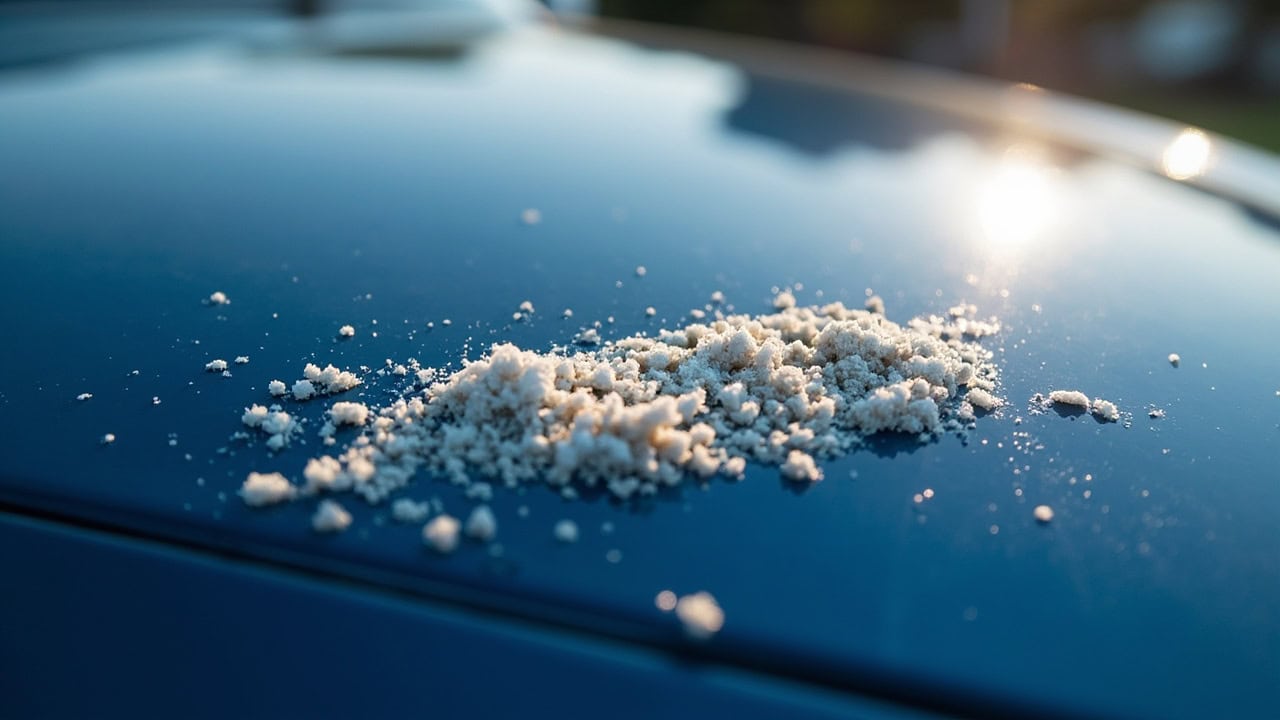
How to Remove Bird Droppings from Car Paint

Bird droppings must be removed from car paint within 48 hours using a two-step softening-and-wash method to prevent uric acid crystallization from etching into the clear coat. The alkaline calcium carbonate and acidic phosphate components in bird excrement decompose automotive paint finish, causing permanent water-spot staining and clear coat damage that requires polish correction when left untreated beyond this critical window.
Why Bird Droppings Damage Car Paint — The Chemistry
Bird droppings are a chemically aggressive cocktail that attacks automotive paint on multiple fronts. They contain uric acid at a pH of 3.5–4.5, which is sufficiently acidic to begin degrading the polyurethane clear coat layer that protects your vehicle’s base coat and primer. Alongside uric acid, bird excrement carries alkaline calcium carbonate from the avian digestive system and phosphate compounds that together create a dual chemical assault on painted surfaces.
When bird droppings land on car paint and begin to dry, the uric acid starts crystallizing within 15–30 minutes at ambient temperatures above 75°F (24°C). These crystallized uric acid structures are sharp and microscopic — they physically abrade the clear coat surface as the deposit contracts during the drying process. The longer the deposit remains, the deeper these crystal structures penetrate into the paint’s protective layers.
The alkaline fraction, primarily calcium carbonate, raises the localized surface pH and can saponify the automotive paint binder over a period of 12–48 hours. Saponification is the same chemical process that turns fat into soap — in this context, it breaks down the resin binders that hold your clear coat together. Direct sunlight accelerates this damage by 3–4× due to thermal activation of the acid reaction, making cars parked in full sun dramatically more vulnerable.
Visible bird dropping damage manifests in three progressive stages: dull matte spots where the clear coat gloss has been compromised, water-ring stains marking the perimeter of the original deposit, and permanent clear coat etching where the surface has been chemically eroded below the level of the surrounding paint. For broader context on how acidic and alkaline contaminants interact with different surfaces, see the Cleaning Chemistry Hub.
What NOT to Use on Car Paint
Before addressing the correct removal method, it is critical to understand which common tools and products will worsen the damage. Automotive clear coat is typically only 1.5–2.0 mils (38–51 microns) thick — thinner than a sheet of paper — and once compromised, it cannot regenerate.
- Never use paper towels or rough shop towels — their wood pulp fibers act as abrasive grit that scratches clear coat. Each pass of a dry paper towel across contaminated paint deposits microscopic scratches that accumulate into visible swirl marks.
- Never use acidic wheel cleaners or bathroom cleaners — phosphoric acid and hydrochloric acid found in these products strip wax, sealant, and clear coat at a far faster rate than the bird dropping itself. A bathroom lime remover (pH 1–2) can cause more paint damage in 60 seconds than a week-old bird dropping.
- Never use degreasers at full strength — solvent-based degreasers strip protective coatings and dry out rubber trim. They dissolve the very wax and sealant layers that are shielding your paint from acid etching.
- Never scrub with stiff-bristle brushes or scouring pads — even “soft” synthetic pads can leave swirls and micro-scratches on cured clear coat. Any mechanical abrasion on a deposit containing crystallized uric acid grinds those crystals into the paint like sandpaper.
- Never use hot water to soften droppings — thermal shock from hot water on paint that has been heated by sunlight can cause clear coat micro-cracking, creating pathways for future chemical damage.
- Never attempt to scrape with plastic cards or fingernails — the edges of cards and nails create stress concentrations that fracture the clear coat. Even plastic-edge tools designed for decal removal are too aggressive for use directly on paint contamination.
What Removes Bird Droppings from Car Paint
Primary Solution — pH-Neutral Two-Step Softening Method
A pH-neutral car wash shampoo (7.0 pH) combined with a dedicated pre-wash bird dropping conditioner (containing 5–10% quaternary ammonium compounds) dissolves the uric acid crystal bond without damaging automotive clear coat or wax coatings. This is the gold standard method recommended by professional detailers and paint manufacturers because it addresses both the chemical bond and the mechanical adhesion of the deposit without introducing additional chemical stress to the paint surface.
Alternative — Waterless Wash with Lubricant Blend
Ceramic-infused waterless wash products with high slickness ratings (CSI > 150) allow contaminant suspension and removal without water introduction. This method is ideal for light, fresh droppings under 4 hours old that have not yet progressed to the crystallization stage. The ceramic particles in these products provide additional lubrication between the microfiber towel and the paint surface, reducing the risk of swirl marks during removal.
Emergency Spot Treatment — pH-Balanced Detail Spray
A pH-balanced quick detailer (6.5–7.5 pH) with lubricating polymers provides temporary suspension of fresh droppings until a full wash is possible. This is not a complete solution — it must be followed by a thorough wash within 24 hours. However, it serves as an effective emergency measure to halt the crystallization process when you discover a dropping but do not have access to a full wash setup.
Step-by-Step Removal Process
- Step 1: Pre-Soak the Deposit — Apply bird dropping pre-wash conditioner or pH-neutral shampoo directly onto the affected area using a pump sprayer. Allow 60–90 seconds of dwell time to penetrate and soften the uric acid crystal structure without drying. Do not allow the pre-wash to dry on the surface, as this concentrates the cleaning agents and can create its own staining.
- Step 2: Cover with a Wet Microfiber Pad — Place a clean, damp microfiber wash pad (280 GSM or higher) over the soaked deposit. Allow 2–3 minutes for the moisture to continue softening the bond between the dropping and paint surface. The microfiber pad acts as a wicking agent, drawing dissolved contamination away from the paint.
- Step 3: Gentle Circular Suspension Wash — Using the microfiber pad with light pressure, work in small circular motions starting from the outer edge of the deposit working inward — never scrub aggressively. The goal is contaminant suspension, not abrasion. If you feel resistance, apply additional pre-wash conditioner and wait another 60 seconds before continuing.
- Step 4: Rinse and Inspect — Thoroughly rinse the area with clean water using a dedicated car wash bottle or pressure washer at 800–1200 PSI. Inspect for any remaining residue or matte-spot indication of clear coat interaction. If residue persists, repeat Steps 1–3 rather than increasing pressure or aggression.
- Step 5: Apply Protection Layer — Once the area is clean and dry, apply a layer of spray wax or paint sealant to the cleaned spot to restore protective coating integrity and prevent future bonding. This step is essential because the removal process may have stripped any existing wax or sealant from the immediate area, leaving it temporarily vulnerable.
How to Prevent Future Bird Dropping Damage
- Apply a ceramic coating (SiO₂-based) or graphene paint sealant to create a hydrophobic barrier with 9H hardness that reduces adhesion and enables easier removal. Ceramic coatings do not make your car immune to bird dropping damage, but they buy you significantly more time before etching begins.
- Park in covered areas or use a car cover when parked under trees or near power lines where birds roost. Physical barriers remain the most effective prevention strategy.
- Remove fresh droppings within 4 hours using a quick detailer spray and microfiber towel to prevent acid crystallization. Carrying a small bottle of detail spray and a microfiber towel in your vehicle is a practical habit that can prevent hundreds of dollars in paint correction costs.
- Maintain a coat of carnauba or synthetic wax (reapplied every 60–90 days) to create a sacrificial barrier that takes acid damage instead of clear coat. Wax is not as durable as ceramic coating, but it provides an accessible and affordable layer of protection.
- Avoid parking in high-bird-activity zones — areas near lakes, rivers, coastal regions, and under telephone wires or trees where birds congregate are the highest risk locations for repeated exposure.
Understanding Bird Dropping pH and Car Paint Vulnerability
The severity of bird dropping damage correlates directly with the age of the deposit, the ambient temperature, and the type of paint on your vehicle. The table below summarizes how these factors interact to determine the level of risk and the appropriate response. For guidance on related contaminants that affect automotive paint, see our article on how to remove tree sap from car paint — another organic contaminant that requires pre-soak removal methods.
| Factor | Effect on Paint Damage |
|---|---|
| Fresh dropping (< 4 hours) | Removable with quick detailer; minimal acid penetration into clear coat |
| Aged dropping (4–24 hours) | Uric acid crystallizes; requires pre-soak and two-bucket wash method |
| Baked dropping (24–48+ hours) | Clear coat etching likely; may require compound polish correction |
| Direct sunlight exposure | Accelerates damage 3–4× due to thermal activation of uric acid reaction |
| Clear coat vs. single-stage paint | Clear coat provides chemical barrier but once breached, base coat is vulnerable |
Water spot etching is a common consequence of delayed bird dropping removal — as the deposit dries and contracts, the acidic perimeter leaves a ring that bonds to the clear coat. For detailed guidance on addressing this secondary damage, see our article on how to remove water spots from car paint. Both issues share the same underlying mechanism: acidic contamination bonding to the clear coat through thermal activation.
The principles of pH-balanced cleaning and acid neutralization discussed here also apply across other cleaning contexts. For example, the same uric acid chemistry that damages car paint also affects surfaces in residential settings — the Floor Cleaning Hub covers pH considerations for removing organic acid contamination from hard flooring surfaces.
Frequently Asked Questions
Q: Will bird droppings damage my car if left overnight?
A: Bird droppings left on car paint for 24–48 hours significantly increase the risk of clear coat etching and permanent water-spot staining — the alkaline calcium carbonate and acidic uric acid components work together to decompose automotive paint finish. Fresh droppings under 4 hours old can typically be removed with a pH-balanced quick detailer, while older deposits require the full two-step softening method described in our Specialty Cleaning Hub.
Q: Can I use a clay bar to remove bird droppings from car paint?
A: A clay bar can safely remove bonded bird dropping residue after the deposit has been properly softened, but using a clay bar on a hardened dropping without pre-treatment risks marring the clear coat with embedded uric acid crystals — always soften first with a pre-wash conditioner or pH-neutral shampoo dwell time before claying. The clay lubricant alone is insufficient to break down crystallized uric acid.
Q: What is the safest bird dropping remover for a ceramic-coated car?
A: For ceramic-coated vehicles, use a pH-neutral car wash shampoo with a microfiber wash pad as the primary method — ceramic coatings resist acid etching better than clear coat but can still be degraded by harsh solvents or abrasive pads over time. Avoid acidic wheel cleaners or bathroom-grade calcium removers even on ceramic coatings, as these products can degrade the SiO₂ matrix.
Q: How do I fix clear coat damage from bird droppings?
A: Minor clear coat etching from bird droppings requires a two-step correction process: first, compound the affected area with a dual-action polisher using a medium-cut foam pad and compound polish to level the surface, then refine with a finishing pad and polish to restore gloss. Deep etching that exposes primer or base coat requires professional repainting, as DIY correction cannot restore material that has been completely dissolved.
References
- National Institutes of Health. (2023). Uric Acid Compound Summary — PubChem. National Library of Medicine.
- Basu, N., & Scheuhammer, A. M. (2009). Avian Excreta as a Source of Urban Environmental Contamination. Science of the Total Environment.
- International Detailing Association. (2024). Best Practices for Automotive Surface Decontamination. IDA Technical Guidelines.
- Society of Automotive Engineers. (2022). Automotive Paint Coating Systems — Thickness and Durability Standards. SAE J2334.
- Wulff, J. E., & Ang, T. L. (2018). Ceramic Coating Hardness Testing: Pencil Hardness and Nano-Indentation Methods. ResearchGate.


