
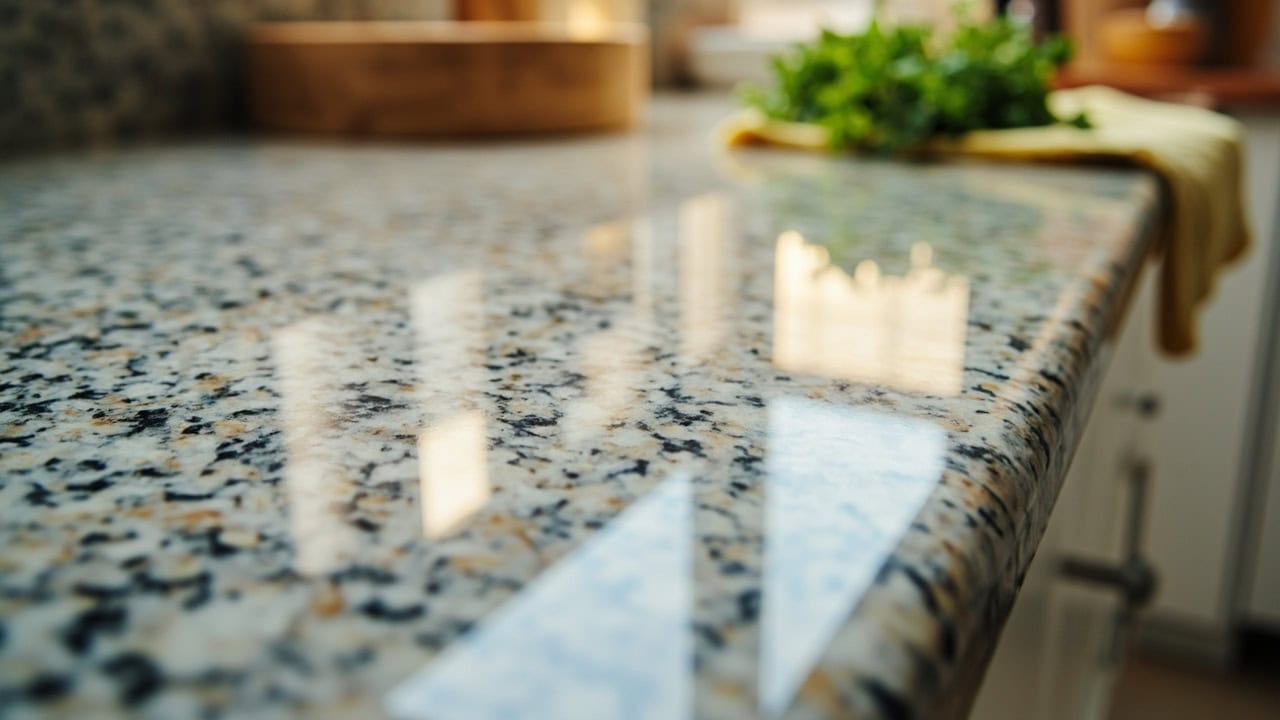
How to Clean Granite Countertops

Granite countertops must be cleaned with a pH-neutral cleaner specifically formulated for natural stone, applied using a soft microfiber cloth in gentle circular motions at a dilution ratio of 1:4, followed by a clean water rinse and dry buff with a separate microfiber towel. Acidic substances like vinegar (pH 2–3), lemon juice, or ammonia-based cleaners cause permanent etching that dulls the polished surface within minutes of contact. Oil-based spills require a specially formulated granite degreaser applied within 10–15 minutes to prevent staining through the stone’s micro-pores.
What You Need Before You Start
Gathering the correct supplies before you begin prevents the single most common cause of granite damage: reaching for the wrong cleaner mid-task. Granite is a natural stone composed primarily of quartz, feldspar, and mica — minerals that react adversely to acidic and abrasive products. Using the wrong cleaner even once can produce etch marks that require professional polishing to remove. The following materials are specifically chosen to protect the stone’s sealed surface while delivering a thorough clean.
- pH-neutral granite cleaner — a dedicated granite surface formula rated at pH 7. Avoid multi-surface cleaners, glass cleaners, and general-purpose sprays, which often contain citrus acids or ammonia that degrade the sealer layer over time. For more on how pH affects cleaning performance, see our Cleaning Chemistry Hub.
- Soft microfiber cloths — minimum two: one for applying cleaner and a second dedicated cloth for drying and buffing. Microfiber lifts dirt without scratching; cotton towels and paper products can leave lint or micro-abrasions on polished granite.
- Warm water — for rinsing the surface after cleaning. Use warm, not hot, water; excessive heat can weaken the adhesive bonds at granite seams over prolonged exposure.
- Granite sealer (optional, for maintenance) — an impregnating sealer used when the water-bead test indicates the existing seal has degraded. Most manufacturers recommend a water-based penetrating sealer rated for natural stone.
- Soft-bristled brush — for grout lines, edge detailing, and tight corners where a microfiber cloth cannot reach. Never use the brush on the flat polished surface.
- Spray bottle — for controlled, even application of the granite cleaner. Pre-dilute concentrated formulas at the manufacturer’s recommended ratio, typically 1:4 (one part concentrate to four parts water).
Step-by-Step Cleaning Process
The following seven-step process is designed for routine daily or weekly maintenance of sealed granite countertops. Each step builds on the previous one to ensure no residue, streaks, or moisture are left behind. For deeper stain removal guidance, see our companion article on How to Remove Stains from Granite Countertops.
- Remove surface debris. Clear all items — appliances, cutting boards, dish racks — from the countertop. Wipe the entire surface with a dry microfiber cloth to remove loose dust, crumbs, and particles that could scratch the stone when wet cleaning begins.
- Apply cleaner. Spray the pH-neutral granite cleaner directly onto the surface or onto the microfiber cloth. If using a concentrate, apply at a 1:4 dilution ratio. Avoid oversaturating the surface; a light, even mist is sufficient. Never spray cleaner near open seams or unsealed edges.
- Clean in circular motions. Wipe the entire surface using gentle circular pressure, working from the back of the countertop toward the front edge. Circular motions lift dirt evenly without pushing contaminants into seams. Maintain consistent pressure — pressing too hard can force liquid into micro-fissures.
- Focus on high-use areas. Pay extra attention to zones surrounding the stove, sink, and food preparation areas where grease splatter, water deposits, and food residue accumulate fastest. These areas may require a second pass with fresh cleaner.
- Rinse with warm water. Dampen the second microfiber cloth with warm water and wipe the entire surface to remove all cleaner residue. Any remaining surfactant film attracts dust and dulls the finish. Change the rinse water if it becomes cloudy during the process.
- Dry and buff. Use a clean, dry microfiber cloth in long, overlapping strokes to prevent water spots and achieve a streak-free shine. Granite’s polished surface reveals every water droplet under kitchen lighting, so thorough drying is critical. Buff until the surface reflects light uniformly.
- Polish (optional). For added depth of shine between sealings, apply a granite-specific polish spray after the surface is completely dry. Spray a small amount onto the cloth — not the stone — and buff in circular motions. This step is cosmetic and does not replace the protective function of a sealer.
Granite-Specific Considerations: What to Avoid
More granite countertops are damaged by the wrong cleaner than by any other cause. The Marble Institute of America (now the Natural Stone Institute) has long advised that acidic and alkaline cleaners pose the greatest threat to polished natural stone surfaces. Understanding exactly which products cause harm — and why — prevents costly repairs or permanent surface degradation.
- Acidic cleaners — vinegar (pH 2–3), lemon juice (pH 2), ammonia, and bleach all cause immediate chemical etching on granite. The acid reacts with the calcium carbonate found in some granite varieties, dissolving the polished layer and leaving permanently dull spots that cannot be restored by cleaning. Only products at or near pH 7 are safe for granite.
- Abrasive tools — steel wool, scouring pads, and stiff-bristled scrub brushes create hairline scratches across the polished surface. These scratches scatter light, making the finish appear hazy and dull over time. Even nylon scrub pads rated “non-scratch” can micro-abrade granite polish with repeated use.
- Bleach-based products — chlorine bleach degrades the penetrating sealer that protects granite from stains. Once the sealer layer is compromised, the stone’s natural pores absorb liquids rapidly, leading to deep-set staining that requires a poultice treatment to reverse. Oil-based cleaners not formulated for granite — furniture polish, mineral oil sprays, and general degreasers leave a residue film that attracts dirt, dulls the finish, and prevents the granite sealer from bonding during resealing.
- Excessive water exposure — water pooling near seams, edges, or around the sink cutout can compromise the epoxy adhesive used to join granite slabs. Dry all standing water promptly, especially along seam lines where the adhesive is most vulnerable.
Drying and Finishing Granite Countertops
The drying and finishing stage is where most homeowners cut corners — and where most visible quality issues originate. Granite’s mirror-polished surface amplifies every water spot, streak, and missed section under typical kitchen lighting. Proper drying technique is not optional; it is the difference between a countertop that looks professionally maintained and one that appears perpetually hazy.
- Always dry with a dedicated clean microfiber cloth — not the same cloth used for cleaning. Residual cleaner on a damp cloth leaves a film that attracts dust within hours. Designate one cloth exclusively for drying and replace it when it begins to lose absorbency.
- Work in long, linear strokes following the stone’s natural grain direction when visible. Linear strokes produce a more uniform finish than random wiping patterns, and they ensure complete coverage without doubled-back wet sections.
- Inspect for streaks under kitchen lighting at an angle. Granite’s reflective surface reveals missed spots that are invisible when viewed straight-on. Tilt your viewing angle to catch light reflections across the full surface area.
- Apply granite sealer every 6–12 months depending on usage frequency and manufacturer guidelines. Heavy-use kitchens near stoves and prep areas may require sealing every 6 months, while lightly used surfaces can go 12 months between applications.
- Test seal integrity monthly using the water-bead method: pour a 3-inch diameter puddle of water onto the surface and wait 30 minutes. If the water beads up and wipes away cleanly, the seal is intact. If the water darkens the stone within 2–3 minutes, the sealer has degraded and resealing is needed immediately to prevent stain absorption through the stone’s pores.
For comparison with other popular stone surfaces, our guide on How to Clean Quartz Countertops covers the distinct maintenance requirements of engineered quartz, which differs from granite in its sensitivity to heat and its reliance on resin binders rather than natural stone sealers.
Common Mistakes When Cleaning Granite Countertops
The following table summarizes the most frequent cleaning errors that lead to permanent granite damage, their consequences, and the specific preventive measures that protect the stone surface.
| Mistake | Consequence | Prevention |
|---|---|---|
| Using vinegar or acidic cleaner | Permanent surface etching and dull spots that require professional re-polishing | Use only pH-neutral granite formulas rated pH 7 |
| Using abrasive scrubbers (steel wool, scouring pads) | Hairline scratches that scatter light and permanently dull the polish | Use only soft microfiber cloths or soft-bristle brushes on edges only |
| Leaving spills to set beyond 15 minutes | Oil and pigment stains penetrate stone pores, requiring poultice treatment | Blot spills immediately with paper towels, then clean with granite cleaner within 10–15 minutes |
| Skipping sealer maintenance beyond 12 months | Staining, water damage, and increased porosity of the stone surface | Reseal every 6–12 months per usage; test monthly with water-bead method |
| Using multi-surface or glass cleaners | Residue buildup, progressive sealer degradation, and hazy film | Designate a granite-specific cleaner only; store separately from other household products |
Many of these mistakes are also relevant to other kitchen stone surfaces. For a broader perspective on kitchen maintenance, our Kitchen Cleaning Guide covers all countertop materials, appliance surfaces, and food preparation areas. Homeowners with natural stone bathroom vanities should also consult the Bathroom Cleaning Guide, which addresses tile, stone, and grout maintenance in high-moisture environments where granite care principles also apply.
Frequently Asked Questions
Q: Can I use vinegar to clean granite countertops?
A: No. Vinegar is acidic (pH 2–3) and causes immediate permanent etching on granite surfaces. Even diluted vinegar will dull the polished finish within minutes of contact. The acetic acid in vinegar reacts with mineral components in the stone, dissolving the polished surface layer on contact. Always use a pH-neutral cleaner specifically formulated for natural stone with a pH of 7.
Q: How often should I seal my granite countertops?
A: Granite countertops should be resealed every 6–12 months depending on usage frequency and the stone’s porosity. Test seal integrity monthly by pouring a 3-inch diameter puddle of water onto the surface and waiting 30 minutes. If the water darkens the stone within 2–3 minutes instead of beading up cleanly, the sealer has degraded and resealing is needed immediately to prevent stain absorption.
Q: What is the best daily cleaner for granite countertops?
A: The best daily cleaner is a pH-neutral (pH 7) granite-specific formula applied with a soft microfiber cloth using circular motions, followed by a clean water rinse and dry buff with a separate microfiber towel. Avoid spray-and-leave products that can build up residue over time and degrade the sealer layer. Always wipe the surface completely dry after cleaning to prevent mineral water spots from forming as the surface air-dries.
Q: How do I remove oil stains from granite countertops?
A: Oil stains on granite require a granite-specific poultice or degreaser applied directly to the stained area, covered with plastic wrap for 24–48 hours to draw out the oil from the stone’s pores, then cleaned with pH-neutral granite cleaner. For fresh oil spills, immediate blotting with paper towels followed by granite cleaner application within 10–15 minutes prevents the oil from penetrating the sealed surface. For detailed stain removal procedures, see How to Remove Stains from Granite Countertops.
References
- Natural Stone Institute. (2023). Care and Maintenance of Natural Stone Surfaces. Natural Stone Institute.
- Granite Gold. (2024). How to Clean Granite Countertops: Complete Guide. Granite Gold.
- U.S. Environmental Protection Agency. (2024). Safer Choice: Certified Safer Products for Home and Business. EPA.
- Centers for Disease Control and Prevention. (2024). Cleaning and Disinfecting Your Home. CDC.


