
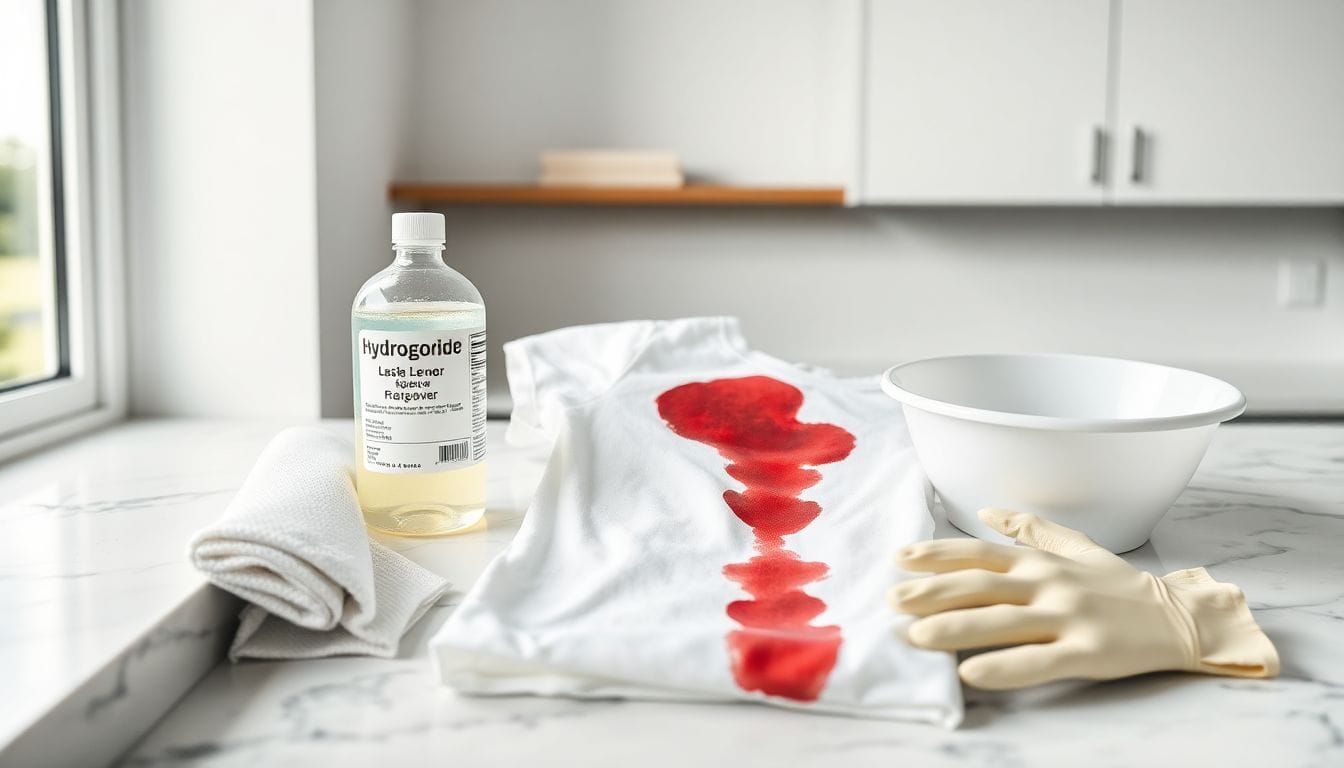
How to Remove Blood Stains from Clothes (Fresh and Set-In)

Blood stains must be treated with cold water and enzymatic cleaner within 2 hours of exposure for maximum removal success — hot water permanently coagulates the protein and bonds it to fabric fibers. Set-in blood stains require pre-soaking in hydrogen peroxide (3% concentration) or an ammonia solution for 30 minutes before laundering, because oxidation breaks down the hemoglobin structure. Never apply heat or hot water to blood stains, as this causes the proteins to denature and permanently bond to clothing fibers through protein denaturation.
Understanding Blood Stains: Why They Bond to Fabric
Blood contains hemoglobin, an iron-rich protein that binds to fabric fibers through molecular adhesion. When blood contacts clothing, the hemoglobin molecules form electrostatic bonds with cellulose in cotton and linen or with synthetic polymer chains in polyester and nylon. The pH of blood (7.4) interacts differently with various fabric types — natural fibers like cotton and linen absorb blood faster than synthetics such as polyester and nylon because their porous cellulose structure wicks moisture more readily.
Fresh blood stains, meaning those under 2 hours old, contain proteins still in a soluble state that respond well to cold water flushing. Once blood dries and ages beyond 2 hours, the proteins undergo denaturation and cross-link with fabric at a molecular level, making removal significantly harder. Temperature is the single most critical variable: hot water above 104°F (40°C) causes rapid protein coagulation and permanent bonding, which is why cold water treatment is universally recommended by textile care experts. For a broader understanding of stain chemistry across all types, see our complete stain removal guide.
What NOT to Use on Blood Stains
Before treating any blood stain, it is equally important to know which methods will make the problem worse. Certain common household products and techniques permanently set blood stains into fabric, making them impossible to remove.
- Hot water or heated drying: Causes protein denaturation and sets the stain permanently. Even warm water above 85°F (29°C) can begin the coagulation process.
- Chlorine bleach on colored fabrics: Damages fabric dyes and can cause skin irritation. Use oxygen-based bleach alternatives instead.
- Hairspray or acetone: Ineffective on protein stains and may damage synthetic fibers by dissolving acetate or triacetate blends.
- Rubbing or scrubbing motion: Pushes the stain deeper into the fabric weave and spreads contamination across a larger area. Always blot or dab gently.
- Wringing wet fabric: Damages garment shape and forces the stain deeper into fibers. Press water out gently instead.
How to Remove Fresh Blood Stains (Under 2 Hours)
Fresh blood stains are among the easiest to remove when treated promptly. The proteins have not yet denatured, so cold water alone can flush out most of the staining material. Follow these steps in order for the best results. This same enzymatic approach also works well for removing sweat stains from clothes, since both are protein-based biological stains.
- Cold Water Flush: Immediately rinse the stained area under cold running water for 5–10 minutes. Work from the back of the fabric to push the stain out rather than driving it deeper through the weave. The water temperature should stay below 85°F (29°C) to prevent any protein coagulation.
- Enzymatic Pre-Treatment: Apply enzymatic cleaner directly to the affected area. Gently rub the fabric together to work the product into the fibers. Allow a dwell time of 5–15 minutes so the protease enzymes can break down the hemoglobin protein chains.
- Cold Water Soak: Submerge the garment in cold water with additional enzymatic cleaner for 15–30 minutes. Do not use warm or hot water at any point during this soak, as even moderate heat will reverse the enzymatic action.
- Gentle Agitation: After soaking, gently agitate the fabric by hand or use a soft-bristle brush in small circular motions. Focus on the stained area without applying excessive pressure that could damage delicate fibers.
- Machine Launder: Launder in the washing machine on the coldest gentle cycle available. Use a pH-neutral detergent that will not interfere with the enzymatic residue still working on the stain.
- Air Dry: Air dry the garment flat. Inspect the stain before any heat exposure — if the stain persists, repeat the entire process from Step 1 before allowing any heat near the fabric.
How to Remove Set-In Blood Stains (Over 2 Hours)
Set-in blood stains require stronger chemical agents because the hemoglobin proteins have already denatured and cross-linked with the fabric. Hydrogen peroxide and ammonia are the two most effective household treatments, each working through a different chemical mechanism. Unlike grease stain removal, which relies on surfactants and solvents, blood stain removal depends on oxidation and enzymatic breakdown of proteins.
- Hydrogen Peroxide Treatment (for white and light fabrics): Apply 3% hydrogen peroxide directly to the set-in stain. The oxidation process breaks down hemoglobin molecules by releasing oxygen radicals that cleave the iron-porphyrin bonds. Allow 15–30 minutes of dwell time while monitoring for color change on dyed fabrics — peroxide can have a mild bleaching effect.
- Ammonia Solution Treatment (for colored fabrics): Mix 1 tablespoon of clear ammonia with 1 cup of cold water. Apply to the stain and allow 15 minutes of dwell time. Ammonia works by raising the pH and denaturing the remaining protein structure, dissolving the molecular bonds between hemoglobin and fabric fibers. Never mix ammonia with bleach, as this produces toxic chloramine gas.
- Extended Soaking: For stubborn set-in stains, create a soaking solution of cold water with 2 tablespoons of enzymatic cleaner or hydrogen peroxide. Soak for 1–4 hours, checking periodically to assess progress. Change the soaking solution if it becomes discolored, indicating the proteins are being released into the water.
- Mechanical Treatment: After soaking, use a soft-bristled toothbrush or fabric scrub brush to gently work the stained area. This mechanical action loosens the broken-down protein fragments from the fibers without damaging the fabric structure.
- Rinse and Launder: Thoroughly rinse the treated area with cold water to remove all chemical residue, then launder as normal with an appropriate detergent and enzymatic boost. For best post-treatment washing practices, refer to our laundry care guide.
Prevention and Aftercare Tips
Treating blood stains immediately delivers the highest success rate — enzymatic action on fresh blood can remove over 90% of visible staining before any permanent bonding occurs. After 2 hours, the success rate drops significantly as proteins denature and adhere to fibers. If you cannot treat the stain right away, submerge the stained item in cold water to slow the denaturation process until you can apply a proper treatment.
Always test any treatment product on an inconspicuous area of the fabric first, especially on colored or delicate materials. Hydrogen peroxide at 3% concentration is safe for most white and light fabrics but can cause fading on dark dyes. For menstrual blood stains, cold water combined with specialized enzymatic cleaners designed for biological stains provides the most reliable results. Before placing any previously stained garment in a dryer, always inspect for residual discoloration — heat from the dryer will permanently set any remaining trace of the stain.
Blood Stain Removal by Fabric Type
Different fabrics react to blood stains and treatments in distinct ways. Cotton and linen absorb blood quickly due to their porous cellulose structure, while synthetics like polyester resist absorption but can trap proteins in their weave. The table below provides fabric-specific guidance to prevent damage while maximizing stain removal.
| Fabric Type | Best Treatment | What to Avoid |
|---|---|---|
| Cotton / Linen | Cold water + enzymatic cleaner | Hot water, chlorine bleach |
| Polyester / Nylon | Hydrogen peroxide (diluted) | Acetone, harsh scrubbing |
| Silk / Wool | Cold water + enzyme only | Harsh chemicals, agitation |
| Denim | Ammonia solution or peroxide | Chlorine bleach on dark denim |
| White uniforms | Hydrogen peroxide + sun drying | Colored detergents |
Frequently Asked Questions
Q: Does hot water set blood stains?
A: Yes, hot water permanently sets blood stains by causing the protein in blood to denature and bond to fabric fibers. Always use cold water (below 85°F/29°C) when treating blood stains, and never put blood-stained items in a hot dryer.
Q: How long does it take to remove a set-in blood stain?
A: Set-in blood stains typically require 30 minutes to 4 hours of soaking treatment before laundering, depending on the stain’s age and fabric type. Old set-in stains may require multiple treatment cycles over several days for complete removal.
Q: Can hydrogen peroxide damage fabric?
A: Hydrogen peroxide at 3% concentration is safe for most white and light-colored fabrics, but can cause fading or bleaching on colored fabrics. Always test on an inconspicuous area first, and never use on silk, wool, or leather.
Q: What removes blood stains naturally?
A: Natural blood stain removers include cold salt water (1 tablespoon per cup), saliva (contains amylase enzymes), lemon juice (for white fabrics), and meat tenderizer powder (contains papain enzyme). These are effective alternatives for fresh stains but less effective on set-in stains.
Q: Can you remove dried blood from clothes?
A: Yes, dried blood can be removed by rehydrating the stain with cold water and enzymatic cleaner, followed by hydrogen peroxide or ammonia treatment. For dried stains over 24 hours old, multiple soaking cycles of 1–4 hours each may be necessary for complete removal.
References
- University of Illinois Extension. (n.d.). Stain Solutions: Blood. University of Illinois.
- International Fabricare Institute. (n.d.). Blood Stain Removal Procedures. IFI.
- Mayo Clinic. (2023). Hand Washing: Why It Matters and How to Do It. Mayo Clinic.
- U.S. Consumer Product Safety Commission. (n.d.). Home Safety Guidelines for Household Chemicals. CPSC.
- American Cleaning Institute. (n.d.). Laundry and Fabric Care Tips. ACI.


