
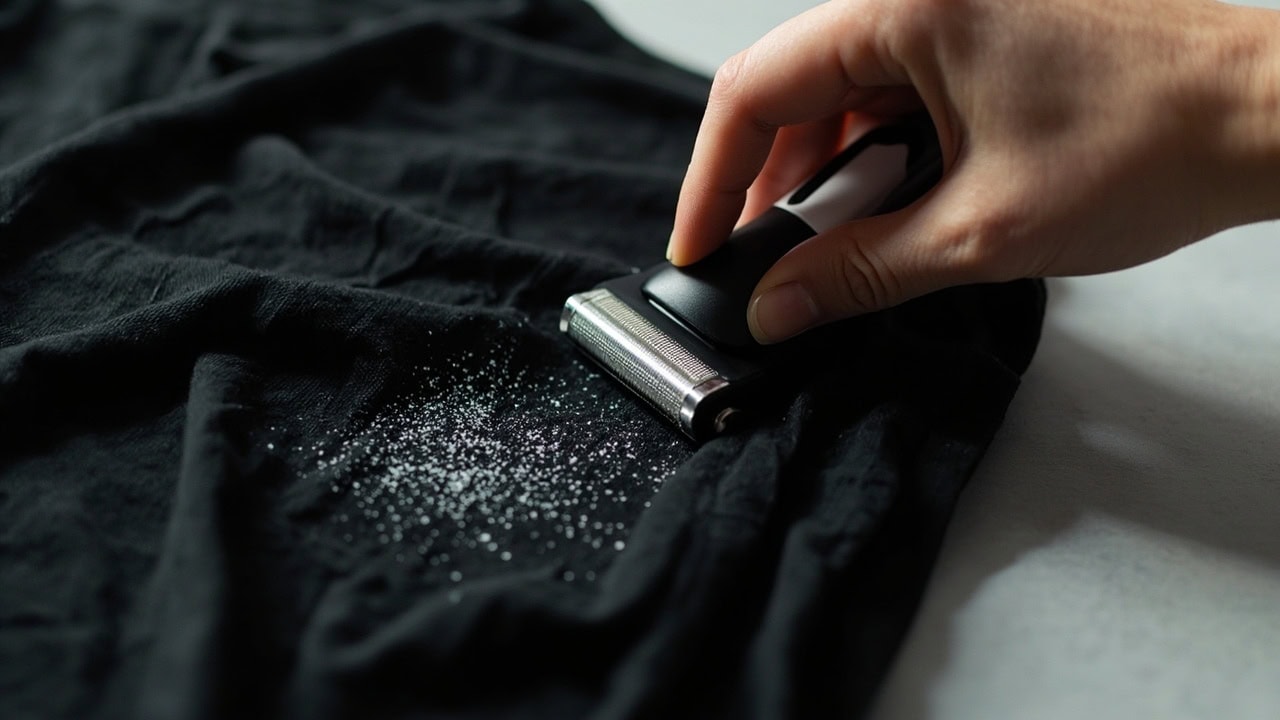
How to Remove Lint from Black Clothes

Lint is removed from black clothes most effectively using a fabric shaver at a 90-degree angle to the fabric surface, applied in short, controlled strokes after the garment is freshly laundered and slightly damp. The primary cause of lint accumulation on black fabrics is fiber shedding during wear and washing, which is exacerbated by friction against other garments in the wash cycle. Black clothing requires specialized lint removal because the static electricity generated by synthetic blends attracts and holds lint particles more aggressively than lighter fabrics. Regular maintenance with a lint roller between wears prevents visible lint buildup and extends the garment’s appearance by up to 60%.
What Is Lint and Why It Accumulates on Black Clothes
Lint consists of loose microfibers — typically cotton, polyester, or wool strands measuring 10 to 500 microns in length — that shed from fabric surfaces during wear, washing, and drying cycles. According to textile research published in the journal Textile Research Journal, a single cotton garment can shed between 50 and 150 milligrams of fiber per wash cycle. These freed fibers float in the wash water, circulate in the dryer airstream, and ultimately settle on other garments in the load.
Black fabrics show lint more visibly than any other color due to the extreme contrast between white or gray lint particles and the dark fabric surface. On a white shirt, the same quantity of lint is virtually invisible. On a black cotton T-shirt, even a few dozen fibers create a noticeable dusty appearance. This contrast effect means that black garments do not necessarily attract more lint — they simply reveal it more clearly.
Synthetic blends such as polyester-cotton and polyester-elastane generate higher static charge during tumbling and wear. Polyester has a triboelectric ranking that causes it to accumulate negative charge when rubbed against cotton or nylon. This static charge acts like a magnet for loose fibers, pulling them onto the fabric surface and holding them in place. Loosely woven fabrics such as fleece, knits, and cashmere also contribute more lint because their open construction allows fibers to escape easily during agitation.
Understanding the pilling process helps distinguish it from lint. Pills form when fibers break and tangle into small balls anchored to the fabric surface, whereas lint consists of free-floating fibers from any source that settle on the garment. Both issues are more visible on black clothing, but they require different removal approaches. For related fabric degradation, see our guide on how to remove pilling from clothes.
What NOT to Use on Black Clothes
Not all lint removal methods are safe for black garments. Using the wrong tool can cause permanent damage to fabric fibers, leave adhesive residue, or create faded patches that ruin the garment’s appearance.
- Avoid adhesive lint rollers with low-tack glue on delicate fabrics — inexpensive rollers with weak adhesive often leave a sticky residue that attracts even more lint and dust within hours of application. This residue is difficult to wash out and can permanently alter the fabric’s sheen.
- Never use sharp razors or box cutters as improvised fabric shavers — these lack the protective mesh guard that commercial fabric shavers use. A single slip creates a cut or snag in the fabric that cannot be repaired. This risk is especially high on thin knits and T-shirt-weight cotton.
- Steer clear of sticky tackifiers or DIY sticky-sheet alternatives — household adhesives like packing tape or duct tape can strip fabric dyes, damage water-repellent coatings, and leave chemical residues that degrade synthetic fibers over time.
- Do not apply excessive pressure with any lint removal tool — pressing too hard with a fabric shaver thins the fabric and creates bald spots where the blade cuts below the fiber surface. On black garments, these thinned areas appear as lighter patches that cannot be reversed.
Tools and Products for Lint Removal
Selecting the right tool depends on the garment type, the severity of lint accumulation, and whether you need a quick fix or a thorough cleaning. The following tools cover every lint removal scenario for black clothing.
Fabric Shaver (Battery-Operated or Electric)
A fabric shaver uses a rotating blade behind a protective metal mesh to cut and collect lint, pills, and loose fibers. Electric models with 3-blade heads cover approximately 15 square centimeters per pass, making them ideal for large flat areas like shirt fronts, sweater bodies, and pant legs. Battery-operated models typically run at 6,000 to 8,000 RPM, while plug-in electric versions reach 10,000 RPM for faster results. Look for models with adjustable height settings (typically 1.5 mm, 3 mm, and 4.5 mm) to match the fabric thickness.
Lint Roller
A lint roller consists of a handle with a roll of adhesive-coated paper sheets. Each sheet picks up surface-level lint, pet hair, and dust using a pressure-sensitive adhesive. Lint rollers work best for quick touch-ups between wears, targeting seams, cuffs, collars, and other areas where a fabric shaver cannot maneuver. Replace the sheet when it loses tackiness — typically after 8 to 12 passes over a garment. For delicate black fabrics such as silk or fine wool, choose a low-tack roller specifically labeled for delicate garments.
Lint Brush with Sticky Adhesive Sheets
Lint brushes combine a flat paddle design with peel-off adhesive sheets, offering more control than a roller on structured garments like blazers and coats. The flat surface distributes pressure evenly, reducing the risk of fabric distortion. These brushes are particularly effective on tailored black garments where maintaining the fabric’s drape is critical.
Anti-Static Spray
Anti-static spray contains quaternary ammonium compounds or conductive polymers that neutralize the electrical charge on fabric surfaces. By eliminating static, these sprays prevent lint from being attracted to the garment in the first place. Apply a light mist from a distance of 20 to 25 centimeters and allow 5 minutes to dry before wearing. Most formulations are safe for synthetic and natural fiber blends, but always check the label for fabric compatibility.
Wool Dryer Balls
Wool dryer balls are a preventive tool rather than a removal tool. Added to the tumble dryer, they create mechanical separation between garments, reducing friction and allowing lint to be captured by the dryer’s lint filter rather than deposited on clothing. A load of 3 to 4 wool dryer balls can reduce drying time by up to 25% and decrease lint transfer between garments. For best results on black clothing, use them in combination with the gentle or low-heat drying cycle at temperatures below 50°C (122°F).
Step-by-Step: Removing Lint from Black Clothes
This step-by-step process covers the complete lint removal procedure for black garments. Follow all eight steps in order for the most thorough results. The entire process takes approximately 15 to 20 minutes per garment.
- Prepare the garment — Turn the black clothing inside-out and lightly mist with water from a spray bottle until the fabric is slightly damp. Moisture relaxes fiber bonds and causes lint particles to release more readily from the fabric surface. Avoid soaking the garment — a light mist is sufficient.
- Select the appropriate tool — Choose a fabric shaver for large flat areas such as shirt fronts, sweater panels, and pant legs. Switch to a lint roller for seams, cuffs, collars, and structured areas where the shaver head cannot reach evenly. For blazers and tailored items, a lint brush offers better control.
- Test on an inconspicuous area — Apply the chosen tool to an inside seam or hem for 3 to 4 seconds. Check for any fabric damage, color change, or fiber pulling. If the test area shows any adverse reaction, reduce pressure or switch to a gentler tool.
- Shave in one direction — Hold the fabric taut with your non-dominant hand, pulling it flat against a table or ironing board. Glide the fabric shaver in the direction of the fabric grain using short, overlapping strokes approximately 5 to 8 centimeters long. Overlap each stroke by about 30% to ensure complete coverage.
- Alternate directions for stubborn lint — For compacted or embedded lint that does not lift on the first pass, rotate the approach angle by 45 degrees and repeat the shaving motion. This cross-hatching technique catches fibers aligned in different directions.
- Clean the shaver frequently — Empty the collection chamber after every 2 to 3 strokes. A full chamber reduces suction efficiency and can cause the blade to clog, leading to uneven cutting and potential fabric snagging.
- Finish with a lint roller — Once the shaver has removed the bulk of the lint, pass a fresh lint roller sheet over the entire garment surface. Use firm, even pressure and roll in one direction only — rolling back and forth can redeposit lint. Replace sheets as soon as tackiness diminishes.
- Apply anti-static spray — Hold the spray nozzle 20 to 25 centimeters from the fabric and apply a light, even mist across the garment. Allow 5 minutes for the spray to dry completely before wearing or storing. This step neutralizes residual static charge and prevents new lint from adhering for up to 24 hours.
How to Prevent Lint on Black Clothes
Prevention is more effective than removal. Adjusting your laundry habits to minimize fiber shedding and static buildup keeps black garments looking clean between wears. These prevention strategies are especially important for frequently worn items like black T-shirts, leggings, and work trousers.
- Wash black garments inside-out — Turning garments inside-out before washing protects the outer surface from direct abrasion against other items in the drum. Use the gentle cycle at 30°C (86°F) or colder. Cold water reduces fiber swelling, which in turn decreases shedding. For more detailed washing guidance, see our Laundry Care Hub and our article on how to wash black clothes properly.
- Add 2 to 3 wool dryer balls to the tumble dry cycle — Wool dryer balls create physical separation between garments, reducing surface-to-surface friction by up to 40%. They also improve airflow, which shortens drying time and limits the window for lint transfer.
- Separate dark and light laundry loads — Mixing dark and light garments causes cross-contamination, where light-colored lint from towels, socks, and fleece settles visibly on black fabrics. Wash black items in a dedicated load whenever possible.
- Use liquid detergent instead of powder — Powder detergents contain granules that increase mechanical friction during the wash cycle, accelerating fiber shedding. Liquid detergents dissolve completely, reducing abrasion. Choose a detergent formulated for dark colors to preserve dye intensity.
- Air-dry black delicate items flat — For delicate black garments such as wool sweaters, silk blouses, and fine knits, skip the dryer entirely. Lay items flat on a clean, lint-free towel or drying rack. Air drying eliminates the tumbling agitation that causes both fiber shedding and static charge buildup.
The same principles that prevent lint — reducing friction, minimizing static, and separating fabric types — also apply to particle-based stain pre-treatment methods. Understanding how fibers behave in your laundry routine gives you better control over both lint and stains.
Frequently Asked Questions
Q: Can I use a fabric shaver on all types of black clothing?
A: Fabric shavers work safely on tightly woven cotton, polyester blends, and most knit fabrics. Avoid using on loosely woven sweaters, fleece, or fabrics with raised textures — the rotating blade can catch and damage these materials. Always test on an inconspicuous seam first to confirm the fabric tolerates the blade.
Q: Why does lint stick more to black clothes after washing?
A: Lint adheres to black clothes more aggressively due to static electricity generated during the wash and dry cycles. Synthetic black fabrics are particularly prone because they lack the moisture-absorbing properties of natural fibers that help dissipate static charge. The tumbling motion in both the washer and dryer creates friction between garments, which transfers fibers between items.
Q: How often should I remove lint from black clothes?
A: Remove visible lint after every 2–3 wears for frequently used items like black T-shirts and leggings. For formal wear or occasionally worn black garments, lint removal before each wear is recommended to maintain a polished appearance. Regular removal prevents fibers from becoming embedded, which makes them harder to extract later.
Q: Does fabric softener help reduce lint on black clothes?
A: Liquid fabric softener reduces static electricity during washing, which decreases initial lint attraction. However, it does not prevent fiber shedding — the actual source of lint — and can leave a waxy residue that attracts more lint over time. Use fabric softener sparingly on black garments and alternate with white vinegar (60 ml per load) as a natural alternative that softens without residue.
References
- Whirlpool Corporation. (2024). How to Remove Lint from Clothes. Whirlpool.
- van der Velden, N., et al. (2022). “Microfiber Release from Textiles During Washing.” Textile Research Journal, 92(3-4), 435-452.
- Bob Vila. (2024). The Best Fabric Shavers for Removing Pills and Lint. BobVila.com.
- U.S. Environmental Protection Agency. (2023). Safer Choice Standard for Fabric Care Products. EPA.gov.


