
Why Do Clothes Pill? How to Prevent Pilling

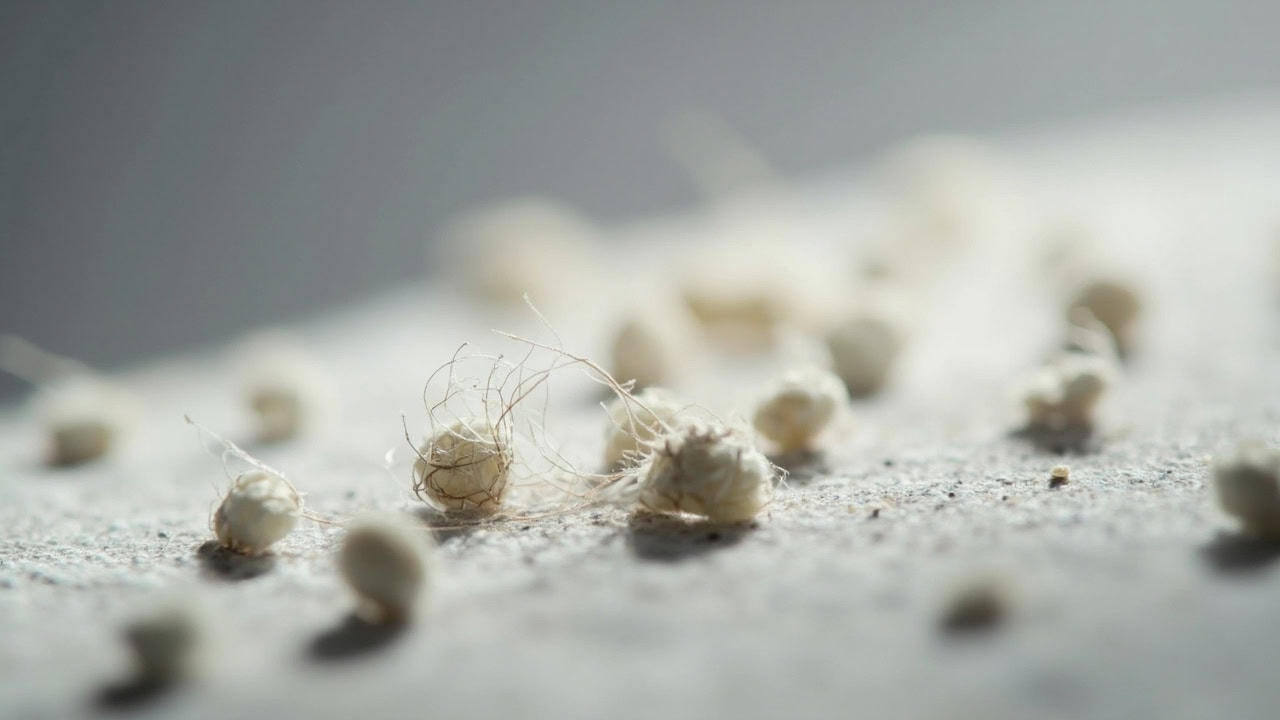
Clothes pill when friction causes short or loose fibers in fabric to migrate to the surface, tangle together, and form small fibrous balls called pills. This process is accelerated by abrasion from wear, washing, and drying, particularly in synthetic fabrics and loosely woven materials. The pilling phenomenon occurs within the first 5–20 wash cycles, with the highest concentration forming at high-friction contact points like underarms, collars, and cuffs.
What Is Pilling and Why Does It Happen?
Pilling is the formation of small, rough balls of tangled fibers on a fabric surface. These pills develop when loose fiber ends are pulled to the exterior of the garment through repeated friction — from body movement during wear, agitation during machine washing, and tumbling inside a dryer. Once on the surface, the loose fibers twist and knot together, creating the characteristic pill clusters that make fabric look worn and textured.
Certain fiber types are significantly more prone to pilling than others. Polyester, acrylic, and synthetic blends lead the list because their strong, continuous filaments hold pills firmly in place rather than allowing them to break off. A polyester-cotton blend shirt, for example, will often show more visible pilling than a 100% cotton equivalent because the polyester fibers anchor the pills while the cotton fibers supply the loose ends that form them.
Natural fibers are not immune. Cotton, wool, and linen can all pill, especially when made from short staple fibers or woven into loose, open constructions. Wool sweaters are particularly susceptible because the scaly surface structure of wool fibers encourages a felting effect, where individual fibers interlock and mat together under friction. The difference is that natural-fiber pills tend to be weaker — they often break off on their own during subsequent wash cycles, whereas synthetic pills cling stubbornly to the fabric surface.
Pills initially form as loose, fuzzy accumulations but become more firmly bonded over time through continued abrasion. Each wash-and-wear cycle tightens the entanglement, compressing the pill into a compact, hardened ball. The most concentrated pilling appears at high-friction zones: underarms where sleeves rub against the torso, collar lines where skin and hair make constant contact, cuff edges that brush against desks and countertops, and seat areas that bear body weight against chairs and car seats.
The Science Behind Fabric Pilling
The pilling process follows a predictable four-stage sequence: fuzzing, entanglement, growth, and wear-off. During the fuzzing stage, abrasion pulls loose fiber ends to the fabric surface. In the entanglement stage, these exposed fibers twist around each other through continued rubbing. The growth stage sees pills accumulate additional fibers and increase in size. Finally, in the wear-off stage, pills either shed naturally (common with weak natural fibers) or remain anchored (typical of strong synthetics).
Fiber length is the single most influential factor in pilling susceptibility. Short staple fibers — those measuring less than 28 mm in cotton or under 60 mm in wool — have more exposed fiber ends per unit of yarn length, providing more material that can migrate to the surface. Long-staple cotton varieties like Egyptian or Pima cotton (staple lengths of 34–40 mm) produce smoother yarns with fewer loose ends and significantly lower pilling rates. ASTM D4970, the standard test method for evaluating pilling resistance using the Martindale tester, consistently demonstrates that long-staple yarns achieve pilling grades of 4–5 (minimal to no pilling) while short-staple equivalents grade at 2–3 (moderate to significant pilling) under identical test conditions.
Yarn construction plays an equally important role. Loosely twisted yarns — those with fewer turns per inch — shed fibers more readily because the individual filaments are held less tightly within the yarn structure. A yarn with 15 turns per inch will release fibers far more easily than one with 25 turns per inch, even if both use identical raw fiber. Similarly, open, loose weaves allow greater fiber movement than tight, dense weaves. A loosely knit polyester fleece will pill far more aggressively than a tightly woven polyester dress fabric, even though both are made from the same polymer.
Fabric finishing processes can dramatically reduce pilling susceptibility. Shearing — a mechanical process that cuts protruding fibers from the fabric surface — removes the raw material that would otherwise form pills. Anti-pill treatments, commonly applied to fleece and knitted fabrics, chemically weaken the fibers so that any pills that do form break off quickly rather than accumulating. ISO 12945-2, the international standard for testing fabric propensity to pilling using the Martindale method, evaluates these finishes by simulating 5,000 to 25,000 abrasion cycles and grading the resulting surface change.
The fundamental difference between synthetic and natural fiber pilling lies in fiber strength. Polyester fibers have a tensile strength of approximately 400–600 MPa, roughly three times stronger than cotton at 300–400 MPa. This means polyester pills grip tightly and persist on the fabric surface, while cotton pills break under their own weight and shed. This mechanical property explains why a 50/50 cotton-polyester blend shows the most visible pilling — the cotton provides loose fiber ends that form the pills, and the polyester anchors them firmly in place.
How to Prevent Pilling During Washing
The washing machine is where the majority of preventable pilling occurs. High agitation speeds, hot water, and overcrowded drums create the exact conditions — intense friction between fabric surfaces — that drive fiber migration. Adjusting your wash settings can reduce new pill formation by up to 60% compared with a standard heavy-duty cycle. For a broader guide to garment care fundamentals, see our laundry care guide.
- Turn garments inside out before loading them into the washer. This positions the fabric’s interior surface — the side already subjected to body friction — toward the drum, shielding the exterior face that people see from direct abrasion against other garments.
- Use gentle or delicate wash cycles with slower agitation speeds. A delicate cycle typically agitates at 30–40 oscillations per minute compared with 60–80 on a normal cycle, dramatically reducing the mechanical force that pulls fibers to the surface.
- Wash with cold water (20 °C / 68 °F or below). Cold water reduces fiber swelling and contraction, which limits the mechanical stress that breaks and releases loose fibers. It also helps preserve dye integrity, reducing color fading that makes pills more visible.
- Choose mild, liquid laundry detergents without harsh enzymes or bleach. Powdered detergents can leave undissolved particles that act as microscopic abrasives during the wash cycle, physically grinding against fabric fibers and accelerating fiber release.
- Avoid overloading the washing machine. Garments need adequate space to circulate freely in the drum. When the machine is packed tightly, clothes are pressed forcefully against each other with each rotation, simulating the same sustained friction that industrial pilling testers apply intentionally.
- Remove clothes promptly after the wash cycle completes. Leaving damp garments sitting in the drum causes them to press against each other under their own weight, creating the sustained contact pressure that promotes fiber entanglement.
- Use mesh laundry bags for garments that are particularly prone to pilling — sweaters, fleece items, and any knit fabrics. The mesh barrier limits direct garment-to-garment contact while still allowing water and detergent to circulate for effective cleaning. This approach is especially valuable for delicate items that require extra protection.
Drying Practices That Reduce Pilling
If the washing machine is where pilling begins, the dryer is where it accelerates. The tumbling motion inside a heated dryer generates continuous, high-impact friction between garments — essentially replicating the mechanical action of laboratory pilling testers like the Martindale or Random Tumble Pilling Tester used in ISO 12945-1 evaluations.
Air drying is the single most effective way to eliminate dryer-induced pilling. Laying garments flat on a drying rack or hanging them on a line removes tumbling abrasion entirely. Flat drying is especially recommended for knits and sweaters, which are structurally more vulnerable to both pilling and stretching under their own weight when wet.
When machine drying is necessary, use the lowest heat setting or a tumble-dry-air (no-heat) option. High heat softens synthetic fibers, making them more pliable and easier to pull from the yarn structure. Removing items while they are still slightly damp — before the cycle completes — reduces total exposure time. Adding wool dryer balls to the load helps physically separate garments, preventing them from clumping together and creating concentrated friction zones. Fabric softener sheets can reduce static-induced fiber attraction, though as discussed in the myths section below, they do not prevent pilling at its source.
Wardrobe and Care Habits for Long-Term Prevention
Everyday habits outside the laundry room contribute significantly to pilling rates. Garments worn repeatedly without rest accumulate more body friction in the same contact zones, accelerating the fuzzing stage. Rotating your wardrobe — giving each garment at least 48 hours of rest between wears — allows fibers to recover their natural position and reduces sustained directional friction on any single item.
Spot cleaning minor stains instead of running the full garment through a wash cycle reduces unnecessary mechanical agitation. A targeted application of detergent to a small stain, followed by gentle blotting, avoids the full-drum exposure that pulls fibers across the entire garment surface. For persistent stains that require full washing, our stain removal guide covers pre-treatment techniques that minimize fabric stress.
Regular maintenance with a fabric shaver or pilling comb removes pills before they grow large enough to entangle additional surrounding fibers. An electric fabric shaver with an adjustable guard (typically set to 2–3 mm clearance) trims pills cleanly at the base without cutting into the underlying fabric. Manual pilling combs work on smaller areas but require a lighter touch to avoid pulling intact fibers from the weave.
When shopping for new garments, check the fabric composition label. Items made from long-staple cotton, merino wool (fiber diameter under 19.5 microns), or tightly woven synthetics will resist pilling far longer than loosely knit blends with unspecified short-staple cotton. Higher thread counts in woven fabrics and tighter gauge in knits both correlate with lower pilling grades in standardized testing. Proper storage also matters — hanging structured garments on padded hangers and folding knits flat prevents the compression and surface friction that develops when items are stuffed tightly into drawers.
When to Replace vs. Restore Pilled Clothing
An electric fabric shaver is the most effective restoration tool for moderately pilled garments. Devices with rotary blades and protective mesh guards remove pills at the base without damaging intact yarns beneath. For light to moderate pilling, a single pass with a quality shaver can restore the fabric’s original smooth appearance, extending the garment’s usable life by months or even years.
However, restoration has clear limits. When pilling is accompanied by fabric thinning — where the material between pills has become visibly translucent or developed small holes — the structural integrity of the garment has been compromised. No amount of shaving will restore fiber that has already broken away from the weave. Signs that replacement is the better option include: permanent fabric distortion where the garment no longer holds its original shape, visible tears forming between pill clusters, and fabric that feels paper-thin when held up to light.
The economic argument favors prevention and quality investment. Repeatedly restoring a cheap, short-staple garment costs time and yields diminishing returns as fiber loss accumulates. A single higher-quality replacement made from long-staple cotton or a tightly woven synthetic will outlast multiple cycles of low-grade purchases and restoration efforts. For tips on keeping towels and other household textiles in good condition, see our guide on how to keep towels soft.
Common Pilling Myths Debunked
Myth: Only cheap clothes pill. Reality: All fabrics with exposed fiber ends can pill. Quality affects the rate and severity, not the fundamental occurrence. A $200 cashmere sweater will pill under the same friction conditions as a $20 acrylic knit — the difference is that cashmere pills are weaker and shed more quickly, making them less noticeable. ASTM standardized testing confirms that even premium long-staple fabrics develop pills under sufficient abrasion cycles; the grading shifts from “severe” to “slight,” but never reaches zero.
Myth: Fabric softener prevents pilling. Reality: Fabric softener coats fibers with a thin layer of silicone or cationic surfactants that reduce static electricity and make fabric feel smoother to the touch. This coating does not alter the mechanical forces that pull fibers from the yarn structure — it only masks the tactile symptom. The softener film wears off within one to two subsequent washes, providing no lasting protective benefit against fiber migration.
Myth: Hand washing eliminates pilling risk. Reality: Hand washing can reduce pilling compared to a heavy-duty machine cycle, but only when done correctly. Aggressive hand rubbing, wringing, or twisting wet fabric concentrates friction on specific areas and can actually produce more localized pilling than a gentle machine cycle. The correct hand-washing technique involves submerging the garment in cool water with mild detergent, gently squeezing suds through the fabric without rubbing, and pressing — never wringing — excess water out.
Myth: Pilling means the garment is defective. Reality: Pilling is a normal wear characteristic of virtually all textile fabrics. Even fabrics rated at the highest anti-pill grades under ISO 12945-2 testing will develop some surface change under extended use. Manufacturers apply anti-pill finishes to reduce the rate of pill formation, but no finish can prevent it entirely. Understanding the distinction between expected wear and manufacturing defects — such as excessive pilling after a single gentle wash — helps consumers set realistic expectations and focus on prevention rather than avoidance. For more on keeping whites bright during regular washing, see our article on why white clothes turn gray.
Frequently Asked Questions
Q: Why do my clothes pill even after just one wash?
A: Clothes can pill after one wash because the initial wash cycle causes significant fiber agitation that pulls loose staple fibers to the surface. Pre-washing fiber ends, chemical finishing residues, and loose weave structure all contribute to early pill formation. Garments with short-staple fibers or loosely twisted yarns are most susceptible to rapid pilling.
Q: Does fabric softener help prevent pilling?
A: Fabric softener does not prevent pilling — it only reduces static electricity and adds a temporary coating that makes fabrics feel smoother. The softener film wears off during subsequent washes and does not address the fundamental friction-induced fiber migration that causes pilling.
Q: Which fabrics pill the most?
A: Polyester and acrylic fabrics pill the most visibly because their synthetic fibers are strong enough to hold their pill form rather than breaking off. Cotton, wool, and linen can also pill, but the pills tend to shed or break away rather than accumulating on the surface. Blends combining natural and synthetic fibers typically show the most noticeable pilling.
Q: Is pilling a sign of poor quality clothing?
A: Pilling is not exclusively a quality indicator — even high-quality garments made from long-staple fibers will pill under sufficient friction. Higher quality typically means slower pilling development and easier pill removal, but all fabrics with exposed fiber ends can experience this normal wear phenomenon.
References
- ASTM International. (2022). ASTM D4970-22: Standard Test Method for Pilling Resistance and Other Related Surface Changes of Textile Fabrics. ASTM.
- International Organization for Standardization. (2020). ISO 12945-2:2020 Textiles — Determination of fabric propensity to surface fuzzing and to pilling — Part 2: Martindale method. ISO.
- Cooke, W. D. (1985). “Pilling Attrition and Fatigue.” Textile Research Journal, 55(6), 369–376.
- AATCC. (2022). AATCC TM135: Dimensional Changes of Fabrics after Home Laundering. American Association of Textile Chemists and Colorists.


