
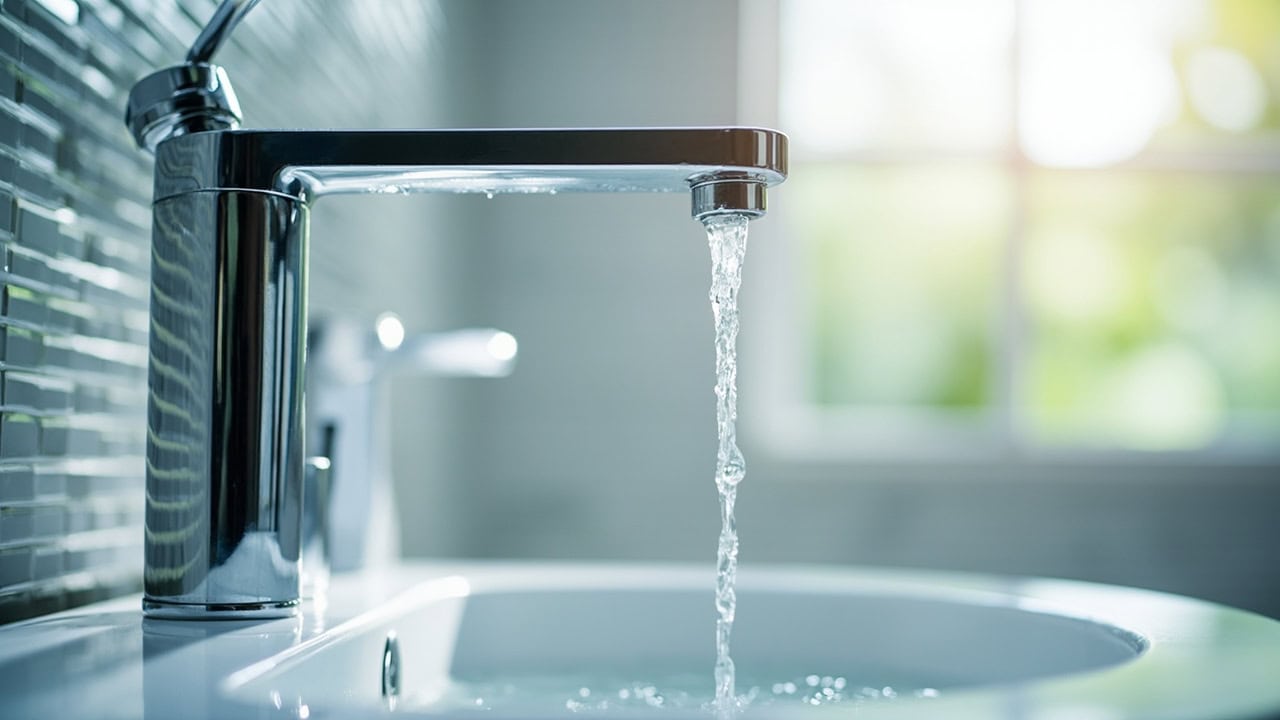
How to Clean Bathroom Faucet: Chrome, Brushed Nickel, Matte

Clean a bathroom faucet using a pH-neutral dish soap diluted at 1:10 with warm water and a soft microfiber cloth, working in gentle circular motions on chrome or along the directional grain on brushed nickel. Acid-based cleaners with a pH below 4 cause dezincification in brass internal components and permanently etch chrome surfaces, while abrasive scrubbers destroy the directional grain pattern on brushed nickel and leave visible sheen variation on matte black finishes. The entire process takes roughly five minutes when performed weekly and requires only basic supplies already found in most homes.
What You Need Before You Start
Gathering the correct supplies before you begin prevents the common mistake of reaching for whatever is under the sink mid-clean — which is exactly how faucet finishes get ruined. The right tools and cleaning agents differ from what you would use on tile, glass, or countertops, so assemble a dedicated faucet-cleaning kit and keep it separate from your general bathroom supplies.
Tools
- Soft microfiber cloths (2–3) — one for cleaning, one for rinsing, one for drying
- Old soft-bristle toothbrush for cleaning the aerator and crevices around the handle base
- Small basin brush for the sink deck area around the faucet mounting
Cleaning Agents
- pH-neutral liquid dish soap (pH 7) diluted at a 1:10 ratio with warm water — this is your primary cleaner for all finish types
- White distilled vinegar (5% acetic acid, pH ~2.5) diluted 1:1 with water — reserved exclusively for hard water mineral deposits on chrome and polished nickel only
- Baking soda paste (3 parts baking soda to 1 part water) — for stubborn deposits on chrome only, applied with minimal pressure
What NOT to Use
More faucet finishes are destroyed by the wrong cleaner than by years of normal use. Abrasive scrubbers, steel wool, scouring powders, and even paper towels create micro-scratches that permanently dull polished surfaces. Acidic cleaners below pH 4 — including full-strength vinegar, lime removers, and toilet bowl cleaners — cause dezincification in brass fixtures, a corrosion process that leaches zinc from the alloy and leaves a weak, porous copper residue. Bleach-based and ammonia-based products degrade the protective clear coating applied to most modern faucets, leading to pitting and discoloration that no amount of polishing can reverse.
Step-by-Step Cleaning Process
Follow these eight steps in order. The sequence matters because rinsing the faucet before applying cleaner prevents soap from bonding to dry mineral deposits, and removing the aerator first ensures you can clean it while you work on the rest of the faucet. For detailed guidance on dealing with stubborn mineral buildup, see our guide on how to remove hard water stains from bathroom surfaces.
- Remove the aerator. Unscrew the aerator from the faucet spout tip by hand. If it is stuck, grip it gently with pliers wrapped in a soft cloth to avoid scratching the finish. Set the aerator aside in a small bowl of warm water to begin loosening debris.
- Rinse the faucet. Run warm water over the entire faucet body for 30 seconds. This removes loose surface debris, toothpaste splatter, and soap scum, and it pre-wets the finish so the cleaning solution spreads evenly rather than drying into streaks.
- Apply cleaner to the cloth. Spray or dab your 1:10 pH-neutral soap solution onto a microfiber cloth — never spray directly onto the faucet. Direct spraying causes cleaner to drip into the drain area, pool around the base, and leave residue that attracts more grime.
- Clean the spout. Wipe the spout using gentle circular motions (chrome and polished nickel) or long strokes in the grain direction (brushed nickel), working from the base to the tip. Make 5 to 6 passes per section, overlapping each pass by about half to ensure full coverage.
- Clean the handles and escutcheon. Wipe all handle surfaces thoroughly, including the underside where grime accumulates and behind the escutcheon plate where water pools. Use the old toothbrush gently around the handle bases to reach crevices the cloth cannot access.
- Clean the aerator. Transfer the aerator to a small bowl containing a 1:1 vinegar-water solution. Soak for 15 minutes to dissolve mineral deposits, then scrub gently with the old toothbrush to remove remaining sediment. Rinse the aerator thoroughly under warm running water to remove all vinegar residue before reinstallation.
- Rinse and inspect. Run warm water over the entire faucet for 20 seconds to wash away any soap residue. Inspect the surface under good lighting for remaining water spots, soap film, or mineral deposits. If spots remain, repeat the cleaning pass on those areas only.
- Dry completely. Use a dedicated dry microfiber cloth to buff the entire faucet dry. This step is non-negotiable — leaving water to air-dry is what causes water spots in the first place. Buff chrome to a mirror shine; dab brushed nickel and matte finishes gently without rubbing. For comprehensive faucet and sink care, see our complete bathroom cleaning guide.
Faucet Finish-Specific Considerations
Not all faucet finishes tolerate the same cleaning approach. The three most common bathroom faucet finishes — chrome, brushed nickel, and matte — each have distinct vulnerabilities. Using the wrong technique on any one of them produces visible damage that cannot be undone without refinishing or replacing the faucet. For broader guidance on caring for polished metal surfaces, see our article on how to clean chrome bathroom fixtures.
Chrome Faucets
Polished chrome is the most forgiving finish but also the most revealing — its mirror-like reflectivity shows every water spot, fingerprint, and smear the instant they form. Chrome is electroplated over a brass or zinc alloy base, and the plating is thin (typically 0.3 to 0.5 microns). Abrasive cleaners and scouring pads cut through this layer quickly, exposing the base metal to corrosion.
Use only a soft microfiber cloth for routine cleaning. Even paper towels contain wood fibers hard enough to create micro-scratches that gradually dull the reflective surface. For hard water spots on chrome, dampen a microfiber cloth with a 1:1 vinegar-water solution, apply to the affected area for no more than 30 seconds, then rinse immediately with clean water. Prolonged acid exposure etches the chrome surface and accelerates dezincification of the brass substrate underneath, a well-documented corrosion mechanism in copper-zinc alloys.
Avoid bleach-based cleaners, scouring powders, and any drain-cleaning products that may splash onto the faucet during sink cleaning. If you are also cleaning the sink basin, protect the faucet by draping a cloth over it while you work on the drain area — our guide to cleaning a bathroom sink drain covers that process in detail.
Brushed Nickel Faucets
Brushed nickel has a directional grain pattern created by fine wire brushes during manufacturing. This grain is what gives the finish its characteristic muted luster — and it is also what makes brushed nickel so easy to ruin with improper cleaning. Circular scrubbing or cross-grain wiping disrupts the uniform directional pattern, creating visible swirl marks that catch light differently from the surrounding surface. Once the grain is damaged, no amount of polishing can restore it.
Always wipe brushed nickel in the direction of the grain — typically top to bottom on the spout and handles, though some models have a horizontal pattern. If you are unsure of the direction, check an inconspicuous area first by running your fingernail lightly across the surface; you will feel slightly more resistance when going against the grain. Use pH-neutral soap solution at 1:10 dilution applied with a soft microfiber cloth, using long, even strokes.
Never use abrasive pads, scratchy sponges, or any product containing pumice or silica on brushed nickel. These materials fill the grain grooves with abrasive residue and create permanent sheen variations that are visible under any lighting condition. Matte brushed nickel requires the same care as standard brushed nickel — the “matte” designation refers to a lower-gloss clear coat, not a different surface texture.
Matte Black and Other Matte Finishes
Matte black faucets are the most finish-sensitive of the three types. The matte surface has no reflective gloss to hide imperfections, so even microscopic scratches from “non-abrasive” cleaning creams become visible as lighter-colored marks against the dark surface. The matte coating — typically a PVD (physical vapor deposition) or powder-coated layer — is durable in terms of corrosion resistance but thin in terms of scratch protection.
Clean matte black faucets only with a barely-damp microfiber cloth and pH-neutral soap at 1:10 dilution. No scrubbing pressure is needed — the soap solution lifts oils and grime on contact, and the microfiber traps debris without abrading the surface. Never use vinegar or any acidic cleaner on matte finishes; the acid reacts with the PVD coating and causes permanent etching and uneven color changes that appear as lighter patches on the dark surface.
Dry the faucet immediately after cleaning with a second, dry microfiber cloth. Water left to air-dry on matte black creates visible mineral deposits and spotting that is far more noticeable than on lighter finishes. For all matte finishes — matte black, matte white, matte gold — the rule is the same: minimal moisture, no acid, no abrasion, dry immediately. The same pH-neutral approach applies to kitchen faucet cleaning where wet-area fixtures face similar water exposure, as covered in our kitchen cleaning guide. Understanding the chemistry behind why these rules matter is explained in our cleaning glossary entries on pH-neutral, dezincification, and microfiber care.
Drying and Finishing the Faucet
Drying is not optional — it is the step that determines whether your faucet looks clean for five minutes or five days. Water spots form when dissolved minerals in tap water evaporate and deposit on the surface, so every drop left behind becomes a new spot. Use a dedicated dry microfiber cloth that has not been used for cleaning, since cleaning cloths retain soap residue that leaves streaks.
Buff chrome and polished nickel finishes in long, smooth strokes following the form of the faucet. This directional buffing aligns with the surface polish and produces a uniform shine. For brushed nickel and matte finishes, use a dab-dry technique instead — press the cloth gently against the surface to absorb moisture without dragging debris across the finish. After drying, inspect the faucet under your bathroom’s normal lighting (both overhead and vanity) to check for remaining water spots or soap residue that may not be visible from a single angle.
Reinstall the aerator by screwing it back on by hand only. Hand-tightening provides sufficient seal pressure — using pliers on reassembly risks cracking the decorative housing or stripping the threading. Run the water for 10 seconds to confirm the aerator is seated properly and the flow is even with no spraying from misalignment.
Common Mistakes to Avoid
Most faucet damage comes from a short list of repeated mistakes. This table covers the six most common errors and the specific damage mechanism each one causes.
| Mistake | Why It Damages the Faucet |
|---|---|
| Using acidic cleaners (vinegar stronger than 1:1 dilution) | Acid etches chrome plating and dezincifies brass internal components by leaching zinc from the copper-zinc alloy |
| Abrasive scrubbers or paper towels | Creates micro-scratches that dull polished finishes and destroy the directional grain on brushed nickel |
| Bleach-based or ammonia cleaners | Degrades the clear protective coating on all faucet types and causes pitting on chrome surfaces |
| Leaving aerator soaking overnight | Prolonged acid exposure weakens brass fittings and degrades rubber gaskets, causing leaks |
| Over-tightening aerator on reassembly | Cracks the decorative housing or strips the threading, requiring replacement |
| Using polishing compounds on brushed or matte finishes | Fills the grain pattern with compound residue and creates permanent sheen variation |
Frequently Asked Questions
Q: Can I use vinegar to clean my bathroom faucet?
A: Yes, but only at a 1:1 dilution and only on chrome and polished nickel — not on brushed nickel, matte black, or any finish with a coating. Vinegar’s acidity (pH ~2.5) can etch chrome surfaces and degrade finish coatings if left for more than 2 minutes. Apply the diluted vinegar to a microfiber cloth, not directly to the faucet, and rinse immediately after contact.
Q: How do I remove hard water deposits from my faucet?
A: Soak the aerator in a 1:1 vinegar-water solution for 15 minutes, then scrub gently with an old toothbrush. For deposits on the faucet body, dampen a microfiber cloth with the same solution, apply for 30 seconds, then rinse immediately and dry — never let vinegar sit on the finish. For detailed instructions on removing stubborn mineral buildup from multiple bathroom surfaces, see our guide on how to remove hard water stains from bathroom surfaces.
Q: What is the safest cleaner for brushed nickel bathroom faucets?
A: pH-neutral liquid dish soap diluted at 1:10 with warm water, applied with a soft microfiber cloth using long strokes in the direction of the grain. This removes fingerprints and soap scum without scratching the directional finish or damaging the protective coating. Never use circular motions, abrasive pads, or acidic cleaners on brushed nickel.
Q: How often should I clean my bathroom faucet?
A: Wipe the faucet with a dry microfiber cloth after each use to prevent water spots (takes about 30 seconds). Perform a full cleaning with pH-neutral soap solution once per week. Clean the aerator monthly to maintain water pressure and flow. This routine prevents mineral deposit buildup and extends the finish life of the faucet.
References
- Ahmad, Z. (2006). Principles of Corrosion Engineering and Corrosion Control: Dezincification. Butterworth-Heinemann.
- ASTM International. (2019). ASTM B456 — Standard Specification for Electrodeposited Coatings of Copper Plus Nickel Plus Chromium and Nickel Plus Chromium. ASTM International.
- United States Environmental Protection Agency. (2023). Safer Choice Standard for Cleaning Products. U.S. EPA.
- National Sanitation Foundation. (2024). Guidelines for Selecting Safe Cleaning Products. NSF International.


